





BLOG
Twisted Waveguide Design: Principles, Benefits, and Applications
August 17, 2026
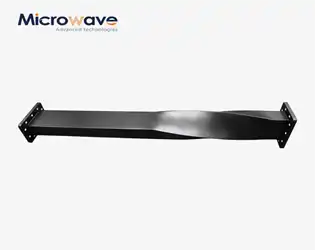
A twisted waveguide incorporates a gradual rotational transformation along its transmission path, enabling microwave systems to navigate complex spatial geometries while maintaining exceptional signal fidelity. This specialized component solves critical routing challenges in satellite feeds, radar assemblies, and aerospace platforms where physical constraints demand both mechanical flexibility and electrical precision. By introducing controlled geometric rotation, twisted waveguides preserve mode purity and minimize reflection losses that would otherwise compromise system performance in high-frequency applications.
How to Choose low loss bandpass filters for RF Systems
August 17, 2026
Selecting the right low loss bandpass filters begins with understanding your system's specific frequency requirements, power handling capacity, and environmental conditions. These filters minimize signal attenuation while allowing only desired frequency bands to pass through, directly impacting system reliability and signal clarity. When choosing, prioritize filters with insertion loss below 1.0 dB for optimal efficiency, evaluate the Q factor for selectivity performance, and confirm compliance with industry standards like RoHS. Whether you're integrating filters into 5G infrastructure, satellite ground stations, or defense radar systems, matching technical specifications to operational demands ensures long-term system performance and avoids costly redesigns.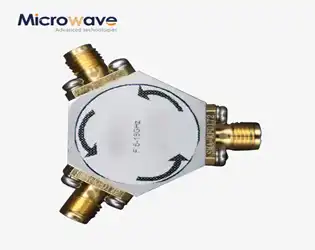
Broadband RF Circulator vs Isolator: What Is the Difference?
August 14, 2026
When sourcing passive RF components for high-reliability systems, understanding the functional distinction between a broadband RF circulator and an isolator is critical. Simply put, a circulator directs RF energy sequentially through three or more ports—signal entering Port 1 exits Port 2, and signal entering Port 2 exits Port 3—while an isolator is essentially a two-port device (or a circulator with one port terminated) that allows signal flow in only one direction. Both leverage ferrite materials and magnetic biasing to achieve non-reciprocal behavior, but their port configurations and signal routing architectures serve fundamentally different roles in RF system design.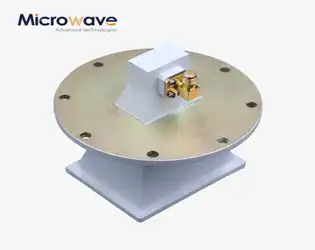
Pyramidal Horn Antenna Design for 5G Applications
August 14, 2026
Pyramidal horn antenna design represents a cornerstone technology for 5G network infrastructure, delivering the precision directivity and high-gain performance essential for millimeter-wave communications. As 5G deployments accelerate globally, procurement managers and system integrators increasingly seek antennas that balance electromagnetic efficiency with manufacturing scalability. These aperture antennas seamlessly transition impedance from rectangular waveguide feeds to free space, minimizing reflection losses while providing controlled radiation patterns across critical frequency bands. Their inherent simplicity, combined with predictable performance characteristics, positions them as indispensable tools for base station testing, backhaul systems, and beamforming calibration in next-generation wireless networks.
Precision Phase Shifters: Key Features and Applications
August 14, 2026
Precision phase shifters are essential RF and microwave components that control signal phase with exceptional accuracy, enabling advanced beamforming, radar tracking, and communication system optimization. These devices manipulate electromagnetic wave phase relationships without significantly altering amplitude, serving as the foundation for modern phased array antennas, satellite ground stations, and defense surveillance systems. With operational frequencies extending from hundreds of megahertz to over 110 GHz, precision phase shifters address critical demands in telecommunications infrastructure, aerospace navigation, and high-frequency measurement equipment where phase accuracy directly impacts system performance and mission success.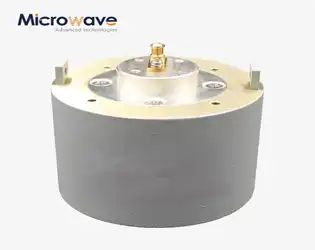
Everything you need to know about helical antenna
August 13, 2026
When sourcing high-frequency communication components for mission-critical applications, understanding the distinctions between helical antennas and their planar counterparts is essential. Helical antennas are three-dimensional, coiled structures that radiate circularly polarized signals, making them exceptionally reliable for satellite telemetry, GPS navigation, and aerospace tracking systems. Meanwhile, the Planar Spiral Antenna offers a flat, broadband alternative with frequency-independent performance spanning multi-octave ranges. Both antenna types serve distinct roles across defense, telecommunications, and research sectors, and selecting the right configuration depends on bandwidth requirements, space constraints, polarization needs, and environmental resilience. This comprehensive guide walks procurement managers and technical teams through the fundamentals, performance trade-offs, and sourcing considerations for these critical RF components.
Choosing Low Insertion Loss Isolators for Precision Applications
August 13, 2026
When designing mission-critical RF and microwave systems—whether for satellite uplinks, radar transmitters, or high-frequency test equipment—protecting sensitive components from reflected power is paramount. Low insertion loss isolators serve as the first line of defense, ensuring signal paths remain clean while safeguarding amplifiers, oscillators, and transmitters from damaging reverse signals. These passive ferrite devices allow forward signal propagation with minimal attenuation (typically under 0.5 dB) while blocking reflected energy, making them indispensable for maintaining signal fidelity and system longevity across defense, aerospace, telecommunications, and research environments.
Twisted Waveguide vs Conventional Waveguide: Key Differences
August 13, 2026
When we talk about the distinction between a twisted waveguide and a conventional waveguide, we're examining two fundamentally different approaches to guiding high-frequency electromagnetic signals. A twisted waveguide incorporates deliberate geometric rotation along its length, enabling it to accommodate complex spatial routing while maintaining signal integrity. Conventional waveguides, by contrast, feature fixed cross-sections—typically rectangular or circular—with rigid structural characteristics. The twisted design provides mechanical flexibility and adaptability for installations requiring both bending and angular displacement, making it indispensable for satellite ground stations, radar systems, and aerospace applications where space constraints and movement tolerance are critical considerations.