





Technical Features of H-Plane Tee Waveguide Junctions
H-Plane Tee waveguide junctions represent critical microwave components engineered for signal splitting and combining applications across high-frequency systems. These specialized devices feature auxiliary arm junctions positioned on the narrow wall of the main waveguide, enabling efficient electromagnetic energy distribution along the H-plane. Advanced Microwave Technologies Co., Ltd manufactures precision H-Plane Tee components that deliver exceptional performance in satellite communications, defense systems, aerospace applications, and telecommunications infrastructure, ensuring minimal signal loss while maintaining optimal transmission quality throughout demanding operational environments.
Understanding H-Plane Tee Waveguide Junctions
Fundamental Design Principles and Structure
Waveguide innovation shapes the spine of present day microwave communication frameworks, with H-plane tee intersections serving as fundamental building pieces for complex flag directing applications. These components work by making a intersection where electromagnetic vitality can be part or combined effectively inside the framework architecture. The basic plan of an H-plane tee includes making an assistant arm opposite to the primary waveguide way, situated particularly on the contract divider. This setup permits electromagnetic areas to proliferate along the H-plane, which alludes to the plane containing the attractive field vector and the heading of engendering. The exact situating guarantees ideal field dispersion and minimizes undesirable reflections that may debase framework performance. Manufacturing these components requires uncommon accuracy in dimensional resiliences to keep up reliable electrical characteristics. The intersection geometry must be carefully calculated to guarantee legitimate impedance coordinating over the operational recurrence run, anticipating flag reflections that would something else compromise framework efficiency.
Operating Mechanisms in Microwave Systems
H-plane tees work by leveraging the electromagnetic field conveyance designs inside rectangular waveguides. When a flag enters the fundamental waveguide harbour, the electromagnetic vitality actually partitions between the through harbour and the assistant arm based on the junction's geometric properties and the end conditions at each port. The control division characteristics can be accurately controlled through cautious plan of the intersection geometry, permitting engineers to make components with particular part proportions custom fitted to framework prerequisites. This adaptability makes H-plane tees important in applications requiring exact flag dissemination control. Signal segregation between ports speaks to another significant working characteristic. Legitimate plan guarantees that signals entering one harbour do not spill altogether into undesirable ways, keeping up framework keenness and anticipating impedances between distinctive flag paths.
Applications Across Critical Industries
Modern radar frameworks broadly utilize H-plane tee components for recieving wire bolster systems, where numerous get channels require indistinguishable flag characteristics. Climate checking frameworks depend on these components to keep up calibration precision over diverse polarization channels, guaranteeing exact meteorological measurements. Satellite ground stations utilize H-plane tees in their uplink and downlink flag preparing chains, where flag astuteness specifically impacts communication quality. The components must perform dependably over wide temperature ranges and changing air conditions whereas keeping up steady electrical characteristics. Defense applications put especially rigid prerequisites on H-plane tee execution, as these components regularly work in mission-critical scenarios where disappointment is not worthy. Electronic fighting frameworks, reconnaissance radars, and communication sticking hardware all depend on the exact flag control given by these specialized waveguide junctions.

Technical Design and Performance Characteristics
Material Selection and Manufacturing Specifications
Advanced Microwave Innovations Co., Ltd produces H-plane tees utilizing carefully chosen materials optimized for particular operational necessities. Aluminum development gives amazing conductivity whereas keeping up lightweight characteristics basic for aviation applications. The chromate change wrapping up handle improves erosion resistance, guaranteeing long-term unwavering quality in unforgiving natural conditions. High-performance applications advantage from copper development, which offers predominant electrical conductivity for requesting flag astuteness necessities. Gold plating alternatives are accessible for components requiring remarkable natural resistance and ideal surface conductivity, especially in space-grade applications where support is impossible. Dimensional exactness speaks to a basic fabricating parameter, with resiliences kept up inside ±0.001 inches to guarantee steady electrical execution. Computer-controlled machining forms ensure repeatability over generation runs, empowering dependable framework integration and unsurprising execution characteristics.
Electrical Performance Parameters
The electrical characteristics of H-plane tees straightforwardly affect framework execution, with inclusion misfortune speaking to a essential concern for framework creators. Progressed Microwave's components accomplish addition misfortune values of ≤2.0 dB over their operational recurrence ranges, with premium models conveying execution as moo as 1.25 dB. Voltage Standing Wave Proportion (VSWR) estimations show the component's impedance coordinating quality, with values of ≤1.20 guaranteeing negligible flag reflections. This execution level keeps up flag judgment all through the component whereas avoiding vitality misfortune that would corrupt generally framework efficiency. Isolation between ports guarantees that flag spillage remains negligible, ordinarily accomplishing superior than 20 dB segregation over operational transfer speeds. This characteristic avoids undesirable coupling between flag ways, keeping up framework soundness and avoiding obstructions issues.
Frequency Range and Bandwidth Capabilities
The recurrence extend scope of H-plane tees ranges from 0.332 GHz to 40 GHz, obliging applications from UHF communications through millimeter-wave frameworks. This wide scope empowers framework creators to select components fitting for their particular operational prerequisites without compromising performance. Working transfer speed characteristics stay steady inside ±10% resilience over the operational recurrence extend, guaranteeing steady execution all through the component's indicated transfer speed. This steadiness is pivotal for applications requiring exact recurrence reaction characteristics, such as radar frameworks and communication links. Power dealing with capabilities expand up to 100 watts depending on the particular demonstrate and recurrence run, empowering utilize in high-power applications such as radar transmitters and communication frameworks. Warm administration highlights guarantee solid operation indeed beneath maintained high-power conditions.
Comparative Analysis for Informed Procurement Decisions
Performance Benchmarking Against Alternative Solutions
When assessing microwave intersection choices, H-plane tees offer particular preferences over E-plane setups in particular applications. The control division characteristics of H-plane tees give way better control over flag adequacy conveyance, making them perfect for applications requiring exact control part ratios. Compared to enchantment tees, H-plane setups offer easier mechanical development whereas keeping up amazing electrical execution. This effortlessness deciphers to moved forward unwavering quality and decreased fabricating costs, especially useful for high-volume generation necessities where taken a toll optimization is essential. Circulator-based arrangements give diverse usefulness but at altogether higher taken a toll and complexity. H-plane tees offer a more clear approach to flag part applications, with less components required and disentangled framework integration procedures.
Design Flexibility and Customization Options
Standard catalog components serve numerous applications successfully, but custom-engineered arrangements give ideal execution for specialized prerequisites. Progressed Microwave Advances offers broad customization capabilities, empowering exact recurrence band optimization, particular control dealing with prerequisites, and interesting mechanical configurations. Connector interface choices incorporate standard rib sorts such as FDP and FBP setups, with custom flanging accessible for specialized mounting necessities. Numerous wrap up choices oblige diverse natural necessities, from standard chromate change to premium gold plating for space applications. Size limitations frequently drive component choice in present day frameworks where space productivity is vital. Custom mechanical setups can optimize component measurements whereas keeping up electrical execution, empowering integration into space-constrained applications without compromise.
Integration Considerations and System Compatibility
System impedance coordinating prerequisites must be carefully assessed when selecting H-plane tee components. Appropriate impedance coordination guarantees negligible reflections and ideal control exchange all through the flag chain, maximizing by and large framework productivity and performance. Thermal extension contemplations gotten to be significant in applications encountering wide temperature varieties. Fabric choice and mechanical plan must suit warm cycling without debasing electrical execution or mechanical astuteness over the component's operational lifetime. Mechanical mounting prerequisites change altogether between applications, from lightweight aviation establishments to ruggedized military frameworks. Component determination must consider both electrical execution and mechanical compatibility with the target framework architecture.
Procurement Insights: Buying and Customizing H-Plane Tees
Supplier Evaluation and Quality Assurance
The microwave component commercial center incorporates various providers with shifting capabilities and quality benchmarks. Assessing provider capabilities requires cautious appraisal of fabricating capabilities, quality certifications, and specialized back assets accessible to customers. ISO certification speaks to a principal quality pointer, illustrating the supplier's commitment to steady fabricating forms and quality control strategies. Progressed Microwave Innovations keeps up ISO 9001:2015 certification, guaranteeing thorough quality administration all through all generation activities. Technical mastery inside the provider organization straightforwardly impacts the victory of custom component advancement ventures. Providers with broad RF building capabilities can give profitable plan interview administrations, making a difference optimize component determinations for particular applications whereas maintaining a strategic distance from potential execution pitfalls.
Cost Considerations and Value Engineering
Component pricing structures vary significantly between suppliers and depend heavily on order quantities, customization requirements, and delivery schedules. Understanding these factors enables more effective budget planning and supplier selection for both prototype and production quantities. Volume pricing advantages become significant for large-scale production requirements, with many suppliers offering substantial discounts for committed annual volumes. Long-term supply agreements can provide additional cost benefits while ensuring component availability throughout product lifecycles. Customization costs must be balanced against performance benefits when evaluating component options. Standard catalog components offer immediate availability and lower unit costs, while custom designs provide optimized performance at higher development costs and longer lead times.
Supply Chain Management and Logistics
Global supply chain considerations impact component availability, particularly for specialized microwave components requiring precision manufacturing processes. Supplier geographic location affects lead times, shipping costs, and communication effectiveness throughout project development phases. Lead time planning becomes critical for project scheduling, particularly when custom components require development and qualification testing. Standard components typically ship within weeks, while custom designs may require several months for development, prototyping, and production qualification. Quality documentation requirements vary between industries, with aerospace and defense applications requiring extensive test data and traceability documentation. Suppliers must demonstrate capability to provide comprehensive documentation packages meeting industry-specific requirements.
Advanced Microwave Technologies: Your Trusted H-Plane Tee Partner
Company Expertise and Manufacturing Capabilities
Advanced Microwave Technologies Co., Ltd brings over two decades of specialized experience in microwave component design and manufacturing to every customer engagement. Our comprehensive product portfolio encompasses waveguide assemblies, coaxial components, microwave antennas, and measurement systems, providing complete solutions for complex RF applications.Our state-of-the-art 24-meter microwave darkroom facility enables precise antenna and component characterization across frequencies from 0.5 to 110 GHz. This capability ensures that every H-plane tee component undergoes rigorous testing and validation before shipment, guaranteeing performance compliance with specifications.The company maintains multiple international quality certifications, including ISO 9001:2015 for quality management, ISO 14001:2015 for environmental management, and ISO 45001:2018 for occupational health and safety. These certifications demonstrate our commitment to excellence across all operational aspects.
Product Portfolio and Technical Specifications
Our H-plane tee component family covers frequency ranges from 0.332 to 6.0 GHz with exceptional electrical performance characteristics. Insertion loss performance achieves ≤2.0 dB across operational bandwidths, with premium models delivering enhanced performance for critical applications.Material options include aluminum construction for standard applications, copper for enhanced conductivity requirements, and gold-plated finishes for premium environmental resistance. Flange options encompass standard FDP and FBP configurations with custom flanging available for specialized mounting requirements.Working bandwidth tolerance maintains ±10% consistency across operational frequency ranges, ensuring predictable performance for system integration. Unbalance specifications remain within ±0.25 dB for most models, providing exceptional amplitude control for demanding applications.
Custom Engineering and OEM Services
Our technical team collaborates closely with customers to develop optimized solutions for specific application requirements. Custom frequency band optimization, unique mechanical configurations, and specialized environmental requirements can all be accommodated through our engineering design capabilities.Rapid prototyping services enable quick turnaround for design validation and testing, typically delivering prototype components within 2-3 weeks for evaluation purposes. This capability accelerates product development cycles and reduces time-to-market for customer applications.Volume production capabilities support both small batch requirements and large-scale manufacturing demands. Our production planning processes ensure consistent delivery schedules while maintaining rigorous quality standards throughout all manufacturing operations.
Conclusion
H-plane tee waveguide junctions represent essential components for modern microwave systems requiring precise signal splitting and combining capabilities. The technical characteristics of these components, including low insertion loss, excellent isolation, and broad frequency coverage, make them indispensable for applications across telecommunications, defense, aerospace, and scientific research sectors. Advanced Microwave Technologies Co., Ltd provides comprehensive solutions combining superior technical performance with flexible customization options, supported by over 20 years of specialized manufacturing experience and state-of-the-art testing facilities that ensure reliable component performance across demanding operational environments.
Frequently Asked Questions
What distinguishes H-plane tees from E-plane tee configurations?
H-plane tees position their auxiliary arm junction on the narrow wall of the main waveguide, enabling electromagnetic energy distribution along the H-plane. This configuration provides different power division characteristics compared to E-plane tees, which position the junction on the broad wall. H-plane designs typically offer better power handling capabilities and more straightforward impedance matching for many applications.
How do I select the appropriate H-plane tee for X-band radar applications?
X-band applications require careful consideration of frequency range coverage, power handling requirements, and environmental conditions. Components should provide consistent performance across the 8.2-12.4 GHz band with insertion loss ≤1.5 dB and VSWR ≤1.15. Material selection depends on environmental requirements, with aluminum suitable for most applications and gold plating recommended for marine or space environments.
What customization options are available for specialized applications?
Advanced Microwave Technologies offers extensive customization including frequency band optimization, custom mechanical dimensions, specialized connector interfaces, and enhanced environmental specifications. Custom power handling requirements, unique mounting configurations, and specialized material selections can all be accommodated through our engineering design services.
What quality certifications ensure component reliability?
Our components are manufactured under ISO 9001:2015 quality management systems with RoHS compliance for environmental safety. All components undergo comprehensive testing including electrical performance verification, dimensional inspection, and environmental stress screening when specified. Complete test documentation is provided with each shipment.
How long are typical lead times for custom H-plane tee components?
Standard catalog components typically ship within 2-3 weeks, while custom designs require 8-12 weeks for development, prototyping, and production qualification. Rush orders can often be accommodated with expedited processing, and prototype components are usually available within 2-3 weeks for design validation purposes.
Partner with ADM for Superior H-Plane Tee Solutions
Advanced Microwave Technologies stands ready to support your H-plane tee requirements with precision-engineered components backed by comprehensive technical expertise and reliable manufacturing capabilities. Our experienced engineering team provides personalized consultation services to optimize component selection for your specific applications, whether you need standard catalog products or fully customized solutions. As a leading H-plane tee manufacturer, we combine competitive pricing with exceptional quality standards, ensuring your projects benefit from superior component performance and dependable supply chain support. Contact our technical sales team at sales@admicrowave.com to discuss your requirements and discover how our H-plane tee solutions can enhance your system performance.
References
1. Johnson, R.C., and Jasik, H. "Antenna Engineering Handbook, Fourth Edition." McGraw-Hill Professional, 2007.
2. Marcuvitz, Nathan. "Waveguide Handbook." Institution of Engineering and Technology, 1986.
3. Pozar, David M. "Microwave Engineering, Fourth Edition." John Wiley & Sons, 2011.
4. Collin, Robert E. "Foundations for Microwave Engineering, Second Edition." IEEE Press, 2001.
5. Rizzi, Peter A. "Microwave Engineering: Passive Circuits." Prentice Hall, 1988.
6. Ragan, George Louis. "Microwave Transmission Circuits." McGraw-Hill Book Company, 1948.
YOU MAY LIKE
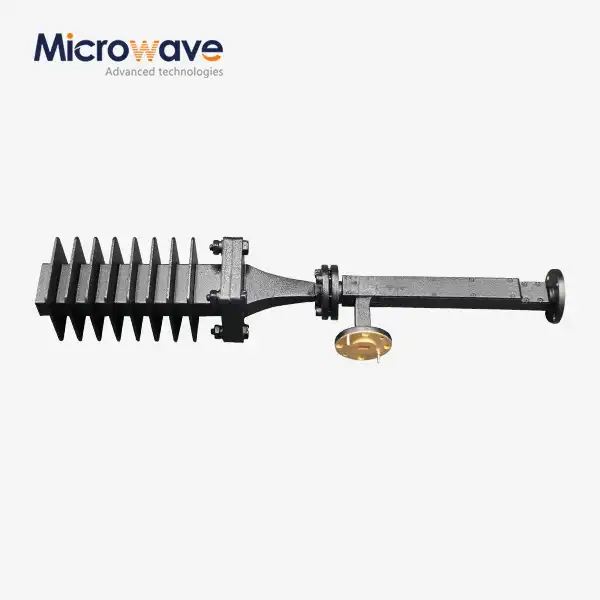 VIEW MOREWaveguide Fixed Attenuator
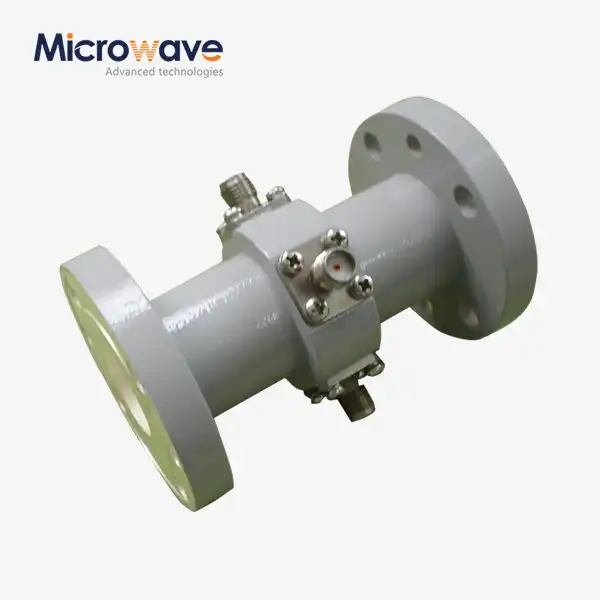 VIEW MOREWaveguide Probe Coupler
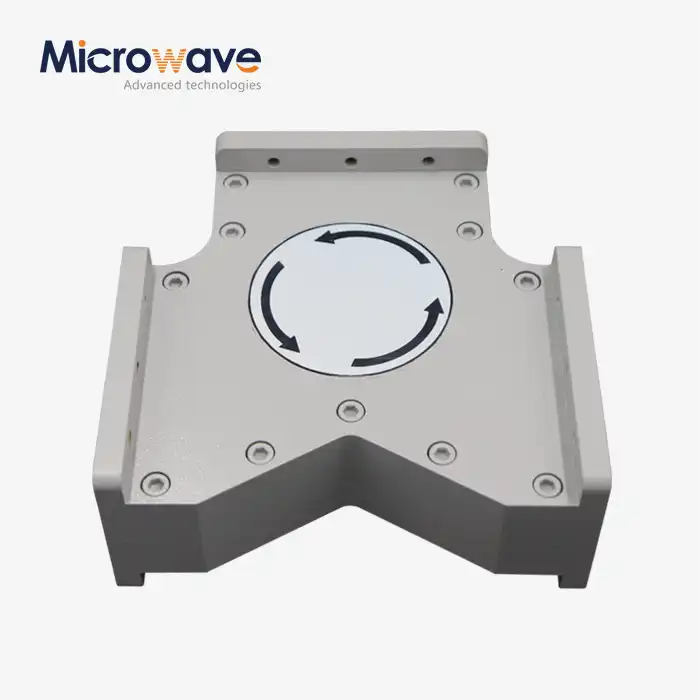 VIEW MOREHigh Power Waveguide Circulator
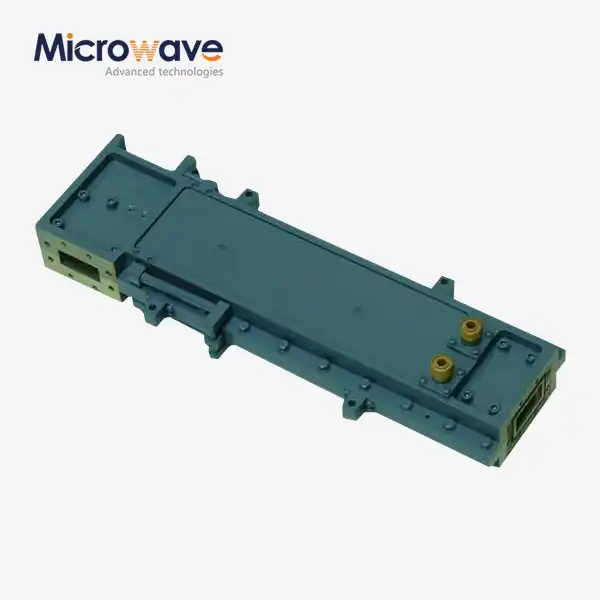 VIEW MOREHigh Power Waveguide Differential Phase Shift Circulator
 VIEW MOREWaveguide Variable Attenuator
 VIEW MOREHigh Power Waveguide Isolator
 VIEW MOREWG Bandpass Filter
 VIEW MOREWG Harmonic Filter