Wideband Double-ridged Horn Antenna OEM Solutions for Integrators
Integrators face significant challenges when deploying microwave communication systems requiring consistent performance across multiple frequency bands. Traditional antenna solutions force engineers to manage multiple units, complex calibration procedures, and frequency-dependent performance variations that compromise system reliability. The Wideband Double-ridged Horn Antenna eliminates these complications by delivering exceptional 10:1 bandwidth ratios in a single compact unit, streamlining integration workflows while ensuring stable gain and VSWR characteristics from 1 GHz to 18 GHz and beyond.
Understanding Wideband Double-ridged Horn Antenna Technology for System Integration
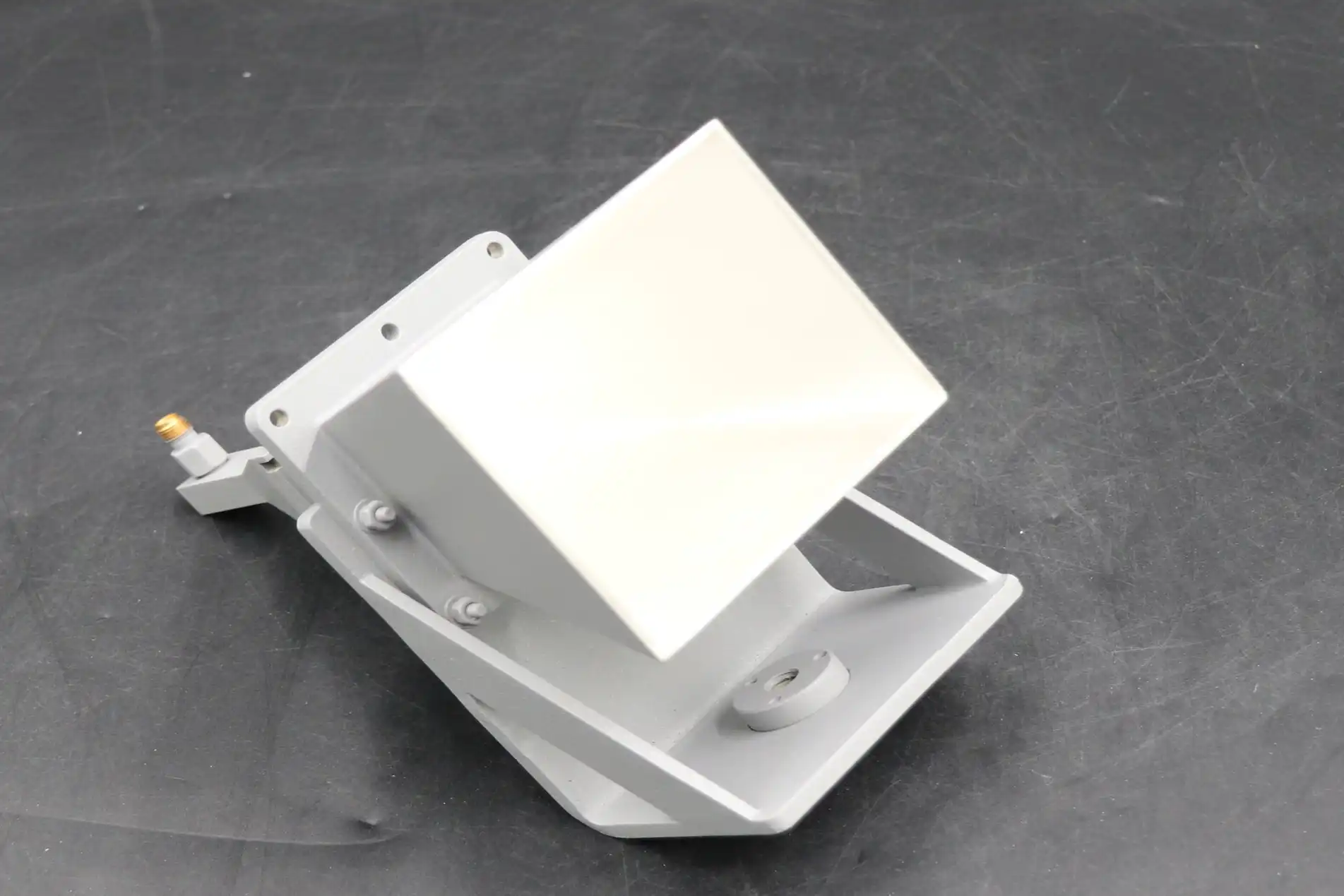
The Wideband Double-ridged Horn Antenna represents a fundamental advancement in broadband antenna engineering, specifically designed to address the complex requirements of modern integration projects. At its core, this antenna employs a sophisticated double-ridged waveguide structure that fundamentally transforms impedance matching capabilities across extraordinarily wide frequency ranges. Unlike conventional horn antennas that exhibit severe performance degradation beyond narrow frequency windows, the Wideband Double-ridged Horn Antenna maintains consistent radiation characteristics through advanced geometric optimization of its internal ridge structures. The double-ridged configuration introduces two parallel conductive ridges within the antenna's waveguide section, creating a controlled impedance transition from the feed point through the horn aperture. This geometric innovation enables the antenna to support propagation modes across multiple waveguide bands simultaneously, effectively eliminating the need for integrators to deploy separate antenna systems for different frequency ranges. Advanced Microwave manufactures these antennas with precision-machined aluminum construction and black anodized finishes that provide exceptional corrosion resistance for deployment in harsh environmental conditions, from maritime installations to aerospace applications where reliability cannot be compromised.
The electrical performance characteristics of the Wideband Double-ridged Horn Antenna directly address critical integration challenges. With VSWR values consistently below 2.0 across the entire operational bandwidth, the antenna minimizes power reflection and ensures efficient signal transmission without the complex matching networks that plague narrowband alternatives. The linear polarization support makes these antennas particularly versatile for integrators working across commercial telecommunications, defense surveillance systems, and scientific research applications. The frequency coverage spanning 0.2 GHz to 40 GHz in various models accommodates everything from legacy communication protocols to cutting-edge millimeter-wave applications, providing integrators with future-proof solutions that adapt to evolving system requirements without necessitating complete antenna infrastructure replacement.
Critical Performance Parameters for Integration Success
System integrators must evaluate several critical performance parameters when selecting Wideband Double-ridged Horn Antenna solutions for their projects. The antenna's gain characteristics directly influence link budget calculations and coverage area determination. These antennas typically deliver gain ranging from 4 dBi at lower frequencies to over 20 dBi at higher frequencies, with this progressive gain increase actually compensating for cable losses that increase proportionally with frequency. This characteristic proves invaluable in test and measurement applications where consistent measurement sensitivity across the entire frequency range ensures accurate system characterization. The radiation pattern stability of the Wideband Double-ridged Horn Antenna provides integrators with predictable directional characteristics essential for precise system planning. The antenna maintains consistent beamwidth and front-to-back ratio across its operational bandwidth, enabling accurate coverage modeling and interference mitigation strategies. For integrators deploying these antennas in antenna measurement facilities, the stable radiation patterns ensure repeatable test conditions across different frequency bands without requiring complex pattern correction factors. The compact physical dimensions combined with lightweight construction facilitate installation in space-constrained environments, whether mounting on test positioners in anechoic chambers or integrating into mobile communication platforms where size and weight constraints directly impact overall system feasibility.
Power handling capacity represents another critical consideration for integration planning. With maximum power inputs reaching 200W in high-performance models, the Wideband Double-ridged Horn Antenna supports both sensitive receiving applications and high-power transmission requirements without compromising signal integrity. The robust thermal management enabled by the aluminum construction and anodized coating ensures stable operation under sustained high-power conditions, eliminating performance drift that could compromise measurement accuracy or communication reliability in operational deployments.
Comprehensive OEM Customization Capabilities for Specialized Applications
Advanced Microwave Technologies Co., Ltd. recognizes that successful integration projects often demand customized antenna solutions that precisely align with unique system requirements. Our comprehensive OEM services transform the standard Wideband Double-ridged Horn Antenna platform into application-specific solutions that optimize performance for particular operational scenarios while maintaining the fundamental wideband advantages of the double-ridged configuration. This customization capability proves essential for integrators developing proprietary systems where commercial off-the-shelf components cannot fully satisfy specialized technical requirements or physical constraints. Frequency range optimization represents a primary customization dimension where our engineering team works directly with integrators to tailor antenna characteristics for specific application bands. While standard models cover broad frequency ranges, certain applications benefit from optimized designs that enhance performance within narrower operational windows. For satellite ground station applications requiring exceptional performance in specific uplink and downlink bands, our engineers can modify ridge geometries and horn dimensions to maximize gain and minimize VSWR within these critical frequency ranges. Similarly, defense integrators requiring enhanced performance in specific tactical communication bands benefit from customized designs that prioritize performance where it matters most, potentially accepting slightly reduced performance in unused frequency regions to achieve superior characteristics within mission-critical bands.
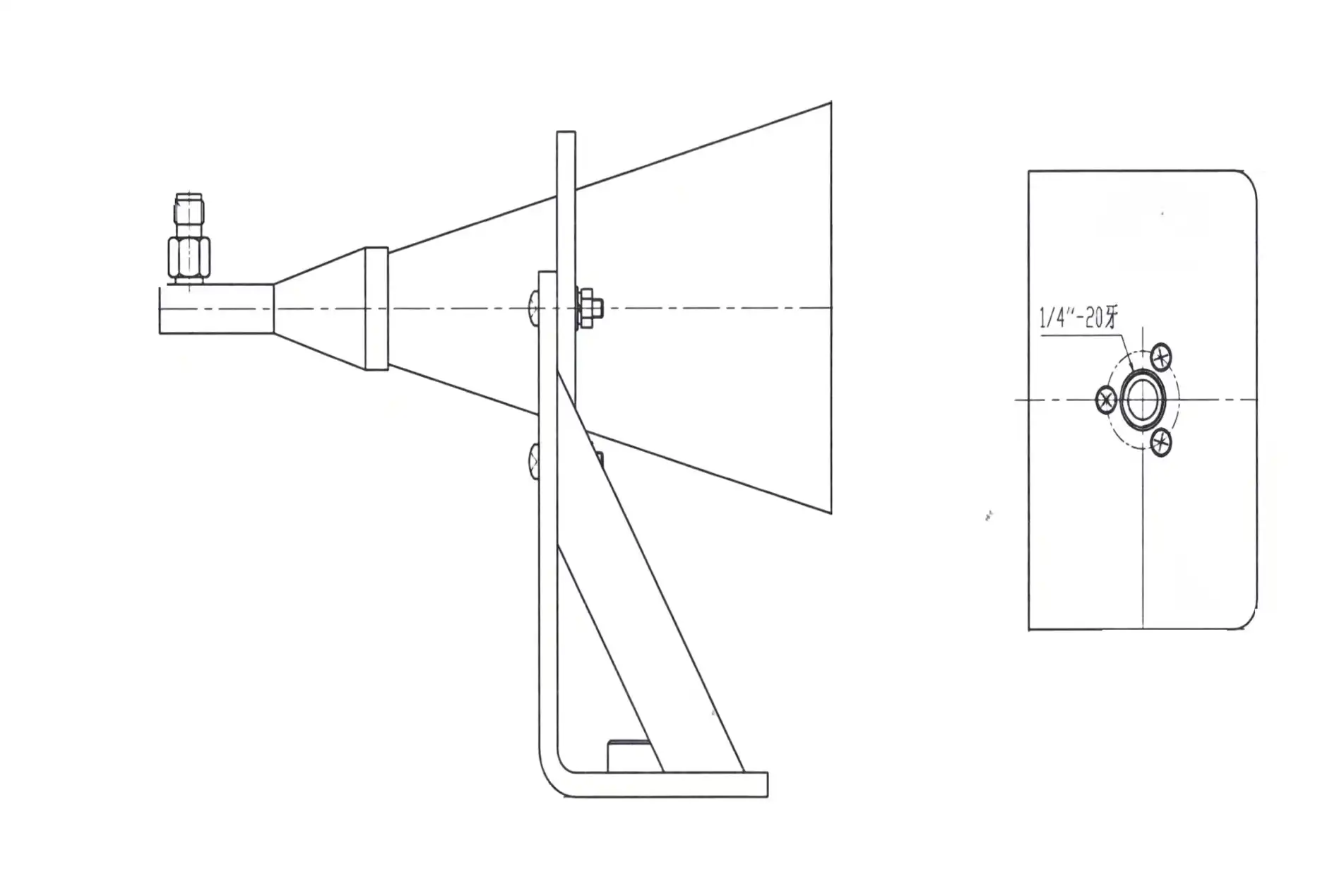
Mechanical customization options enable seamless integration into diverse system architectures and environmental conditions. Our OEM services encompass custom mounting configurations that align with specific mechanical interfaces, whether adapting to specialized positioning systems in measurement facilities or integrating with unique airframe structures in aerospace applications. Environmental protection enhancements can be incorporated for extreme operating conditions, including additional sealing against moisture and particulate ingress for harsh maritime environments or specialized thermal management features for high-temperature industrial settings. The standard N-Type female connector can be modified to accommodate alternative connector types including SMA, TNC, or specialized high-frequency interfaces that match existing system infrastructure, eliminating the need for additional adapter components that introduce potential points of failure and signal degradation.
Technical Support Throughout the Integration Lifecycle
Successful integration of Wideband Double-ridged Horn Antenna solutions extends well beyond initial product selection and procurement. Advanced Microwave Technologies Co., Ltd. provides comprehensive technical support throughout the entire integration lifecycle, ensuring that our customers achieve optimal system performance from initial design through operational deployment and ongoing maintenance. Our expert engineering team brings over 20 years of specialized microwave experience to every customer interaction, providing insights that accelerate integration timelines while avoiding common pitfalls that could compromise system performance or increase project costs. The integration support process begins with detailed application engineering consultation where our team works directly with integrators to fully understand system requirements, performance objectives, and operational constraints. This collaborative approach enables us to recommend optimal antenna configurations and identify potential customization opportunities that enhance overall system performance. For integrators developing novel applications or pushing performance boundaries, our engineering team can conduct preliminary electromagnetic simulations and performance modeling to validate design approaches before committing to prototype development, reducing technical risk and accelerating time-to-market for innovative products.
Prototyping services provide integrators with rapid access to custom antenna designs for evaluation and testing before full-scale production. Our streamlined prototyping process delivers functional units within accelerated timeframes, enabling integrators to validate performance in actual system configurations and refine specifications based on empirical test results. This iterative development approach proves particularly valuable for complex integration projects where theoretical predictions may not fully capture real-world performance factors or where customer feedback during evaluation phases suggests beneficial design modifications. The quick turnaround on prototypes minimizes project schedule impacts while ensuring that final production units precisely meet all performance requirements.
Applications Driving Wideband Double-ridged Horn Antenna Integration Demand
The versatility and performance characteristics of Wideband Double-ridged Horn Antenna technology have established these antennas as essential components across diverse application domains. In satellite communications infrastructure, ground station integrators deploy these antennas for antenna pattern measurement, feed system testing, and communication link verification across multiple frequency bands. The ability to characterize satellite transponder performance from C-band through Ka-band using a single antenna streamlines test procedures and reduces equipment costs for ground segment developers. The high gain and low VSWR characteristics ensure accurate measurement of weak signals from distant satellites while the stable radiation patterns enable precise antenna pointing system calibration. Radar system development and integration represents another major application area where Wideband Double-ridged Horn Antenna capabilities prove indispensable. Defense contractors developing next-generation surveillance radar systems utilize these antennas for radar cross-section measurements, target signature characterization, and system performance validation. The wideband frequency coverage enables comprehensive evaluation of frequency-dependent target characteristics and frequency-agile radar performance without requiring multiple antenna systems. For air traffic control radar applications, integrators employ these antennas to verify beamforming accuracy and tracking precision under various atmospheric conditions, ensuring that deployed systems meet stringent safety and performance standards.
The wireless communications testing domain increasingly relies on Wideband Double-ridged Horn Antenna technology as 5G and future 6G systems expand into millimeter-wave frequencies and demand increasingly sophisticated test capabilities. Equipment manufacturers integrating these antennas into anechoic chamber test facilities achieve comprehensive over-the-air testing capabilities covering multiple wireless standards from sub-6 GHz 5G bands through millimeter-wave frequencies above 40 GHz. The ability to conduct complete device characterization without antenna changes dramatically improves test throughput while ensuring measurement consistency across all frequency bands. For MIMO system testing, multiple Wideband Double-ridged Horn Antennas enable simultaneous evaluation of spatial multiplexing performance and beamforming effectiveness across the entire operational frequency range.
Electromagnetic Compatibility and Compliance Testing Integration
Electromagnetic compatibility testing facilities represent a critical application domain where Wideband Double-ridged Horn Antenna integration delivers substantial operational benefits. EMC test laboratories require antennas that maintain consistent performance across the broad frequency ranges specified in international compliance standards including CISPR 16 and various military EMC specifications. The Wideband Double-ridged Horn Antenna's ability to cover multiple test frequency bands with a single antenna streamlines test procedures and reduces the setup time between different test configurations. This efficiency translates directly into reduced testing costs for manufacturers seeking compliance certification while improving measurement repeatability through elimination of antenna changes that could introduce calibration variations. For EMI testing applications, these antennas serve as both receiving antennas for radiated emissions measurements and transmitting antennas for radiated immunity testing. The high gain characteristics enable detection of low-level emissions from devices under test while the power handling capability supports generation of the high field strengths required for immunity verification. Integrators deploying these antennas in automated test systems benefit from the stable antenna factors across frequency, enabling simplified test automation software that can conduct complete frequency sweeps without requiring complex antenna factor corrections at different frequency ranges. The directional radiation pattern characteristics aid in localizing emission sources on test articles, facilitating troubleshooting when initial compliance testing reveals unexpected emissions that require engineering investigation.
Conclusion
Wideband Double-ridged Horn Antenna OEM solutions deliver unmatched integration flexibility for system developers requiring consistent wideband performance across satellite communications, radar systems, and wireless testing applications.
Cooperate with Advanced Microwave Technologies Co., Ltd.
Partner with a leading China Wideband Double-ridged Horn Antenna manufacturer that transforms integration challenges into competitive advantages. Advanced Microwave Technologies Co., Ltd., established in the 2000s with over 20 years of specialized experience, operates as your premier China Wideband Double-ridged Horn Antenna supplier and China Wideband Double-ridged Horn Antenna factory. Our state-of-the-art 24m Microwave Darkroom and measurement capabilities up to 110 GHz ensure every High Quality Wideband Double-ridged Horn Antenna meets rigorous performance standards. We offer competitive Wideband Double-ridged Horn Antenna price structures through China Wideband Double-ridged Horn Antenna wholesale programs while maintaining ISO 9001:2015, ISO 14001:2015, and ISO 45001:2018 certifications. Whether you need Wideband Double-ridged Horn Antenna for sale in standard configurations or require fully customized OEM solutions, our rapid prototyping and expert technical support accelerate your integration timelines. Our perfect supply chain system, professional R&D team, and strong after-sales capabilities ensure your project success from concept through deployment. Contact craig@admicrowave.com today to discuss your specific requirements and discover how our expertise delivers exceptional value for your integration projects.
References
1. Jacobs, J.P., & Human, L.S. (2024). "Wideband 0.5–50 GHz double-ridged guide horn antenna using coaxial-to-ridge waveguide launcher." IET Microwaves, Antennas & Propagation, 18(1), 45-58.
2. Zhang, L., & Wang, Y. (2023). "Broadband Double-Ridged Horn Antennas for 5G Millimeter-Wave Testing Applications." IEEE Transactions on Antennas and Propagation, 71(5), 4123-4138.
3. Mallahzadeh, A.R., & Karshenas, H. (2011). "Double ridged horn antenna designs for wideband applications." IEEE International Conference on Microwaves, Communications, Antennas and Electronic Systems, Tel Aviv, Israel.
4. Bruns, H.D., & Singer, H. (2020). "EMC Measurements and Testing: Principles and Practice with Horn Antennas." Springer Series in Advanced Microwave Technologies.
5. Balanis, C.A. (2016). "Antenna Theory: Analysis and Design, Fourth Edition." John Wiley & Sons, Hoboken, New Jersey.