




Benefits of a Wideband Double-ridged Horn Antenna for R&D
When research and development teams struggle with limited frequency coverage, requiring multiple antenna systems to span the frequencies needed for comprehensive testing, project timelines extend and equipment costs skyrocket. The Wideband Double-ridged Horn Antenna addresses this critical challenge by delivering exceptional broadband performance from 0.2 GHz to 40 GHz in a single, robust platform, enabling R&D professionals to conduct extensive electromagnetic measurements, antenna characterization studies, and system validation tests without the complexity and expense of maintaining multiple specialized antennas across different frequency bands.
Understanding Wideband Double-ridged Horn Antenna Technology for Research Applications
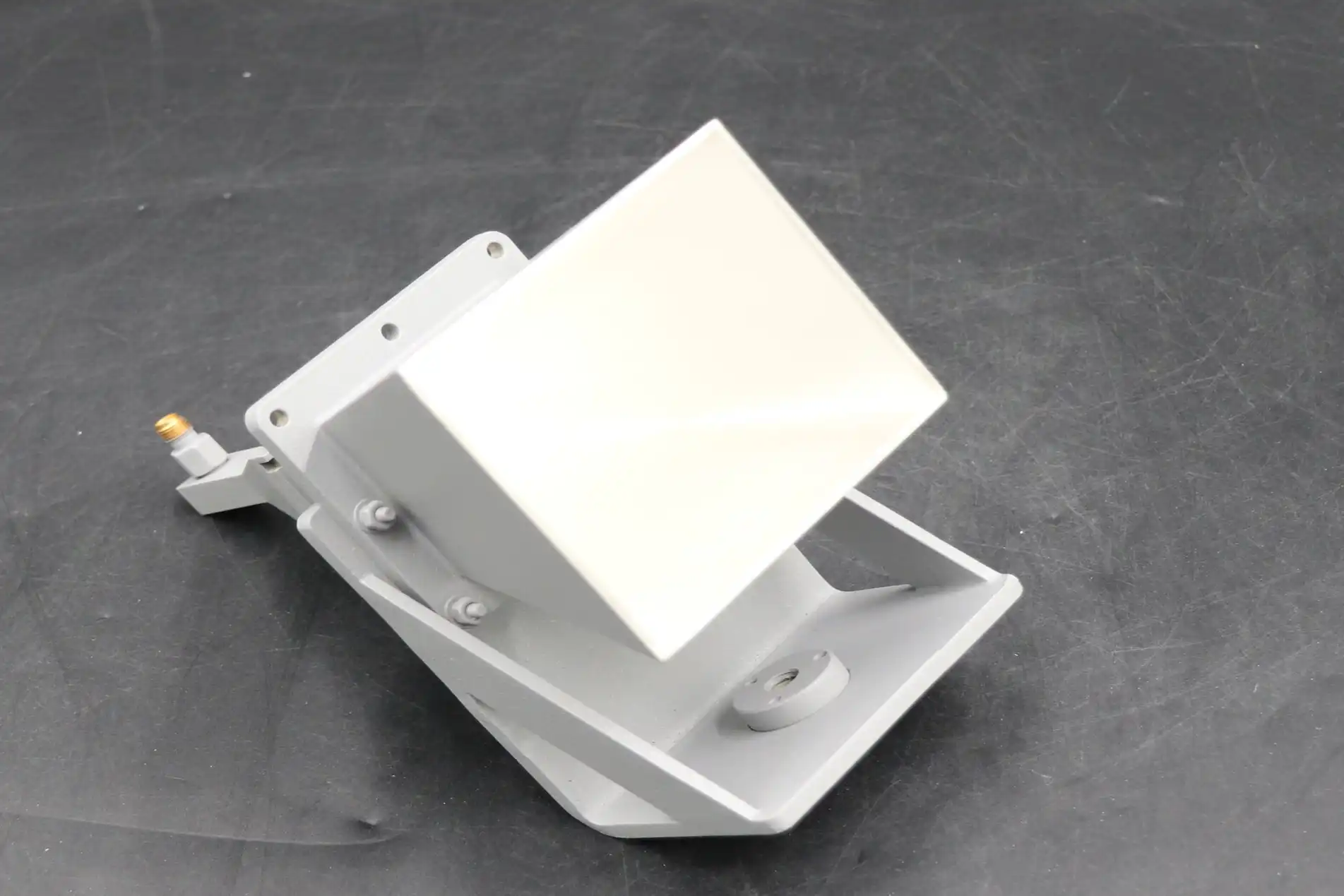
The Wideband Double-ridged Horn Antenna represents a significant advancement in antenna design specifically engineered to meet the demanding requirements of research and development environments. Unlike conventional horn antennas that typically achieve bandwidth ratios limited to 2:1 or 3:1, the innovative double-ridged configuration introduces metallic ridges within the horn structure that function as impedance transformers. These ridges create a unique electromagnetic environment enabling signal propagation across an extraordinarily wide frequency spectrum while maintaining consistent impedance matching throughout the operational bandwidth. Research laboratories benefit tremendously from this design because it eliminates the need for frequent antenna changes during multi-frequency testing protocols, thereby reducing measurement uncertainties introduced by switching between different antenna systems and ensuring more reliable comparative data across the entire frequency range under investigation. The electromagnetic principles underlying the Wideband Double-ridged Horn Antenna's performance involve careful geometric optimization of ridge profiles and their precise interaction with the horn's flaring structure. The ridges gradually transition the electromagnetic field from the feeding waveguide to free space, maintaining optimal impedance matching characteristics that result in remarkably low voltage standing wave ratios typically below 2.0 across the entire operational spectrum. For R&D applications requiring precise measurements of antenna gain, radiation patterns, and electromagnetic compatibility parameters, this low VSWR translates directly to minimized power loss and enhanced measurement accuracy. Research institutions conducting antenna pattern measurements, electromagnetic interference testing, and wireless system characterization find that the consistent performance of Wideband Double-ridged Horn Antennas across such broad frequency ranges enables more comprehensive analysis while significantly reducing both testing time and associated costs.
Critical Performance Characteristics for R&D Testing Environments
The exceptional frequency response of Wideband Double-ridged Horn Antennas extends from sub-GHz frequencies through millimeter-wave bands, covering the spectrum essential for contemporary wireless research including legacy communication systems, modern cellular networks, radar applications, and emerging 5G and 6G technologies. This comprehensive coverage capability proves invaluable for research programs investigating multi-band wireless systems, frequency-dependent propagation phenomena, and broadband antenna designs. The antenna's ability to maintain stable gain characteristics typically ranging from 8 dBi to 17 dBi across its operational bandwidth ensures that researchers can conduct meaningful comparative measurements at different frequencies without compensating for dramatic variations in antenna performance. The high gain combined with excellent directivity characteristics makes these antennas particularly suitable for far-field antenna measurements, electromagnetic compatibility testing in anechoic chambers, and long-range radar system development where precise signal focusing and minimal side lobe levels are essential for accurate characterization of systems under test.
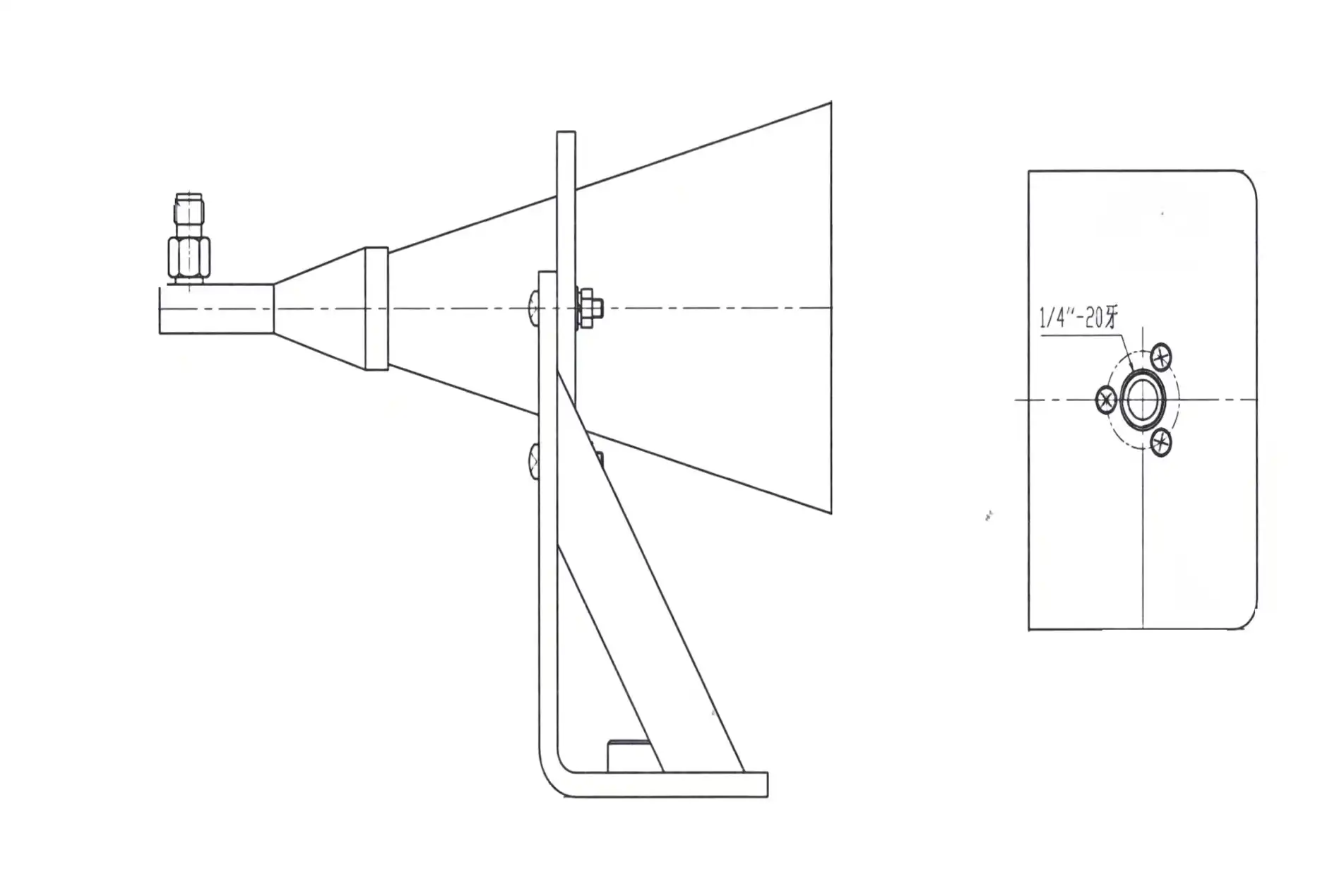
Advanced research facilities equipped with Wideband Double-ridged Horn Antennas benefit from the antenna's linear polarization characteristics, which support precise control of electromagnetic field orientation critical for polarization-dependent studies and cross-polarization measurements. The robust construction typically featuring high-quality aluminum with protective anodized coatings ensures longevity in demanding laboratory environments while maintaining dimensional stability essential for repeatable measurements over extended research programs. The compact and lightweight design facilitates mounting on positioning systems for automated pattern measurements, and the standard connector interfaces such as N-Type female enable seamless integration with existing vector network analyzers, spectrum analyzers, and signal generators commonly deployed in research laboratories. These practical considerations combined with outstanding electrical performance establish the Wideband Double-ridged Horn Antenna as an indispensable tool for R&D professionals pursuing cutting-edge developments in wireless communications, radar technology, electromagnetic compatibility, and antenna engineering.
Accelerating Research Timelines Through Multi-Frequency Measurement Capabilities
Research and development projects in telecommunications, aerospace, and defense sectors increasingly require comprehensive testing across multiple frequency bands to validate system performance under diverse operating conditions. Traditional approaches necessitating separate antennas for different frequency ranges introduce significant complications including repeated calibration procedures, mechanical reconfiguration time, and potential measurement inconsistencies arising from using different antenna patterns and gain characteristics at various test frequencies. The Wideband Double-ridged Horn Antenna fundamentally transforms this paradigm by enabling continuous frequency sweep measurements from below 1 GHz through millimeter-wave frequencies without any physical equipment changes. This capability dramatically accelerates research timelines because engineers can execute complete multi-frequency characterization studies in single test sessions rather than scheduling multiple separate testing periods with different equipment configurations. The time savings compound when conducting iterative design optimization where researchers need to evaluate performance modifications across the full operational spectrum repeatedly throughout the development cycle.
Streamlining Antenna Characterization and Pattern Measurement Studies
Antenna measurement facilities conducting precise gain measurements, radiation pattern analysis, and polarization characterization across broad frequency ranges represent prime applications where Wideband Double-ridged Horn Antennas deliver exceptional value. When these antennas serve as reference standards or test sources in anechoic chamber measurements, their consistent performance characteristics eliminate variables associated with changing reference antennas during multi-frequency testing sequences. Research programs evaluating novel antenna designs for wideband applications benefit particularly because the stable, well-characterized radiation patterns of double-ridged horn antennas across their operational bandwidth provide reliable benchmarks against which to compare experimental antenna performance. The low voltage standing wave ratio maintained throughout the frequency range ensures that reflected power remains minimal, improving measurement accuracy especially when conducting sensitive gain comparison tests or evaluating antennas with moderate efficiency where small measurement errors could significantly impact results interpretation.
Advanced antenna measurement systems incorporating Wideband Double-ridged Horn Antennas enable researchers to conduct sophisticated near-field to far-field transformations across wide frequency spans, supporting comprehensive electromagnetic characterization of complex antenna arrays and reflector systems. The antenna's predictable phase center stability across frequency proves crucial for accurate range measurements and precise positioning in compact antenna test ranges. Research institutions investigating millimeter-wave propagation phenomena for next-generation wireless systems leverage these antennas to conduct detailed channel sounding experiments, measuring multipath characteristics, path loss exponents, and angular spread parameters across the frequency bands allocated for 5G millimeter-wave services and anticipated 6G spectrum. The ability to characterize propagation environments continuously from microwave through millimeter-wave frequencies using a single antenna system yields more cohesive datasets enabling better understanding of frequency-dependent propagation mechanisms essential for optimizing future wireless network architectures.
Electromagnetic Compatibility Testing and Regulatory Compliance Research
Electromagnetic compatibility research laboratories conducting emissions testing, immunity evaluations, and radiated susceptibility assessments rely heavily on broadband antennas capable of covering the frequency ranges specified in international EMC standards. The Wideband Double-ridged Horn Antenna addresses this requirement comprehensively, spanning the frequencies typically required for commercial, military, and aerospace EMC testing protocols. EMC test engineers appreciate that maintaining a single calibrated antenna system throughout testing procedures eliminates potential errors introduced when switching between multiple antennas and reduces the complexity of measurement uncertainty calculations required for accredited test laboratory operations. The antenna's ability to handle significant power levels, often up to 200 watts, makes it suitable for both emissions measurements where it receives radiated signals from equipment under test and immunity testing where it must transmit electromagnetic fields to evaluate device susceptibility to external interference.
Supporting Advanced EMC Research and Standard Development
Research organizations contributing to the development and refinement of electromagnetic compatibility standards benefit from the comprehensive frequency coverage and excellent measurement repeatability offered by Wideband Double-ridged Horn Antennas. When investigating emerging EMC challenges associated with new wireless technologies, electric vehicles, or densely integrated electronic systems, researchers need reliable measurement tools that perform consistently across the broad frequency ranges where potential interference issues may manifest. The double-ridged horn design's inherent stability and predictable characteristics enable research teams to establish robust baseline measurements and conduct comparative studies evaluating the effectiveness of various shielding approaches, filtering techniques, and grounding strategies across wide frequency spans. This comprehensive frequency coverage proves particularly valuable when characterizing broadband noise sources or evaluating the spectral signatures of complex digital systems where emissions may extend across multiple frequency decades requiring investigation.
Universities and research institutes conducting fundamental studies in antenna theory and electromagnetic wave propagation utilize Wideband Double-ridged Horn Antennas as educational tools and research instruments. Graduate students learning antenna measurement techniques benefit from working with professional-grade equipment exhibiting the performance characteristics and operational bandwidth representative of industrial applications they will encounter in their careers. Research programs exploring novel materials for electromagnetic applications, investigating metamaterial structures, or developing advanced beamforming concepts require reliable reference antennas with well-characterized performance across broad frequency ranges to validate theoretical predictions and simulation results. The Wideband Double-ridged Horn Antenna serves this purpose excellently, providing the stable, documented performance necessary for rigorous scientific investigation while offering the practical robustness required for repeated use in academic laboratory environments where equipment must withstand frequent handling by multiple users.
Cost Efficiency and Laboratory Space Optimization for R&D Facilities
Budget-conscious research programs recognize that Wideband Double-ridged Horn Antennas deliver exceptional value by consolidating the functionality of multiple specialized antennas into a single versatile instrument. The capital cost savings from purchasing one high-performance wideband antenna instead of several narrow-band alternatives represent only the initial financial benefit. Ongoing operational cost reductions emerge from simplified calibration requirements because maintaining calibration for a single antenna system costs significantly less than managing separate calibration schedules for multiple antennas each requiring periodic verification against traceable standards. Research laboratories with limited physical space particularly appreciate the footprint reduction achieved by deploying wideband antennas that eliminate the need for storing multiple bulky antenna systems. In compact antenna test ranges or university research facilities where laboratory space commands premium value, this space optimization translates to tangible operational advantages enabling more efficient utilization of available measurement environments.
Enhancing Measurement Flexibility and Experimental Versatility
The versatility inherent in Wideband Double-ridged Horn Antenna systems extends beyond simple frequency coverage to encompass adaptability across diverse measurement scenarios and experimental configurations. Research teams investigating radar systems benefit from using these antennas for both transmit and receive functions in monostatic or bistatic radar configurations, testing target detection algorithms, evaluating clutter rejection techniques, and characterizing doppler processing capabilities across operational frequency bands. Wireless communication researchers employ Wideband Double-ridged Horn Antennas in channel sounding experiments, propagation measurement campaigns, and over-the-air testing of communication devices where the antenna's broad bandwidth enables comprehensive characterization of frequency-dependent channel behaviors. The stable radiation patterns and consistent gain characteristics facilitate meaningful comparison of measurement results obtained at different frequencies, supporting research conclusions about spectral efficiency trends, capacity variations, and optimal frequency selection for specific deployment scenarios.
Satellite communication research programs leveraging Wideband Double-ridged Horn Antennas for ground station antenna testing and feed system evaluation appreciate the antenna's ability to cover multiple satellite communication bands including L-band, S-band, C-band, X-band, Ku-band, and Ka-band frequencies within a single antenna system. This comprehensive coverage supports research into multi-band satellite terminals, frequency-agile communication systems, and adaptive modulation techniques that adjust operating parameters based on link conditions across different frequency allocations. Defense research organizations developing electronic warfare systems, signals intelligence platforms, and spectrum monitoring capabilities require antennas with exceptional instantaneous bandwidth and consistent performance across the frequencies of interest. The Wideband Double-ridged Horn Antenna meets these demanding requirements while providing the reliability and repeatability essential for developing and validating sophisticated signal processing algorithms that must operate effectively across wide frequency ranges in operationally relevant scenarios.
Integration with Advanced Measurement Systems and Automated Test Equipment
Modern research and development facilities increasingly deploy automated measurement systems that execute complex test sequences without continuous operator intervention, improving measurement throughput and enhancing repeatability by eliminating operator-dependent variables. Wideband Double-ridged Horn Antennas integrate seamlessly into these automated test environments through standard RF connectors compatible with automated switching matrices and their mechanically stable construction suitable for robotic positioning systems. Research laboratories conducting overnight measurement campaigns or executing extensive parametric studies benefit tremendously from antenna systems that maintain stable performance characteristics throughout extended automated test sequences. The reliable performance of double-ridged horn antennas across temperature variations and mechanical repositioning cycles ensures that automated measurements yield consistent results even when test programs span multiple hours or days without operator oversight.
Supporting Cutting-Edge Research in Emerging Wireless Technologies
As research institutions worldwide investigate next-generation wireless technologies including 6G systems, terahertz communications, and advanced radar concepts, the demand for versatile broadband measurement tools continues intensifying. Wideband Double-ridged Horn Antennas positioned at the intersection of proven performance and forward-looking capability serve as essential instruments for laboratories pushing the boundaries of wireless technology. Research programs exploring massive MIMO architectures, reconfigurable intelligent surfaces, and distributed antenna systems leverage these antennas for over-the-air testing that characterizes system-level performance under realistic propagation conditions. The ability to conduct measurements continuously across wide frequency ranges enables researchers to identify frequency-dependent phenomena that might be overlooked when testing only at discrete frequency points, leading to more comprehensive understanding of complex system behaviors and more robust design solutions capable of delivering reliable performance across their intended operational spectrum. Collaborative research initiatives bringing together academic institutions, industry partners, and government laboratories benefit from the standardization enabled by widely adopted measurement tools like Wideband Double-ridged Horn Antennas. When multiple research sites employ similar antenna systems for their measurement programs, the resulting data exhibits better comparability facilitating more effective collaboration and enabling meta-analyses combining results from different research groups. This standardization advantage proves particularly valuable in large-scale research programs investigating fundamental wireless propagation phenomena or evaluating the performance of candidate technologies for future standardization where consistency across multiple independent verification studies strengthens confidence in research findings and accelerates technology maturation toward practical deployment.
Conclusion
Wideband Double-ridged Horn Antennas deliver transformative benefits for R&D applications through exceptional frequency coverage, measurement reliability, and operational efficiency that accelerate research timelines while reducing costs.
Cooperate with Advanced Microwave Technologies Co., Ltd.
Partner with Advanced Microwave Technologies Co., Ltd., your trusted China Wideband Double-ridged Horn Antenna manufacturer, supplier, and factory offering High Quality Wideband Double-ridged Horn Antenna solutions at competitive prices. With over 20 years of expertise, ISO certifications, and a state-of-the-art 24m Microwave Darkroom capable of testing up to 110 GHz, we deliver China Wideband Double-ridged Horn Antenna wholesale options and custom OEM services including tailored frequency ranges, specialized designs, and rapid prototyping. Our Wideband Double-ridged Horn Antenna for sale combines superior performance with comprehensive technical support. Contact craig@admicrowave.com today to discuss your project requirements and discover how our engineering excellence can elevate your research capabilities.
References
1. Jacobs, J. P., & van Rooyen, M. "Wideband 0.5–50 GHz Double-Ridged Guide Horn Antenna Using Coaxial-to-Ridge Waveguide Launcher." IET Microwaves, Antennas & Propagation, 2024.
2. Ghorbani, A., & Khaleghi, A. "Double Ridged Horn Antenna Designs for Wideband Applications." IEEE International Conference on Ultra-Wideband, 2011.
3. Mallahzadeh, A., & Karshenas, F. "A Novel Dual-Polarized Double-Ridged Horn Antenna for Wideband Applications." Progress in Electromagnetics Research B, 2008.
4. Demirel, S., Çalışkan, A., Mersin, M. T., Türk, A. S., Belen, M. A., & Mahouti, P. "The Comparison of the Characteristics of the Double-Ridged Horn Antennas Depending the Geometry of Ridge Profiles for Wideband Application." IEEE Conference Publication, 2017.
5. Bellizzi, G., Bevacqua, M. T., Crocco, L., & Isernia, T. "A Compact Double-Ridged Horn Antenna for Ultra-Wide Band Microwave Imaging." IEEE Transactions on Antennas and Propagation, 2021.