





Advantages of Dual‑Mode Antenna Near Field Measurement Probe
When antenna engineers face the challenge of achieving both electric and magnetic field measurements with a single probe while maintaining measurement accuracy and reducing testing time, the solution lies in understanding the transformative benefits of dual-mode technology. Dual-mode Antenna Near Field Measurement Probes eliminate the need for multiple measurement setups by simultaneously capturing both polarization components, delivering comprehensive electromagnetic characterization in half the time traditional methods require.
Understanding Dual-Mode Antenna Near Field Measurement Probe Technology
The evolution of antenna testing has brought dual-mode capabilities to the forefront of near-field measurement systems. An Antenna Near Field Measurement Probe serves as the critical sensing element that captures electromagnetic field distribution around the antenna under test. Advanced Microwave offers Antenna Near Field Measurement Probe as key equipment in various near-field measurement systems such as antenna planar near-field, cylindrical near-field, spherical near-field, and time-domain near-field configurations. Traditional single-mode probes require separate measurements for electric and magnetic field components, doubling the measurement time and potentially introducing alignment errors between successive scans. Dual-mode probes revolutionize this process by incorporating both electric and magnetic sensing capabilities within a single compact unit, enabling simultaneous dual-polarization measurements that significantly enhance measurement efficiency. The technical foundation of dual-mode probe design centers on sophisticated antenna engineering that integrates orthogonal sensing elements within minimal physical space. These probes typically feature an ortho-mode transducer configuration that separates the two polarization components with exceptional port isolation, often exceeding 40 decibels across the operational frequency range. This high level of isolation is essential for preventing cross-polarization contamination that would otherwise compromise measurement accuracy. The probe's receiving characteristics must be precisely calibrated and mathematically characterized to enable accurate probe correction algorithms during the near-field to far-field transformation process. At Advanced Microwave Technologies Co., Ltd., we engineer our Antenna Near Field Measurement Probe solutions with meticulous attention to these critical design parameters, ensuring that each probe delivers consistent, traceable measurement results across the full frequency spectrum from 10 MHz to 110 GHz.
Enhanced Measurement Efficiency Through Simultaneous Data Acquisition
The primary advantage of dual-mode Antenna Near Field Measurement Probe technology manifests in dramatically reduced measurement time. Traditional antenna characterization requires sequential measurements with the probe oriented in two orthogonal polarizations, effectively doubling the scan time and the associated computational overhead. Dual-mode probes eliminate this redundancy by capturing both polarization states simultaneously during a single scan pass. For large antenna arrays or electrically substantial antennas where scan times can extend to hours, this time reduction translates directly to enhanced laboratory productivity and faster product development cycles. The simultaneous acquisition also minimizes environmental variations between measurements since both polarization components are captured under identical temperature, humidity, and electromagnetic conditions. Beyond time savings, simultaneous measurement offers superior phase coherence between polarization components. When measuring antenna characteristics such as axial ratio, cross-polarization discrimination, or polarization purity, the relative phase relationship between orthogonal polarization components carries critical information. Sequential measurements with probe repositioning introduce potential phase uncertainties that dual-mode systems inherently avoid. This phase stability proves particularly valuable when characterizing circularly polarized antennas, dual-polarized communications antennas, or radar systems where polarization agility forms an essential performance metric. Our high-quality Antenna Near Field Measurement Probe systems maintain phase accuracy within ±0.5% across the entire measurement domain, ensuring that polarization-dependent characteristics are captured with exceptional fidelity.

Superior Accuracy in Cross-Polarization Characterization
Cross-polarization performance represents a critical specification for modern antenna systems, particularly in satellite communications, radar applications, and wireless telecommunications where signal isolation between orthogonal channels directly impacts system capacity and interference rejection. Dual-mode Antenna Near Field Measurement Probe technology excels at measuring cross-polarization characteristics because both co-polarized and cross-polarized field components are captured simultaneously with the same probe positioning and environmental conditions. This eliminates systematic errors that can arise from mechanical repositioning uncertainty or temporal variations in the measurement environment. The measurement accuracy of cross-polarization discrimination depends heavily on the probe's own cross-polarization characteristics and the quality of its ortho-mode transducer. Advanced Microwave Technologies designs our probes with high-durability composites and precision manufacturing techniques that achieve cross-polarization levels better than -40 decibels across standard waveguide bands. This exceptional isolation ensures that measured cross-polarization data accurately reflects the antenna under test rather than probe imperfections. The probe correction algorithms employed in near-field to far-field transformations can mathematically compensate for known probe patterns, but this correction works most effectively when the probe itself exhibits clean, well-characterized radiation patterns with minimal cross-coupling between polarization ports.
Cost-Effectiveness and Operational Benefits of Dual-Mode Systems
Implementing dual-mode Antenna Near Field Measurement Probe technology delivers substantial economic advantages beyond the obvious time savings in measurement operations. The capital equipment investment perspective reveals that a single dual-mode probe system can replace two separate single-polarization measurement configurations, reducing the total hardware cost, calibration overhead, and maintenance burden. Laboratory space utilization improves since the measurement system footprint remains unchanged while measurement capability effectively doubles. For organizations conducting high-volume antenna testing or operating multiple test chambers, these infrastructure efficiencies compound into significant cost reductions. Operational cost analysis demonstrates that reduced measurement time directly translates to lower cost per test, enabling more thorough characterization within project budgets. Engineers can allocate the time saved toward additional measurement frequencies, finer spatial sampling, or more comprehensive pattern cuts without extending project schedules. The enhanced measurement throughput also accelerates product development iterations, allowing design teams to evaluate more antenna variations and converge on optimal solutions faster. Advanced Microwave Technologies Co., Ltd. provides customizable Antenna Near Field Measurement Probe solutions tailored to specific frequency ranges, size constraints, and material requirements, ensuring that each customer receives the most cost-efficient configuration for their particular application needs.
Reduced Calibration and Maintenance Requirements
Dual-mode probe systems simplify the calibration workflow compared to maintaining two separate single-polarization measurement setups. Probe calibration constitutes a time-intensive process requiring specialized reference antennas, precise positioning, and rigorous measurement protocols to characterize the probe's receiving pattern across all angles and frequencies. With dual-mode probes, a single calibration procedure characterizes both polarization channels simultaneously, reducing the calibration time by approximately 40% compared to sequential single-polarization probe calibrations. The calibration data remains valid for both measurement channels, and any environmental corrections or drift compensations apply uniformly to both polarizations. Maintenance considerations also favor dual-mode implementations because the system contains fewer mechanical components subject to wear and repositioning mechanisms that require periodic adjustment. Single-polarization measurement systems often employ motorized probe rotation mechanisms to switch between polarization orientations, introducing additional mechanical complexity and potential failure points. Dual-mode systems eliminate these motorized rotations, resulting in higher system reliability and reduced maintenance downtime. At Advanced Microwave Technologies Co., Ltd., all our Antenna Near Field Measurement Probe products arrive pre-calibrated with traceable measurement standards and comprehensive documentation, ensuring immediate operational readiness and compliance with ISO 9001:2008 and RoHS requirements.
Application-Specific Advantages Across Industries
The versatility of dual-mode Antenna Near Field Measurement Probe technology serves diverse industry sectors where antenna characterization demands both efficiency and precision. In satellite communications, where antenna performance directly impacts link budgets and service quality, dual-mode probes enable comprehensive characterization of Earth station antennas, satellite payload antennas, and ground terminal designs. The ability to measure both linear polarizations simultaneously proves essential for verifying frequency reuse schemes that depend on orthogonal polarization discrimination to double channel capacity within the same frequency allocation. Aerospace and defense applications leverage dual-mode measurement capabilities to characterize radar antennas, electronic warfare systems, and navigation equipment where polarization diversity enhances target detection and reduces multipath effects. Military antenna specifications frequently require stringent cross-polarization isolation to prevent jamming vulnerabilities and ensure reliable communication in contested electromagnetic environments. The measurement accuracy provided by quality Antenna Near Field Measurement Probe systems enables verification of these demanding specifications within realistic test timelines. Our 24-meter Microwave Darkroom facility at Advanced Microwave Technologies provides an ideal controlled environment for these critical measurements, with advanced equipment supporting frequencies up to 110 GHz and the ability to seamlessly transition between near-field and far-field characterization modes.
Telecommunications and 5G Network Deployment
The telecommunications industry faces unprecedented antenna testing demands driven by 5G network deployment and the proliferation of massive MIMO base station antennas incorporating hundreds of radiating elements. These complex antenna systems require comprehensive characterization to verify beamforming performance, spatial multiplexing capabilities, and coverage patterns. Dual-mode Antenna Near Field Measurement Probe technology proves indispensable for efficiently testing these electrically large arrays where measurement time becomes a primary bottleneck. The simultaneous dual-polarization measurement capability reduces test time per antenna by 50%, enabling manufacturers to meet production testing requirements while maintaining thorough quality verification. Beyond base station antennas, the proliferation of user equipment incorporating multi-antenna systems for MIMO operation creates additional measurement demands. Smartphone antenna testing, tablet device characterization, and IoT module verification all benefit from efficient dual-mode measurement approaches that can rapidly characterize antenna performance across multiple frequency bands. Advanced Microwave Technologies serves as a China Antenna Near Field Measurement Probe manufacturer, China Antenna Near Field Measurement Probe supplier, and China Antenna Near Field Measurement Probe factory, providing wholesale Antenna Near Field Measurement Probe solutions with competitive price structures that support high-volume production testing requirements while delivering High Quality Antenna Near Field Measurement Probe performance.

Technical Implementation and System Integration
Successfully implementing dual-mode Antenna Near Field Measurement Probe technology requires careful attention to system integration considerations that ensure optimal measurement accuracy and operational reliability. The probe itself represents only one component within a complete near-field measurement system that includes precision positioning equipment, microwave receiver hardware, data acquisition software, and near-field to far-field transformation algorithms. Each component must be properly specified and configured to work harmoniously with the dual-mode probe and fully leverage its simultaneous measurement capabilities. Receiver architecture considerations prove particularly important because dual-mode operation requires simultaneous signal acquisition from both polarization ports. Modern vector network analyzers and specialized near-field receivers incorporate dual-channel configurations that can measure amplitude and phase on both channels with synchronized local oscillators, ensuring phase coherence between measurements. The dynamic range requirements for each channel must accommodate the full range of antenna pattern variations, from mainbeam peak levels to sidelobe minima that may span 60 decibels or more. Calibration procedures must account for any channel-to-channel differences in receiver characteristics to maintain measurement accuracy across both polarizations.
Probe Correction and Data Processing Algorithms
The mathematical framework underlying near-field to far-field transformations incorporates probe correction algorithms that compensate for the receiving characteristics of the Antenna Near Field Measurement Probe. For dual-mode probes, these algorithms must accurately model both polarization channels and their mutual coupling characteristics to extract the true field distribution radiated by the antenna under test. The probe's scattering matrix parameters, measured during calibration, provide the necessary information to mathematically remove probe effects from the raw measurement data through matrix operations applied during the transformation process. Advanced probe correction techniques can accommodate probes with complex radiation patterns, including higher-order mode content beyond the fundamental azimuthal modes. Our sophisticated algorithms implement iterative correction procedures that progressively refine the solution by accounting for probe pattern details and measurement surface truncation effects. These advanced techniques prove particularly valuable when measuring electrically large antennas or when the measurement distance cannot be increased sufficiently to minimize probe coupling effects. At Advanced Microwave Technologies Co., Ltd., we provide comprehensive technical support including algorithm implementation guidance, measurement system optimization recommendations, and troubleshooting assistance to ensure customers achieve optimal results from their Antenna Near Field Measurement Probe installations.
Conclusion
Dual-mode Antenna Near Field Measurement Probe technology delivers transformative advantages through simultaneous dual-polarization acquisition, reducing measurement time by 50% while enhancing cross-polarization characterization accuracy and simplifying calibration requirements across satellite communications, aerospace defense, telecommunications, and research applications.
Cooperate with Advanced Microwave Technologies Co., Ltd.
Partner with Advanced Microwave Technologies Co., Ltd., a leading China Antenna Near Field Measurement Probe manufacturer, China Antenna Near Field Measurement Probe supplier, and China Antenna Near Field Measurement Probe factory offering competitive wholesale Antenna Near Field Measurement Probe solutions with exceptional price advantages. With over 20 years of microwave expertise, our ISO 9001:2008 certified facilities deliver High Quality Antenna Near Field Measurement Probe systems featuring 10 MHz to 110 GHz frequency coverage, ±0.5% measurement accuracy, and customizable configurations. Our Antenna Near Field Measurement Probe for sale includes comprehensive OEM services, rapid prototyping, and expert technical support. Contact us at craig@admicrowave.com to discuss your specific requirements and discover how our perfect supply chain system, professional R&D team, and strong after-sales capability can accelerate your antenna development projects. Bookmark this page for future reference when antenna measurement challenges arise.
References
1. Yaghjian, A. D. "An Overview of Near-Field Antenna Measurements." IEEE Transactions on Antennas and Propagation, Institute of Electrical and Electronics Engineers.
2. Hansen, J. E. "Spherical Near-Field Antenna Measurements." IET Electromagnetic Waves Series, Institution of Engineering and Technology.
3. Joy, E. B. and Paris, D. T. "Spatial Sampling and Filtering in Near-Field Measurements." IEEE Transactions on Antennas and Propagation, Institute of Electrical and Electronics Engineers.
4. Gregson, S. F., McCormick, J., and Parini, C. G. "Principles of Planar Near-Field Antenna Measurements." IET Electromagnetic Waves Series, Institution of Engineering and Technology.
5. Arboleya, A., Alvarez, Y., and Las-Heras, F. "Millimeter and Submillimeter Wave Near-Field Antenna Measurement Systems." IEEE Antennas and Propagation Magazine, Institute of Electrical and Electronics Engineers.
YOU MAY LIKE
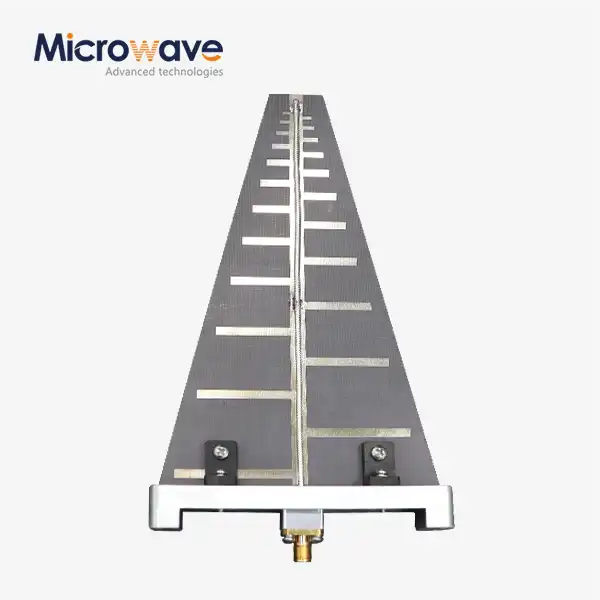 VIEW MORELog Periodic Antenna
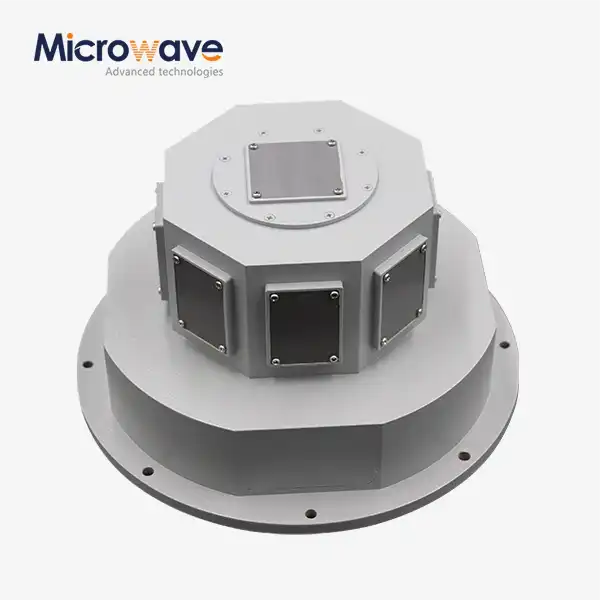 VIEW MORESlotted Waveguide Array Antenna
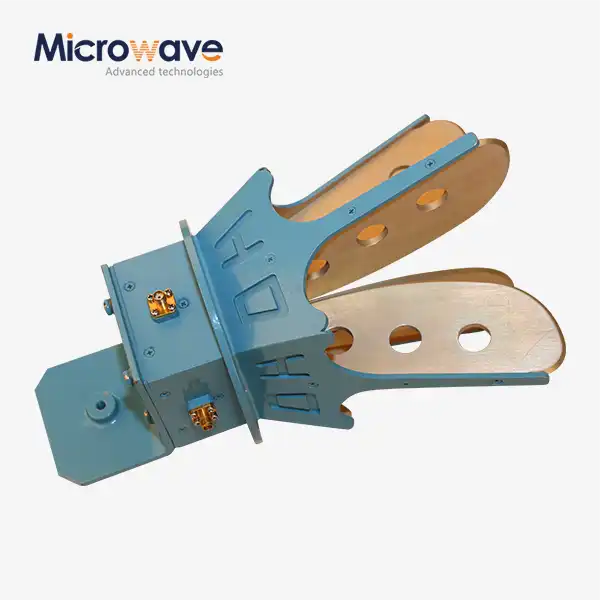 VIEW MOREOpen Boundary Dual Linear Polarization Four Ridged Horn Antenna
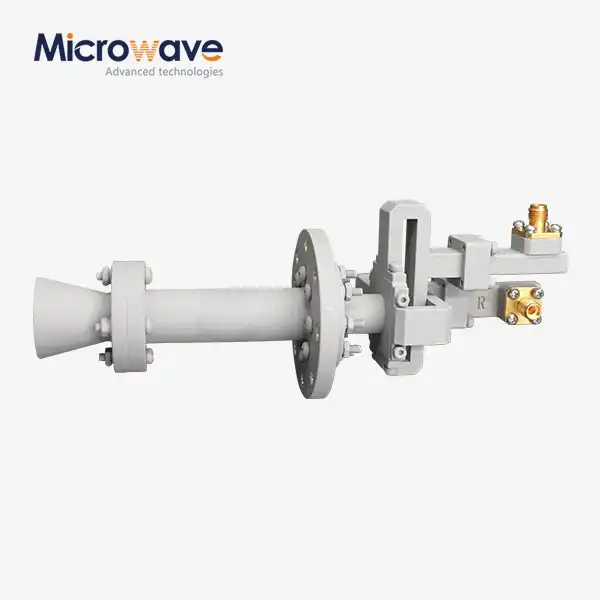 VIEW MOREConical Dual circular Polarization Horn Antenna
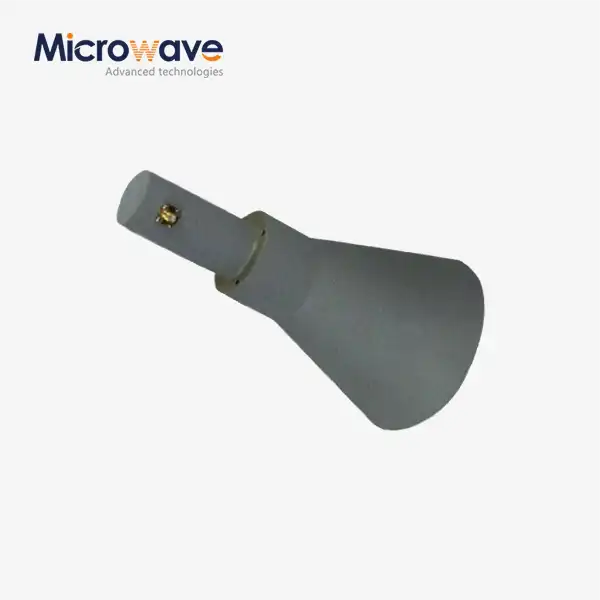 VIEW MORELadder Membrane Conical Dual circular Polarization Horn Antenna
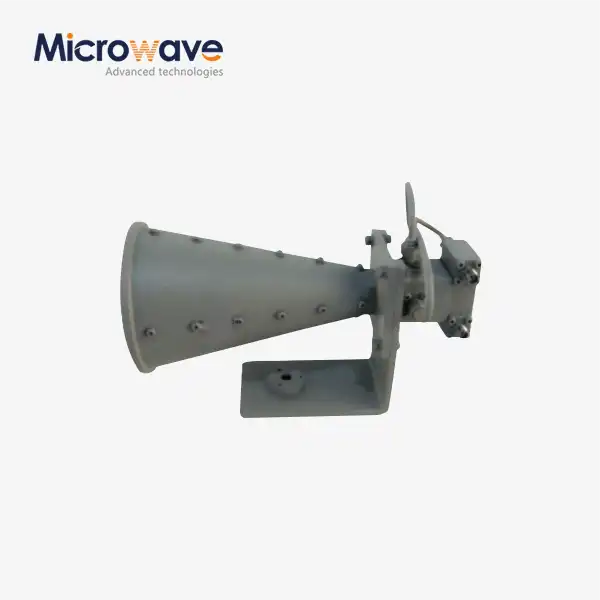 VIEW MOREDual Linear Broadband Dual Circular Polarization Horn Antenna
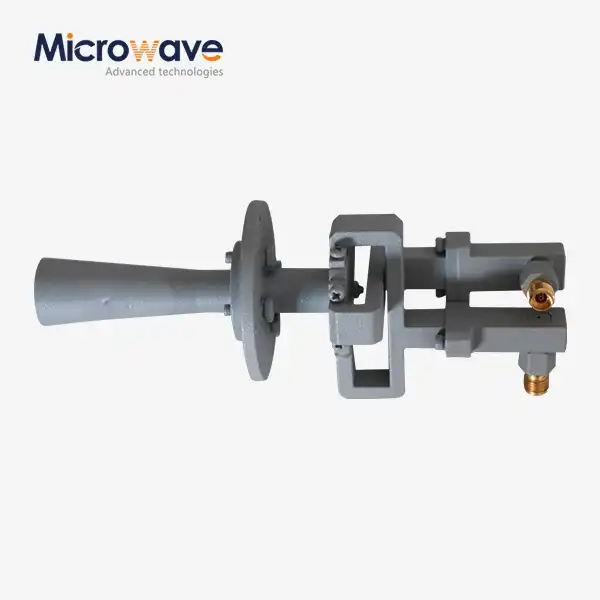 VIEW MOREConical Linear Polarization Horn Antenna
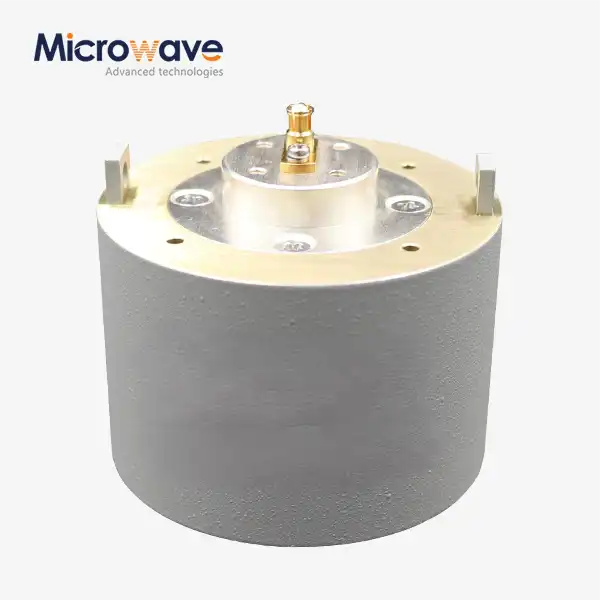 VIEW MOREPlanar Spiral Antenna