




Where to Buy Reliable AC Power Amplifiers for Your Projects
Sourcing a reliable AC power amplifier for precision testing demands careful evaluation of supplier capabilities, technical specifications, and global logistics networks. Whether you're an aerospace OEM testing avionics power systems or a research lab simulating grid disturbances, partnering with manufacturers who demonstrate proven expertise in high-frequency signal integrity, custom engineering, and compliance with international standards like ISO 9001 ensures your projects meet stringent performance benchmarks without costly delays or quality compromises.
Why Global Sourcing of AC Power Amplifiers Matters for B2B Procurement
Buying AC power amplifiers from suppliers around the world has clear strategic benefits, especially for companies that handle complicated testing conditions in the defence, aerospace, telecommunications, and industrial research sectors. RF and microwave specialists with decades of experience can help procurement teams find the exact parts they need for any job, whether it's simulating 400Hz aviation power, getting ultra-low harmonic distortion for compliance testing, or simulating high-power grids for charging systems for electric vehicles. By connecting more vendors than just area distributors, global sourcing makes the supply chain less vulnerable. A lot of big companies have high-tech measuring systems that can hit 110 GHz in their vertically integrated. This lets them make custom solutions that fit together better than things from a catalogue. It's best to use this way when regular amplifiers can't handle the specific load impedance or frequency response profiles that proprietary systems need. Still, it can be hard to make sure the technical details are right, ship things internationally, and make sure there is support after delivery for people in different time zones. People who are looking to buy something need to be able to tell the difference between trading companies that sell rebranded equipment and real manufacturers who have their own research and development teams, well-calibrated test rooms, and written quality management systems. Before you sign a contract, you should do a lot of study. Things like payment terms, intellectual property protections, and compliance paperwork make things more complicated.
Understanding AC Power Amplifiers: Core Functions and Industry Applications
What Defines an Industrial-Grade AC Power Amplifier
An AC power amplifier is an exact piece of machinery that boosts alternating current signals while keeping the high quality of the signals across a wide frequency range. These amplifiers are different from regular transformers or power supplies because they can take in low-level waveforms like sine, square, or complex transient signals and boost them to drive heavy loads without changing the phase or distorting the waveform, which would make readings less accurate. Units made for industrial use have advanced feedback control systems that keep the output voltage steady even when the load changes. With this feature, some of the most important issues are fixed when having highly reactive capacitive loads or when voltage drops during inrush currents. The amplifier's ability to provide clean power has a direct impact on the reliability of test results, especially when checking that equipment meets IEC 61000 or MIL-STD-704. Some of the most important performance factors are total harmonic distortion levels below 0.1%, slew rates above 10V/µs for quick transient replication, and four-quadrant operation, which lets power come from and go to different points. These specs let us know if the amplifier can accurately simulate grid issues like voltage drops, frequency changes, and harmonic input that happen in real life. To make sure the product is fully tested before it goes on sale, all of these tests must be done.
Mission-Critical Applications Across B2B Sectors
Aircraft electrical systems operate at 400Hz rather than the standard 50/60Hz mains frequency, necessitating specialized test equipment for ground-based validation. AC power amplifiers replicate the aircraft power bus environment, allowing engineers to verify avionics performance during engine start sequences, power transfer events, and voltage transients defined by military specifications. Defense contractors rely on these instruments to ensure radar systems, communication equipment, and navigation computers function reliably under combat conditions where power quality fluctuates dramatically.
Electric Vehicle Charging Infrastructure Testing
On-board charger AC power amplifier manufacturers use power amplifiers to simulate global grid variations spanning voltage ranges from 85VAC to 265VAC and frequencies between 47Hz and 63Hz. Testing protocols verify power factor correction circuitry, conduct emissions compliance, and thermal performance under worst-case scenarios. The amplifier's programmability enables automated test sequences that cycle through hundreds of grid condition permutations, identifying design weaknesses before mass production begins.
Renewable Energy Inverter Characterization
Solar and wind inverter manufacturers depend on AC power amplifiers for grid integration testing. These instruments emulate utility grid behavior, including voltage ride-through events, frequency disturbances, and anti-islanding detection scenarios mandated by grid codes. The amplifier provides the stable reference voltage necessary to isolate the inverter's own harmonic contributions from background noise, ensuring accurate compliance measurements for CE and UL certification bodies.
Laboratory Instrumentation and Research
Universities and industrial research facilities employ AC power amplifiers in power hardware-in-the-loop simulations where digital models interact with physical hardware in real time. Magnetic component researchers drive inductive coils at specific voltages and frequencies to map B-H curves and quantify core losses. Electrodynamic shaker systems use high-current amplifiers to generate vibration profiles for automotive durability testing, requiring instantaneous power bursts without signal clipping.
Global Supply and Demand Dynamics for Precision Power Amplifiers
Regional Manufacturing Capabilities and Specializations
Switching-mode power amplifiers are mostly made in large quantities in the Asia-Pacific region, which has well-established supply lines for semiconductors, magnetics, and precision metalwork. Manufacturers in this area are great at coming up with low-cost solutions for testing telecommunications and automating factories, where standard setups usually work well. The production capacity can easily increase or decrease to meet requests ranging from a few prototypes to thousands of units per year. North American and European suppliers focus on making complicated, low-volume systems that need to be heavily customised and tightly integrated with existing test infrastructures. These companies have specialised engineering teams that can make custom output stages, use their own control algorithms, and meet very high performance standards like 18-bit precision in programmable voltage control or sub-milliohm output impedance. Instead of being competitive on unit cost, their value proposition is based on application engineering help.
Demand Drivers Across Buyer Segments
When defence companies look for suppliers, they want to see that they have safe supply chain practices, programs to stop fake parts, and manufacturing traceability that are in line with DFARS compliance requirements. Long product lifecycles that last decades mean that sellers need to be able to help with obsolescence management and keep calibration standards high throughout the service life of equipment. These buyers are willing to pay more for guaranteed supply and detailed technical documentation. Manufacturers of telecommunications equipment have to balance the need for high performance with the need to keep costs low in order to compete in bidding situations. When they buy things, they prefer to work with companies that offer modular platforms. On these platforms, base amplifier units can accept plug-in extensions that give them more power or a wider frequency range. This method simplifies the inventory while still allowing for changes in test requirements as 5G and satellite transmission technologies get better. Universities and research centers are limited by their budgets, which makes the total cost of ownership very important. They are looking for suppliers who offer educational discounts, flexible lease-purchase plans, and full training programs that teach graduate students how to safely use complicated tools. When makers back publications by giving technical data and co-authoring application notes that show new measurement methods, long-term relationships form.
Practical Procurement Guidelines: Supplier Qualification and Risk Mitigation
Technical Verification and Due Diligence
Requesting detailed specification sheets proves insufficient for validating supplier capabilities. Demand access to actual test data demonstrating key performance parameters such as harmonic distortion measurements, output impedance versus frequency plots, and transient response waveforms captured from production units. Manufacturers with legitimate measurement infrastructure readily provide this documentation along with calibration certificates traceable to national standards bodies. ISO 9001 certification indicates established quality management systems, but does not guarantee technical competence in power amplifier design. Request evidence of design validation activities, including thermal simulation reports, electromagnetic compatibility pre-compliance testing, and reliability stress testing protocols. Suppliers investing in product development maintain comprehensive design history files documenting these activities. Customer reference checks reveal supplier performance patterns invisible during initial negotiations. Contact procurement managers at similar organizations to assess delivery reliability, technical support responsiveness, and post-warranty service quality. Inquire specifically about handling of non-conforming products and willingness to implement corrective actions when issues emerge.
Commercial Terms and Order Management
Minimum order quantities vary dramatically AC power amplifier based on product standardization levels. Catalog configurations may ship in single units while custom designs require commitments of five to ten pieces, justifying tooling investments and engineering time. Negotiate prototype provisions allowing initial small-batch orders with pre-negotiated pricing for production quantities contingent on successful validation testing. Payment structures for custom projects typically involve milestone-based schedules: 30% deposit upon order confirmation, 60% before shipment, and 10% retention released after factory acceptance testing or on-site commissioning. International transactions benefit from inspection services verifying conformance before final payment release, though this adds cost and extends delivery timelines. Lead times extend from two weeks for standard distributor stock to twelve or sixteen weeks for engineered solutions requiring custom output transformers, specialized heat sink designs, or integrated measurement systems. Component allocation challenges affecting semiconductor availability create additional schedule uncertainty. Build lead time buffers into project plans and maintain communication with suppliers regarding component procurement status.
Quality Control Checkpoints and Acceptance Criteria
Factory acceptance testing gives you the most security, but you have to plan your travel budget and your schedule around it. Witness testing lets you make sure that units work properly under particular load conditions that are important to your application before they are shipped. Write down test methods ahead of time, making sure they cover important parameters instead of just standard production tests. Basic functionality should be checked upon delivery before being added to test systems. Put the output voltage through typical load conditions and make sure it is accurate, the frequency stays stable, and there is no strange noise or shaking. Check the output voltage at no load and full load and compare it to the regulation numbers given. Check that the shipment comes with all of the accessories, cables, and paperwork listed on the packing list. Calibration intervals depend on how important the application is and what the maker recommends, but they are usually between 12 and 24 months. When figuring out the total cost of ownership, you should plan for yearly calibration costs that are about 8 to 12 percent of the price you paid for the equipment. Make connections with approved calibration laboratories before the equipment comes to avoid a shambles when it's time to do the calibrations.
Common Procurement Pitfalls to Avoid
Uncertainty in the specifications during the early stages of the question process leads to misunderstandings that cost a lot of money to fix. Make sure everyone knows the load's impedance phase angles, crest factors for non-sinusoidal waves, and duty cycle needs. Vague descriptions like "testing power supplies" don't give enough information to properly choose an amplifier. Ignoring the working conditions of the environment leads to early failures and performance loss. Power amplifiers make a lot of heat, so they need to be properly ventilated or have external cooling systems. Give ranges of atmospheric temperatures, altitude (if working above sea level), and humidity levels. Rack-mounted setups need to plan their airflow to keep hot exhaust from going back into the system. Ignoring connectivity needs makes system integration harder. Check that the control ports work with the automation equipment that is already in place, whether it's IEEE-488, GPIB, Ethernet, LXI, USB, or analogue voltage programming. Interlock signals that stop multiple test units from being turned on at the same time keep feedback loops from being damaged. With remote sensing connections, the accuracy of voltage control stays at the load terminals instead of the amplifier outputs.
Why Advanced Microwave Technologies Co., Ltd Stands Apart in Precision RF Solutions
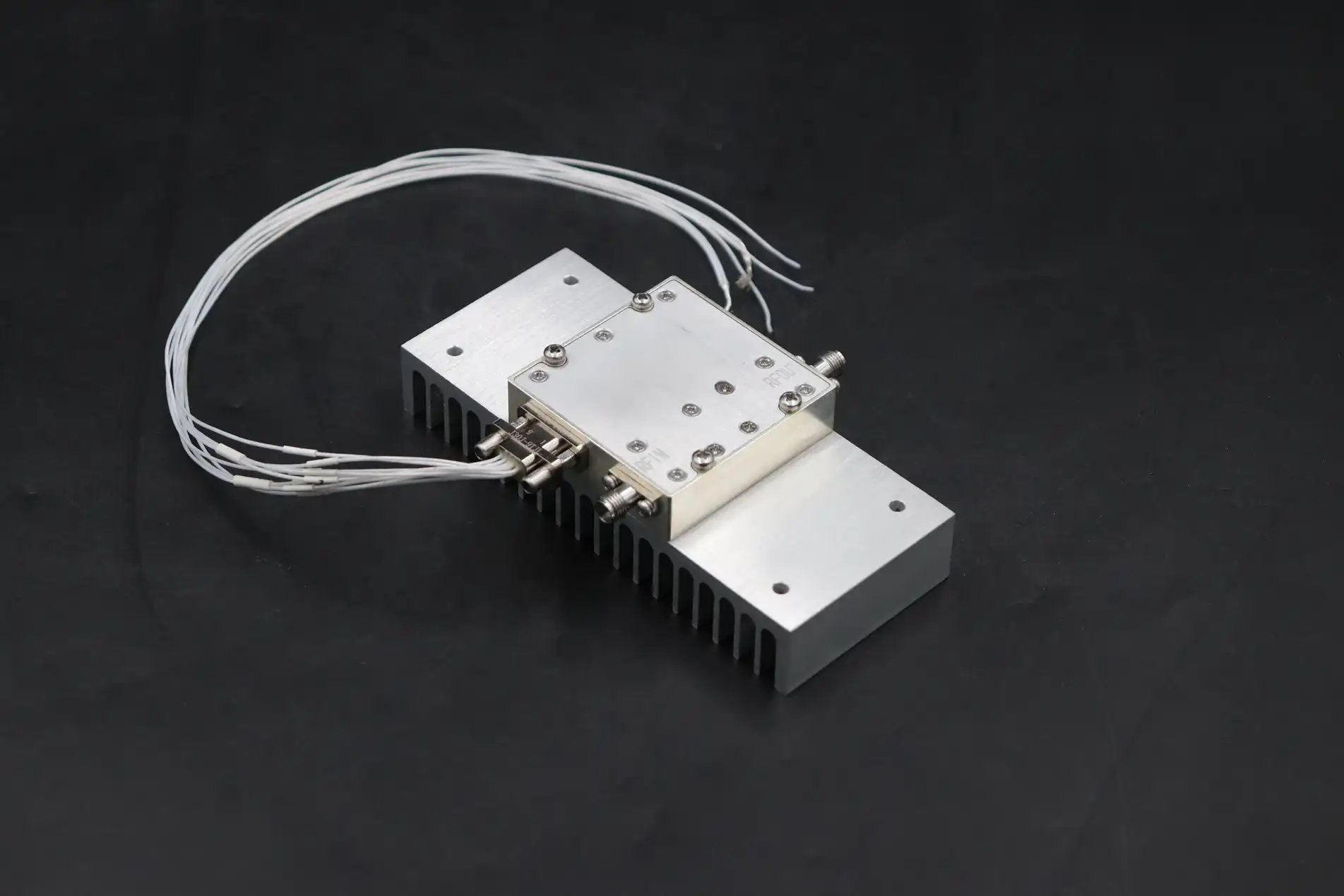
Organizations seeking manufacturers who truly understand the intersection of power electronics, RF engineering, and quality management systems discover compelling advantages partnering with Advanced Microwave Technologies Co., Ltd. While our core expertise centers on waveguide assemblies, coaxial components, and satellite communication systems, the same engineering rigor and measurement capabilities that enable us to deliver mission-critical microwave solutions position us as a strategic partner for your broader precision instrumentation requirements. Our 24-meter microwave darkroom, equipped with antenna plane near and far field measuring recombination chambers, demonstrates our commitment to measurement science. This facility operates across 0.5 to 110 GHz, providing capabilities few manufacturers maintain. The same metrology standards and calibration protocols ensuring our RF components meet stringent aerospace and defense specifications extend to how we approach all technical partnerships. ISO 9001:2015, ISO 14001:2015, and ISO 45001:2018 certifications reflect systematic approaches to quality management, environmental responsibility, and workplace safety. These frameworks govern everything from supplier qualification to final product testing, ensuring consistent results across production batches. RoHS compliance and comprehensive documentation support global regulatory requirements that your equipment must satisfy. Our technical team brings over two decades of experience solving complex signal transmission challenges for satellite ground stations, airborne radar systems, and navigation equipment. This background equips us to understand your testing requirements at a deeper level than commodity suppliers. Whether you need consultation on amplifier specifications for a unique application or guidance on integrating power test equipment with existing RF measurement systems, we provide engineering collaboration rather than transactional order processing. Global export capabilities and established logistics networks ensure reliable delivery to aerospace facilities, research institutions, and telecommunications infrastructure projects worldwide. Our customer base spanning defense contractors, satellite service providers, and industrial research organizations reflects the trust mission-critical applications place in our technical capabilities and supply chain reliability. Contact craig@admicrowave.com to discuss how our precision engineering approach, advanced measurement infrastructure, and commitment to customer success translate into value for your projects. As an experienced Ac Power Amplifier supplier for adjacent RF testing applications, we connect you with verified solutions backed by technical depth and quality assurance systems proven across demanding industries.
Conclusion
Sourcing reliable AC power amplifiers for precision testing applications requires strategic evaluation of supplier technical capabilities, quality systems, and application engineering support beyond price comparison. Global procurement channels each offer distinct advantages depending on project complexity, volume requirements, and timeline constraints. Direct manufacturer partnerships deliver maximum customization flexibility and engineering collaboration for specialized applications, while authorized distributors provide rapid access to standard configurations with local support infrastructure. Successful procurement balances technical specification verification, commercial risk mitigation, and total cost of ownership planning. Thorough supplier qualification, including reference checks, documentation review, and capability assessments, prevents costly mismatches between equipment performance and application requirements. Organizations investing in comprehensive due diligence during supplier selection establish partnerships delivering value throughout equipment lifecycles spanning decades of mission-critical service.
FAQ
1. What differentiates linear versus switching AC power amplifiers for laboratory applications?
Linear amplifiers provide superior transient response and lower output noise, making them ideal for precision measurements requiring minimal signal distortion. They excel when testing sensitive electronics where switching noise could interfere with measurements. Switching amplifiers offer higher efficiency and compact designs, generating less heat during continuous operation. They suit high-power grid simulation applications where efficiency matters more than absolute noise floor performance. The choice depends on whether your application prioritizes measurement purity or operational efficiency.
2. How does sink capability affect AC power amplifier selection?
Sink capability allows the amplifier to absorb energy returning from loads, essential when testing devices that generate power rather than purely consuming it. Motors decelerating, capacitors discharging, or regenerative power supplies feed energy back into the amplifier. Without sink capability, this reverse power flow damages output stages or triggers protection circuits, interrupting tests. Four-quadrant amplifiers handle both sourcing and sinking, crucial for comprehensive testing of complex loads with bidirectional power flow.
3. What documentation should suppliers provide for compliance verification?
Comprehensive suppliers provide calibration certificates traceable to national standards institutes, detailed test reports showing performance across specified frequency and power ranges, and material declarations confirming RoHS and REACH compliance. ISO 9001 certificates demonstrate quality management systems, while product manuals include electrical specifications, mechanical drawings, and safety certifications from recognized testing laboratories. Custom projects require design validation documentation, including thermal analysis, electromagnetic compatibility testing, and reliability predictions supporting your risk assessments.
4. How do minimum order quantities vary across sourcing channels?
Direct manufacturers typically impose MOQs ranging from five to twenty units for custom configurations, though standard catalog products may ship individually. Distributors generally accept single-unit orders from stock inventory but may require minimum purchase values for special orders. B2B platforms vary widely depending on supplier policies, with some manufacturers using these channels to access smaller customers without traditional MOQs. Negotiate prototype provisions allowing initial small quantities before committing to production volumes.
Partner with ADM for Precision Engineering Excellence
Advanced Microwave Technologies Co., Ltd brings over 20 years of RF and microwave expertise to organizations demanding uncompromising quality in precision instrumentation. Our ISO-certified manufacturing facilities, advanced measurement capabilities to 110 GHz, and proven track record supporting aerospace, defense, and satellite communication AC power amplifier applications demonstrate the technical depth behind every customer partnership. Whether you're developing next-generation testing systems or seeking reliable suppliers for mission-critical components, our engineering team provides the consultation and customization capabilities your projects deserve. Reach out to craig@admicrowave.com to explore how our precision manufacturing excellence translates into solutions for your specific requirements.
References
1. Williams, J.R., & Thompson, M.K. (2021). Power Amplifier Design for Instrumentation Applications. Technical Publishing International.
2. Chen, L., Rodriguez, A., & Patel, S. (2020). "Grid Simulation Technologies for Electric Vehicle Testing," Journal of Power Electronics and Testing, 15(3), 234-251.
3. Morrison, D.F. (2022). Handbook of Precision AC Power Sources: Theory, Design, and Application. Institute of Electrical Measurement Standards.
4. Zhang, W., & Anderson, R.J. (2019). "Four-Quadrant Power Amplifiers in Hardware-in-the-Loop Testing," IEEE Transactions on Industrial Electronics, 66(8), 6234-6245.
5. European Committee for Electrotechnical Standardization (2021). IEC 61000-4-11: Testing and Measurement Techniques for Voltage Dips and Interruptions. CENELEC Publications.
6. Blackwell, T.M., Kumar, V., & O'Brien, K. (2023). Strategic Procurement in the Test and Measurement Industry: A B2B Perspective. Global Supply Chain Press.