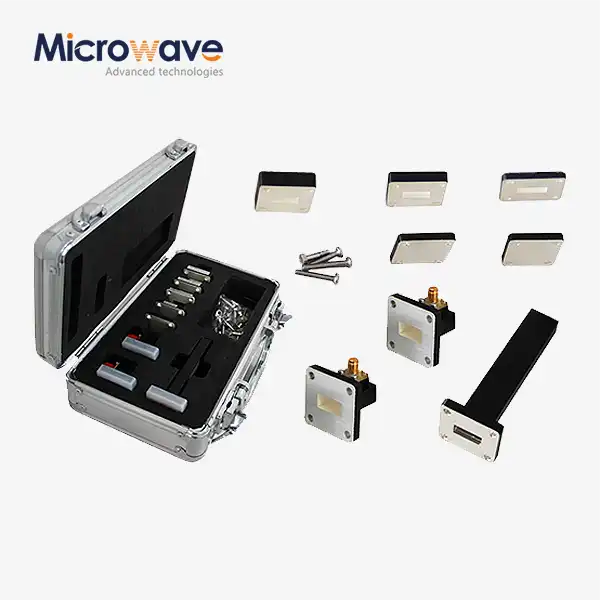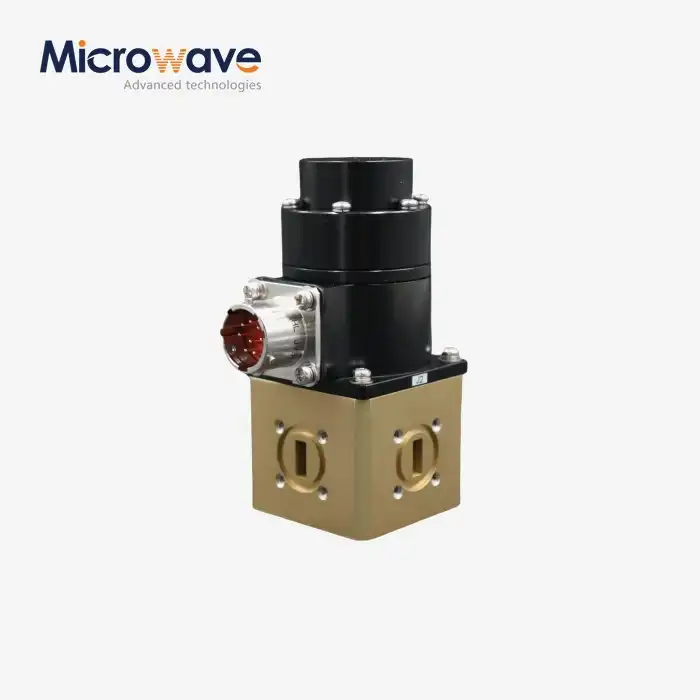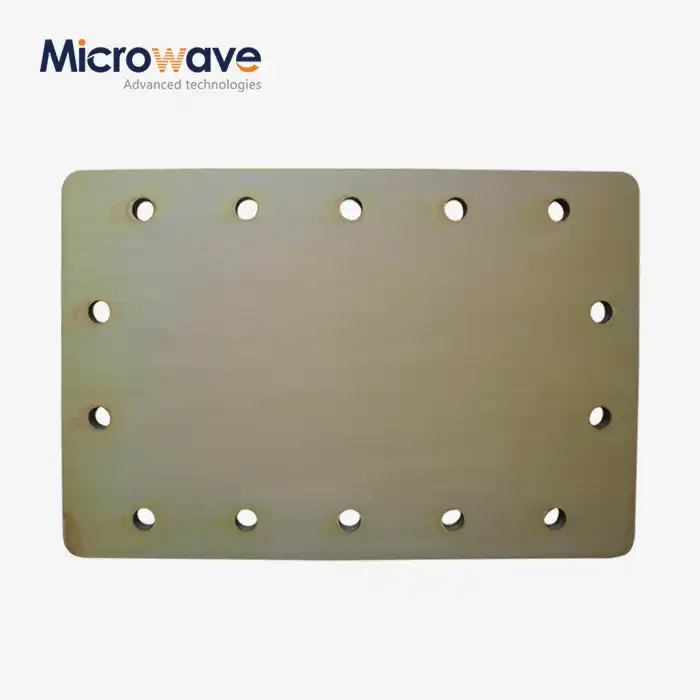





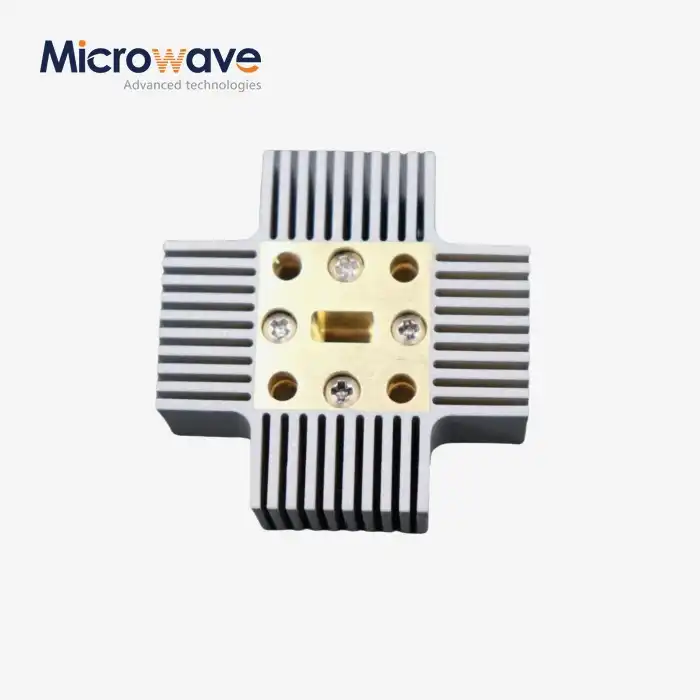
WG Pressure Window
WG Pressure Window for Waveguide Systems — Hermetic Sealing with Minimal RF Loss
A WG Pressure Window is a passive component installed inside a waveguide transmission line to maintain a hermetic seal while allowing RF energy to pass through with minimal attenuation. Advanced Microwave Technologies Co., Ltd. (ADM) designs and manufactures these components using low-loss dielectric materials and precision metallic frames. Each unit is tested for insertion loss and VSWR before shipment, and the product range covers frequency bands from L and S through Ku and Ka, with an operating temperature range of -55°C to +125°C.
What Is a WG Pressure Window?
A product acts as a physical barrier inside a waveguide run. It separates different environmental zones — typically isolating a pressurized internal section filled with dry air, nitrogen, or SF6 from the outside atmosphere or a vacuum — without interrupting the RF signal path.
Without this barrier, moisture, dust, and airborne contaminants can enter the waveguide line and degrade or damage active components such as magnetrons or klystrons. In high-altitude or vacuum environments, a sealed waveguide also prevents dielectric breakdown, which occurs when reduced internal pressure can no longer withstand the electric fields at high power levels.

Key Technical Specifications
Parameter | Specification |
Insertion Loss | Typically < 0.05 dB to 0.1 dB |
VSWR | < 1.10:1 |
Operating Temperature | -55°C to +125°C |
Differential Pressure Rating | 30–60 psi standard; 100+ psi for special designs |
Dielectric Materials | PTFE, Quartz, Alumina Ceramic, Polyimide (Kapton) |
Frame Materials | Copper, Aluminum, Brass |
Frequency Bands | L, S, C, X, Ku, Ka, and others |
Hermetic Leak Rate | < 1 × 10⁻⁷ std cc/sec (Helium Mass Spectrometry) |
Mechanical Standard | MIL-DTL-85, EIA waveguide tolerances |
Dielectric Material Options
One of the most important design decisions for any WG Pressure Window application is picking the right insulating material.
The most common choice is PTFE (Teflon). It works well at normal power levels and strikes a good balance between price and RF performance. PTFE is usually enough for systems that don't have strict thermal or outgassing needs.
Quartz and Alumina Ceramic work better in vacuums or places with a lot of normal power. Both materials are better at moving heat than PTFE, which makes it less likely that the insulating surface will get too hot in one place. Also, they release gases much less quickly, which is important in vacuum beamlines and aerospace deployments.
As a thin-film option, polyimide (Kapton) can be used in certain low-pressure situations where mechanical flexibility is needed.
If you're not sure which material will work best for your system, the ADM engineering team can look at your power level, frequency, and environmental needs and suggest a good choice. Email us at craig@admicrowave.com to talk about your application.
Application Scenarios
Airborne and Ground-Based Radar
A product covers the waveguide run and keeps the pressure inside the guide close to sea level in radar stations on the ground and in planes. This keeps the voltage from dropping at high elevations, where the weaker dielectric strength of the gas inside the line is caused by lower air pressure. As the altitude changes, radar systems on defence and aerospace platforms rely on this function to keep working.
SATCOM Earth Station Uplinks
Most of the time, signals from indoor high-power boosters are sent to earth stations through outdoor antennas. The pressure window is where the climate-controlled indoor environment meets the outdoor feed system. It keeps humidity and airborne pollutants from getting into the indoor equipment. In SATCOM ground infrastructure, this feature for sealing the boundary is a must.
Particle Accelerators and RF Systems for Business
In particle accelerator beamlines, ceramic pressure screens separate areas with a high vacuum from areas with RF distribution networks that are under pressure. For these installations to work, the windows need to be able to handle big differences in vacuum and pressure while constantly sending high-level RF energy. The structural and radio frequency needs of industrial heating systems with pressurised waveguide runs are similar.
Quality Control Process
Before sending out a product, ADM inspects and tests it in a number of steps.
Helium Mass Spectrometry is used to make sure that the seal is still in place. The minimum leak rate needed is less than 1 × 10⁻⁷ std cc/sec, which is the standard for pressurised waveguide parts.
VNA (Vector Network Analyser) Sweeps make sure that insertion loss and VSWR stay within the limits that were set for the whole operating bandwidth of each unit.
In Pressure Proof Testing, each unit is put under 1.5 times its rated working pressure to see if the structure changes, the bond breaks, or the dielectric cracks when it's loaded.
Thermal Cycling Tests change the temperature over and over to make sure that the bond between the dielectric and metal frame doesn't break because of different thermal expansion coefficients. This is a known way for field-deployed waveguide assemblies to fail.
The in-house test lab at ADM has a 24-meter microwave darkroom and measurement tools that work from 0.5 GHz to 110 GHz. This helps with the RF verification steps across the whole product frequency range.
Customization and Supply
For non-standard flange configurations, special frequency bands, high-vacuum builds, and pressure ratings above the normal 30–60 psi range, ADM can make custom WG Pressure Windows.
Based on the needs of your system, you can choose the dielectric material, frame material, flange type, and pressure rating. The engineering team at ADM will make sure that the mechanical tolerances are in line with MIL-DTL-85 and EIA standards so that they can work with the waveguide infrastructure you already have.
Send your needs to craig@admicrowave.com to get a unique design or information about specs.
FAQ
Q: How do I choose between PTFE, Quartz, and Ceramic?
A: Use PTFE for standard power levels where cost is a consideration. Choose Quartz or Alumina Ceramic when the application involves high average power handling, vacuum environments, or strict outgassing limits.
Q: What are the common causes of pressure window failure?
A: The most frequent causes are over-pressurization beyond the rated limit, improper flange torquing that distorts the frame, and RF arcing caused by surface contamination on the dielectric — typically dust or moisture that entered during installation.
Q: Will a pressure window affect my system's VSWR?
A: A properly designed and tuned window contributes a very small increase to system VSWR. The typical contribution is below 0.05 in absolute VSWR terms, which is within acceptable limits for most transmission line budgets.
Q: Can I use conductive gaskets with these windows?
A: Yes. The gasket thickness must be compatible with the window's mechanical design. An incorrect gasket thickness can either compress the dielectric beyond its mechanical tolerance or leave a gap that degrades the hermetic seal and RF continuity.
Q: What maintenance does a pressure window need in service?
A: Pressure windows are designed for long service life with minimal intervention. An annual visual check for carbon tracking on the dielectric surface and a periodic verification of system pressure retention are sufficient for most installed deployments.
Q: Can ADM supply windows for non-standard waveguide sizes?
A: Yes. ADM supports custom designs for non-standard flanges, unusual frequency bands, and high-pressure or vacuum-rated configurations. Send your specifications to craig@admicrowave.com and the engineering team will follow up.
Contact Us
Have a requirement or need a custom WG Pressure Window design? Email ADM directly at craig@admicrowave.com.