




Precision Waveguide Twists For K-, Ka-, V- and W-Bands
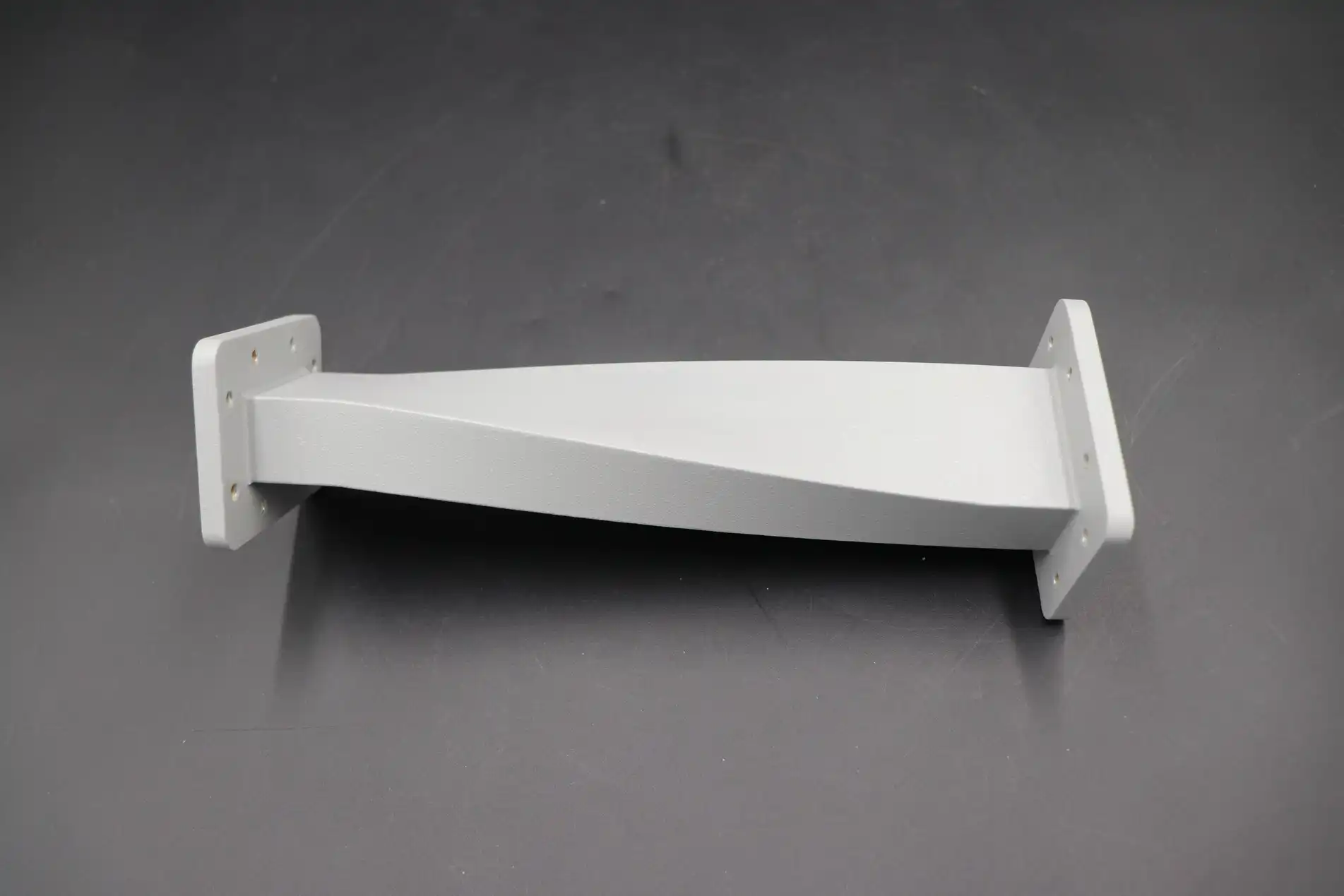
Precision Waveguide Twist components are important passive microwave devices designed to make it possible for high-frequency transmission systems to control the rotation of electromagnetic waves' polarization. These parts are very important for K-band (18–27 GHz), Ka-band (26.5–40 GHz), V-band (40–75 GHz), and W-band (75–110 GHz) uses, where it's important to keep the signal's integrity while allowing for changes in physical orientation. We make these devices at Advanced Microwave Technologies Co., Ltd. (ADM) using five-axis CNC precision machining. This lets us rotate the polarization 90° or 180° while keeping the insertion loss below 0.1dB. Our range of products covers frequencies from 2.2GHz to 110GHz and continuous wave power from 1kW to 50kW. These products are reliable for high-power industrial microwave applications, phased array radar systems, and satellite communication payloads.
Understanding Waveguide Twists and Their Functional Principles
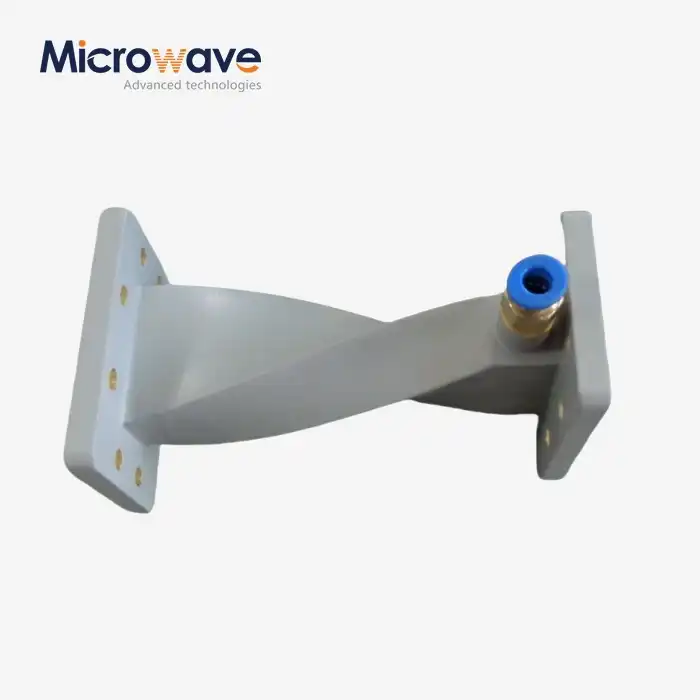
One of the main jobs of a Waveguide Twist is to change the direction of the dominant TE10 mode's electric field without changing the mode or causing the signal to get weaker. When connecting waveguide sections that have to have orthogonal flange orientations because of mechanical constraints, or when polarization alignment needs to be done between antenna feeds and transmission systems, this feature becomes essential.
How Polarization Rotation Works
When an electromagnetic wave moves through a rectangular waveguide, it keeps its electric field oriented in a certain way with respect to the wide and narrow walls of the waveguide. When the geometry of the system calls for the waveguide path to be physically rotated, a twist component slowly rotates the cross-sectional dimensions. This makes the electric field vector follow this mechanical change. For this process to work, the impedance must stay the same during the transition. Our engineers do this by designing the gradient waveguide's inner wall in a way that avoids sudden breaks. When purchasing these parts, teams should know that the twist's physical length has a direct effect on both its bandwidth performance and its insertion loss characteristics. When compared to stepped designs, continuous twists have better VSWR performance over a wider frequency range because the transitions are smoother and more gradual. At ADM, we use contactless rotation mechanisms that get rid of mechanical wear points. This means that our products work the same way for more than 100,000 hours in harsh temperatures ranging from -40°C to +85°C.
Material Selection and Electromagnetic Performance
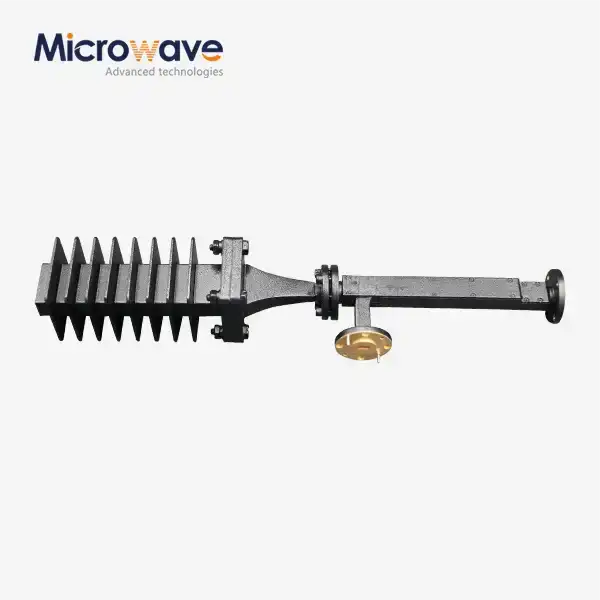
The choice of material has a big effect on both how well it conducts electricity and how long it lasts mechanically. Aluminum construction makes solutions that are light and perfect for use in the air, where weight restrictions are the most important design factor. Copper alloys are better at conducting electricity, which means they have less insertion loss in situations where every tenth of a decibel counts. For high-power radar transmitters with peak powers close to 50kW, our thermal compensation structures include heat-dissipating fins or liquid cooling channels to keep performance from dropping when temperatures rise. We use a double-layer electromagnetic shielding structure to protect against external electromagnetic interference, which is an important part of defense procurement requirements. This way of thinking about design makes things less vulnerable to EMI and stops internal signal leakage that could make military radar installations less secure. Our manufacturing processes are RoHS-compliant and use lead-free welding and materials that are good for the environment. They meet strict regulatory requirements for aerospace and satellite communication applications.
Types of Waveguide Twists and Their Industry Applications
Knowing the differences between the different twist waveguide configurations helps procurement professionals correctly match the specifications of a component with the needs of an application. The selection process depends on looking at the rotation angle, the amount of power that needs to be handled, the frequency bands that need to be covered, and the available space.
Configuration Variants and Their Characteristics
90-Degree Twists: These parts rotate the polarization plane by a quarter turn. They are often used to connect horizontal and vertical waveguide runs in small satellite transponder assemblies. In phased array radar systems, where antenna elements need orthogonal feed networks, the 90-degree configuration is very useful. Our WR90 parts made for X-band uses usually have insertion losses below 0.05dB, which means they don't matter in most link budget calculations. 180-Degree Twists: Full rotation versions are used in systems that need to reverse the polarity completely or where physical routing needs a half-twist configuration. Even though they take up more space, these longer components still have the same low-loss properties as their 90-degree counterparts. When purchasing these parts for satellite ground station installations, procurement managers like how flexible this configuration is for routing complex three-dimensional waveguides around structural obstacles.Customizable Angle Solutions: For some special uses, non-standard rotation angles like 45° or 60° are needed. Because we can do custom CNC machining, we can make these variations with the same lead times as standard catalog items. A company that makes telecommunications equipment recently asked us to come up with a 45-degree twist for a new antenna feed design. This shows how flexible we are when it comes to meeting specific technical needs.
Industry-Specific Application Scenarios
Precision polarization matching between antennas on the ground and spacecraft in orbit is needed for satellite communication systems to work. When these are put in place, twists make it possible for fixed antenna mount orientations to line up with satellite polarization schemes that can be linear, vertical, or circular. Cross-polarization discrimination degradation is one of the effects of polarization mismatch. It has a direct effect on signal quality and data throughput. Defense radar uses waveguide twists in complicated feed networks that serve phased array antennas. Components for these systems need to be able to handle high vibrations, changing temperatures, and electromagnetic pulses. Our military-grade testing methods make sure that the system works as it should on installations on ships, platforms in the air, and air defense systems on the ground. The internal design that doesn't require contact gets rid of any possible weak spots that could compromise mission-critical surveillance. These parts are used in calibration systems and antenna characterization chambers in high-frequency test and measurement labs. Precision twists are used all the time in our 24-meter microwave darkroom, which has antenna plane near and far field measuring recombination chambers and works with frequencies from 0.5GHz to 110GHz. With this ability, we can give customers detailed test results that prove how well a component works in real-world situations.
Comparative Analysis and Selection Criteria for Waveguide Twists
When making decisions about what to buy, it's helpful to know how a Waveguide Twist compares functionally and economically with other polarization management solutions. Which waveguide twists, rotary joints, or other parts to use depends on whether the application needs to be able to change the static polarization or rotate it dynamically.
Twists Versus Rotary Joints
Waveguide rotary joints allow mechanical rotation while they are in use, which helps with things like rotating radar antennas and satellite dishes that can be tilted. But this mechanical ability comes with wear parts, the need for lubrication, and usually higher insertion loss of more than 0.2dB. Our fixed twist designs, on the other hand, don't have any moving parts, so they don't need any maintenance and work better electrically. When you only need to change the polarization slightly, like when you have to work with installation geometry limitations, twists are the best option because they have much lower lifecycle costs. When you look at specific scenarios, the decision matrix becomes easier to understand. A twist is the best choice for a satellite earth station with a fixed-mount antenna that tracks geostationary satellites because it only needs static polarization adjustment. On the other hand, a shipboard radar system with an antenna that rotates mechanically needs a rotary joint, even though it costs more and is harder to maintain. Before setting the more complicated twisted waveguide solution, procurement teams should carefully consider whether their application really needs dynamic rotation.
Material Trade-offs and Performance Implications
Aluminum construction usually costs 30 to 40 percent less than copper construction of the same quality, and it works well enough for many uses. Because aluminum is less conductive, it has a little more insertion loss—maybe 0.03dB more in a typical Ka-band component—but this is still fine for most commercial satellite communication links with big link budgets. Copper is very important for high-power transmitters because it conducts heat better than other materials and stops hot spots from forming, which could cause the voltage to drop at power levels above 10kW. Plated alloys are a middle ground because they combine the weight and cost benefits of aluminum with the better surface conductivity that comes from plating them with silver or gold. The electrical performance of these hybrid constructions is similar to that of solid copper, and they are light enough to be installed in the air. Our engineering team can help procurement managers make these decisions based on the needs of the application, the budget for the link, and the conditions of the environment.
Key Selection Metrics for Procurement Teams
Frequency Band Compatibility: The Waveguide Twist size must match the frequency range. For example, WR-90 is good for X-band applications (8.2-12.4 GHz), WR-42 is good for Ka-band (18-26.5 GHz), and WR-15 is good for V-band needs (50-75 GHz). If you try to use a part outside of its intended frequency range, it will have too much VSWR and potential voltage breakdown at high power levels. Our product specifications make it clear what frequency ranges are supported, so there is no confusion when choosing. Power Handling Capacity: Continuous wave power ratings show how well a part can get rid of heat caused by ohmic losses without getting too hot, which could damage internal parts or lower performance. In pulsed radar applications, where instantaneous field strengths may be orders of magnitude higher than continuous ratings, peak power specifications become very important. We give procurement teams detailed information on how power is handled in a range of environmental conditions so they can figure out the right derating factors for their installations. Mechanical Robustness: Parts used in aerospace and defense are subject to shocks, vibrations, and changes in temperature that would destroy hardware that wasn't designed well. Our qualification tests include MIL-STD-810 environmental protocols, which check the mechanical integrity in conditions like those found on the flight deck of an aircraft carrier, when transporting tactical vehicles over rough terrain, and during space launch acceleration profiles. These qualification standards should be clearly stated in the procurement specifications to make sure that all vendor submissions meet the needs of the application.
Procurement Guide: How to Source Precision Waveguide Twists Efficiently
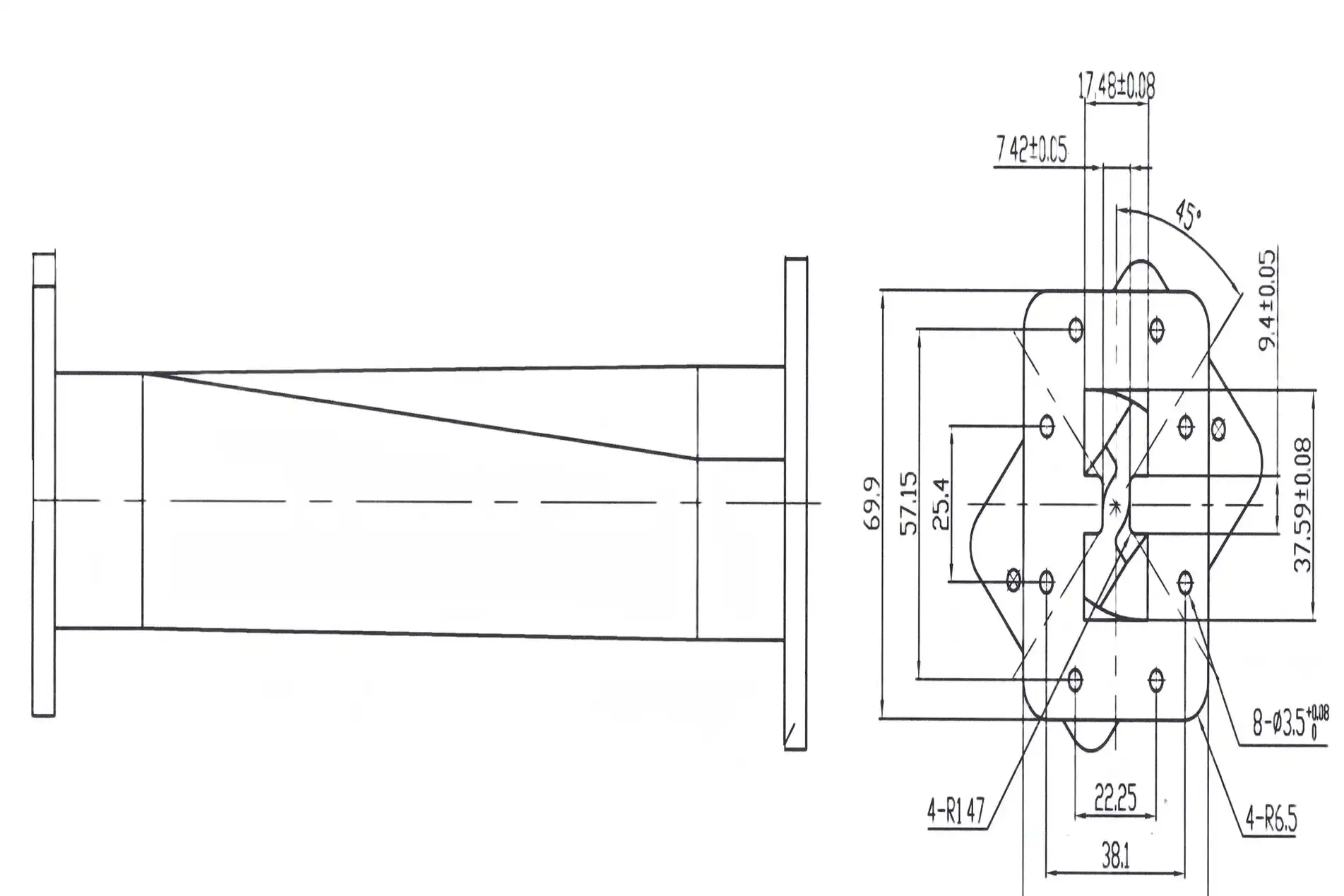
To strategically source precision Waveguide Twist components, you need to work with manufacturers that have a track record of high-frequency engineering skills, quality management systems that meet aerospace standards, and supply chain capabilities that can help deliver projects around the world.
Evaluating Manufacturer Capabilities
Manufacturers that have been around for a while set themselves apart by their technical abilities rather than their marketing claims. Our in-house measuring tools, which can go up to 110 GHz, let us fully test the electrical properties of every part we ship at ADM. This feature makes sure that the specs given are based on actual measured performance and not just theoretical predictions. Teams in charge of buying things should ask for test samples that show insertion loss, VSWR, and power handling across the given frequency band. While ISO 9001:2015 certification is a good starting point for proving that a quality management system is mature, more certifications are usually needed for aerospace and defense applications. Our ISO 14001:2015 certification for environmental management and our ISO 45001:2018 certification for health and safety at work show that we are committed to using sustainable and responsible manufacturing methods. Companies that have to follow corporate social responsibility guidelines are using these standards more and more to help them make purchasing decisions.
Customization and OEM Support Advantages
Standard catalog parts meet about 70% of application needs, but there is still a big need for custom solutions. Our OEM services include customizing parameters like frequency band coverage, power ratings, and polarization angles to fit different system designs. We can make non-standard waveguide interfaces or add specialized connectors that work with specific installation requirements because we can customize the interface. Our approach to customization is shown by our recent work with a telecommunications infrastructure provider. Their new antenna feed design needed to be twisted 135 degrees to handle more power and resist corrosion in marine environments. Our engineering team used electromagnetic simulation to make sure the design was correct. They then chose corrosion-resistant plating that would work with salt spray and delivered prototype parts within eight weeks. This ability to adapt to specific needs sets manufacturers who can support complex system integration apart from suppliers of basic systems.
Price Structures and Lead Time Considerations
The price of a component depends on a number of things, such as the material chosen, the production volume, the level of customization needed, and the certification requirements. When you buy more than 100 units of an aluminum component, it usually costs 40 to 50 percent less than the same copper component. However, setup costs for custom configurations may cancel out volume discounts on small orders. Procurement teams can accurately model total program costs when pricing structures are clear and non-recurring engineering costs are clearly marked. Lead times are very different for catalog items that are kept in stock and custom-engineered parts that need to have tools made. Standard WR-90 90-degree twists can be shipped within two weeks from stock. A fully customized V-band design with unique flanges, on the other hand, could take 10 to 12 weeks, which includes validating the design, making the prototype, and testing it for quality. These facts should be taken into account in procurement schedules, and early involvement of suppliers during the design phase should allow for concurrent development, which shortens the overall program timelines.
Conclusion
Precision Waveguide Twist solutions are an important part of modern microwave systems that work in the K- to W-bands. They allow for physical routing flexibility and control of polarization without affecting the integrity of the signal. When purchasing these parts, people in charge must look at electrical performance metrics, mechanical robustness, material trade-offs, and the manufacturer's capabilities. We at ADM have been making precise microwave parts for 20 years. We also have advanced measurement systems that can go up to 110 GHz and full quality management systems. This makes us a reliable partner for demanding aerospace, defense, satellite communication, and industrial applications. As 5G infrastructure, satellite mega-constellations, and advanced radar systems change, so does the need for these important parts. Suppliers who combine technical innovation with excellent manufacturing and reliable supply chains will be rewarded.
FAQ
1. What factors most significantly influence insertion loss in precision waveguide twists?
Mostly, insertion loss is caused by ohmic losses in the waveguide walls and reflections due to impedance discontinuities. The internal waveguide walls' surface roughness has a direct effect on current flow; smoother finishes result in lower losses. With our five-axis CNC machining, we can get surface finishes that lessen this effect. Material conductivity is also important. In most Ka-band implementations, copper works better than aluminum by about 0.02-0.03dB. Impedance matching is affected by the gradient transition profile. Designs with continuous twists work better than designs with stepped twists. Losses are also affected by the operating frequency. Skin effect phenomena cause higher frequencies to lose more power.
2. Can waveguide twists be customized for non-standard frequency bands?
A core competency of experienced manufacturers is customizing for specific frequency ranges. In research applications, military systems with classified operating bands, or new commercial applications, frequency requirements that are not standard often come up. Our engineering team uses electromagnetic simulation to make sure that designs work well in custom frequency bands and have the right VSWR and power handling properties. Customization usually adds two to three weeks to the normal lead times for validating the design and getting the tools ready. When non-standard frequency needs are expected, procurement teams should talk to suppliers early on in the design phase.
3. How do waveguide twists contribute to polarization diversity in radar systems?
More and more, polarization diversity is being used in phased array radar systems to improve target separation, rejection of weather clutter, and resistance to electronic countermeasures. For these systems to work, the orthogonal polarization channels in the feed network need to be precisely controlled. Waveguide twists make it possible to physically connect antenna elements that are arranged in complicated geometric arrays to transceiver modules that are always facing the same way. Quality twists keep the orthogonality between polarization channels, which is necessary for realizing diversity processing gains, by keeping polarization purity and minimizing cross-polarization coupling. Cross-polarization isolation must be greater than 30dB according to defense procurement specifications. This can only be done by carefully manufacturing all feed network components.
Partner with ADM for Superior Waveguide Twist Solutions
Advanced Microwave Technologies Co., Ltd. has become a world-renowned company that makes Waveguide Twist solutions for customers in the aerospace, defense, satellite communication, and industrial sectors. With insertion loss requirements below 0.1dB and power handling up to 50kW continuous wave, our precision components are used in mission-critical applications that need to be very reliable. Five-axis CNC machining, thorough testing in our 24-meter microwave darkroom, and quality systems certified to ISO 9001:2015 make sure that every part meets strict performance standards.
When procurement teams look at suppliers, they want to find ones that can offer technical know-how, the ability to make changes, competitive prices, and reliable delivery. As part of our OEM services, we can change parameters, create new interfaces, upgrade materials, and work with you on technical issues like electromagnetic simulation support and installation guidance. Our engineering team is ready to provide optimized waveguide twist designs for your application, whether it needs standard catalog parts for quick deployment or custom-engineered solutions to meet specific system needs.
In today's procurement world, the reliability of the supply Waveguide Twist chain is just as important as technical performance. Our reliable sources for raw materials and adaptable production capacity keep lead times stable, even when the global supply chain changes. Talk to craig@admicrowave.com about your waveguide twist needs and find out how our experience, skills, and dedication to customer satisfaction can help you reach your K-, Ka-, V-, and W-band program goals.
References
1. Pozar, David M. Microwave Engineering, Fourth Edition. Hoboken: John Wiley & Sons, 2012.
2. Saad, Theodore S. Microwave Engineers' Handbook, Volume 1. Dedham: Artech House, 1971.
3. Collin, Robert E. Foundations for Microwave Engineering, Second Edition. New York: McGraw-Hill, 1992.
4. Ramo, Simon, John R. Whinnery, and Theodore Van Duzer. Fields and Waves in Communication Electronics, Third Edition. New York: John Wiley & Sons, 1994.
5. Southworth, George C. Principles and Applications of Waveguide Transmission. Princeton: D. Van Nostrand Company, 1950.
6. Montgomery, Carol G., Robert H. Dicke, and Edward M. Purcell. Principles of Microwave Circuits. New York: McGraw-Hill, 1948.