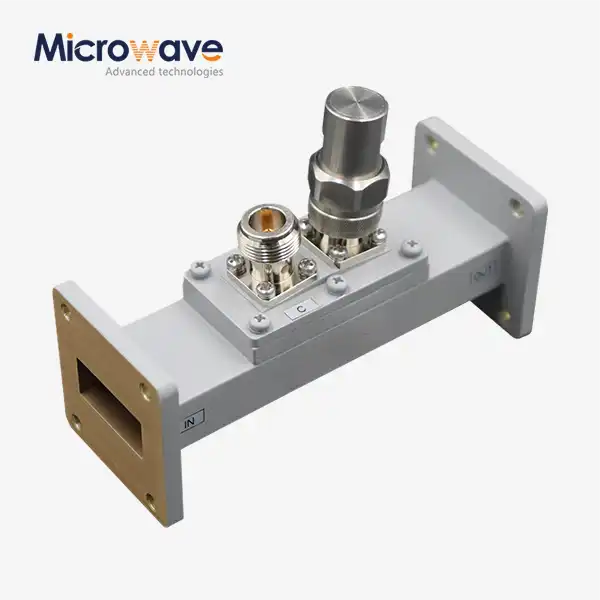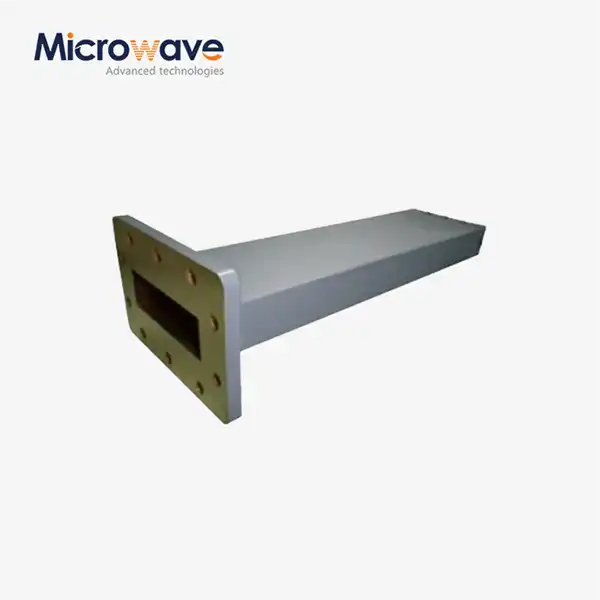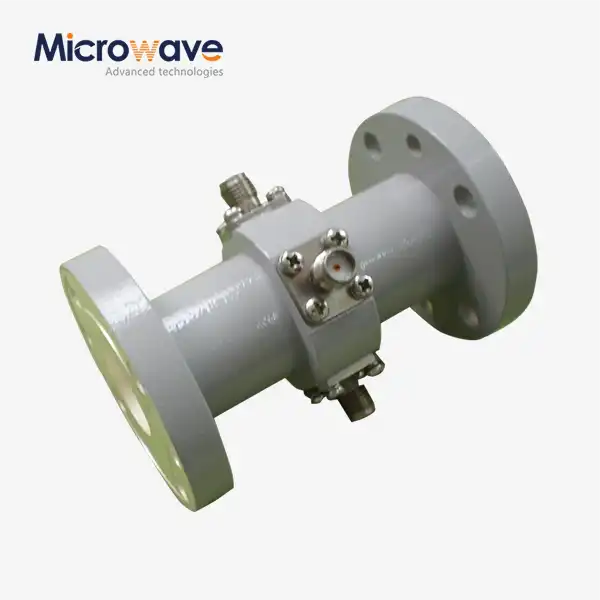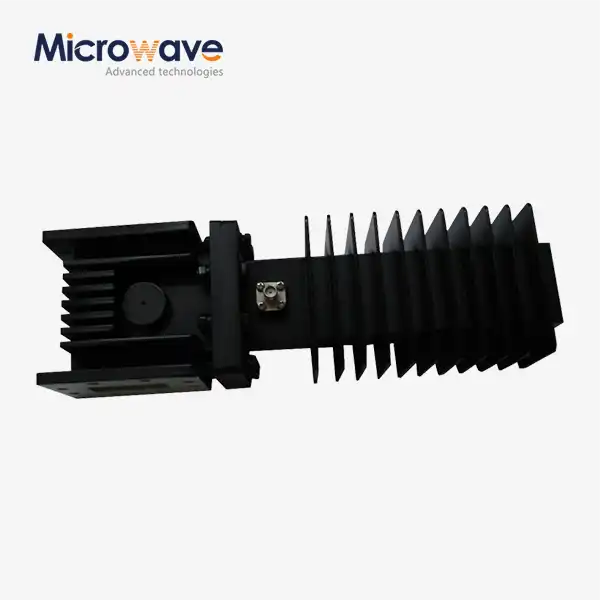





Waveguide Offset Short
Waveguide Offset Short Precision Calibration Standards
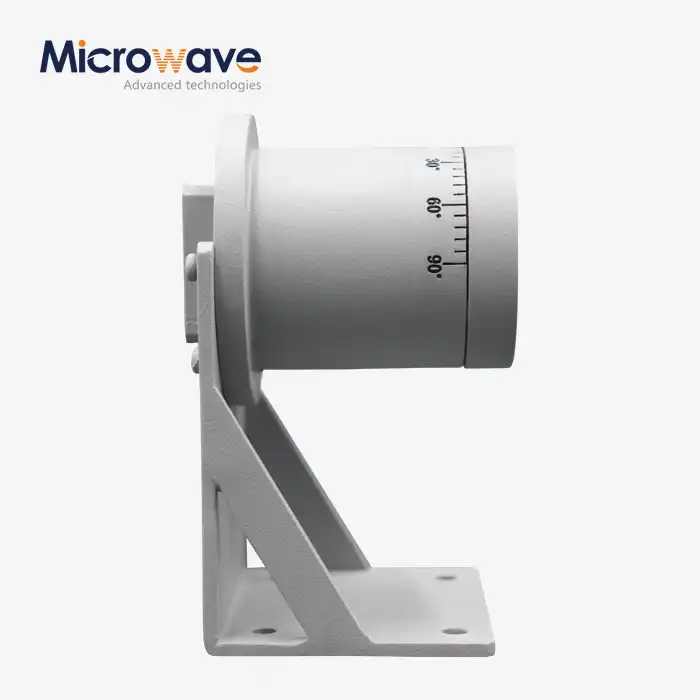
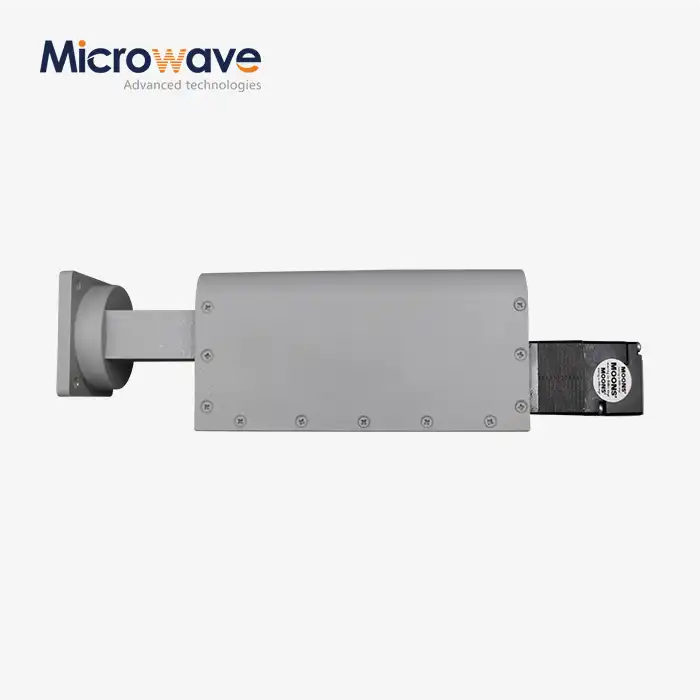
Advanced Microwave Technologies Co., Ltd. (ADM) manufactures Waveguide Offset Short standards covering 1.72 GHz to 110 GHz across 18 waveguide bands, with sizes from WR-10 to WR-430. Each unit delivers a minimum VSWR of 60:1, providing a near-total reflection reference for VNA calibration. Available flange types include UG square/round cover and CPR-style. Bodies are machined from OFHC copper or tellurium copper with gold or silver plating, supporting metrology and R&D applications in aerospace, satellite, and 5G/6G testing.
What Is a Waveguide Offset Short?
A product is a precision microwave calibration standard used in Vector Network Analyzer (VNA) calibration and waveguide system tuning.
Unlike a flush short, which places the reflection plane exactly at the connector reference plane, an offset short positions the reflection plane at a precisely calculated distance from the flange face. This introduces a known electrical delay — typically λ/8 or λ/4 — providing the phase differentiation required by calibration algorithms such as TRL (Thru-Reflect-Line) or SSL (Short-Short-Load).
This phase separation is particularly important in millimeter-wave bands such as E-band or W-band, where flush shorts alone cannot provide sufficient phase resolution for accurate broadband error correction.
Key Technical Specifications
Parameter | Specification |
Frequency Range | 1.72 GHz – 110 GHz |
Waveguide Bands | 18 standard bands |
Waveguide Sizes | WR-10 to WR-430 |
Flange Types | UG Square / Round Cover, CPR-Style |
VSWR (Min) | 60:1 |
Offset Length Tolerance | Better than ±0.005 mm |
Shorting Plane Flatness | < 0.0003 inches |
Material | OFHC Copper / Tellurium Copper |
Plating | Gold or Silver |
Return Loss (Practical) | < 0.1 dB |
Material and Construction
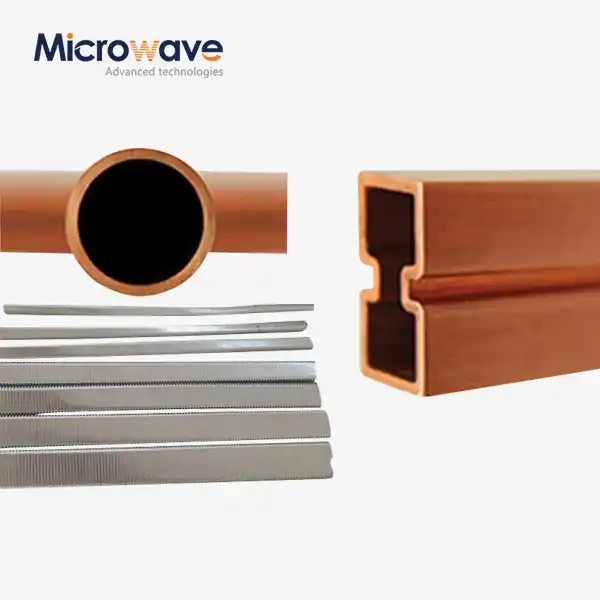
The body is made from either oxygen-free high-conductivity (OFHC) copper or tellurium copper, which were both chosen because they are good at conducting electricity and staying the same size.
Gold or silver is put on the shorting surface to stop oxidation and lower skin-depth losses. Surface rust lowers conductivity at the reflection plane, so the quality of the plating has a direct impact on how reliable measurements are over time.
The offset length is machined with accuracy better than ±0.005 mm, which makes sure that the electrical delay matches the model used in the VNA software. When compared to the flange interface, the shorting plane must be less than 0.0003 inches flat.
Performance Characteristics
Phase Stability
Tight mechanical tolerances keep the electrical length constant over time, which lowers measurement drift between rounds of calibration.
Almost Complete Reflection
When the VSWR is at least 60:1, the reflection coefficient is close to 1.0. This means that there is little resistance loss and a good short-circuit reference for measuring S-parameters.
Broadband Coverage
When used in pairs with different offset lengths, these standards cover the whole waveguide band while lowering phase error regions, which is necessary for accurate VNA calibration across the whole bandwidth.
Temperature Sensitivity
The physical offset length and phase delay are both changed by thermal expansion. To get the best results, readings should be done in places that keep the temperature at 23°C ± 1°C or CTE-based correction factors should be used.
Application Scenarios
Precision VNA Calibration in R&D Labs
These standards are built into VNA calibration kits so that errors can be fixed on both one and two ports. In the development of 5G/6G parts, where measurement error must stay below 0.1 dB, a calibrated Waveguide Offset Short is a regular part of the test setup.
Systems for Characterising Materials
In setups for measuring permittivity and permeability, offset shorts change the standing wave patterns inside the test fixture. This lets the system collect different parts of the standing wave without having to move the probe or sample. In order to describe substrates for high-frequency PCBs or absorber materials, this is useful.
Radar and Satellite Front-End Tuning
In aerospace settings, maintenance teams use offset shorts to mimic certain reflection coefficients during impedance matching network tuning. This is done to test the stability of solid-state power amplifiers (SSPAs) and other active parts when the impedances don't match.
Quality Control and Inspection
ADM applies dimensional and electrical inspection procedures to every unit produced.
Offset Length Verification is performed using Coordinate Measuring Machines (CMM) or laser interferometry. The physical length must match the defined standard within microns to avoid phase errors in calibration.
Flange Surface Flatness and Roughness are verified against MIL-DTL-3922 specifications. Surface defects on the mating face can cause RF leakage or misalignment, which directly affects calibration validity.
Electrical Verification checks return loss — theoretically 0 dB, practically below 0.1 dB — and phase response compared against a reference unit traceable to national metrology standards.
Plating Adhesion Testing checks for blistering or delamination of gold/silver plating under thermal cycling, relevant for units deployed in field test sets.
ADM's electrical testing covers 0.5 GHz to 110 GHz, supported by a microwave darkroom and a near/far-field antenna measurement chamber.
Customization and Supply Options
ADM supports configurations of Waveguide Offset Short components across all 18 waveguide bands. Customers can specify waveguide size (WR-10 to WR-430), flange type (UG square/round cover or CPR-style), and plating material (gold or silver) to match existing measurement system requirements.
With over 20 years in microwave component manufacturing and service locations in Xi'an, Chengdu, Beijing, Tianjin, and Shijiazhuang, ADM supplies both standard catalog items and custom-engineered calibration standards for OEM integrators and metrology laboratories worldwide.
To discuss a specific configuration or request a quotation, contact the team directly at craig@admicrowave.com.
FAQ
Q: What's the difference between a product and a flush short?
A: A flush short sends signals back to the connector reference plane with no phase shift. There is a known phase delay when a product rebounds at a certain internal distance. When you use both together, you can calibrate over a wide range of frequencies, which you can't do with just one short because a single reflection point makes the Smith Chart unclear at some frequencies.
Q: What is the best way to clean something?
A: When you want to get rid of dust, use dry, filtered compressed air. Use an isopropyl alcohol brush that is lint-free and 99% pure or higher if you need to clean it even more. On the shorting plane, don't touch anything hard; even small surface scratches can change the reflecting coefficient.
Q: Does weather change how accurate measurements are?
A: Yes. It changes the offset length and the phase delay when it expands. Make very accurate measurements in a room that is kept at 23°C ± 1°C, or use correction factors based on the material's thermal expansion coefficient.
Q: How often should these standards be checked again?
A: In high-volume production settings, recalibration is usually done once a year. Before using a unit again, it should be inspected for dimensions if it fails a verification check or has wear on the areas where the flanges connect.
Q: Why is the offset loss value important when setting up a VNA?
A: Gold and silver plating lessen skin-effect losses, but they don't get rid of them completely. If you enter the wrong offset loss value in the VNA firmware, it will cause magnitude errors in the calibration reference, which will affect all future measurements on that port.
Q: What waveguide sizes and flanges are out there?
A: Waveguides from ADM come in 18 bands and sizes WR-10 to WR-430. Standard waveguide measurement systems can use UG square cover, UG round cover, or CPR-style flanges.
Contact Us
Send your specifications or technical questions to craig@admicrowave.com. ADM's engineering team covers standard and custom Waveguide Offset Short configurations across all supported bands.