




Waveguide Isolator Insertion Loss Explained for Workshop
When radio waves go through an isolator in a forward direction, the signal power goes down naturally. This is called Waveguide Isolator insertion loss. Procurement engineers, system planners, and workers who work with high-frequency microwave systems need to know about this important parameter. Insertion loss has a direct effect on system efficiency, link budgets, and total performance in a wide range of settings, from military radar sites to satellite ground stations. Waveguide Isolators protect signals by letting them flow in only one way and absorbing reflections. This is why insertion loss control is so important in mission-critical RF systems where every decibel counts for success.
Understanding the Waveguide Isolator and Its Insertion Loss
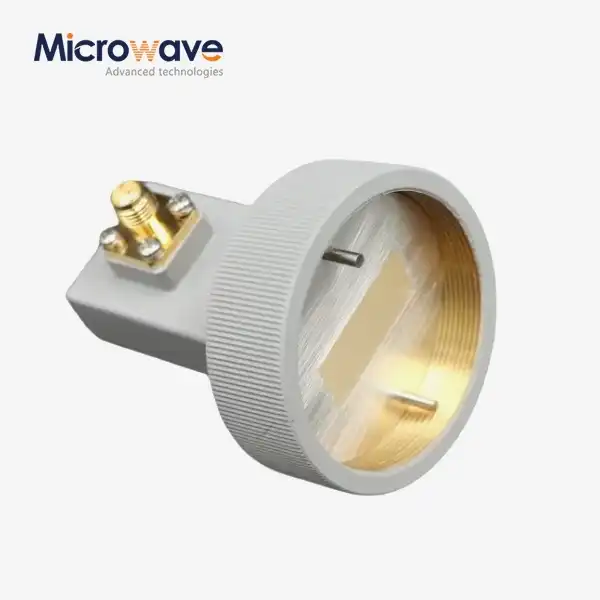
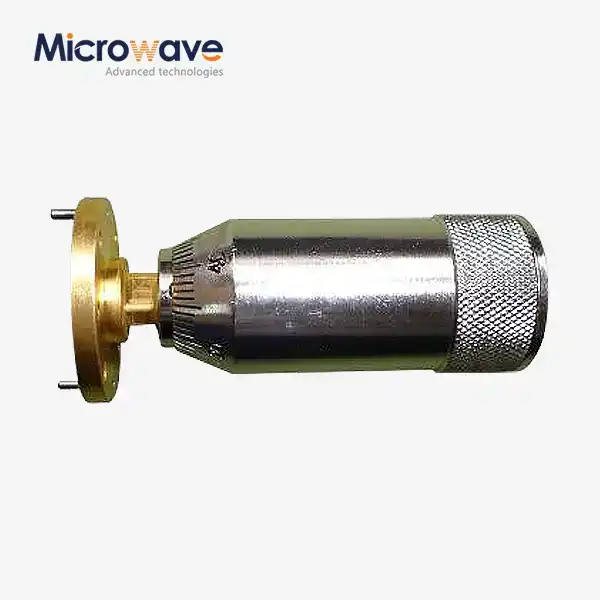
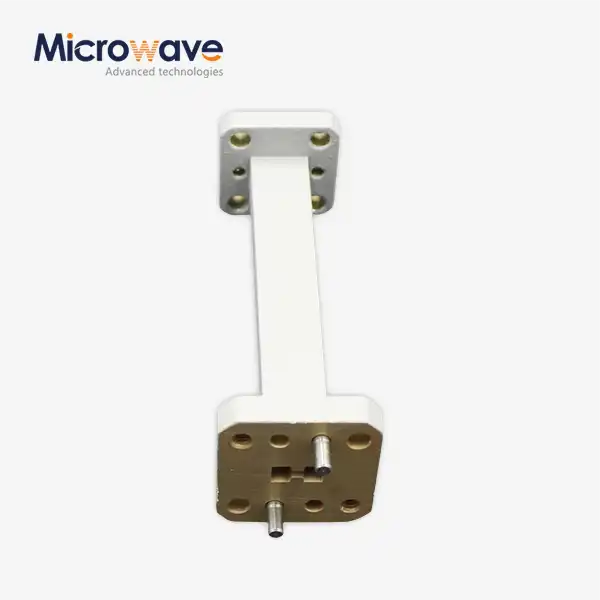
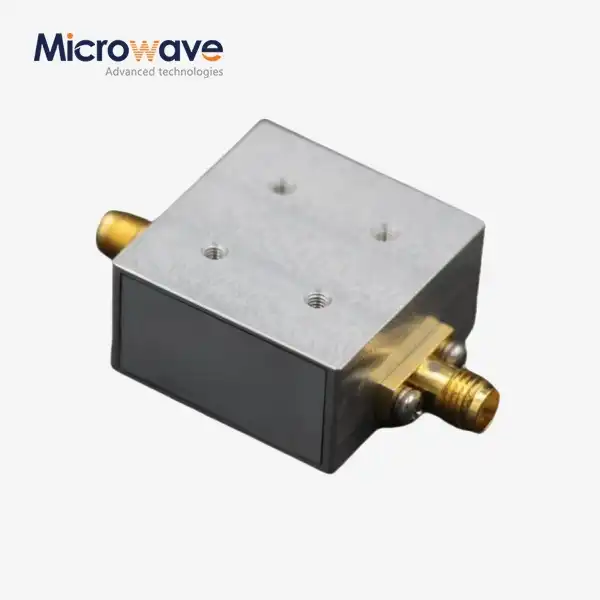
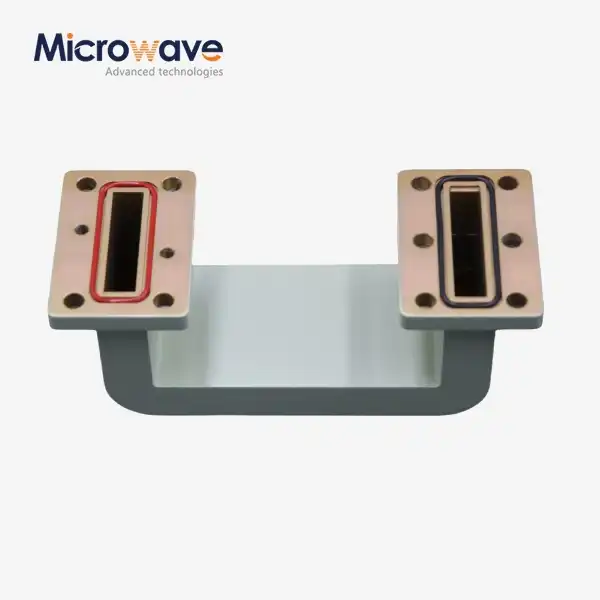
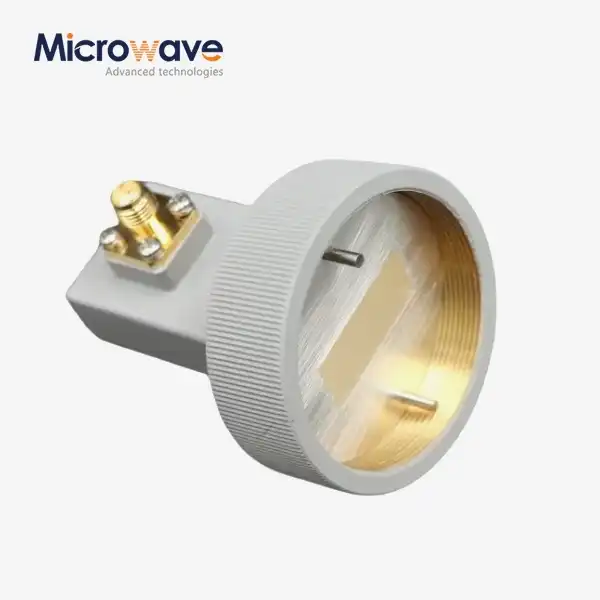
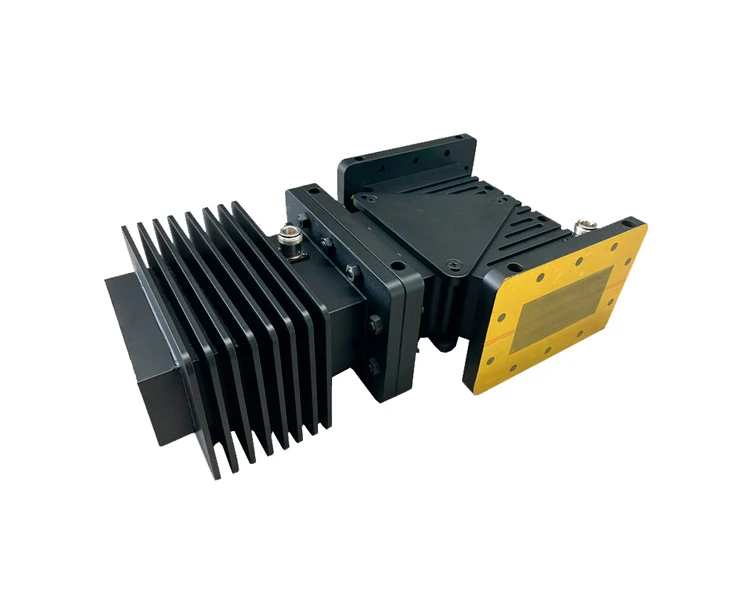
Waveguide Isolators are special inactive devices that are made to keep harmful reflected power away from sensitive RF sources. In a way similar to electrical check valves, these parts let electromagnetic energy move forward while absorbing energy moving backwards toward the source. The non-reciprocal behavior is caused by ferrite materials interacting with carefully set up magnetic fields, which usually use Faraday rotation principles or field movement methods.
Core Operational Principles
Ferrite material placed in a constant magnetic bias field is what makes the system work. When messages are going forward, enter the gadget, the magnetic properties of the ferrite make it possible for them to be sent with little loss. When signals try to travel backwards, they run into a phase-shifted magnetic field that sends the energy to a matched termination load, turning unwanted echoes into heat. This safety feature is very important for traveling wave tubes, solid-state power amplifiers, and magnetrons that will fail in high VSWR situations.
Defining Insertion Loss Metrics
The amount of signal power loss between the input and output ports during forward transfer is measured by insertion loss. This measurement, which is given in decibels (dB), includes resistance losses in waveguide walls, dielectric losses in ferrite materials, and impedance mismatch effects at port changes. Values are usually between 0.3 dB and 0.8 dB for standard waveguide bands, but values may be a little higher for broadband designs. Standards in the industry, like MIL-PRF-15305, set performance standards and require makers to show insertion loss over certain frequency ranges and temperature conditions.
Root Causes of Signal Attenuation
Insertion loss rate is affected by a number of things. The quality of the material is very important. The electromagnetic loss tangent values are based on the ferrite makeup, the crystalline structure, and the peak magnetization levels. Precision in manufacturing affects both the sharpness of the waveguide's surface and its physical tolerances, which in turn affect ohmic losses. Changes in the environment, like weather, can change ferrite permeability, which moves the device's best working point. Over the course of a working lifetime, performance can be decreased by contamination, mechanical stress, or simply getting older. For long-term low-loss operation, both initial quality selection and ongoing upkeep are crucial.
Analyzing Waveguide Isolator Insertion Loss: Factors and Measurement
To accurately measure insertion loss, you need to know the factors that affect performance and the standard ways to take measurements in a workshop. A high-quality Waveguide Isolator must be assessed using precise protocols to ensure system integrity.
Frequency Band Dependencies
The insertion loss of different waveguide standards is different. X-band devices (8.2-12.4 GHz) usually have 0.4 to 0.6 dB insertion loss, thanks to developed ferrite formulas that are best for these frequencies. Ku-band isolators (12.4–18 GHz) may have a little higher loss because the wall current density is higher and the production limits are tighter. Moving into Ka-band (26.5-40 GHz) and higher frequency ranges brings new problems. The surface finish needs to be better, and ferrite loss tangents increase with frequency, making insertion loss reach 0.8 to 1.2 dB for common designs.
Isolator Design Variations
When built correctly, ferrite-loaded isolators are the standard in the industry because they can handle a lot of power and stay stable at high temperatures. The insertion loss is lowest for resonant absorption types at the center frequency, but their spread is smaller. Broadband Waveguide Isolators use complex ferrite shapes and dielectric loading to keep the insertion loss flat across all waveguide bands. However, the absolute minimum loss may be 0.2 to 0.3 dB higher than narrowband equivalents. Magnet systems that are temperature-compensated help keep performance stable from -40°C to +85°C.
Workshop Measurement Procedures
To correctly measure insertion loss, you need Vector Network Analyzers that have been calibrated, precision waveguide calibration kits, and test settings that are kept at a constant temperature. The first step in the measurement process is full two-port calibration using short-open-load-thru standards that are the right size for the waveguide. Once the isolator has been calibrated, it must be connected with the correct flange pressure, making sure that the seal is compressed for RF continuity. Keep track of the S21 level across the frequency range and write down any ripples that could mean standing waves from bad matches. Temperature cycling tests show important thermal drift features for outdoor systems.
Techs should avoid common measurement mistakes like not cleaning the connectors well enough, which causes lossy contact resistance, not aligning the flanges properly, which causes gap discontinuities, and not letting the data settle down enough after temperature changes, which gives incorrect information. Keeping calibrations linked to national standards, like NIST in the US, makes sure that measurements are accurate during acceptance testing or performance checks.
Waveguide Isolator vs Other Microwave Components: Insertion Loss Perspective
To choose the right components, system makers need to know how insertion loss affects the different options they have. Selecting a Waveguide Isolator over other components involves weighing the protection benefits against the inherent signal attenuation.
Comparison with Ferrite Circulators
Isolators and three-port circulators are both made of ferrite, but they have different uses. Isolators stop reflected energy, and circulators send messages through ports in a certain order. Insertion loss between neighboring circulator ports is usually the same as isolator values (0.4 to 0.7 dB), but circulators make the system more complicated, so you have to be careful when closing off ports that aren't being used. Quality isolators can achieve isolation performance between ports that are not close to each other that is often higher than 20 dB. The decision depends on the needs of the application. Circulators work well for dual-mode applications, while isolators protect sources simply.
Directional Coupler Trade-offs
For tracking reasons, directional couplers take samples of both forward and reflected power, but they don't soak up reflections. Their insertion loss (usually between 0.2 and 0.4 dB, which includes coupling loss) is less than that of an isolator, but they don't cover the source. When you combine couplers and isolators, you get full tracking and safety systems, but at the cost of cascaded insertion loss. This is an important thing to think about in power-sensitive situations like satellite uplinks, where every 0.1 dB changes the link margin calculations.
Coaxial Versus Waveguide Implementations
With insertion losses of about 0.3 to 0.5 dB below 6 GHz, coaxial isolators are good for low-frequency uses and small installs. Waveguide Isolator models are most common in millimeter-wave and high-power settings, where coaxial designs have trouble with breakdown voltage limits and too much loss. The shift frequency changes depending on the power level. Systems with more than 100 watts of average power usually use waveguide construction to get rid of heat efficiently. When choosing between forms, procurement teams have to think about size, weight, power handling, and insertion loss.
Practical Solutions: Reducing Insertion Loss in Waveguide Isolators for Enhanced System Performance
By making smart design choices and following good operating procedures, minimizing insertion loss protects transferred power and improves system efficiency. Cutting-edge material science reduces insertion loss in a Waveguide Isolator in a useful way. Modern ferrite mixtures with rare-earth dopants have lower loss tangents while keeping their maximum magnetization.
With CNC tools, precise waveguide cutting can achieve surface finishes below 16 micro-inches Ra, which reduces conductor losses as much as possible. Adding gold or silver coating to the inside of aluminum further lowers resistive losses compared to regular aluminum, but because of the higher cost, this method is only used in high-end uses. Using temperature-stable magnet assemblies keeps the best bias conditions for ferrite elements and stops performance drift across operating settings. Companies that let you customize their products can make devices work best in certain frequency ranges by losing bandwidth to get the lowest insertion loss at important working frequencies. This specific method works well for narrowband uses like fixed-frequency radar systems or special satellite communication links that only need a small amount of bandwidth.
Installation Best Practices
When you put something correctly, you can avoid insertion loss increases that aren't necessary. Before they can be put together, flange surfaces need to be cleaned well with isopropyl alcohol to get rid of rust and contamination. Under-torquing creates RF leaking paths, while over-torquing deforms flanges. Torque wrenches make sure that the seal is compressed evenly. Environmental protection stops water from getting in, which breaks down the qualities of ferrite and corrodes the inside surfaces. Installations that are prone to vibration can benefit from extra mechanical support, which stops the tiny movements that cause occasional contact resistance.
Ongoing Maintenance Strategies
Scheduled performance testing keeps insertion loss within acceptable limits for the entire operating life. Portable network testers are used for annual calibration checks that find signs of degradation before they lead to crashes. Visual checks show if the flange is corroding, the gasket is wearing out, or there is mechanical damage that needs to be fixed. Using thermal imaging during operation can show hot spots that mean there are problems with the internal load or resistance. By writing down the standard performance during commissioning, you can use it as a starting point for trend analysis. This lets you plan predictive maintenance that keeps important systems running as long as possible.
Procurement Guide: Buying Low-Insertion-Loss Waveguide Isolators for Industrial Applications
To do strategic buying, you have to weigh technical requirements against things like cost, delivery, and the supplier's skills. Obtaining a high-performance Waveguide Isolator requires a thorough review of manufacturer data sheets.

Critical Specification Parameters
The paperwork for the procurement should make it clear what the insertion loss levels are across the working frequency band. Usually, it should say what the highest acceptable values are at the band edges, where performance naturally drops. Isolation standards (usually a minimum of 20–25 dB) make sure that sources are properly protected. Power handling standards need to cover both average and peak levels. For example, pulsed radar uses need high peak power ratings even though the average power level is low. System matching is affected by the VSWR specs at the input and output ports. For demanding uses, values below 1.25:1 are best.
Temperature ranges must take into account the real-world working settings, such as the harsh conditions that can happen in space or at outdoor telecommunications sites. The mechanical standards talk about the different types of flanges (UG-series names in the US and European versions), how they should be mounted, and how they should be sealed against the environment. Compliance licenses, such as ISO 9001 for quality management and RoHS for environmental standards, guarantee that products are made correctly and follow the rules.
Supplier Evaluation Criteria
Reputable makers show test results that can be used to measure every single unit of production, not just a sample that is representative of the whole. Traceability paperwork connects parts to certain batches of ferrite and magnetic systems. This lets you figure out what went wrong if field problems happen. For specialized uses, being able to customize is important—suppliers that offer design advice, prototype development, and custom production work better with new projects than sellers that only sell from a catalog.
Lead times and transportation prices are affected by where things are located. Suppliers based in the United States can deliver projects faster for domestic use and make it easier to follow export rules for military uses. Asian makers, especially those in China, offer lower prices for large orders and have well-established facilities for making standard waveguide components. Precision engineering and custom designs for space-qualified or ultra-low-loss uses are often very good at European providers.
Streamlining the Ordering Process
Procurement cycles go faster when there is clear communication. Give providers detailed information about the system, like its working frequency, power levels, environmental conditions, and interaction needs, so they can suggest the best options. If there are extremes of temperature, ask for insertion loss test results across all temperature ranges. Make sure you know when things will be delivered early on, because custom designs can take 8–12 weeks longer than normal store items (2–4 weeks). Forecasting yearly needs helps with volume price talks because it lets suppliers make the best use of their production schedules.
Support after the sale is what sets top sellers apart from commodity vendors. The total cost of ownership includes more than just the purchase price. It also includes technical support during integration, fixing advice, and how quickly the guarantee is honored. For military and defense systems that are used for many years, suppliers who offer testing services, repair skills, and obsolescence management are valuable in the long run.
Conclusion
Waveguide Isolator insertion loss has a big effect on the performance of microwave systems, changing link costs, efficiency, and operating dependability. Engineers and procurement workers can make smart choices when they understand the physical processes that cause insertion loss, as well as testing methods and optimization strategies. When choosing a component, you have to weigh insertion loss against performance in areas like isolation, power handling, bandwidth, and weather resistance. When installed and maintained correctly, original specs are kept throughout the product's useful life. Strategic buying that looks at the skills of the seller, the ability to make changes, and the availability of full support makes sure that companies get parts that meet both short-term technical needs and long-term reliability goals in mission-critical applications.
FAQ
Q1: What insertion loss range is acceptable for X-band waveguide isolators?
Insertion loss for standard X-band Waveguide Isolators is between 0.4 dB and 0.6 dB in the 8.2-12.4 GHz range. High-performance designs get 0.3 dB by using high-quality ferrite materials and making sure the parts are assembled correctly. Broadband versions that cover the whole waveguide band might get as low as 0.7 dB. Acceptance depends on the application. For example, satellite ground stations can handle a little more loss than power-limited flying systems, where every tenth of a decibel can affect battery life or heat management.
Q2: How often should insertion loss calibration occur?
Most industry uses can be met with annual calibration intervals, which are also the norm for quality control systems. Harsh settings, like places with harsh temperatures, high humidity, and shaking, need to be checked every six months. Important defense or space systems may need to be checked every three months. During installation, baseline tests set performance standards, and later calibrations find signs of wear and tear. Sudden increases in insertion loss of more than 0.3 dB should be looked into right away, no matter what the plan is, because they could mean internal damage or contamination that needs to be fixed.
Q3. What frequency ranges do Waveguide Isolators support?
They are available across a wide range of microwave frequencies, typically from GHz bands such as X-band, Ku-band, and Ka-band. The exact range depends on the waveguide size and design specifications.
Partner with ADM for Premium Waveguide Isolator Solutions
Advanced Microwave Technologies Co., Ltd has been helping engineers and buying teams find Waveguide Isolator makers with great insertion loss performance for more than 20 years. Our ISO 9001-certified factories use cutting-edge ferrite materials and precise waveguide machining to get insertion loss numbers that make your system work as well as possible. Our expert team works together to make sure that you get exactly what you want, whether you need normal catalog designs or solutions that are optimized for certain frequency bands and power levels. Our 24-meter microwave lab can test everything up to 110 GHz, and we make sure that every isolator comes with performance data that can be traced back to international standards. Get in touch with our engineering team at craig@admicrowave.com to talk about your requirements. We offer quick development, reasonable bulk pricing, and quick after-sales support that lowers the risk of buying from us and speeds up the time it takes to finish your projects.
References
1. Pozar, David M. Microwave Engineering, 4th Edition. Hoboken: John Wiley & Sons, 2012.
2. Baden Fuller, A.J. Ferrites at Microwave Frequencies. London: Peter Peregrinus Ltd., 1987.
3. Helszajn, Joseph. The Stripline Circulator: Theory and Practice. Hoboken: Wiley-IEEE Press, 2008.
4. Linkhart, Douglas K. Microwave Circulator Design, 2nd Edition. Norwood: Artech House, 2014.
5. Military Specification MIL-PRF-15305F: Performance Specification: Isolators and Circulators, Waveguide, Radio Frequency. United States Department of Defense, 2015.
6. Ishak, Waguih S. "Magnetostatic Wave Technology: A Review." Proceedings of the IEEE, Vol. 76, No. 2, February 1988, pp. 171-187.