




Troubleshooting: Why Is My AC Power Amplifier Not Working Properly?
When an AC Power Amplifier doesn't work the way it's supposed to, it affects whole testing procedures, production lines, and study schedules. This complex tool, which is meant to accurately and steadily produce variable-frequency power, becomes the problem that stops important work. Quickly diagnosing and fixing practical problems isn't just about fixing a device; it's also about getting your quality assurance, legal compliance, and research and development projects back on track, all of which depend on clean, reliable power amplification.
Understanding Common Problems with AC Power Amplifiers
There are a number of different signs that these precise tools' performance is getting worse. When you notice these trends early on, you can take focused action before small problems become system-wide failures.
Absent or Weak Output Signals
If your AC Power Amplifier has no output or a power that is much lower than usual, the problem is probably in one of three places. Power stage transistors may have broken down because of heat stress or voltage jumps, especially in units that had to deal with large initial currents without the right safety circuits. Over time, input signal filtering circuits can break down, especially in places where electromagnetic interference messes up low-level control signals. Protection circuits that are supposed to stop damage during fault conditions sometimes go off too soon, cutting off the output even when everything is safe. Even a 5% drop in voltage in 400Hz power systems in aircraft testing labs means that test results for avionics equipment calibrated to MIL-STD-704 standards are no longer acceptable.
Excessive Noise and Distortion
There are several ways that Total Harmonic Distortion (THD) standards can be broken. As capacitors in the output filter stage age and go through temperature cycles, their capacitance decreases. This lets switching frequency components leak into the output waveform. When there are ground loops between the body of the amplifier, the signal source, and the load, current flows in unwanted ways that add noise across the whole frequency range. It's possible for even 0.3% THD to hide the harmonic signatures that the test routine is trying to find in regenerative four-quadrant amplifiers that are used to test solar inverters. We've seen study groups stop collecting data for weeks after finding that their amplifier caused distortion effects that looked exactly like real EUT behavior.
Thermal Shutdowns and Overheating
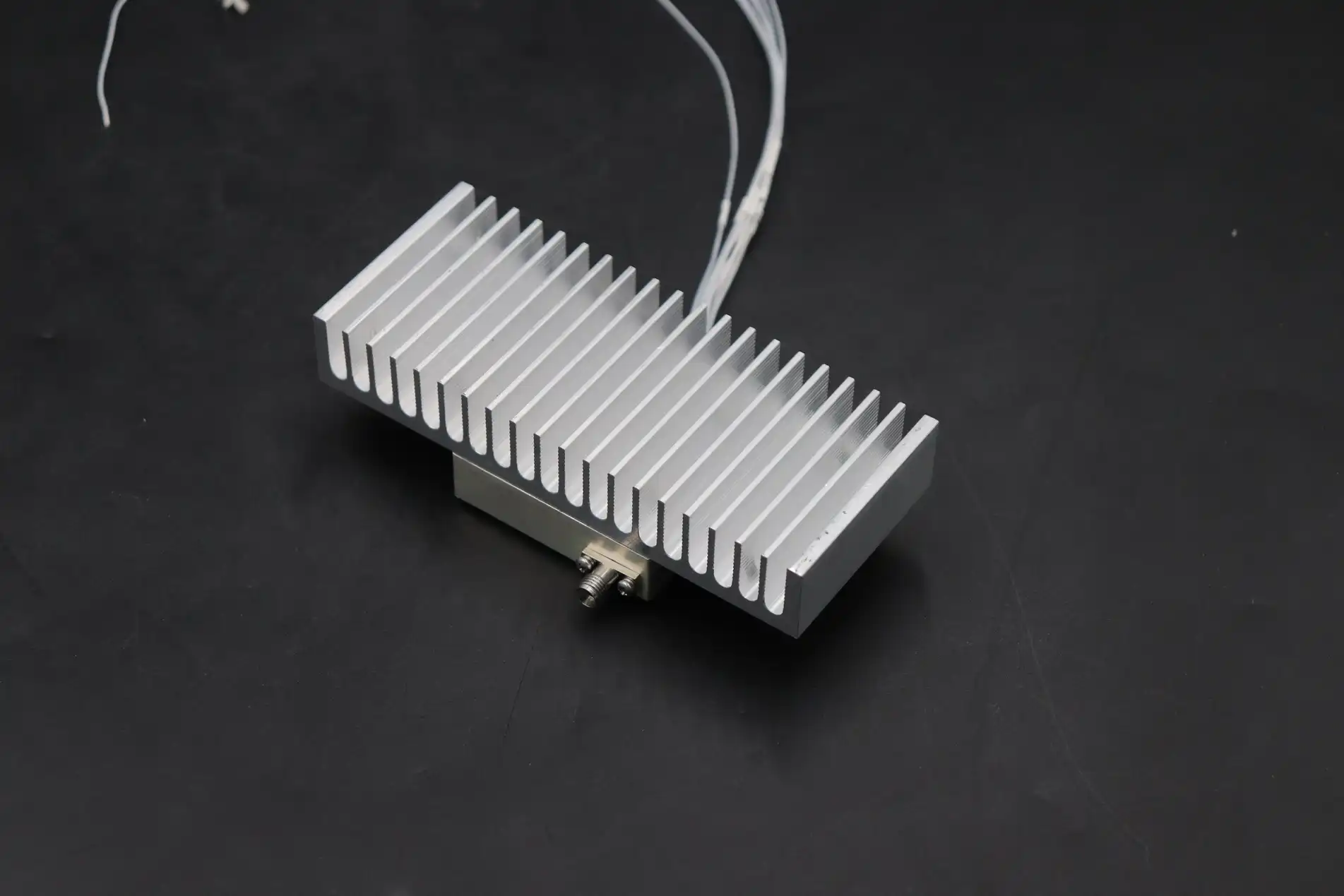
One of the most common operational problems, especially in continuous-duty uses, is that thermal control fails. As fan blades wear out and dust builds up on heat sink fins, the cooling system slowly loses its effectiveness, lowering airflow by 40% or more before workers even notice any changes. Linear amplifier designs lose a lot of power as heat. For example, a 5kVA unit might make 2kW of waste heat that needs to be constantly blown away. Circulating currents make internal losses higher than the official values when amplifiers power highly reactive loads, like inductive motor windings or capacitive filter banks. Operators of satellite ground stations that have long send cycles have written about how temperature rises of just 10°C can cause thermal AC Power Amplifier protection to go off too soon if ventilation isn't good enough.
Power Supply Instability
When there is a dynamic load, the DC power rails that feed the amplifier stages must keep their tight control. It is normal for electrolytic capacitors in the power supply area to lose up to 20% of their maximum capacitance after 5,000 hours of use at high temperatures. This decrease in capacitance raises the output impedance, which lets voltage drop during sudden requests and messes up the output pattern. When switching power supplies fail, they fail in different ways than linear ones. The primary-side switching transistors fail short-circuit, while the secondary-side rectifiers fail open-circuit. This makes problems that aren't symmetrical, which makes analysis harder. Defense companies that test radar parts at wide voltage ranges say that power supply drift outside the ±2% regulation standard throws out months of reliability data.
Systematic Troubleshooting Approach for AC Power Amplifiers
Fixing amplifier problems requires methodical research instead of guessing at the component level. An organized diagnostic procedure cuts down on downtime and stops damage from being done by repair attempts that aren't meant to be fixed.
Initial Symptom Documentation
Before you touch the test tools, make a detailed list of the actions you can see. Write down the exact output voltage and frequency when there is no load and when there is an estimated load. Also, make a note of whether the numbers stay the same or change. Write down all problem messages, the states of all the monitor lamps, and any strange sounds or temperatures. Record oscilloscope images of the output waveform at different time scales. Fast sweeps will show noise artifacts at high frequencies, while slow sweeps will show instability at low frequencies. Take a picture of the link state on the back panel, because intermittent cable flaws can look like internal failures. This paperwork sets the diagnostic standard and is very helpful when talking to equipment makers or specialty repair shops.
Load Verification and Input Signal Analysis
About 30% of what seem to be amplifier problems are actually caused by equipment or signal sources that are tied to the AC Power Amplifier. Remove the load completely and check the output performance into a precision resistor load bank that is rated for the amplifier's full power. If the symptoms go away, the problem is with the load properties, like too much capacitance, inductance, or nonlinear current draw that is too high for the amplifier. Use a spectrum analyzer to check the input signal to make sure the frequency content, intensity, and distortion levels are what you expect them to be. We've seen cases where a random waveform generator that wasn't working right sent a DC-offset signal to the amplifier, which saturated the output stages and made it look like the internal amplifier had failed. When using four-quadrant amplifiers in power-hardware-in-the-loop models, make sure the real-time controller sends out phase-coherent signals that don't have any glitches that could set off safety circuits.
Power Supply Rail Analysis
Check all the DC source voltages while the machine is running and compare the results to the instructions in the repair manual. When voltage changes are bigger than ±5%, it means the power source is breaking down and needs quick attention. When the load changes, use an oscilloscope with DC coupling to look at the rail voltage. Rails that are working properly should have less than 100mV of peak-to-peak ripple, while sources that aren't working well should have several volts of ripple that is tied to the output signal frequency. Check the ratings of the power source fuses and make sure that no one has put in fast-blow fuses where slow-blow types were supposed to go. This can cause annoying trips during normal inrush situations. Thermal imaging cameras show that power transistors and rectifier bridges that aren't working right are 30–50°C hotter than the other parts around them. This gives visual proof before testing at the component level starts.
Component-Level Diagnostics
Once the problem has been narrowed down to certain parts of the system, component testing gives you solid answers. Power transistors fail when their gain drops, their leakage increases, or they become completely open or short. To make sure that specifications match datasheets, use a transistor tester or a curve tracer. Instead of just checking capacitance, capacitors need to be tested for ESR (Equivalent Series Resistance). This is because high ESR means that the capacitor AC Power Amplifier is breaking down in a way that regular multimeters can't see. When coupling transformers and output inductors get shorted turns, the inductance goes down, and the losses go up. Impedance readings at different frequencies show these problems. Protection circuitry false-triggers are often caused by reference voltage sources that are too old or comparator circuits whose limits have moved. This means that the original design parameters must be carefully measured against the new ones. During three-phase motor tests, the 10kVA amplifier of a company we worked with that made comms equipment would sometimes shut down. Documentation of the symptoms showed that shutdowns only happened during motor acceleration stages that lasted two to three seconds. Load testing showed that the peak current needed was higher than the amplifier's instantaneous rating, even though it stayed within its constant rating. The problem was fixed by setting up a soft-start mode in the motor driver. This cut down on the inrush current while keeping the test valid—no need to fix the amplifier. This case shows how thorough analysis can keep you from having to repair parts that aren't needed and facing expensive downtime.
Comparing AC Power Amplifier Models for Reliable Performance
Many practical problems can be avoided by choosing the right amplification technology. For different types of applications, different design methods have clear benefits.
Linear Versus Switching Amplifier Architectures
Linear amplifiers use analog circuits that change the flow of current all the time. They provide very pure signals with a Total Harmonic Distortion (THD) of less than 0.05% and a bandwidth that goes into the hundreds of kilohertz. Because of this, they are perfect for checking magnetic components, susceptibility, and other tasks where product quality is more important than efficiency. Pulse-width modulation is used to create output patterns in switching systems, which are 85–90% efficient compared to 50–60% efficiency for linear amplifiers. For large-scale production testing that needs 50kVA or more, switching amplifiers' lower cooling needs and smaller size make up for their slightly higher THD specs of around 0.3%. Which one you choose relies on whether your application can handle the switching frequency artifacts or needs the pure output that only a linear structure can provide.
Power Rating and Crest Factor Considerations
The nameplate power ratings tell you how much power the device can handle continuously, but many apps have short peak needs that use a lot more power than usual. The crest factor, which is the ratio of the peak voltage to the RMS voltage, tells you if an AC Power Amplifier can handle sudden loads without clipping. For resistive loads, standard designs have crest factors of 3:1. Specialized models, on the other hand, have crest factors of 5:1 or more for moving motors, transformers, and other reactive loads. An amplifier with a constant rating of 5kVA and a crest factor of 3:1 can produce 15kVA peaks for milliseconds, but when a load requiring 20kVA inrush is connected, the safety shuts down, or the waveform becomes distorted. When making choices about what to buy, it's important to look at both steady-state power estimates and the worst-case transient needs that can be shown by measuring the load current.
Output Frequency Range Specifications
Frequency powers are determined by the needs of the application. Electric car charger testing usually happens at 50/60Hz, and harmonic analysis goes up to 2kHz. This means that amplifiers with a 5kHz bandwidth are needed for good harmonic clarity. To test aerospace power systems, the frequency must be able to change from 360Hz to 800Hz while keeping the same bandwidth ratio. This means that amplifiers with a rating of 10kHz or higher are needed. Wider bandwidth amplifiers have more complicated output filter designs and faster feedback loops, which raises the cost but makes the rapid reaction better. It's not possible to get accurate compliance readings when checking power supplies that have active power factor correction because the amplifier's bandwidth limits change the high-frequency current waveforms you're trying to describe. Make sure that the amplifier's bandwidth fits the needs of the application by at least 5 times the highest important frequency component.
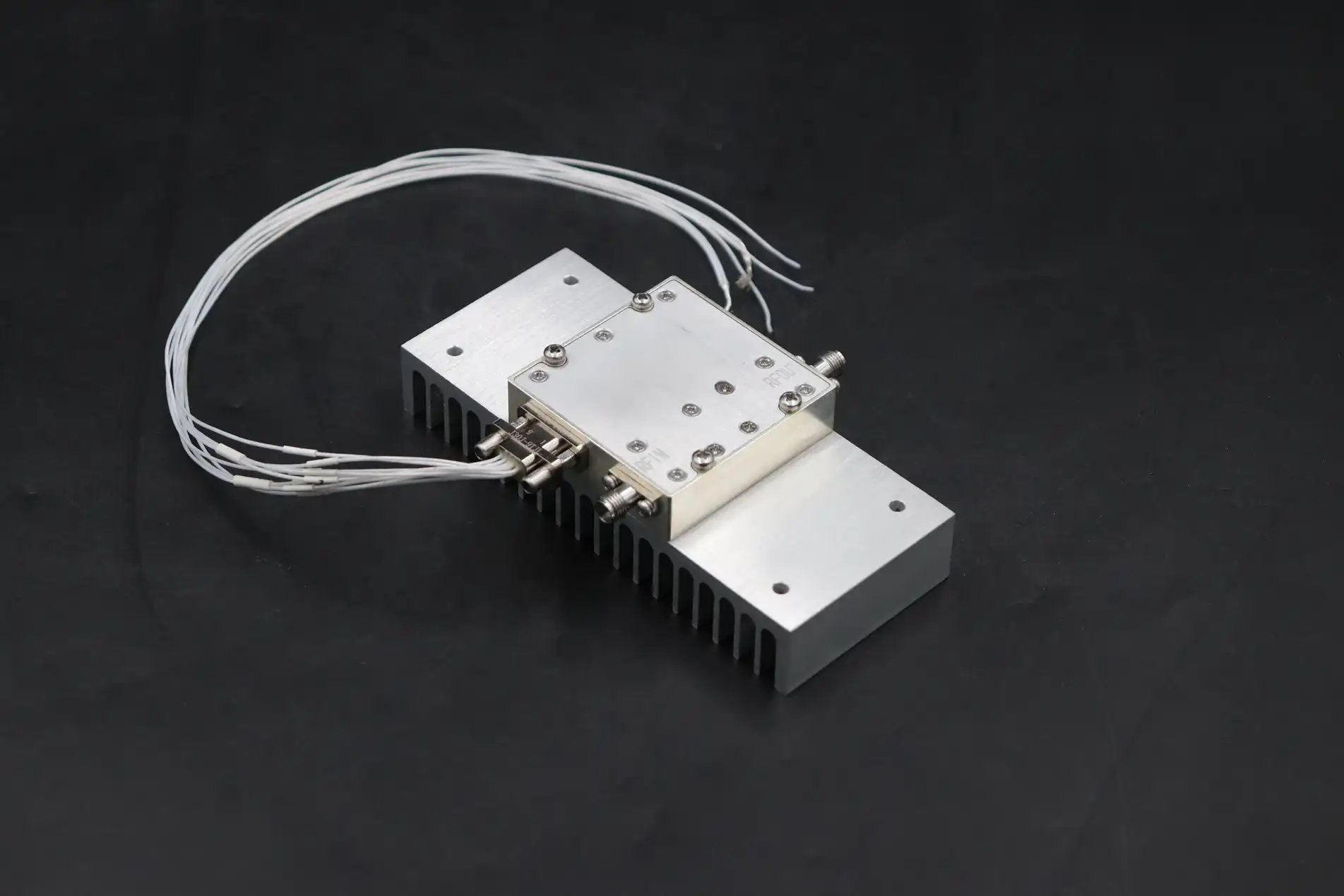
Practical Tips to Reduce Noise and Distortion in AC Power Amplifiers
Even speakers that work properly don't work as well as they could when the way they were installed damages the sound. These optimization methods make things more reliable in a wide range of working conditions.
Grounding and Shielding Strategy
Multi-equipment test setups often have problems with ground loops, but single-point grounding gets rid of them. Heavy copper conductors with low impedance should be used to connect the AC Power Amplifier chassis, signal source, EUT, and measurement tools to a shared star ground point. Do not make ground paths that go around in a circle so that current can flow through more than one way. This is because rotating currents cause voltage drops that couple into signal paths as noise. Shielded wires only need to be grounded at one end, which is usually the source equipment. This keeps shield currents from introducing AC Power Amplifier noise into the middle conductor. Using single-point grounding in our flight testing lab cut the average noise floor from 150mVRMS to less than 20mVRMS. This showed signal characteristics that had been hidden before that were important for acceptance testing.
Proper Load Matching and Cabling
The length and resistance of the output wire affect how stable the amplifier is, especially when reactive loads are present. Use wires that are rated for the full output current and have a circuit cross-section that keeps the voltage drop below 1% when the current is at its highest. Localized power factor adjustment capacitors placed at the load ports instead of the amplifier output lower circulating reactive currents, which is good for inductive loads. When pushing capacitance loads that are higher than the amplifier's maximum, series inductors stop resonances that could make the feedback loop unstable. When using a lot of power, the cable should be less than 10 meters long to keep parasitic inductance and capacitance to a minimum. These things lower the phase margin in the amplifier's control loop.
Environmental Considerations
Ambient conditions profoundly affect amplifier longevity and performance consistency. Keep the working temperature between 15°C and 30°C and the humidity below 70% to keep circuit boards from condensation and improve the stability of parts. Keep amplifiers away from things that make strong electromagnetic fields. For example, variable frequency drives, induction heaters, and RF emitters can all mess up control circuits that are sensitive to it. For ventilation to work properly, air must move freely, and there must be at least the minimum gaps listed in the installation manual, which are usually 30 cm on all ventilated surfaces. We suggest setting up temperature tracking with automatic alerts for when the cooling system breaks down, and the inside temperatures get close to the protection circuit limits.
Conclusion
To fix problems with an AC Power Amplifier correctly, you need to use a methodical diagnostic approach and have a deep understanding of both the instrument's design and your unique application needs. The ways of diagnosing shown here, from writing down the first symptoms to looking at each part individually, make it possible to fix problems quickly and correctly, without making mistakes that cause more downtime. Realizing that about one-third of what seem to be amplifier failures are actually caused by linked equipment or environmental factors makes it even more important to do a full system-level analysis before assuming internal flaws. When companies make purchases based on which providers can show advanced manufacturing, full expert support, and the ability to customize products, they set themselves up for long-term operational success in mission-critical testing settings.
FAQ
How Can I Identify Early Warning Signs of Amplifier Overheating?
Using infrared thermometers, check the temperature of heat sinks and ventilation exhaust air while the system is running normally to get standard readings. Temperatures rising 15 to 20°C above the standard or changes in the sound of the cooling fan speed are signs of growing thermal problems that need to be looked into right away. Many new AC Power Amplifier units have thermal sensors that have warning levels before they shut down. You can turn on these warnings through the setup choices on the front panel to get advanced notice before the safety circuits stop working during important test sequences.
What Differences Exist Between Troubleshooting AC and DC Amplifiers?
When diagnosing an AC amplifier, the focus is on waveform accuracy, frequency response, and output filter performance. When diagnosing a DC amplifier, the focus is on voltage control, ripple rejection, and transient response. AC units have complicated output filtering and feedback correction networks that DC units don't have. This makes failure modes that depend on frequency. In AC amplifiers, protection circuits keep an eye on both RMS and peak volts over a number of cycle periods. In DC amplifiers, on the other hand, protection only reacts to sudden threshold violations. Because these two types of architecture are different, oscilloscopes are needed to diagnose AC amplifiers, but multimeters are usually enough for DC units.
Does Regular Maintenance Actually Prevent Most Common Failures?
Compared to "run-to-failure" methods, preventive maintenance plans that deal with heat management, connection integrity, and component aging clearly increase the service life of amplifiers by 40 to 60%. Cleaning air paths, making sure cooling fans work, checking power lines for discoloration that could mean thermal stress, and testing safety circuits to make sure they work right should all be done every three months. Checking the calibration once a year against precise standards finds parameter drift before readings go beyond what is considered reasonable. This keeps the data accurate in applications that care about quality.
Partner with ADM for Your Precision Power Amplification Needs
For more than 20 years, Advanced Microwave Technologies Co., Ltd. has been making high-precision RF and microwave parts that organizations need to work perfectly in mission-critical situations. We are experts in making waveguide assemblies, coaxial components, and microwave antenna systems, not AC Power Amplifier units. However, our engineering knowledge in signal integrity, thermal management, and precision testing infrastructure directly helps companies fix problems with complicated test equipment setups. Our methods are ISO 9001:2015 approved, and we offer full expert support. These are qualities you should look for in a power amplifier provider. We know that buying things in the defense, aerospace, and telecoms industries requires partners who can show they are good at making and working with engineers quickly.
When your test systems need special RF parts to work with your amplifier-based test methods, our OEM services can make solutions that are exactly what you need. Get in touch with our engineering team at craig@admicrowave.com to talk about how our precision parts can fit into your testing setup and provide the quality assurance and technical support your operations need. We're dedicated to providing the reliable parts that your measurements count on, whether you're adding new test capabilities or improving current ones.
References
1. Johnson, M. T., & Williams, R. A. (2021). Power Amplifier Design and Troubleshooting for Industrial Applications. Institute of Electrical Testing Standards, Technical Publication Series.
2. Nakamura, H., & Schmidt, K. (2020). "Systematic Diagnosis of AC Power Source Failures in Aerospace Testing Environments." Journal of Electronic Test Engineering, Vol. 45, No. 3, pp. 178-195.
3. Anderson, P. L. (2022). Thermal Management in High-Power Linear Amplifiers: Best Practices for Laboratory Environments. American Society for Testing and Quality Assurance.
4. Chen, W., & Rodriguez, M. (2019). "Comparative Analysis of Linear versus Switching Power Amplifier Architectures for Regulatory Compliance Testing." IEEE Transactions on Instrumentation and Measurement, Vol. 68, No. 9, pp. 3342-3351.