





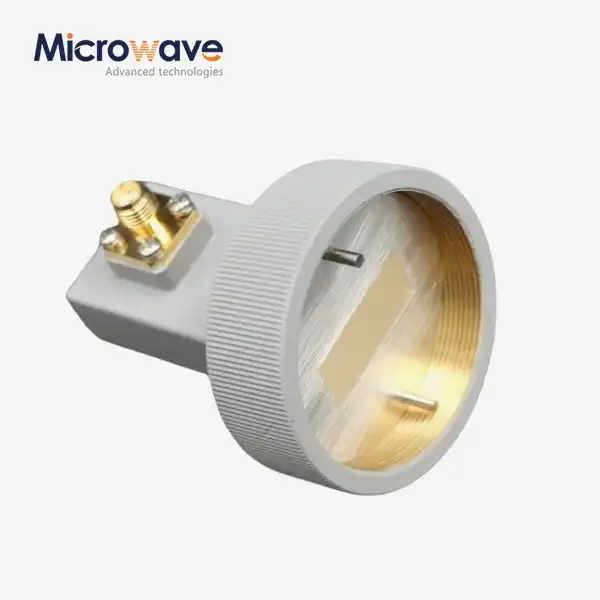
WG Adapter
WG Adapter for Waveguide Systems — Precision Transition Components for Microwave Signal Integrity
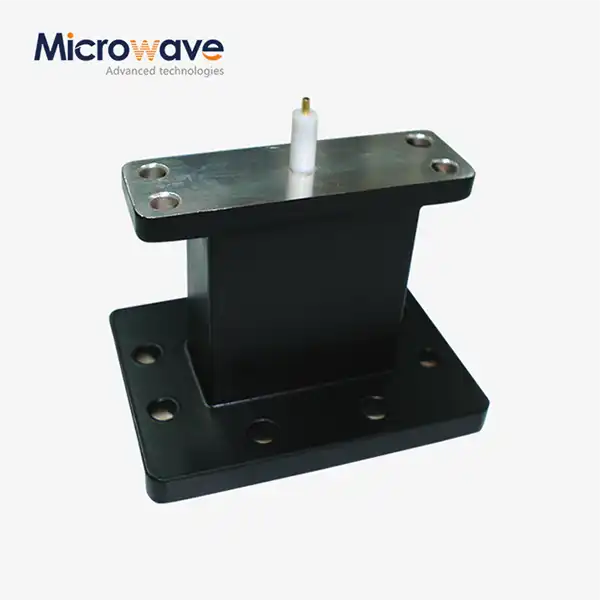
A WG Adapter is a passive transition part that joins waveguide sections that have different cross-section sizes, mounting standards, or flange interfaces. Advanced Microwave Technologies Co., Ltd. (ADM) has been designing and making these parts for over 20 years. They are used in satellite communication, aerospace, radar, and microwave measurement. ADM can test from 0.5 GHz to 110 GHz, and before shipping, each unit is checked for electrical and mechanical performance.
What Is a WG Adapter and Why Does It Matter?
Any microwave system must make sure that the waveguide pieces are connected precisely, physically and electrically. When two parts have differing cross section size, flange types or mounting standard, there are impedance discontinuities, mechanical misalignment and signal loss. This happens when they are joined directly.
This interface mismatch is solved by a product that mates incompatible waveguide ports while maintaining acceptable levels of signal reflection and insertion loss. For this reason, waveguide adapters are one of the most popular passive parts used in microwave assemblies. They are utilised in anything from ground based radar systems to satellite uplink chains.
Materials and Construction
ADM manufactures waveguide adapters using premium base metals selected on their electrical and mechanical properties to meet application needs:
Oxygen-Free Copper (OFC): This is the copper utilised for low-loss, high frequency systems where conductivity is the dominant concern.
Aluminium 6061-T6: The material of choice for weight sensitive applications such as airborne systems where a high degree of structural stiffness is needed with low mass.
Brass: Used in general purpose applications where machinability and corrosion resistance are the primary factors.
It is internally coated with silver (Ag) or gold (Au). Microwaves hitting silver have less resistive loss at the skin layer than when they touch copper, because silver has better surface conductivity. Gold plating is utilised where long-term resistance to oxidation is more significant than slight improvements in conductivity.
Following plating a chemical passivation is used to prevent surface oxidation that could increase the passive intermodulation distortion (PIM) over the life of the product.


Key Technical Specifications
ADM's waveguide adapters are manufactured to precise tolerances in compliance with MIL-DTL-85 standards. The table below summarizes the key performance parameters:
Parameter | Specification |
Frequency Range | 0.5 GHz – 110 GHz |
VSWR | < 1.10 (typical over operating bandwidth) |
Insertion Loss | < 0.05 dB (typical) |
Base Material | OFC / Aluminum 6061-T6 / Brass |
Internal Plating | Silver (Ag) or Gold (Au) |
Pressure Sealing | Available (nitrogen / dry air pressurization) |
Flange Options | Standard and custom waveguide flanges |
Custom Configurations | Available upon request |
Product Types and Configuration Options
WG Adapters come in a number of different configurations to meet the needs of different systems.
Straight Adapters join two waveguide sections together so that they share a shared axis. They are used when the waveguide route is straight but the port sizes or flange standards are different in each section.
Tapered Transition Adapters change the cross-sectional area inside the waveguide slowly from one size to another. The taper shape lowers reflection at the transition point and keeps VSWR low over a large range of frequencies.
When two flanges don't fit together directly, UG-type, CMR, and unique OEM flanges can be changed into each other using a flange-to-flange adapter.
Adapters that can be pressurised have sealed flange interfaces that let nitrogen or dry air be pumped inside. This design is meant for high-power waveguide systems where an electric field concentration at a break could otherwise lead to voltage loss or arcing.
The Vector Network Analyser (VNA) can measure and confirm custom configurations with non-standard dimensions, angular offsets, or special mounting features.
Application Scenarios
Waveguide adapters are used when a signal path goes across the edge of a waveguide specification. Examples of common uses are:
Satellite Communication Systems: Uplink and downlink chains require stable interface matching between antenna feed networks and waveguide runs. For link budget accuracy, low VSWR and steady insertion loss are necessary.
Aerospace and Radar Systems: Airborne radar systems use small waveguide paths to connect feed horns, filters, and receiver front-ends. Because these systems have to be light, aluminium connections that have been silver-plated are a good choice.
Microwave Test and Measurement Gear: In the lab, tools with different waveguide port standards are often connected to each other. Adapters with insertion loss less than 0.05 dB help keep measurements accurate and lower the risk of errors in calibration.
Industrial Microwave Heating Systems: To keep the power stable under load and stop arcing, high-power systems that run all the time need pressurised adapters.
Quality Control and Testing
The 24m Microwave Darkroom that ADM runs has the ability to measure both near-field and far-field. With this facility and an Antenna Plane Near and Far Field Measuring Recombination Chamber, electrical testing can be done over the whole range of frequencies, from 0.5 GHz to 110 GHz.
VSWR, insertion loss, and return loss tests are done on all WG Adapter units across the given frequency band. Before delivery, the dimensions and alignment of the flanges are also checked to make sure they meet the design requirements.
Customization and Supply
ADM supports custom waveguide adapter designs for OEM integrators and system builders. Customers can specify:
· Frequency band and waveguide size (WR designation)
· Flange interface type (standard or proprietary)
· Base material and internal plating
· Pressurization and sealing requirements
· Non-standard transition geometries or mounting features
We can take engineering samples and small batch orders. ADM has offices in Xi'an, Chengdu, Beijing, Tianjin, and Shijiazhuang to help with project coordination and technical advice in the region.
FAQ
Q: What's the difference between a product and a waveguide transfer?
A: People often use these two words to talk about the same thing. What does "adapter" mean? It usually means a short part with a direct connection. "Transition" means a slow change in cross-section or a switch between propagation modes. As things stand, the difference depends on the maker and the facts.
Q: How does a waveguide adapter keep the VSWR low across the frequency range?
A: Tight tolerances on dimensions, the right taper shape in the transition section, and precise flange alignment during assembly are all necessary for low VSWR. For units that are precisely made, a VSWR below 1.10 is normal across the rated bandwidth.
Q: Why is silver used instead of copper for plating inside?
A: Copper is less conductive on the surface than silver. Microwave energy is mostly concentrated at the metal's surface, so silver polishing lowers the resistance losses along the inner wall. The benefit is greatest at millimetre wave frequencies above 30 GHz, which are very close to the skin's surface.
Q: Can ADM make adapters for waveguide sizes that aren't standard?
A: Yes. It is possible to use non-standard dimensions and transition shapes. Before they are sent out, custom designs are checked with VNA measurements to make sure that the goals for insertion loss and impedance matching are met.
Q: Are there waveguide adapters that are pressurised?
A: Yes. For high-power systems, there are adapters that can be pressurised and have sealed flange interfaces. Pressurising the inside with nitrogen or dry air stops the electric field from concentrating and the voltage from dropping at the transition contact.
Q: What kinds of materials should be used for applications that need to be airborne or sensitive to weight?
A: Aluminium 6061-T6 with silver or gold plating on the inside is the standard material for radar systems in space and the air, where reducing the weight of the parts is important for the design.
Contact Us
Contact the ADM technical team at craig@admicrowave.com to discuss your WG Adapter requirements or request a custom quote.
YOU MAY LIKE
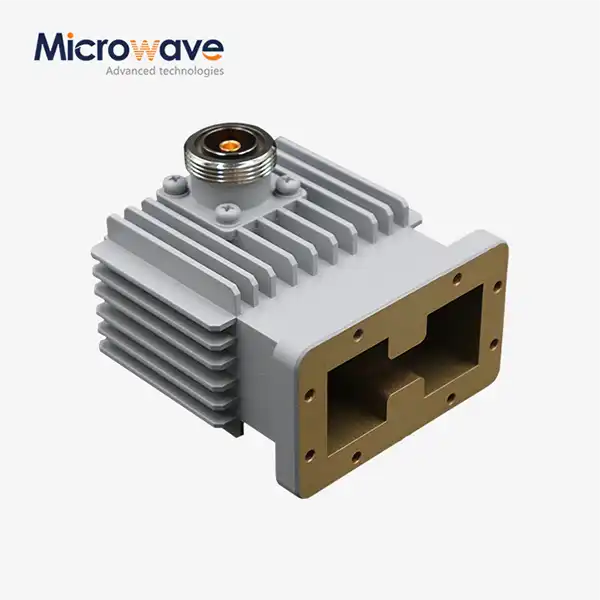 VIEW MOREHigh Power Waveguide to Coaxial Adapter
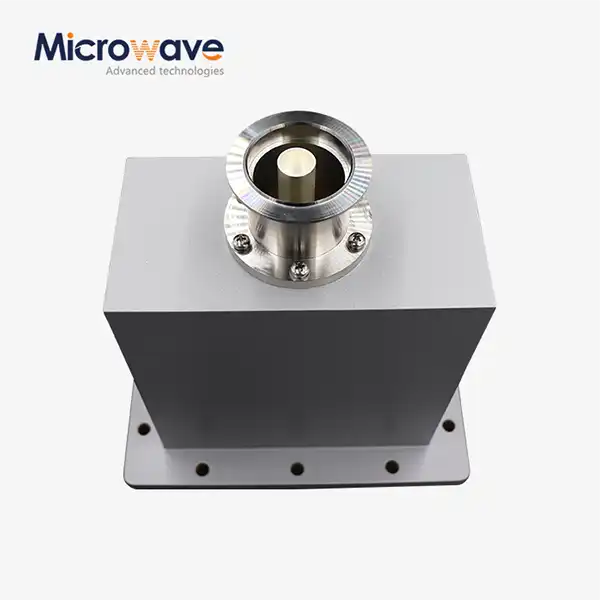 VIEW MOREEnd Launch Waveguide to Coaxial Adapter
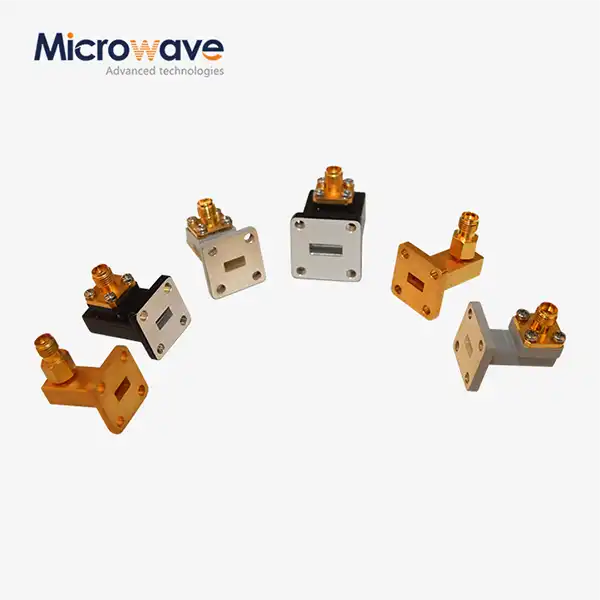 VIEW MORERight Angle Waveguide To Coaxial Adapter
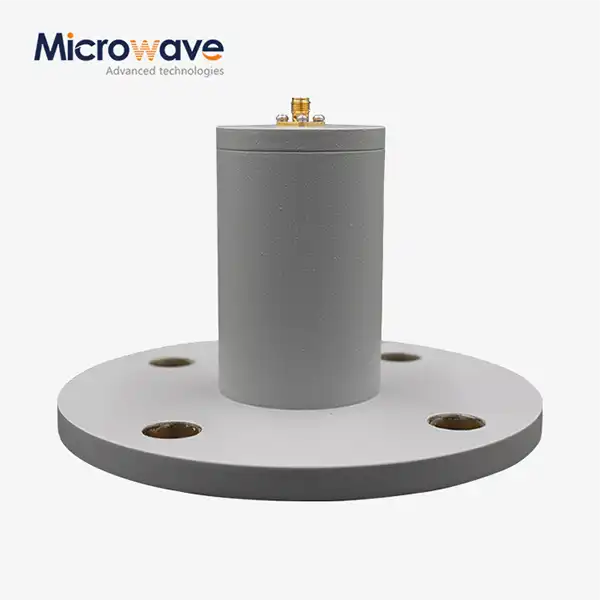 VIEW MORECircular Waveguide To Coaxial Adapter
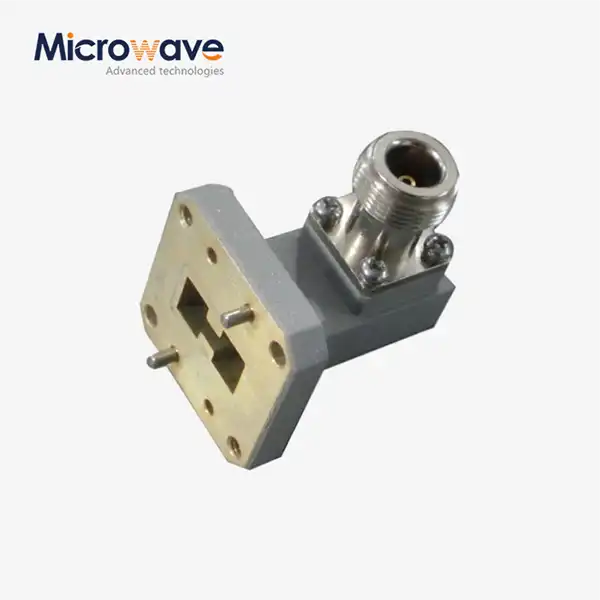 VIEW MORERight Angle Double Ridged WG To Coaxial Adapter
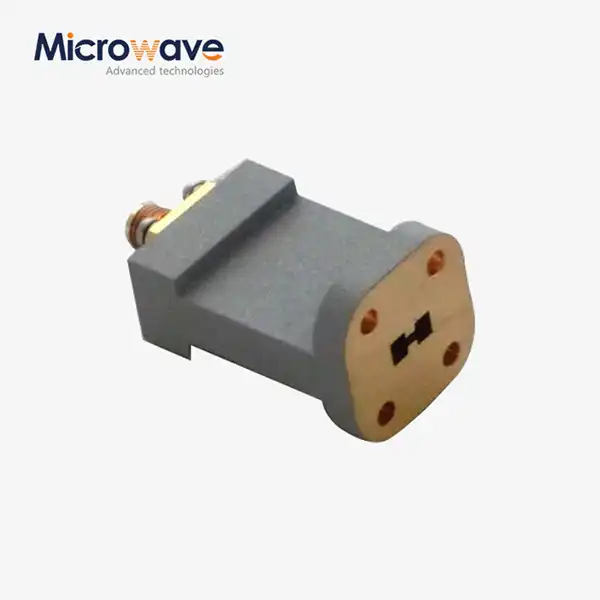 VIEW MOREEnd Launch Double Ridged WG To Coaxial Adapter
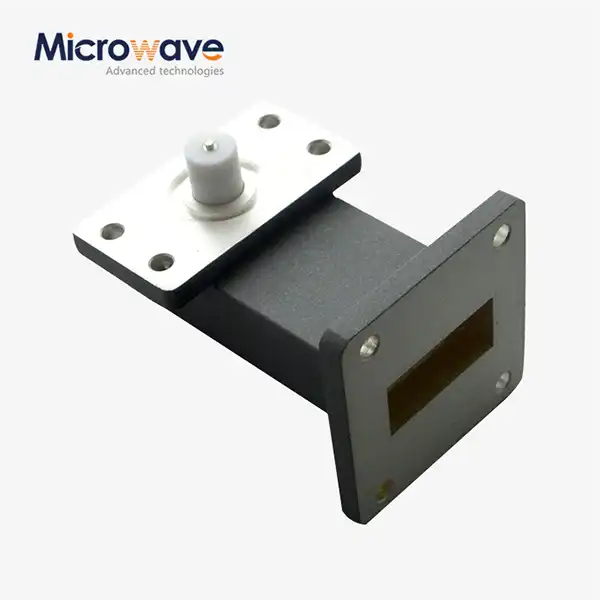 VIEW MORERight Angle Waveguide to Microstrip Adapter
 VIEW MOREEnd Launch Waveguide to Microstrip Adapter