




Waveguide Straights and Transitions
Waveguide Straights and Transitions for High-Frequency RF Systems
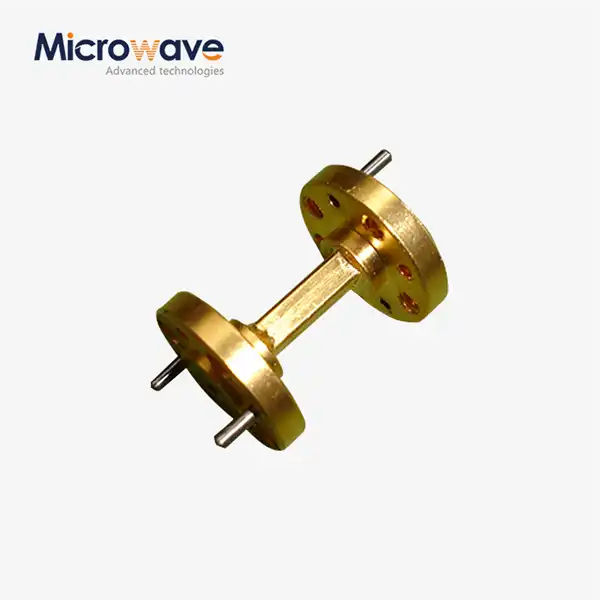
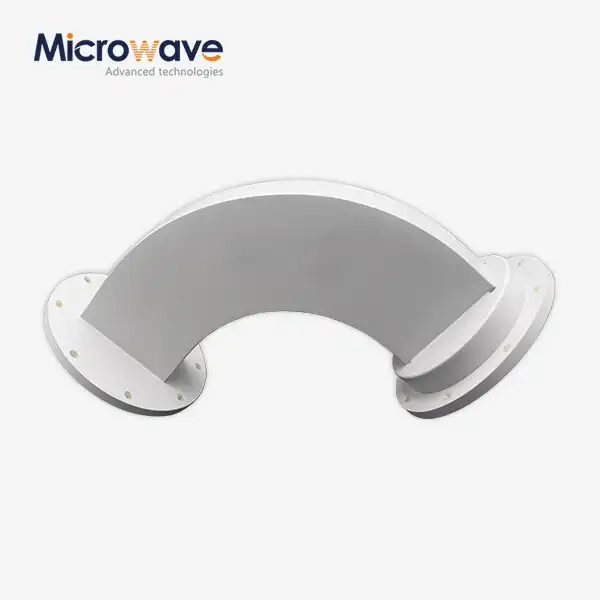
Advanced Microwave Technologies (ADM) makes Waveguide Straights and Transitions in standard sizes WR180 through WR750, with different combinations of length and base. These parts are made to move microwave energy with stable phase response and managed attenuation across frequency bands, from the L-band to the lower millimeter-wave range. Cross-section shapes that can be used are square, circular, single-ridged, double-ridged, flat rectangular, rectangular, square, and rectangular. If you ask, you can get custom sizes and non-standard combinations.
What Are Waveguide Straights and Transitions?
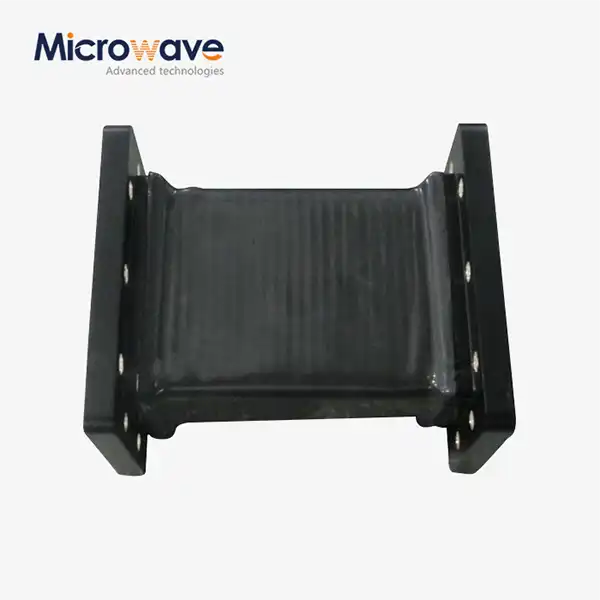
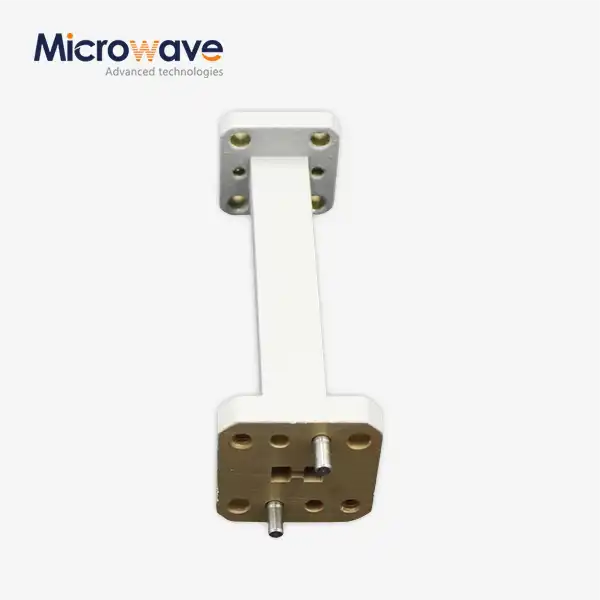
When it comes to high frequencies, especially above 1 GHz, waveguide straights are rigid metal conduits with a rectangular or circular cross-section that carry microwave energy between system components with less loss than coaxial cable.
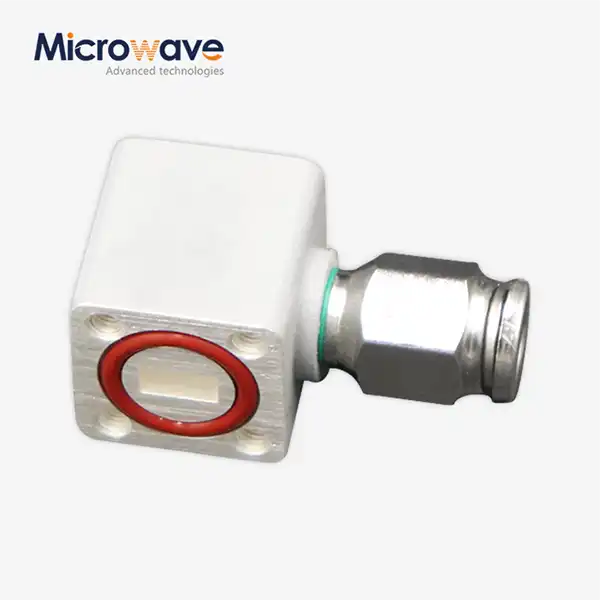
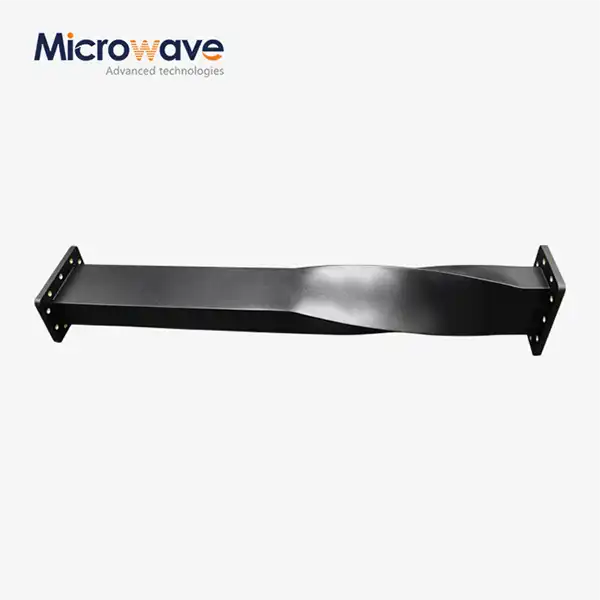
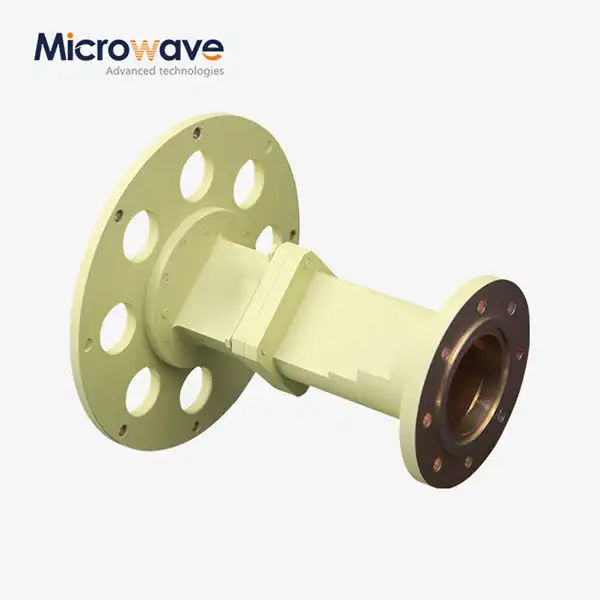
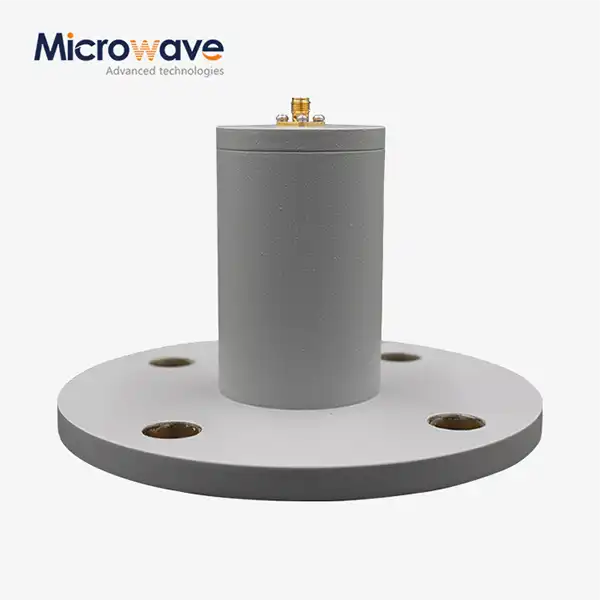
There are interface parts called transitions that connect waveguides with different shapes (like square to round), sizes (like tapers), or types of transmission media (like coaxial-to-waveguide adapters). To cut down on echoes at the junction, they match the impedance and change the mode.
There are some practical issues that both types of parts have to deal with, such as insertion loss in coaxial lines at high frequencies, managing heat in high-power radar feeds, the risk of voltage breakdown at peak power levels, and complex signal routing within limited mechanical spaces.


Key Technical Specifications
Parameter | Value / Standard |
Standard Waveguide Sizes | WR180 – WR750 |
Custom Sizes | Available on request |
Standards Compliance | EIA (WR series), MIL-DTL-85 |
Base Materials | OFHC Copper, Aluminum 6061-T6, Brass / Coin Silver |
Surface Finish Options | Silver plating, Gold plating, Bare |
Flange Types | UG, CPR, PBR, Choke, Cover |
Waveguide Cross-Sections | Rectangular, Flat rectangular, Square, Circular, Single-ridged, Double-ridged |
Materials and Surface Finish
Selecting the correct material for Waveguide Straights and Transitions affects system weight, insertion loss, and long-term corrosion resistance.
OFHC Copper produces the lowest attenuation and is straightforward to solder or braze. It is the preferred choice when minimizing insertion loss is the primary design requirement.
Aluminum 6061-T6 reduces component mass substantially. It is commonly specified for airborne platforms and satellite payloads where weight reduction is a higher priority than achieving the absolute minimum loss.
Brass / Coin Silver offers a practical balance of machinability and conductivity for general-purpose applications.
Surface finish affects performance because microwave currents are confined to a thin surface layer at high frequencies. Silver plating reduces ohmic loss relative to bare brass or aluminum. Gold plating provides corrosion resistance in humid or chemically aggressive environments; it is marginally less conductive than silver.
Waveguide Cross-Section Types
ADM's product range covers the following geometries:
· Rectangular waveguide — the standard geometry for most microwave transmission applications
· Flat rectangular and medium flat rectangular — suited to installations with limited vertical clearance
· Square waveguide — used in dual-polarization signal paths
· Circular waveguide — compatible with rotary joints and many antenna feed configurations
· Single-ridged and double-ridged waveguide — provide usable bandwidth beyond what standard rectangular guides support
All geometries are available in sizes from WR180 to WR750. Dimensions outside this range can be produced to order.
Application Areas
Satellites and Earth Stations for Communication
Transitions link the outputs of high-power amplifiers that are rectangular waveguides to antenna feeds that are circular. The parts that are used in space-qualified assemblies have to be able to handle the program's thermal vacuum cycling and mechanical vibration standards.
Radar Systems for Defence
Waveguide straights are used in feed networks for radar systems in the air and on ships. Precision transitions let signals flow through limited mechanical spaces while keeping the phase correct, which is important for beamforming performance.
Particle Accelerators (LINACs)
RF energy from klystron sources is sent to structures that speed things up through waveguide runs that need to be compatible with vacuum and have ways to handle heat caused by RF.
Test and Measure Microwaves
Used in test sets in the lab and in production where signal integrity and phase stability have a direct effect on how accurate measurements are.
Quality Control and Testing
Vector Network Analyzer (VNA) Testing — Full-band sweep measurements verify insertion loss and return loss across the specified frequency range. Responses are checked for flatness and absence of resonance anomalies.
CMM Dimensional Inspection — Internal waveguide dimensions are verified against EIA and MIL standards. Flange flatness and alignment are measured, since gaps at flange interfaces can degrade RF performance or cause arcing under high-power conditions.
Pressure and Leak Testing — Applied to components intended for pressurized systems using dry nitrogen or SF6. Helium leak detection is used for assemblies with hermetic sealing requirements.
Surface Finish Measurement — Internal surface roughness is measured to confirm it meets the specified limit, which affects resistive loss at operating frequency.
ADM's facility in Xi'an includes a 24-meter microwave anechoic chamber equipped for near-field and far-field antenna and component measurements from 0.5 GHz to 110 GHz.
Customization and Engineering Support
Standard Waveguide Straights and Transitions configurations cover WR180 to WR750 with multiple flange options. For requirements outside this range — including non-standard waveguide sizes, alternative materials, or geometrically complex transitions — ADM's engineers can work from customer specifications to develop appropriate solutions.
ADM operates technical offices in Chengdu, Beijing, Tianjin, and Shijiazhuang in addition to its Xi'an headquarters, providing direct engineering support for system integration and application questions.
FAQ
Q: What's the difference between a step change and a straight line transition?
A: A taper transition slowly changes sizes over a length that is usually longer than one wavelength. This method reduces reflections to a minimum and allows for a wide working bandwidth. A step transition uses separate quarter-wave impedance steps. It is smaller, but it only works with a smaller range of frequencies.
Q: How do I decide between aluminium and copper?
A: When low insertion loss and easy solderability are the most important things, use OFHC copper. Use aluminium 6061-T6 for weight-sensitive parts like hardware that will be sent by air or space, where a small increase in loss is okay in exchange for less mass.
Q: What is the functional difference between a choke flange and a cover flange?
A: Cover flanges have flat faces that fit together. A choke flange has a quarter-wavelength grooved channel that keeps the RF link strong even if there is a small mechanical gap or gasket between the flanges. This lowers the risk of arcing at high power levels and stops radiation from leaking out.
Q: Do waveguide changes go in a certain direction?
A: Not really. Waveguide transitions are passive parts that work the same way in both directions of a signal. Power levels must stay below what the smaller cross-section in the assembly can handle before it breaks.
Q: Does ADM make waveguides in sizes other than WR180 to WR750?
A: Yes. There are non-standard sizes and designs that are made just for you. Get in touch with the ADM team to talk about your application's frequency range, geometry, and mechanical limits.
Contact Us
Send your specifications or quote request for Waveguide Straights and Transitions to craig@admicrowave.com. ADM's engineering team will follow up to discuss your requirements.