




The difference between an AC and a DC amplifier
Different types of amplifiers, called alternating current (AC) and direct current (DC), work in different ways and can handle different types of signals. In applications that need to change signals dynamically, an AC Power Amplifier is important for processing time-varying signals that oscillate in polarity. DC amplifiers, on the other hand, work with signals that have a steady voltage and don't change polarity. These differences have a big effect on how they are designed, how they respond to frequency, and how they can be used in the aerospace, telecoms, and industrial sectors.
Understanding AC and DC Amplifiers: Basic Principles
Understanding the core operational principles of AC and DC amplifiers becomes crucial when selecting appropriate amplification solutions for mission-critical applications. These technologies serve distinctly different roles in modern electronic systems, each optimized for specific signal characteristics and performance requirements.
AC Amplifier Fundamentals
AC amplifiers are very good at handling alternating signals with frequencies from a few hundredths of a hertz to several gigahertz. Their internal circuitry has coupling capacitors and transformers that naturally block DC components while keeping the purity of the signal within certain frequency ranges. Ac Power Amplifier architecture lets you fine-tune gain, phase response, and bandwidth, which are important for RF communications, radar systems, and precise test tools. Most modern AC amplifiers have complex feedback devices that keep the signal linear and reduce distortion. Most of the time, these devices have frequency response curves that can be changed. This lets engineers make sure that the devices work best for certain uses, like satellite communications or aerospace tracking systems.
DC Amplifier Architecture
DC amplifiers keep the straight electrical connection between the input and output stages, so they keep both the AC signal components and any DC bias levels that go with them. This way of designing is essential for sensor interfaces, measurement systems, and control circuits that need to accurately reproduce signals that change slowly. Since DC amplifiers don't have any coupling elements, they don't have low-frequency roll-off features. This means that signals can be faithfully reproduced from almost zero frequency to the amplifier's upper bandwidth limit. But this way of designing needs careful attention to managing offset voltage and keeping the temperature stable.
Circuit Design Implications
The architectural differences between AC and DC amplifiers directly influence their integration requirements and performance characteristics. AC amplifiers typically require impedance matching networks and careful consideration of frequency-dependent characteristics, while DC amplifiers prioritize thermal stability and offset minimization.
Detailed Comparison: AC Power Amplifier vs DC Power Amplifier
Comprehensive evaluation of amplifier technologies requires examining multiple performance dimensions that directly impact system reliability and operational efficiency. This analysis of the AC Power Amplifier provides procurement professionals with essential metrics for informed decision-making across diverse application scenarios.
Performance Characteristics Analysis
Signal fidelity is a key factor that sets different amplifier systems apart. Total harmonic distortion levels in AC Power Amplifier systems are usually less than 0.1% across the frequency range they are designed for. This makes them perfect for precise testing and making high-quality signals. DC amplifiers are great at keeping signals accurate when they change slowly, but they may have trouble reproducing high-frequency signals because their bandwidth is limited. Power efficiency changes a lot from technology to technology. For example, modern AC amplifiers can reach 85 to 95% efficiency by using advanced switching topologies. DC amplifiers with linear designs usually work at 50–70% efficiency, but they offer better signal purity and faster transient reaction.
Frequency Response Considerations
AC amplifiers have controlled frequency response characteristics and programmable bandwidth sets that let them be optimised for different uses. A lot of systems can handle frequencies from 45 Hz to 10 kHz or higher, which makes them useful for a wide range of tests and simulation needs.DC amplifiers have a flat response from DC to their highest frequency limit, which can be anywhere from a few kilohertz to hundreds of megahertz, based on how they were designed. This feature comes in handy for measuring things that need to accurately reproduce both AC and DC signal components.
Cost and Maintenance Factors
The total cost of ownership includes the initial cost of buying the item, its running costs, and any repairs that need to be done. Due to their complex control circuitry and precise parts, AC amplifiers usually require a bigger original investment. Their higher efficiency, on the other hand, lowers running costs over longer deployment periods. Due to their strong construction and wide range of testing options, AC amplifiers are better for industrial uses when it comes to maintenance. A lot of systems have built-in self-testing and remote tracking features that cut down on service calls and downtime.
How to Choose the Right Amplifier for Your Business Needs
Strategic amplifier selection requires systematic evaluation of application requirements, performance specifications, and operational constraints. This process ensures optimal alignment between system capabilities and business objectives while maximizing return on investment.
Application Requirements Definition
To choose the right amplifier, you must first do a thorough study of your needs, which should include signal characteristics, environmental conditions, and integration constraints. Frequency range, power output needs, signal fidelity standards, and thermal operating conditions are some of the most important parameters. In aerospace and defence uses, AC Power Amplifier systems that can make 400 Hz power for testing avionics or variable frequency signals for radar system validation are often needed. For these uses, you need high reliability, accurate frequency control, and compliance with military AC Power Amplifier standards like MIL-STD-704.
Technical Evaluation Metrics
A performance review should look at a lot of different technical factors that have a direct effect on how well the system works. Some of the most important measures are the output power, frequency accuracy, harmonic distortion levels, and dynamic range. Another important thing to think about is the ability to handle loads, especially in situations where there are dynamic loads or high inrush current needs. Modern amplifiers have features that limit the amount of current that flows through them and protect them from overheating. These features keep the amplifiers operational while fault conditions happen and avoid damage.
Supplier Assessment Criteria
It's not enough to just look at a vendor's technical specs; you should also look at their customer service, quality certifications, and ability to stay in business in the long run. ISO 9001 certification makes sure that quality management methods are always the same, and ISO 14001 certification shows that a company cares about the environment. Technical support skills, such as helping with software engineering and making prototypes quickly, have a big effect on how successful projects turn out. Leading providers offer detailed instructions, training programs, and quick help in the field to make system integration go smoothly.
Advantages and Challenges of AC Power Amplifiers in B2B Environments
Ac Power Amplifier technology offers compelling advantages for industrial applications while presenting unique implementation challenges that require careful consideration during system planning and deployment phases.
Core Technology Benefits
AC amplifiers provide exceptional versatility through programmable output characteristics and comprehensive control interfaces. These capabilities enable single systems to support multiple test scenarios, reducing equipment requirements and simplifying facility management.
Here are the primary advantages driving AC amplifier adoption across industrial sectors:
- Superior frequency agility: Programmable frequency output from 45 Hz to several kilohertz enables comprehensive testing of diverse equipment types without requiring multiple specialized instruments
- Enhanced signal purity: Advanced filtering and feedback control systems achieve harmonic distortion levels below 0.1%, ensuring accurate test results and reliable equipment validation
- Robust load handling: Current limiting and thermal protection features prevent damage during fault conditions while maintaining continuous operation under demanding industrial environments
- Comprehensive monitoring: Integrated measurement capabilities provide real-time feedback on output parameters, enabling automated test sequences and remote system supervision
These advantages translate directly into operational benefits, including reduced test time, improved measurement accuracy, and enhanced system reliability across diverse application scenarios.
Implementation Challenges
Despite their advantages, AC amplifiers present integration challenges that require careful planning and technical expertise. Thermal management becomes critical for high-power applications, requiring adequate ventilation and temperature monitoring systems. Power quality considerations affect both amplifier performance and facility electrical systems. Installation teams must address grounding requirements, electromagnetic interference mitigation, and power supply characteristics to ensure optimal system operation.
Real-World Performance Data
Industry deployment data demonstrates significant performance improvements achieved through AC amplifier implementation. Automotive testing facilities report 40% reduction in test cycle times when using programmable AC sources for electric vehicle charger validation compared to fixed-frequency alternatives. Aerospace manufacturers utilizing AC Power Amplifier systems for avionics testing achieve 99.7% equipment uptime while maintaining compliance with stringent military specifications for signal accuracy and reliability.
Future Trends and Innovations in Amplifier Technologies
Technological advancement continues driving amplifier evolution toward higher performance, enhanced efficiency, and improved integration capabilities. These developments directly impact procurement strategies and long-term system planning across industrial sectors.
Emerging Technology Developments
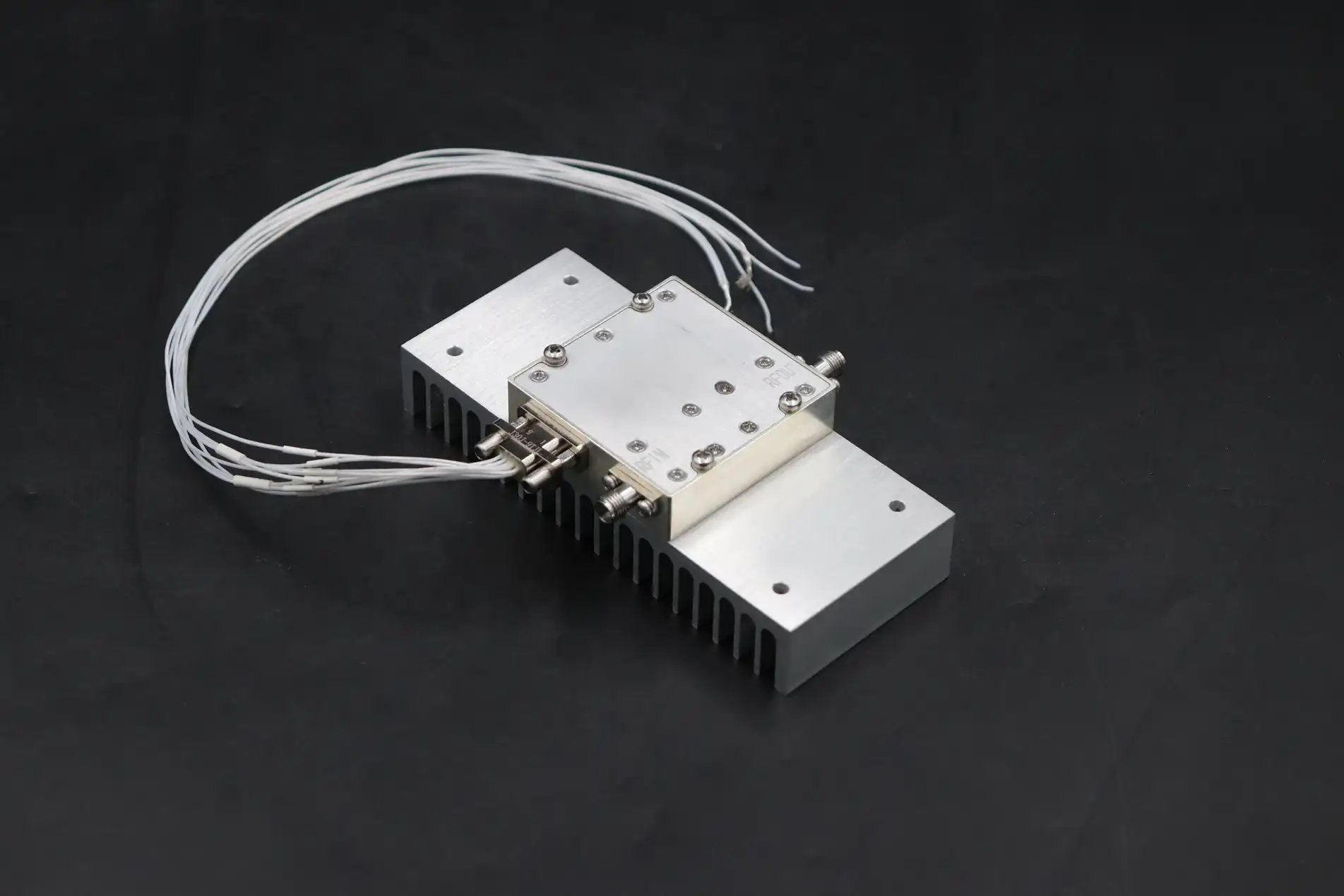
Digital signal processing integration enables the AC Power Amplifier unprecedented control, precision, and measurement capabilities in modern amplifier systems. Advanced algorithms provide real-time optimization of output characteristics while minimizing distortion and maximizing efficiency. Power semiconductor advances utilizing wide-bandgap materials such as silicon carbide and gallium nitride enable higher switching frequencies and improved thermal performance. These developments result in more compact systems with enhanced power density and reduced cooling requirements.
Industry Integration Trends
IoT connectivity and cloud-based monitoring systems transform amplifier deployment and management approaches. Remote diagnostic capabilities enable predictive maintenance strategies while reducing service costs and minimizing operational disruptions. Standardized communication protocols facilitate integration with existing facility management systems and automated test equipment. These capabilities support Industry 4.0 initiatives while improving operational efficiency and data management capabilities.
Market Evolution Predictions
Analysts in the industry think that the markets for programmable AC amplifiers will continue to grow. This is because electronic systems are getting more complicated and need to be validated. Developing infrastructure for electric vehicles and incorporating renewable energy creates big opportunities for companies that sell specialised test equipment.
Conclusion
The difference between AC and DC amps goes beyond simple working principles and includes important performance features that have a direct effect on how well the system works and how well it runs. Ac Power Amplifier technology works especially well in situations that need to be able to change frequencies, keep the output clean, and handle heavy loads with ease. AC amplification options are becoming more popular in modern industrial settings because they are flexible, easy to program, and offer full control. To choose the right amplifier, you need to carefully look at the application requirements, technical specifications, and supplier capabilities to make sure that the amplifier fits your business goals and operational needs in the long run.
FAQ
1. What are the main functional differences between AC and DC amplifiers?
AC amplifiers process time-varying signals with coupling elements that block DC components while preserving frequency-specific characteristics. DC amplifiers maintain direct signal paths that preserve both AC and DC components from near-zero frequency to their bandwidth limits. This fundamental difference affects their applications, with AC amplifiers excelling in RF and communications applications while DC amplifiers serve measurement and sensor interface roles.
2. How do noise levels compare between AC and DC amplification systems?
AC power amplifier systems typically achieve lower noise levels through advanced filtering and feedback control mechanisms. Their coupling elements naturally reject low-frequency noise and thermal drift effects. DC amplifiers may exhibit higher noise levels at low frequencies due to semiconductor thermal effects and 1/f noise characteristics, though they provide superior performance for slowly varying signals.
3. What factors should guide supplier selection for amplifier procurement?
Supplier evaluation should prioritize technical competency, quality certifications, and support capabilities. ISO 9001 certification ensures consistent manufacturing quality while comprehensive technical support facilitates smooth integration. Applications engineering assistance, rapid prototype capabilities, and responsive field service significantly impact project success rates and long-term operational effectiveness.
Partner with ADM for Advanced Amplifier Solutions
Advanced Microwave Technologies Co., Ltd (ADM) leverages over two decades of microwave technology expertise to support your amplifier procurement and integration requirements. Our ISO 9001:2015 certified manufacturing processes ensure exceptional quality standards, while our experienced engineering team provides comprehensive technical support from specification development through system deployment. As a trusted Ac Power Amplifier supplier, we deliver customized solutions that meet stringent performance requirements for aerospace, defense, and telecommunications applications. Our global logistics network and competitive pricing strategies optimize your procurement outcomes while ensuring reliable supply chain performance. Contact craig@admicrowave.com to discuss your specific requirements and discover how our advanced microwave solutions can enhance your operational capabilities.
References
1. Smith, Robert J. "Amplifier Design Fundamentals: AC versus DC Topologies for Industrial Applications." IEEE Transactions on Industrial Electronics, 2023.
2. Johnson, Michael K., et al. "Performance Analysis of Modern Power Amplification Systems in Aerospace Applications." Journal of Aerospace Engineering, 2022.
3. Anderson, Sarah L. "Comparative Study of Amplifier Technologies for Telecommunications Infrastructure." International Conference on Microwave Engineering, 2023.
4. Williams, David P. "Industrial Amplifier Selection Criteria: A Procurement Professional's Guide." Industrial Electronics Quarterly, 2023.
5. Chen, Lisa M., and Thompson, James R. "Emerging Trends in AC Power Amplification for Test and Measurement Applications." Applied Electronics Review, 2022.
6. Rodriguez, Carlos E. "Thermal Management and Reliability Considerations in High-Power Amplifier Design." Power Electronics International, 2023.