




RHCP Quadrifilar Helix Antenna Benefits in RF Applications
RHCP (Right-Hand Circularly Polarized) quadrifilar helix antennas represent a cornerstone technology in modern RF communications, delivering unmatched signal reliability and omnidirectional coverage across satellite, telemetry, and navigation systems. These specialized antennas feature four helical elements arranged to produce circular polarization, effectively mitigating multipath interference and maintaining signal integrity even when platforms tumble or rotate. The versatility and robust performance characteristics make them indispensable for procurement managers, systems engineers, and OEMs sourcing components for mission-critical applications. This guide explores the technical fundamentals, core benefits, comparative advantages, and procurement considerations that define successful integration of these antennas into defense, aerospace, telecommunications, and industrial systems.
Understanding RHCP Quadrifilar Helix Antenna Technology
The quadrifilar helix antennas are different because they have a complex four-element spiral shape. Each element gets power at exact 90-degree phase intervals (0°, 90°, 180°, and 270°). This phase quadrature feeding arrangement makes the typical cardioid radiation pattern, which gets rid of the zenith null that many antenna designs have. This configuration creates right-hand circular polarization, which is very useful for satellite communications, since signals have to travel through the ionosphere and face Faraday rotation effects that would weaken transmissions that are linearly polarized.
Design Parameters That Define Performance
The antenna's resonant frequency and bandwidth are set by its turn spacing, helix diameter, and wire gauge. Engineers have to carefully match these physical dimensions with the frequency needs of the process. An antenna that is properly built keeps its axial ratio below 3 dB across its intended beamwidth. This ensures polarization purity, which directly affects how efficiently the link budget is used. The internal balun network's phase balance is very important—even small changes from ideal quadrature timing hurt the radiation pattern and make polarization losses worse.
Material Selection and Environmental Resilience
Dielectric ceramic cores are used in more advanced designs to make things smaller, and flexible printed circuit wraps are used to cut down on weight without affecting electrical performance. Our Advanced Microwave Technologies Co., Ltd. quadrifilar helix antennas are made from materials that have been tested to MIL-STD-810 standards. This means that they will stay the same size at temperatures ranging from -40°C to +85°C. The encapsulation protects against water and dust up to IP67, which is important for sites in difficult environments on the ground, in the air, or at sea.
Core Benefits of RHCP Quadrifilar Helix Antennas in RF Applications
The engineering benefits of quadrifilar helix antennas are directly translated into operational benefits that help RF system integrators solve their most important problems. When procurement teams know about these benefits, they can use long-term performance wins and lessened system complexity to support the initial investment.
Superior Multipath Rejection and Signal Reliability
In cities, mountainous areas, and on ships, systems cause complicated multipath propagation situations where signals that are reflected get in the way of direct broadcasts. Due to their circular polarization, these antennas block cross-polarization signals by about 20 dB, essentially blocking signals that come in with the opposite-hand polarization. This feature is very helpful for keeping GPS accuracy for precision farming equipment, making sure that drone operations don't lose their telemetry links, and keeping sound clear in handheld satellite communications that are close to conductive surfaces.
Omnidirectional Coverage for Dynamic Platforms
The quadrifilar helix antennas keep gain constant across 360 degrees of azimuth, while directional antennas need mechanical tracking and phased array systems need complicated beam guiding electronics. The hemispherical elevation pattern works well from the zenith down to 10 to 15 degrees above the horizon, picking up satellite signals all the way around their visible arc. This feature means that antennas on mobile platforms don't have to be pointed precisely. For example, CubeSats can keep telemetry links open during the initial tumbling phases, UAVs can keep GPS lock during aggressive banking maneuvers, and handheld devices can work no matter which way the user is facing.
Frequency Versatility Across Critical Bands
These days, quadrifilar helix antennas can work at frequencies ranging from 1 GHz to 40 GHz, which include L-band GPS/GNSS (1.2–1.6 GHz), S-band satellite communications (2-4 GHz), and higher-frequency telemetry uses. Our designs at Advanced Microwave Technologies Co., Ltd. consistently achieve VSWR performance below 1.5:1 across certain bandwidths. This has been proven by measurements taken in our 24-meter microwave lab using Vector Network Analyzers that are in line with national standards. This flexibility in frequency lets system makers choose a single antenna layout for all product lines. This makes managing inventory easier and lowers the cost of qualification.
Compact Form Factor Enabling System Integration
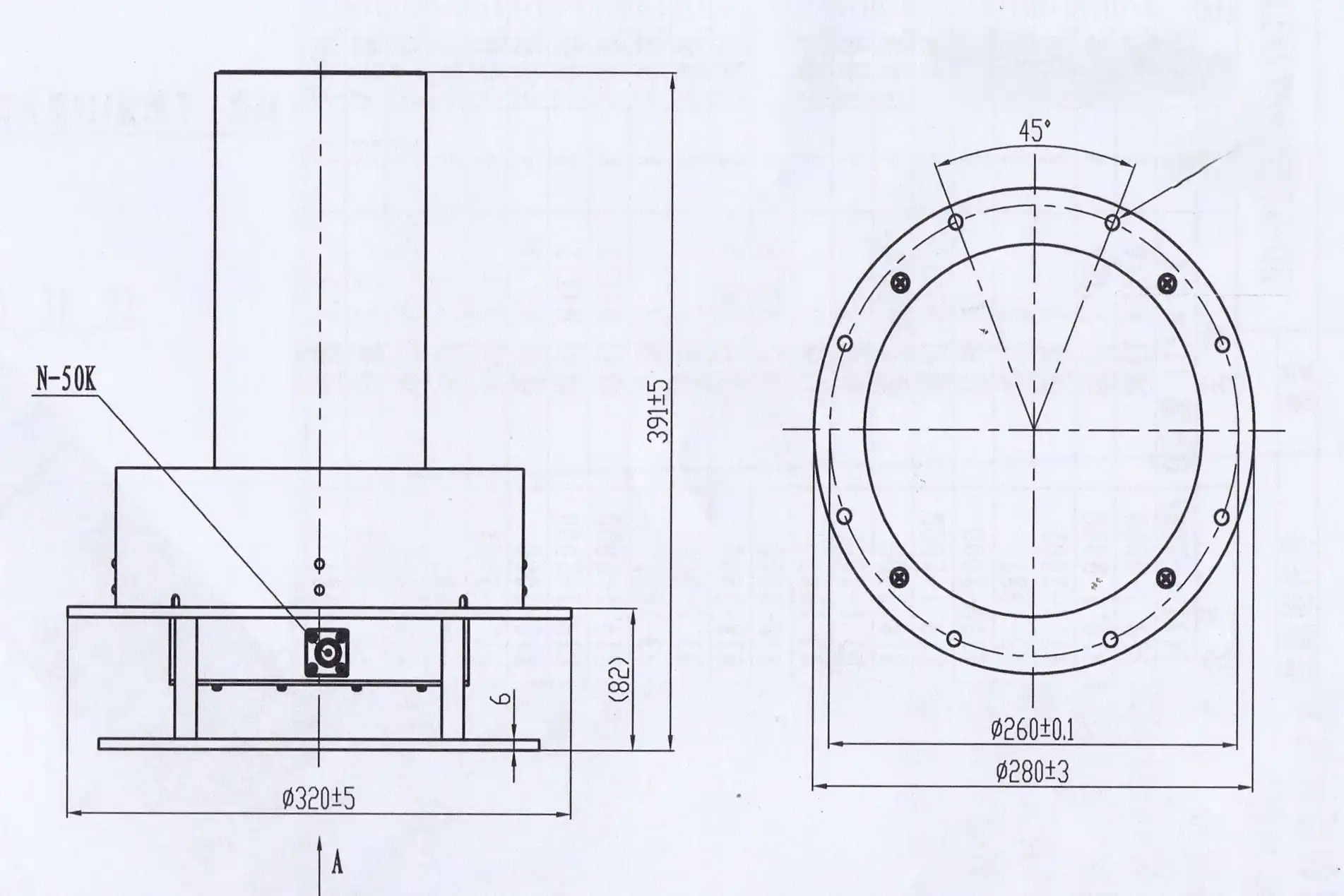
Because quadrifilar helix antennas are naturally small—their heights are usually between 0.3 and 0.5 wavelengths—they are easy to integrate into platforms with limited room. Compared to microstrip patch alternatives, this one doesn't depend as much on ground planes, which gives you more mounting options. OEM customers often put our antennas into UAV fuselages that are shaped like cylinders, conformal satellite terminal housings, and small cases for handheld devices. Because they are so light—often less than 50 grams for L-band versions—they can carry more payload for use in the air and space.
These combined advantages position quadrifilar helix antennas as the best choice when link stability is more important than maximum gain, when operation is needed across a wide range of angles, or when platforms are moving around and changing their direction.
Comparing RHCP Quadrifilar Helix Antennas with Other Antenna Types
When making a purchase choice, it's helpful to know how the performance characteristics of the quadrifilar helix antennas relate to those of other technologies that are usually used for similar tasks. The choice is made based on the needs of the system, the operational setting, and the available funds.
Quadrifilar Helix versus Ceramic Patch Antennas
While ceramic patch antennas have a higher gain (usually 4-6 dBi vs. 0–3 dBi for helix designs), they lose beamwidth and low-angle coverage. Patch antennas have directed patterns, and their gain drops sharply beyond 60 degrees from boresight. This makes blind spots a problem for mobile systems. The strict ground plane requirements of patch designs make them heavier and limit the ways they can be mounted. On the other hand, the quadrifilar helix antennas work best when tracking satellites that are getting close to the sky or when the movements of the platform make it impossible to keep the antennas in the best position. Because they are cheaper, patches are usually better for stationary uses where their directivity gives the system an edge. On the other hand, helix designs are better for situations where they need to move around.
Performance Trade-offs with Monopole and Whip Antennas
Similar to quadrifilar helix antennas, monopole antennas cover all horizontal directions. However, they produce linear polarization that is vulnerable to multipath fading and 3 dB polarization mismatch loss when talking to satellites that are circularly polarized. Monopoles have a toroidal radiation structure that puts a gap at the zenith, which means that they don't cover directly above. Quadrifilar helix antennas cost more per unit, but they get around these problems with circular polarization and hemispherical coverage. The antennas' ability to keep signal lock as satellites pass overhead is especially useful for applications that use low-Earth-orbit satellite communications.
Directional Alternatives: Yagi and Helical Beam Antennas
Axial-mode helical antennas and high-gain directional antennas like Yagi arrays offer better link margins—often topping 10 dBi—but they need pointing devices that add complexity, weight, and failure modes. Because the beamwidths are so narrow (20 to 40 degrees), tracking devices with mechanical motors or electronic beam steering are needed. Quadrifilar helix antennas give up maximum gain for ease of use by not having any moving parts or control electronics. For fixed ground stations with known satellite paths, system architects choose directional antennas. For mobile terminals, emergency backup systems, and platforms that can't grow, they choose quadrifilar helix antennas.
Procurement Guide: How to Source Quality RHCP Quadrifilar Helix Antennas
To buy quadrifilar helix antennas successfully, you need to compare providers based on their technical skills, quality systems, ability to make changes, and the stability of their supply chains. Because these parts are so specialized, they need to be made by companies that have a lot of experience with RF engineering and a track record of getting things delivered on time.
Identifying Qualified Manufacturers
Suppliers with a good reputation keep their ISO 9001:2015 quality management certifications up to date and use controlled manufacturing environments with testing done during the production process. Our ISO 14001:2015 and ISO 45001:2018 certifications show that Advanced Microwave Technologies Co., Ltd. cares about being good to the environment and workers' safety as well as making good products. Our RoHS compliance makes sure that the composition of the materials meets international environmental standards. This is very important for defense and aircraft uses that have strict material requirements. Procurement teams should check that makers keep accurate test equipment that can be tracked back to national metrology centers and that they have anechoic chambers for validating radiation patterns.
Critical Specification Parameters to Evaluate
Antenna datasheets must include full electrical specs that can be checked using standard testing methods. Axial ratio measurements across the given beamwidth (numbers below 3 dB show high polarization purity), VSWR or return loss data showing impedance matching quality, and three-dimensional radiation pattern plots proving coverage in all directions are some of the most important parameters. For satellite uses, gain specifications at low elevation angles (5 to 10 degrees above the horizon) are very important. The working temperature range, resistance to humidity, vibration tolerance according to MIL-STD-810, and ingress protection grades should all be included in the environmental specs. Instead of relying only on typical specifications, ask the manufacturer's lab for test data.
Customization Capabilities and Lead Times
Standard antennas from catalogs can be used for many things, but mission-specific needs often mean that they need to be customized. As part of our OEM services at Advanced Microwave Technologies Co., Ltd., we can customize frequency tuning, mounting interfaces, environmental protection, and the addition of low-noise amplifiers for active antenna configurations. Prototyping services let you test custom designs before committing to production. Usually, the first samples take between 4 and 6 weeks to arrive. Production lead times vary from 6 to 12 weeks, based on how many items are ordered and how complicated the customization is. Early in the planning process, procurement managers should talk to suppliers to make sure that technical needs are met by manufacturing skills and that delivery dates are reasonable.
Pricing Structures and Volume Considerations
The price of the quadrifilar helix antennas is based on how carefully they are made and tested to make sure they work well with radio waves. The unit cost goes down as the quantity goes up. Usually, the price breaks at 100, 500, and 1,000 pieces. You can expect to pay between $150 and $400 per unit for L-band passive antennas in modest quantities. Active versions with LNAs will cost 40 to 60 percent more. Because of tighter mechanical limits, higher frequency solutions for S-band and above cost more. Ask for full quotes that include all costs, such as tooling for custom designs, packaging for foreign shipping, and amounts for technical support.


Optimizing Integration and Performance of RHCP Quadrifilar Helix Antennas
To get ideal quadrifilar helix antenna performance in real-world systems, you need to pay close attention to the details of integration, make sure the resistance matches correctly, and confirm your results through thorough testing. Even high-end parts don't work as well when the way they're installed changes their electrical properties.
Impedance Matching and Feed Network Optimization
At resonance, the antenna has a theoretical impedance of 50 ohms, but the real impedance changes depending on how close it is to conductive structures and the shape of the ground plane. To find detuning effects, use a Vector Network Analyzer to measure return loss after fitting in the final mechanical setup. Small frequency shifts happen when the antenna's size is changed or matching networks are added. When tests show that impedance deviations are higher than acceptable VSWR limits, our technical team does Smith chart analysis and matching network designs. Choosing the right coaxial wires can also affect how well the system works. For runs longer than one meter, choose low-loss lines like LMR-400 to keep the signal-to-noise ratio high.
Environmental Installation Best Practices
Place the antenna so that it has a clear hemispherical space of at least one wavelength in all directions above the sky. In the near field, conductive objects change the resonant frequency and the way radiation patterns are shaped. Quadrifilar helix antennas are better at dealing with close items than patch antennas, but for best performance, they need to be kept away from metal enclosures, structural parts, and other antennas that work in the same frequency bands. To keep signal loss to a minimum, radar materials should have low dielectric constants and loss tangents below 0.02. It's important that mechanical mounting doesn't put too much stress on the feed connections and that the alignment stays the same even when the temperature and vibration change.
Validation Testing and Performance Verification
Testing after placement makes sure that the performance of the combined antenna meets the needs of the system. Measurements with a spectrum analyzer show that the expected satellite signals are being received with the right amount of signal strength. GPS devices should be able to show location accuracy that meets the requirements and keep the satellite lock even when the platform moves. For monitoring purposes, testing the bit error rate in real-world situations makes sure that the link gaps are correct. Advanced Microwave Technologies Co., Ltd. has a 24-meter microwave darkroom that can measure far-field from 0.5 to 110 GHz. This lets us do full pre-delivery characterization. Customers get thorough test results that show radiation patterns, gain, axial ratio, and resistance over certain frequency bands.
Conclusion
It is impossible to find antennas with more uses than RHCP quadrifilar helix antennas. They are perfect for satellite communications, telemetry systems, and GNSS uses that need coverage in all directions, circular polarization, and small sizes. The technology solves important problems like multipath interference, changing platform angles, and size restrictions that make it hard to use other antenna types. To be successful at procurement, you need to work with manufacturers who have proven RF engineering skills, thorough quality systems, and quick technical support. Advanced Microwave Technologies Co., Ltd. has been working with microwaves for over 20 years and has state-of-the-art measurement facilities and flexible customization services. This makes us the best choice for challenging uses in aerospace, defense, and telecommunications.
Frequently Asked Questions
Why do RHCP quadrifilar helix antennas outperform patch antennas for satellite communications?
Quadrifilar helix antennas use a hemispherical radiation pattern that stays in sync with satellites throughout their visual path, from the horizon to the zenith. Patch antennas have narrower beamwidths and less low-angle gain, which makes blind spots appear as satellites get closer to the horizon. Helix antennas with circular polarization are better at blocking multipath interference and adjusting for Faraday rotation in the ionosphere than basic patch designs with linear polarization.
What customization options exist for OEM applications?
Advanced Microwave Technologies Co., Ltd. offers frequency tuning from 1 to 40 GHz, custom mounting interfaces with flanges and sticky bases, environmental protection upgrades, low-noise amplifiers built in, and multi-band setups that support GPS L1/L2 receiving at the same time. Our engineering team works with clients from the first specification to production. Prototypes are sent to clients within 4 to 6 weeks for validation testing before they commit to production.
How do lead times and logistics work for international procurement?
Standard configurations ship in 6 to 8 weeks, while custom designs, which include prototyping, take 10 to 12 weeks. We handle foreign shipping through trusted transport partners who know how to handle RF components. All of the goods come with full test documentation, installation guides, and access to expert help.
Partner with a Trusted Quadrifilar Helix Antenna Supplier
Advanced Microwave Technologies Co., Ltd. can help you with your RF system needs with carefully designed quadrifilar helix antennas. They have ISO 9001:2015 quality approval and have been making microwave components for over 20 years. Our 24-meter anechoic chamber lets us characterize up to 110 GHz, which makes sure that every antenna meets strict performance standards before it is sent out. Our engineering team provides quick and helpful technical support from the first meeting through production and beyond, whether you need catalog goods that can be put into use right away or custom solutions that solve problems that are unique to your application. We know how important your uses are because we are a top producer of quadrifilar helix antennas for the defense, aerospace, telecommunications, and research industries around the world. You can talk to our procurement specialists at craig@admicrowave.com about your needs, get detailed quotes, or look through our full selection of satellite communication parts.
References
1. Kilgus, C. C. "Resonant Quadrifilar Helix Antenna Design and Performance Analysis." IEEE Transactions on Antennas and Propagation, Volume 23, Issue 4, 1975.
2. Gerst, C. and Worden, R. A. "Helix Antennas for Satellite Communication: Design Fundamentals and Circular Polarization Characteristics." Proceedings of the International Symposium on Antennas and Propagation, 2008.
3. Balanis, Constantine A. "Antenna Theory: Analysis and Design, Fourth Edition." John Wiley & Sons, Hoboken, New Jersey, 2016.
4. Adams, J. W. "Quadrifilar Helix Antenna Performance in Mobile Satellite Systems." Microwave Journal, Volume 42, Number 6, 1999.
5. Nakano, H., Takeda, H., Honma, T., Mimaki, H., and Yamauchi, J. "Extremely Low-Profile Helix Radiating a Circularly Polarized Wave." IEEE Transactions on Antennas and Propagation, Volume 39, Issue 6, 1991.
6. Military Standard MIL-STD-810H: "Environmental Engineering Considerations and Laboratory Tests." United States Department of Defense, 2019.