




Quadrifilar Helix Antennas offer Advantages for RFID Readers
Looking for the best antenna for RFID reader systems? The quadrifilar helix antenna is the best quadrifilar helix antenna choice for business-to-business uses that need reliable tag recognition that doesn't change. This special four-arm helical structure sends out circularly polarized radiation patterns that reduce direction sensitivity and multi-path interference, two problems that industrial RFID operations keep running into. The QHA keeps the signal strong over a wider range of angles than traditional patch or monopole antennas, which can have trouble in places with metallic surfaces or tags that don't always face the same way. This means that there are fewer missed reads and higher throughput in logistics, aerospace, and defense applications. We at Advanced Microwave Technologies Co., Ltd. have seen buying teams from both Fortune 500 companies and defense contractors use QHA solutions when normal antennas don't meet performance standards that are important for mission-critical tasks.
Understanding Quadrifilar Helix Antennas and Their Role in RFID Systems
The unique shape of the four-arm helix antenna is what makes it work technically. Four helical wires wrap around a cylinder-shaped core in the middle. Each one is fed precise 90-degree phase steps (0°, 90°, 180°, 270°). This quadrature phasing makes a radiation pattern that looks like a heart and has very pure circular polarization. Circular polarization is very important in RFID reader applications because tags on goods or assets don't always stay in the same position. For example, boxes spin while being shipped, pallets move around in stores, and handheld things move from side to side while being scanned.
Why Circular Polarization Matters for Tag Detection
When the RFID tag is turned in a way that is different from the reader antenna's polarization plane, traditional linearly polarized antennas lose a lot of information. This direction difference can cause read errors or a read range that is much smaller than expected. This problem is solved by circular polarization, which keeps the signal strength the same no matter how the tag is rotated. When a quadrifilar helix antenna is well-designed, its axial ratio usually stays below 3 dB across its working beamwidth. This makes sure that both right-hand and left-hand circularly polarized tags get enough signal power.
Radiation Pattern Advantages in Complex Environments
Another useful feature of QHAs is their hemispherical spread pattern. The QHA doesn't focus energy into a small beam like a directed Yagi antenna does. Instead, it spreads signal power over a large solid angle, which is often greater than 120 degrees in elevation. This wide range means that fewer reader antennas are needed to cover the same area. This lowers the cost of the system and makes placement easier. When supply centers switched from patch arrays to carefully placed QHA units, our engineering team at ADM was able to cut the number of antennas they needed by 30 to 40 percent.
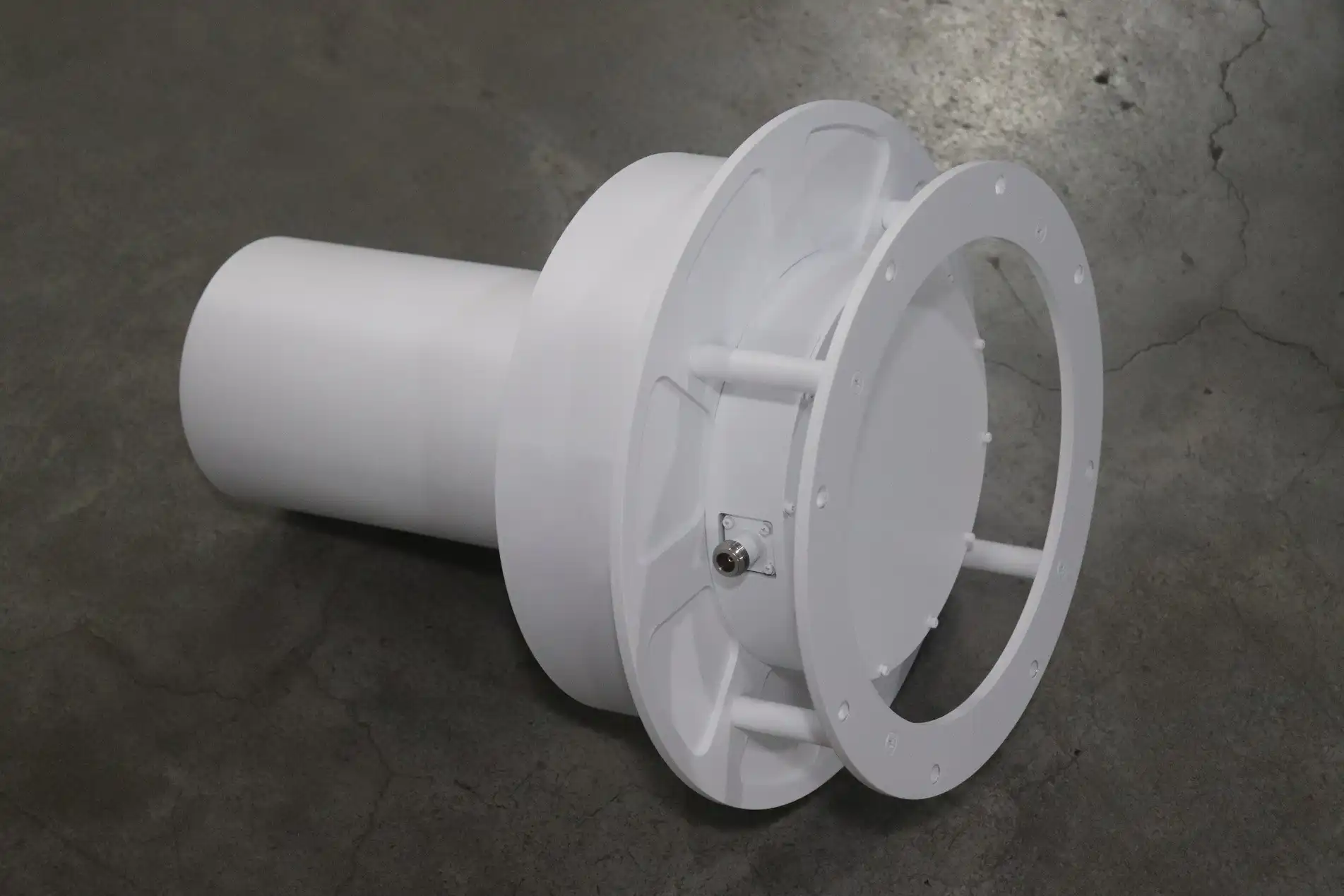
Comparison with Patch and Monopole Antennas
Patch antennas have small sizes, but their beamwidths are narrow, and their axial ratio drops quickly at angles other than straight on. While monopole antennas can pick up signals in all horizontal directions, they don't have the range of vertical polarizations that are needed for tags that are placed randomly. The QHA fills in these holes by offering wide-angle coverage and a range of polarization options. In tests done in our 24-meter microwave darkroom, QHAs regularly beat patch antennas by 15–25% in multi-angle read rate situations. This was especially true when tags were attached to metal containers or placed at sharp quadrifilar helix antenna angles to the reader.
Performance Benefits of Quadrifilar Helix Antennas in RFID Reader Deployment
When four-arm helical antennas are used in RFID systems, practical changes are made that have a direct effect on the accuracy of inventory, the speed of processing, and the efficiency of labor. The circular polarization property is the main way that these gains happen, but there are a few other things that affect how well the system works as a whole.
Increased Read Range and Tag Acquisition Speed
In real life, QHAs usually have read ranges 20–35% longer than equivalent-gain patch antennas in UHF RFID systems that use frequencies between 860 and 960 MHz. This longer range comes from tags that are randomly aligned, matching polarization better, and being less sensitive to reflections in the surroundings. Distribution centers that use readers with QHA technology say that they can handle pallets faster. For example, they can check full pallet loads in two to three seconds instead of six to eight seconds with older radio systems.
Multi-Path Interference Mitigation
With their metal shelves, concrete walls, and moving trucks, warehouses, factory floors, and store backrooms are tough places for RF to work. These structures make multi-path transmission possible, which means that signals bounce off surfaces and arrive at the receiver with different phases, which could lead to harmful interference. Because reflected signals usually have polarization reversed (right-hand becomes left-hand), the circular polarization of QHAs lowers multi-path sensitivity. This lets the listener tell the difference between direct and reflected paths. Field deployments in factories that make cars have shown that moving to QHA-based systems cuts down on fake negative reads by 40%.
Environmental Adaptability and Durability
Advanced Microwave Technologies Co., Ltd makes QHAs with tough cases that meet IP67 standards for security against dust and water. The helical structure supports itself and doesn't need a big ground plane. This makes it possible to put it compactly in tight areas where patch antennas would detune because of proximity effects. Our QHAs work consistently in temperatures ranging from -40°C to +70°C, keeping their axial ratio and VSWR performance the same. For mobile RFID uses on military trucks and aircraft ground support equipment, defense companies really like how stable the environment is.
Quantified Performance Improvements
A European company that makes parts for aircraft recently shared the results of a six-month test that compared QHA readers to their old patch antenna system. The QHA rollout achieved 99.2% first-pass read accuracy compared to 94.7% with patches. This is a 4.5 percentage point improvement that got rid of the need for human verification steps and saved about 120 hours of work each month. In another case, a pharmaceutical shipping business cut the number of times their goods got lost by 63% after putting QHA readers at the dock doors. This directly improved their compliance with serialization rules.
Procurement Considerations for B2B Buyers of Quadrifilar Helix Antennas
To choose the right QHA provider, you need to carefully look at their technical specs, ability to make changes, and supply chain stability. There are a number of well-known companies that make antennas, and each one has its own benefits that depend on the needs of the application.
Critical Datasheet Parameters to Evaluate
Procurement engineers should pay attention to a few key measures when they look over the QHA specs. The Voltage Standing Wave Ratio (VSWR) shows how well the impedance matches. Values below 1.5:1 across the working bandwidth mean that power is transferred efficiently with few echoes. Axial ratio specs show how pure the polarization is; readings below 3 dB across the covering angles ensure consistent performance with tags that are positioned randomly. The highest read range potential is found by measuring the gain, which is usually between 2 and 7 dBic for RFID-oriented QHAs. Specifications for bandwidth make sure that it works with RFID frequencies that are used in different parts of the world. For example, systems in North America use 902–928 MHz, and systems in Europe use 865-868 MHz.
Customization Options for OEM Integration
Standard stock QHAs can be used for many things, but mission-critical quadrifilar helix antenna systems often work better with unique designs. As part of ADM's OEM services, we can tune the frequency to exact working bands, match the impedance to the reader hardware, and make mechanical changes to meet particular mounting needs. We made small QHAs for handheld RFID scanners because normal designs were too big for them. We also made high-power versions that can work with 50-watt emitters and are used in long-range gate readers. Our prototyping services let buying teams test how well a product works in their own settings before committing to large-scale production.
Pricing Structures and Volume Considerations
The price of a quadrifilar helix antenna depends a lot on the frequency range, the amount of power it can handle, and how much flexibility you want. Standard UHF RFID receivers usually cost between $150 and $400 per unit when bought in small amounts. If you buy more than 50 units, you can get a discount. Custom designs come with one-time planning fees that can be anywhere from $2,000 to $8,000, based on how complicated they are. However, these costs are quickly covered by the production runs. Our purchasing team works with buyers to make sure that orders are structured in a way that meets both short-term needs and long-term plans for system growth. They often suggest phased purchases that fit with budget cycles and lock in specs for future orders.
Supply Chain and Certification Requirements
Defense and aerospace buyers need to make sure that antenna providers follow relevant standards and keep track of where their materials come from. Advanced Microwave Technologies Co., Ltd is certified by ISO 9001:2015 and gives full paperwork on how materials can be tracked back to their source. RoHS rules say that our goods are safe for the environment, and they can also be made to meet military standards like MIL-STD-810 for tests in the environment and MIL-STD-461 for electromagnetic interference. We keep a planned stock of long-lead parts to keep shipping times as short as possible. Standard goods usually have lead times of 4 to 6 weeks, and custom designs have lead times of 8 to 12 weeks.
Installation and Optimization Best Practices for Maximizing RFID Reader Performance
Whether theoretical performance specs translate into real-world operational gains depends on how well the antenna is installed. If installed incorrectly or used outside of its intended parameters, even the best quadrifilar helix antenna will not work as well as it should.
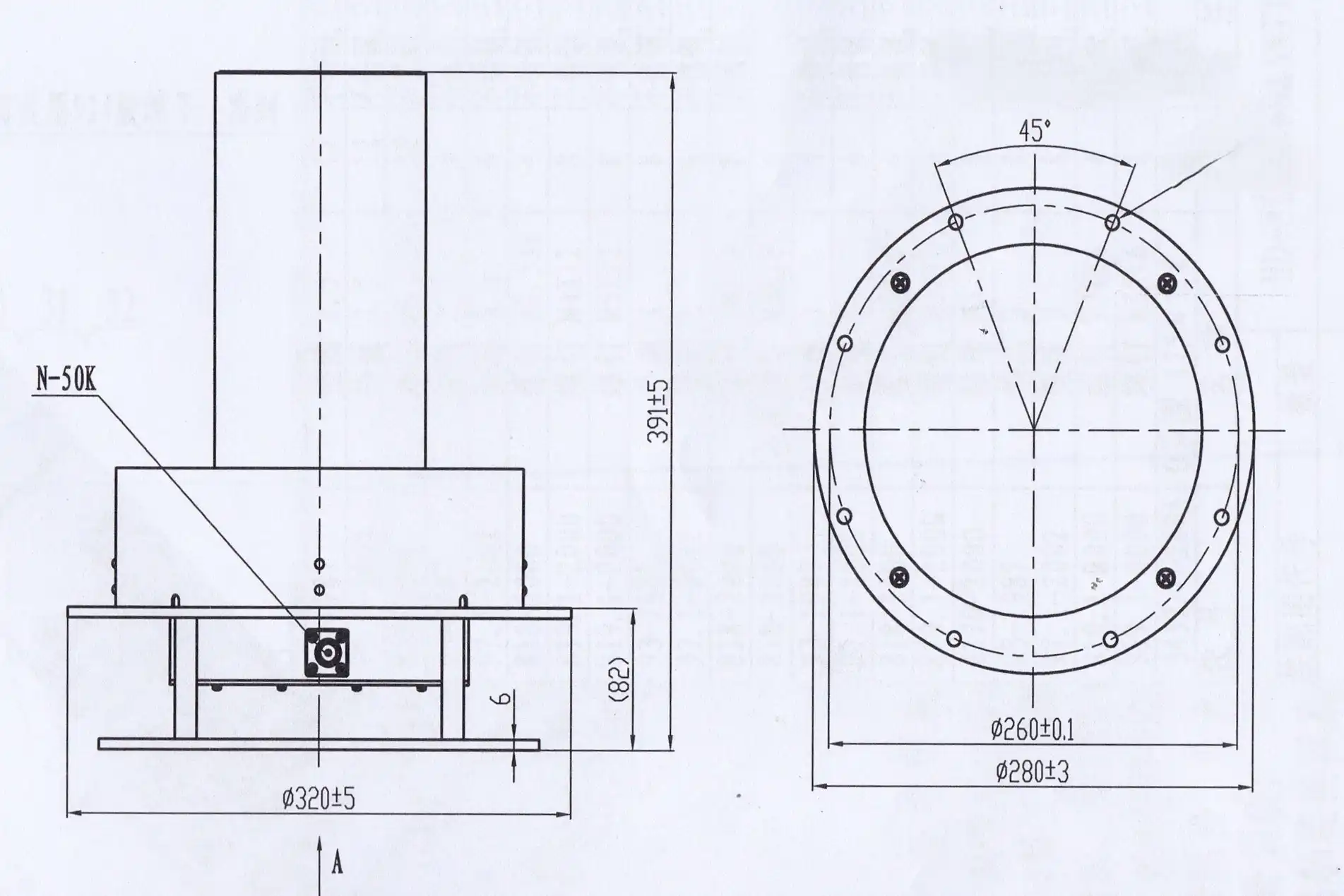
Mounting Location and Orientation Strategies
QHAs should be placed so that they have the best line-of-sight to the predicted tag sites with the least amount of interference from building elements. For overhead conveyor systems, ceiling mounts work well, and for dock door openings, side-wall fixing at 45-degree angles works best. Because the antenna's cardioid design focuses power in the front half, it is very important to aim correctly. Before installing permanent hardware, we suggest doing site studies with temporary mounting hardware and using read rate mapping tools to find the best places to put things.
Height and Spacing Calculations
To get the best mix between read range and coverage width, mount QHAs 1.5 to 2.5 meters above the top of the belt. There shouldn't be any gaps between the antennas so that tags can't get through. The antennas should be set so that they meet by 20 to 30 percent at the minimum read range distance. Four antennas—two on each side at different heights—help portal applications get rid of the shadows that stacked boxes or tall containers cause.
Frequency Tuning and Performance Verification
Even though QHAs are made to work with certain frequency bands, they may quadrifilar helix antennas need some small tuning to work best with certain reader hardware. Check with a network monitor that the antenna's lowest VSWR point matches the frequency that the reader works at. Small changes in where the antenna is placed or how close it is to the ground plane can move the resonance by several megahertz. Once everything is set up, use reference tags in different orientations to test tag recognition across the whole coverage zone and make sure that the read rates meet system standards.
Maintenance Protocols and Troubleshooting
QHAs don't need much care, but they should be checked every three months for physical damage, corroded connectors, and broken container seals. Pay close attention to the links between the cables, because loose joints or broken feedlines can seriously lower performance. When trying to figure out why read ranges are getting shorter, check the antenna VSWR, cable continuity, and connection tightness before thinking the antenna is broken. Our technical support team at ADM can help with remote troubleshooting and set up portable test tools to check the performance of antennas.
Real-World Implementation Example
A shipping logistics company in Texas replaced old patch radio arrays with our QHA units at 12 dock doors. The first read rates were 97.3%, but they went up to 99.6% after we changed the mounting positions based on how traffic really was during the first week. The installation team recorded the antennas' azimuths and elevations in a maintenance database. This made it possible to replace them consistently if they had to be taken down temporarily for changes to the building. Because of this careful construction and regular inspections every three months, read rates have stayed above 99% for 18 months of nonstop use.
Conclusion
The quadrifilar helix antenna gives RFID reader devices real benefits when they work in tough industrial, aerospace, and defense settings. Because it is circularly polarized, has wide-angle coverage, and can withstand harsh environments, it overcomes major problems with traditional antenna designs. This leads to faster read rates, lower labor costs, and more accurate accounting. When business-to-business buyers are looking at antenna options, knowing about QHA technical specs, customization options, and the right way to put them helps them make smart choices that get the most out of their RFID system investments. As RFID technology moves toward integrating with the Internet of Things (IoT) and global standardization, working with experienced QHA manufacturers guarantees access to next-generation solutions that offer practical benefits that make you competitive.
FAQ
What frequency ranges do QHAs support for RFID applications?
Most RFID-focused four-arm helical antennas work in the UHF band, which spans frequencies from 860-960 MHz and includes both European (865-868 MHz) and North American (902-928 MHz) bands. Designs made just for you can work with HF RFID at 13.56 MHz or higher bands for specific uses. The antenna's bandwidth is usually between 50 and 100 MHz, which is wide enough to cover a whole area with room for manufacturing flaws and changes in the environment.
How does QHA performance compare to phased array antennas?
Electronic beam steering in phased arrays lets you change the range on the fly, but it comes at a much higher cost and is harder to set up. For a lot less money than phased arrays, QHAs offer constant hemispherical coverage that works well for most RFID uses. A quadrifilar helix antenna is a better choice for situations that need to cover a large area without beam steering. When covering areas that need to change often or when a single antenna needs to serve multiple areas that don't meet, phased arrays make sense.
Can QHAs operate in outdoor environments?
Advanced Microwave Technologies Co., Ltd makes ruggedized QHAs with IP67-rated casings that can be installed permanently outside. UV-resistant radomes keep the spiral elements from breaking down in the environment, and sealed connections keep water out. Operating temperatures between -40°C to +70°C are suitable for most weather situations. Lightning-prone places still need proper grounding and surge protection, which is normal practice for installing RF equipment outside.
What cable length limitations should be considered?
Losses in RF cables go up with frequency and wire length, which directly cuts down on the read range of the system. At 915 MHz, regular RG-58 coax has a loss of about 0.5 dB per meter. Low-loss lines like LMR-400 lower this to 0.2 dB per meter. When using normal coax, wire runs should be less than 15 meters. When using low-loss cable, the length should be less than 30 meters. For longer lengths, you might need to add inline amplifiers or switch to fiber-optic lines with RF heads that are far away but close to the antennas.
Partner with ADM for Your Quadrifilar Helix Antenna Requirements
Advanced Microwave Technologies Co., Ltd is ready to be your reliable source for quadrifilar helix antennas. They have been making them for over 20 years, and their production processes are ISO 9001:2015 approved. Our 24-meter microwave lab lets us precisely characterize antennas from 500 MHz to 110 GHz. This makes sure that every QHA meets published standards before it is shipped. Our expert team is here to help you with everything from the initial meeting to making sure the installation goes smoothly, whether your application needs standard UHF RFID antennas or custom-engineered solutions for specific operational problems. Please email craig@admicrowave.com right away to talk about your specific needs, get full technical specs, or set up sample evaluation units that show how QHA performs better in your real-world setting.
References
1. Kilgus, C. C. (1975). Resonant quadrifilar helix antenna design. IEEE Transactions on Antennas and Propagation, 23(4), 590-597.
2. Balanis, C. A. (2016). Antenna Theory: Analysis and Design, 4th Edition. John Wiley & Sons, Hoboken, New Jersey.
3. Finkenzeller, K. (2010). RFID Handbook: Fundamentals and Applications in Contactless Smart Cards, Radio Frequency Identification and Near-Field Communication, 3rd Edition. John Wiley & Sons, Chichester, United Kingdom.
4. Dobkin, D. M. (2012). The RF in RFID: UHF RFID in Practice, 2nd Edition. Newnes, Oxford, United Kingdom.
5. ISO/IEC 18000-63:2021. Information technology - Radio frequency identification for item management - Part 63: Parameters for air interface communications at 860 MHz to 960 MHz Type C. International Organization for Standardization.
6. Curran, K. & Millar, A. (2012). A survey of RFID antenna designs for item-level tagging. International Journal of RF Technologies: Research and Applications, 3(2), 79-103.