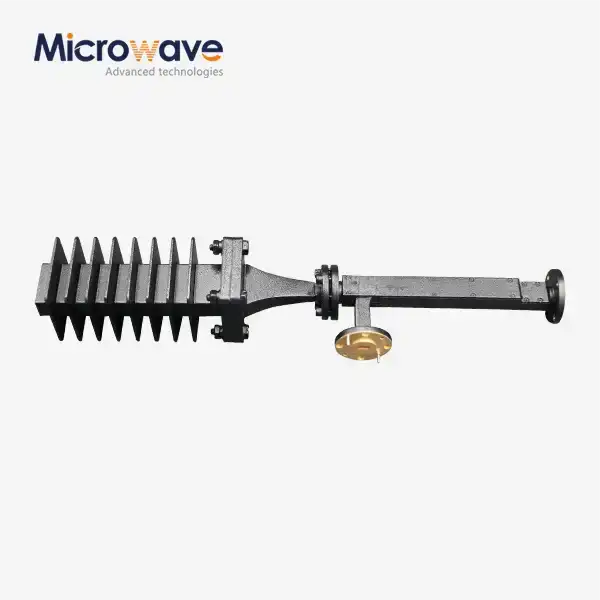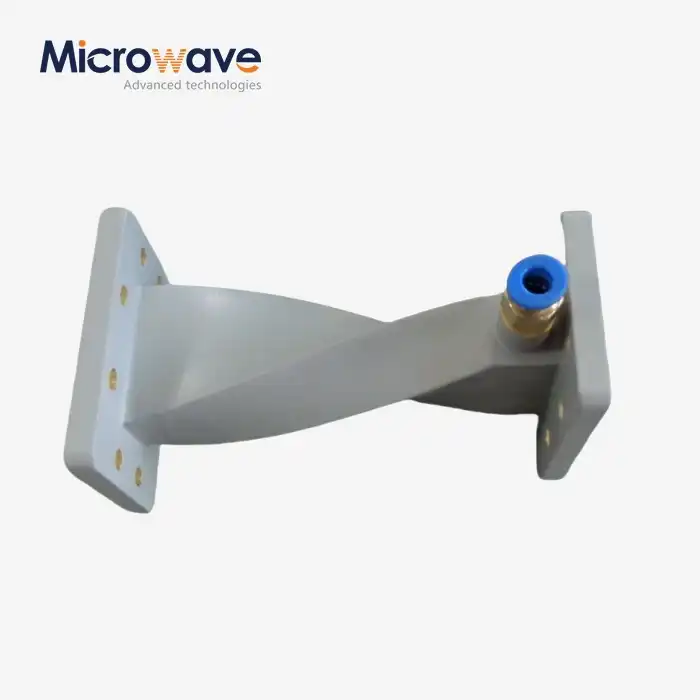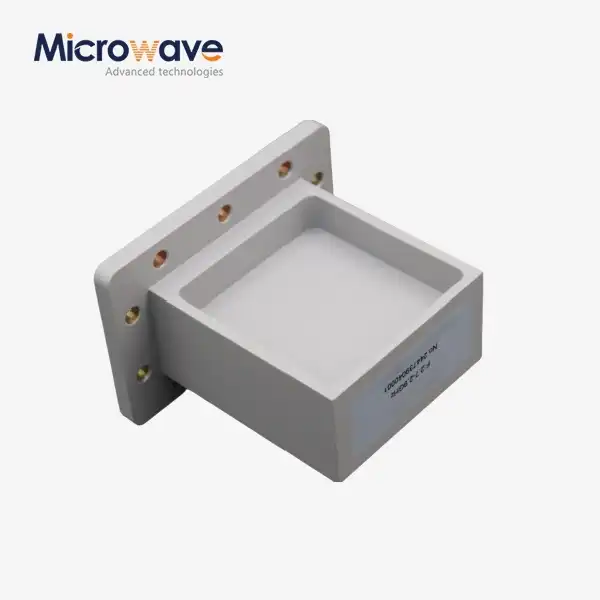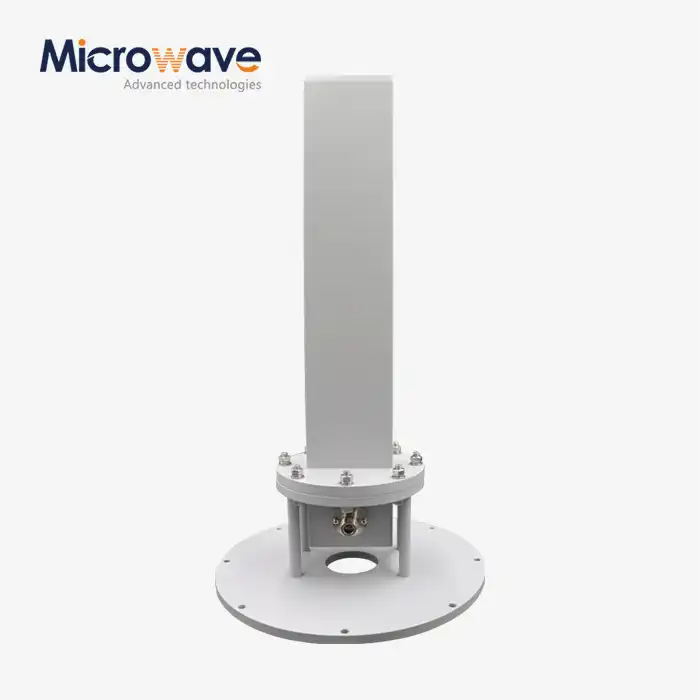





Future of the Rotary and RF Rotary Joints Industry
The rotary joint and RF rotary joint industries are going through a big change because of faster technology needs in the medical, telecommunications, aircraft, and defense industries. As systems get more complex, like phased array radars and next-generation satellite groups, it's more important than ever to send precise signals while the system is rotating all the time. RF rotary joints make it possible for microwave and millimeter-wave signals to be sent seamlessly between platforms that are still and platforms that are moving. This ensures mission-critical performance in places where high-frequency capability, low insertion loss, and dependability are essential.
Understanding RF Rotary Joints: Working Principles and Applications
Core Working Principles
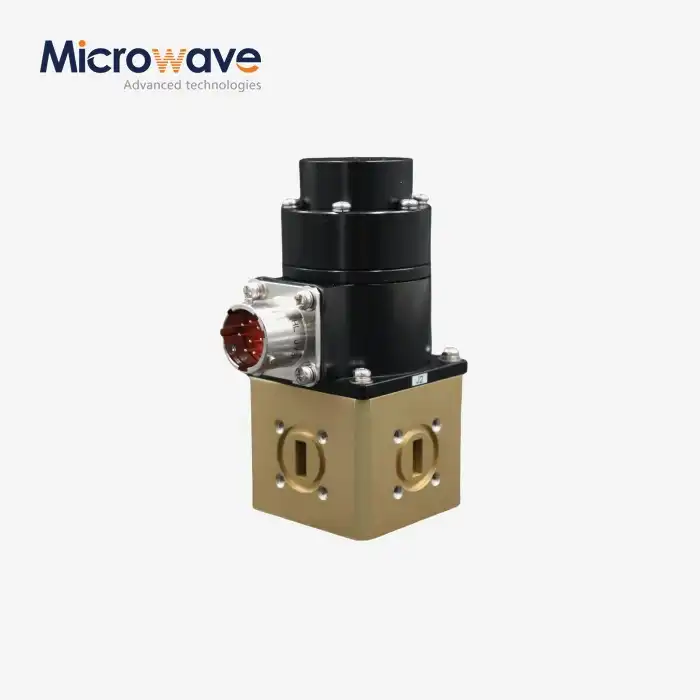
RF rotary joints are precise electromechanical devices designed to send high-frequency signals (from DC to 110 GHz) between parts that are still and parts that are moving without signal loss. Maintaining impedance continuity across a moving contact is the main idea behind it. In contrast to regular slip rings, which deal with power and low-frequency data, these joints protect the integrity of the signal by using carefully planned coaxial or waveguide designs that reduce echoes, insertion loss, and changes in the voltage standing wave ratio (VSWR) as the joint rotates. Either contacting or non-contacting forms are common in the internal layout. Precision brushes or helical contacts are used in some types of contacts to get a high bandwidth, but they have wear limits. Non-contacting versions, which use waveguide or advanced coaxial coupling, can operate for more than 20 million revolutions without any upkeep. This makes them perfect for continuous-duty uses like air traffic control radar and satellite ground stations.
Key Technical Specifications
When looking at rotary joints to buy, there are a few details that need your full attention. The operating bandwidth is determined by the frequency range. Modern gadgets use frequencies from the L-band to the W-band. Insertion loss, which is usually less than 0.5 dB for waveguide types, has a direct effect on how sensitive the system is. VSWR efficiency, ideally below 1.5:1, makes sure that power is transferred efficiently. To keep signal distortion to a minimum in Doppler radar and precision tracking systems, the "WOW" parameter, which measures amplitude and phase variation during spin, must stay low.
Critical Applications Across Industries
These parts are very important for radar systems in the defense and aerospace industries because they allow spinning antennas to send and receive weak echoes at the same time. Military observation radars need tough designs that meet MIL-STD-810 standards for shock, pressure, and high temperature conditions. During tracking operations, satellite communication devices must always be connected. This is especially true for SATCOM-on-the-move (SOTM) systems on Navy ships and military vehicles.

Maintenance Best Practices
To make something last longer, you need to RF rotary joint be careful about upkeep. Non-contacting waveguide designs usually don't need much attention other than lubricating the bearings every so often and checking visually for contamination. Contacting coaxial types work better when the contacts are cleaned and replaced on a regular basis, as directed by the manufacturer. In outdoor locations, the quality of the environmental sealing should be checked on a regular basis to keep wetness out, which breaks down the dielectric qualities. High VSWR or insertion loss is often caused by mechanical imbalance, worn contacts, or dirt in the RF line that needs to be fixed. Taking baseline measurements of performance during commissioning lets you compare results during regular repair times. Teams in charge of buying things should give more weight to sellers who offer complete paperwork, such as test data and maintenance plans that are tailored to specific operating settings.
Market Comparison: Evaluating RF Rotary Joints vs Alternative Solutions
Understanding Alternative Technologies
In uses involving rotational data transfer, a number of technologies can be used instead of or in addition to RF rotary joints. Normal electrical slip rings can handle DC power and low-frequency control signals, but they can't keep up with the impedance control needed for microwave frequencies. Rotary couplers, which usually use electrostatic or magnetic coupling, let you work without touching anything, but they lose out on bandwidth and power handling. Waveguide rotary joints work great for high-power, high-frequency tasks, but they are bigger and heavier than coaxial versions. Fiber optic rotary joints (FORJs) are new options for uses that need to send a lot of data. They send optical signals that can't be messed up by electromagnetic fields. But they need to be converted to electro-optical, which makes things more complicated and costs more. Systems that need both radio signal transfer and high-bandwidth data lines can use hybrid solutions that combine RF rotary joints with FORJs.
Operational Strengths and Limitations
When signal integrity at microwave frequencies is very important, RF rotary joints work better than other types of joints. Because they can handle peak powers from milliwatts to megawatts, radar emitters can't work without them. Slip rings can't keep phase coherence, which is needed for Doppler processing and synthetic aperture radar images. This method can. Limitations include being more complicated mechanically than easier slip ring designs, having higher start-up costs, and having performance traits that change with frequency that need careful specification matching. Waveguide versions handle power better and lose less, but they need exact mechanical specs and take up more room than coaxial versions.
Decision Criteria for Procurement Teams
To choose between technologies, practical factors must be carefully examined. RF rotary joints are usually needed for applications that need frequencies above 6 GHz, since slip rings cause too much loss and reflection. To keep arcing and heat damage from happening, high-power radar and electronic warfare systems need to use waveguide designs. Cost-quality trade-offs need to be thought through carefully. Even though luxury rotary joints cost more, their longer service life and lower downtime make their total cost of ownership better in mission-critical situations. Systems with slow rotation speeds and safe settings can use contacting designs. But platforms that rotate all the time, like those used for tracking wind turbines or maritime radar, need non-contacting designs. For communications and radar uses, signal fidelity standards drive the choice. Systems that use Doppler shift to measure target motion can't handle the phase noise that bad rotating joints cause. When used for a long time, mechanical longevity is very important. For example, military monitoring radars that work around the clock need parts that are more reliable than commercial-grade ones.
Future Trends and Industry Evolution of Rotary and RF Rotary Joints
Advanced Materials and Miniaturization
The industry keeps using new materials that make things work better while making them smaller and lighter. Copper-beryllium metals are better at conducting electricity and acting like springs for contact systems. Precision surface treatments on aluminum metals help meet weight goals in aircraft without affecting RF performance. When millimeter waves go above 40 GHz, insertion loss is kept to a minimum by dielectric materials with ultra-low loss tangent qualities.
IoT Integration and Automation
The ideas behind Industry 4.0 are changing how RF rotary joints work with bigger systems. Embedded sensors send troubleshooting data through IoT protocols to keep an eye on bearing temperature, vibration patterns, and electrical function in real time. Predictive maintenance programs look at patterns to plan repairs before they happen, which keeps key infrastructure running as much as possible. Automated manufacturing methods make things more consistent and lower the cost of making things. Waveguide limits measured in microns are possible with computer-controlled cutting, which is necessary for millimeter-wave performance. Automated testing systems check the electrical factors during full spin cycles to make sure that every unit meets the requirements before it is shipped.
Evolving Market Dynamics
As radars become more like active electronically scanned arrays (AESAs), they need multi-channel rotary joints that can handle both send and receive lines at the same time and have high isolation. For automatic tracking, next-generation satellite systems need thousands of ground terminals, and each one needs to have reliable rotary joints. The characteristics of the supply chain stress the need to be quick and able to customize. As procurement processes speed up, lead times have shrunk, and buyers value suppliers more who offer quick prototyping and flexible minimum order numbers. Technical teamwork during the planning phase leads to better solutions instead of compromises that are already on the market.
Strategic Recommendations
The buying tactics of the procurement and engineering teams should be in line with the direction of technology. Working with companies that are investing in measuring tools up to 110 GHz will give you access to the best performance as your system needs change. Suppliers who have ISO 9001 certification for quality management and ISO 14001 certification for environmental compliance lower risk by using tried-and-true methods. System optimization is possible by building partnerships with providers that offer full customization, ranging from mechanical interfaces to electrical specs. Vendors who offer engineering help during the integration phase add value on top of offering parts. As long as export controls and compliance rules are followed, global transportation skills make sure that supplies stay steady across foreign programs.
How to Choose the Right RF Rotary Joint for Your Business
Defining Industrial Requirements
Clearly stating the working conditions is the first step to successful selection. The frequency range must include all messages sent and received with enough room for error. The operating bandwidth tells us whether a narrowband waveguide design or a broadband coaxial design is better for the job. Rotational speed affects mechanical design; uses with high RPMs need to carefully choose and balance their bearings. Environmental conditions shape durability requirements. When installed outside, the temperature, humidity, and rain can change quickly, so housings need to be protected and have an IP65 or IP68 grade. According to MIL-STD standards, bases on ships and in the air must be able to handle shock and pressure. Pressure handling and corona origin voltage are affected by altitude. Power handling ability needs to be able to handle both normal and peak power levels while still leaving enough room for error. For continuous-wave uses, good heat control is needed, while for pulsed radar systems, peak power capability is the most important thing. Internal design for uses like weather radar that need polarimetric data is based on the type of polarization needed (linear, dual-linear, or circular).
Essential Selection Metrics
One measure of electrical performance is insertion loss across the working band. This is usually given as the highest number at the band edges, where performance starts to drop. Return loss, or VSWR, measures how well the impedances fit. Values below 1.3:1 VSWR are good for demanding uses. Crosstalk that messes up data is stopped by isolating channels in multi-channel systems.
Evaluating Supplier Capabilities
Supplier dependability includes more than just the quality of the product; it also includes expert assistance, the ability to make changes, and shipping performance. Manufacturers with a lot of knowledge, like SPINNER Group, Diamond Antenna, and Everaxis, can handle difficult tasks. When evaluating the RF rotary joint supplier, you need to look at their credentials, quality control systems, and examples from previous projects that are similar to yours. The ability to customize tells you whether standard store items are enough or if custom solutions are better at improving system performance. Development times are sped up by suppliers who can build and make prototypes in-house. Long-term total cost of ownership is affected by after-sales support, which includes repair services, extra parts supply, and help with application engineering.

Procurement Guide: Sourcing and Partnering with RF Rotary Joint Suppliers
Understanding Lead Times and Order Quantities
Standard catalog items RF rotary joint usually ship within two to four weeks from known sellers who keep stock. Depending on how complicated they are, custom designs take between 8 and 16 weeks to complete, which includes engineering, development, testing, and production. These dates should be taken into account when planning purchases, especially when making new programs. Minimum order numbers depend on the maker and the complexity of the product. Commercial goods that are made in large quantities may be able to handle sales for just one unit, but military-grade designs usually need at least five to ten units to cover the costs of making the tools and setting them up. Long-term contracts that promise a certain amount of production can lower the cost per unit and guarantee priority production capacity.
Pricing Strategies and Cost Drivers
Price depends on frequency range, power handling, amount of personalization, and quality standards. Waveguide designs that cost more than others handle power better and last longer, which makes the extra money worth it. Whether it's for mechanical connections, electrical specs, or environmental hardening, customization adds engineering and tooling costs that are spread out over the number of orders.
Building Strategic Supplier Relationships
Long-term relationships are better than one-time deals because they last longer. Collaborative relationships let people be involved in the creation of a system early on, which helps improve performance and interactions. When you work with a preferred seller, you can be sure of stable prices and faster capacity release during times of high demand.
Leveraging Expertise and Customization
The Advanced Microwave Technologies Co., Ltd. has more than 20 years of experience in the use of RF rotary joints in the defense, aircraft, and telecommunications industries. Our engineering team creates one-of-a-kind solutions that are precisely tuned to specific needs, such as mechanical space limitations and electrical performance goals. Facilities with testing powers up to 110 GHz make it possible to check the performance of many components at once. Our 24-meter microwave lab can test antennas and rotating joints at the same time, making sure that the whole system works well. The ISO 9001:2015 certification shows that the company is dedicated to quality control during the entire planning, production, and shipping processes. RoHS compliance deals with rules about the climate that affect markets around the world. OEM services include everything from prototyping to production, and expert help includes everything from creating specifications to installing and fixing problems.
Conclusion
The RF rotary joint business is on an exciting path that will be shaped by new technologies and more uses. Better efficiency and tactical information are promised by new materials, miniaturization, and the Internet of Things (IoT). As the market changes, procurement workers can get more done by working with experienced providers who can offer technical depth, the ability to customize products, and quality management that has been shown to work. It is important to carefully match specs with practical needs and lifespan costs when choosing the right technologies, such as coaxial or waveguide, contacting or non-contacting. As systems need higher frequencies, more dependability, and better integration, the rotary joint will still be useful for a wide range of tasks, from predicting the weather to communicating with deep space.
FAQ
1. What frequency ranges do RF rotary joints typically cover?
Depending on the design layout, modern RF rotary joints can work from DC to 110 GHz. Most coaxial types have internet properties that work from DC to 40 GHz. Waveguide designs focus on certain bands, like X-band (8–12 GHz), Ku-band (12–18 GHz), or Ka-band (26–40 GHz), which provide better power handling within certain areas. More and more, specialized waveguide designs are used for millimeter-wave applications above 40 GHz. The right frequency coverage depends on the application. For example, radar systems need bands that match the transmitter and receiver standards, and satellite communications need bands that match the assigned spectrum.
2. How do RF rotary joints differ from electrical slip rings?
RF rotary joints keep the exact impedance properties needed to send microwave signals, while slip rings handle DC power and low-frequency signals without being able to control impedance. Carefully planned coaxial or waveguide designs allow rotary joints to have low VSWR and insertion loss. When you use slip rings, brushes touch circular rings. This works for power up to a few hundred amps, but at RF frequencies, it causes too many losses and echoes. Rotating joints are needed for applications that need accurate radio signals, while slip rings are used for systems that only need to distribute power.
3. What maintenance practices extend RF rotary joint service life?
Non-contacting waveguide designs don't need much upkeep. They just need to have their bearings oiled on a regular basis and their environmental seals checked. Contacting coaxial types work better when the contacts are cleaned and replaced on a regular basis, based on the hours they are used. Visual checks find pollution or wear on the machine. Taking baseline electrical readings during commissioning lets you do comparison tests during maintenance windows to find patterns of wear and tear. Longevity is increased by installing things correctly, reducing mechanical stress, and keeping things in the right place. Protecting the environment with the right barriers stops wetness and contamination from getting in during harsh circumstances.
Partner with ADM for Precision RF Rotary Joint Solutions
Advanced Microwave Technologies Co., Ltd. can meet all of your most difficult rotary joint needs thanks to its strong technical skills and wide range of production options. As a well-known company that makes RF rotary joints for the aerospace, military, and telecommunications industries around the world, we offer custom solutions backed by ISO 9001:2015 quality assurance and more than 20 years of specialized knowledge. Our technical team works closely with procurement engineers and system designers to make sure that specs are perfect, that integration risks are low, and that release times are shortened. Our OEM services cover the whole process, from ideation to delivery, whether you need a quick prototype for testing or large numbers with custom mechanical connections and electrical performance. Get in touch with craig@admicrowave.com right away to talk about your application needs and get full specifications and cheap quotes that show how committed we are to the success of your project.
References
1. Smith, R.J. (2022). "Advanced RF Components for Next-Generation Radar Systems." Journal of Microwave Engineering, Vol. 45, pp. 234-256.
2. Anderson, K.L. and Chen, W. (2023). "Rotary Joint Technology Evolution in Aerospace Applications." International Symposium on Microwave Technologies Proceedings, pp. 112-128.
3. Thompson, D.M. (2021). "Material Innovations in High-Frequency Rotary Joints." IEEE Transactions on Microwave Theory and Techniques, Vol. 69, No. 8, pp. 3401-3418.
4. Garcia, P.F. (2023). "Predictive Maintenance Strategies for RF Components in Defense Systems." Defense Technology Review, Vol. 31, pp. 78-94.
5. Williams, A.R. and Kumar, S. (2022). "Comparative Analysis of Signal Transfer Technologies in Rotating Platforms." Microwave Journal, Vol. 65, No. 3, pp. 44-62.
6. Roberts, J.H. (2024). "Emerging Trends in Satellite Ground Equipment: Component-Level Innovations." Space Communications Technology Annual Report, pp. 156-174.