





BLOG
Coaxial Load Selection Factors for High-Power Applications
July 13, 2026
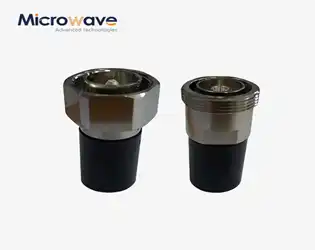
Selecting the right RF termination components for high-power systems requires careful consideration of multiple technical and operational factors. Coaxial Loads serve as essential elements in radio frequency and microwave architectures, absorbing transmitted energy to protect sensitive equipment and ensure accurate testing. These passive components convert RF energy into heat, preventing reflections that could damage amplifiers or distort signals. When specifying terminations for defense radar, satellite ground stations, or broadcast transmitters, procurement engineers must evaluate power handling, thermal management, and frequency performance to ensure long-term reliability and system integrity.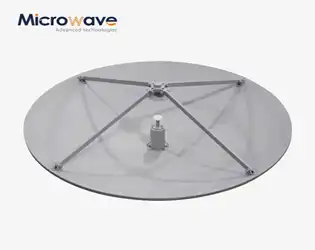
Can Cassegrain Antennas Achieve 50 dB Gain Under 1 m Dish?
July 13, 2026
Different companies use different rotating precise technologies in Cassegrain antennas, a variable waveguide attenuator. Some use worm gears to cut down on torque and make things more repeatable. Others use ball detents or friction locks to keep the place even when the machine is shaking. The attenuator's ability to consistently repeat the same reduction value when set back to a certain dial setting depends on how well these systems are made mechanically. Advanced Microwave Technologies Co., Ltd. has made rotary mechanisms that have been tried in a range of weather conditions and vibration levels that meet MIL-DTL-3933 standards. These mechanisms are reliable in aircraft and defence settings.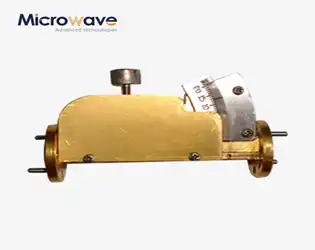
Does Rotary Precision Affect Variable Waveguide Attenuator Accuracy?
July 13, 2026
Yes, rotary precision significantly influences variable waveguide attenuator accuracy. The mechanical resolution of the rotary vane mechanism directly determines how precisely attenuation levels can be adjusted and repeated. When you work with high-frequency RF systems where signal integrity matters, even minor deviations in the rotary positioning translate to measurable errors in insertion loss. Variable waveguide attenuators rely on the precise angular movement of an absorbing element within the waveguide structure. Without adequate rotary precision, the device cannot maintain consistent attenuation settings, compromising calibration stability and measurement reliability critical for radar testing, satellite ground stations, and defense applications.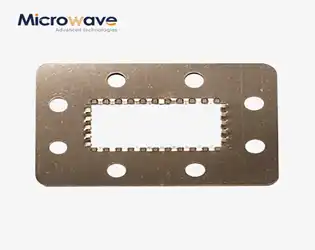
Does Compression Rate Affect EMI Waveguide Gaskets Shielding?
July 10, 2026
The compression rate does have a direct and important effect on how well EMI waveguide gaskets protect. When these special gaskets are pressed down properly, they make close metal-to-metal contact between the sides of two flanges that fit together. This lowers the contact resistance and stops electromagnetic interference from leaking out at important waveguide joints. If you don't compress the gasket enough, tiny air holes form that let leaks happen. If you compress it too much, conductive particles inside the matrix can become forever deformed, which hurts both its mechanical integrity and its ability to conduct electricity. To get the best shielding across microwave and RF bands in mission-critical systems, you need to understand and control the compression settings.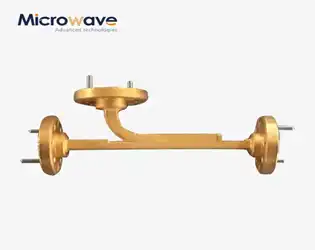
Broadwall Coupler vs Crossguide — Which Handles Higher Power?
July 10, 2026
When evaluating high-power microwave components, the broadwall coupler consistently outperforms crossguide alternatives in power handling capacity. This benefit comes from the fact that it is strong, made of a high-grade aluminum alloy or silver-plated copper, and has many openings spread out across the wide wall of the waveguide. These couplers can usually handle high power levels of kilowatts to megawatts. The only thing that limits them is the waveguide breakdown voltage, not their structural stability. Broadwall couplers are the best choice for radar emitters, satellite uplink systems, and particle accelerators, where power density and stability can't be compromised because they are air-dielectric and better at dissipating heat.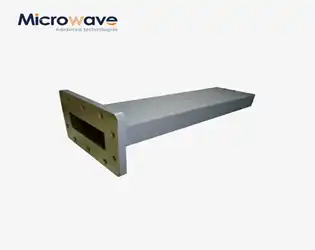
Can a Termination Waveguide Serve as a Dummy Load in Radar?
July 10, 2026
In radar systems, a termination waveguide can act as a fake load if it is built correctly. This unique part works as an absorber that turns electromagnetic energy into heat instead of letting signals bounce back into the system. This is done by resistive materials and impedance-matching designs in the termination waveguide, which keep sensitive radar emitters safe while they are being tested. But how well it works relies on important factors like voltage standing wave ratio (VSWR), power handling ability, and the design of thermal dissipation. Before using termination waveguides instead of standard dummy loads in mission-critical radar applications, procurement teams need to carefully look over these specs.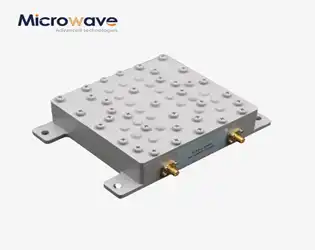
Can a Coaxial Bandpass Filter Achieve Ultra-Narrow Bandwidth?
July 9, 2026
Yes, a Coaxial Bandpass Filter can have an extremely narrow bandwidth if the quality factors of the resonators are carefully engineered and the physical design is made better. Manufacturers like ADM are able to make filters with fractional bandwidths below 1% by using high-conductivity materials like silver-plated brass or aluminium and fine-tuning the mechanical tolerances within coaxial resonator structures. These filters have excellent frequency selectivity that is needed for defence radar, satellite communications, and places with a lot of other signals, where signal purity and adjacent channel rejection are essential.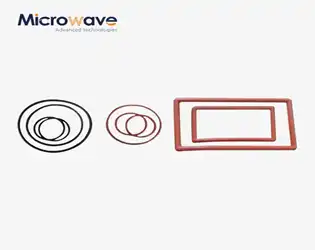
Moisture Sealing and EMI Waveguide Gaskets — Dual Function Trade-Offs
July 9, 2026
One of the trickiest things to do when buying things for high-frequency RF uses is picking the right EMI waveguide gaskets that can block electromagnetic fields and keep out moisture. To balance these two purposes, you have to figure out how to balance the material's conductivity, its ability to withstand external stress, its compression properties, and its cost structures. To get solid performance across the full working envelope of radar, satellite, telecommunications, and defence systems, procurement engineers need to know that improving one function may hurt the other. This is why careful selection and installation are so important.