




Top Benefits of Using a Log Periodic Antenna in Testing Labs
Testing labs face a persistent challenge: How can they accurately measure electromagnetic emissions across dozens of frequency bands without constantly swapping antennas, recalibrating equipment, or compromising measurement precision? The Log Periodic Antenna addresses this exact pain point by delivering consistent broadband performance across ultra-wide frequency ranges, making it an indispensable tool for EMC compliance testing, radar validation, and communication system verification. This article reveals why leading testing facilities worldwide rely on Log Periodic Antennas to streamline operations, reduce measurement uncertainty, and achieve regulatory compliance with greater efficiency.
Why Log Periodic Antennas Are Essential for Modern Testing Laboratories?
Modern testing laboratories operate under increasing pressure to validate electronic devices against stringent electromagnetic compatibility standards such as FCC Part 15, CISPR, MIL-STD 461, and EN specifications. Traditional narrowband antennas force engineers to interrupt testing workflows repeatedly to switch equipment when scanning across different frequency ranges. The Log Periodic Antenna eliminates this operational bottleneck by maintaining relatively constant gain, impedance characteristics, and radiation patterns across frequency ranges spanning from 300 MHz to 10 GHz or even higher. This broadband capability means a single Log Periodic Antenna can replace multiple specialized antennas, dramatically reducing equipment costs while improving measurement consistency. Testing facilities equipped with Log Periodic Antennas can perform continuous frequency sweeps without band breaks, which is particularly valuable for automated emissions and immunity measurement systems. The antenna's directional characteristics ensure that radiated emissions from the device under test are captured with high precision, while its well-controlled radiation pattern minimizes reflections from chamber walls and surrounding structures. Advanced Microwave Technologies Co., Ltd. manufactures precision-engineered Log Periodic Antennas specifically designed for testing environments, with frequency ranges from 300 MHz to 10 GHz, gain specifications from 8 dB to 18 dB, and beamwidth characteristics optimized for both compact shield rooms and large anechoic chambers. These antennas maintain impedance of 50 ohms throughout their operating range and can handle power levels up to 100 watts, making them suitable for both emissions monitoring and immunity injection testing.
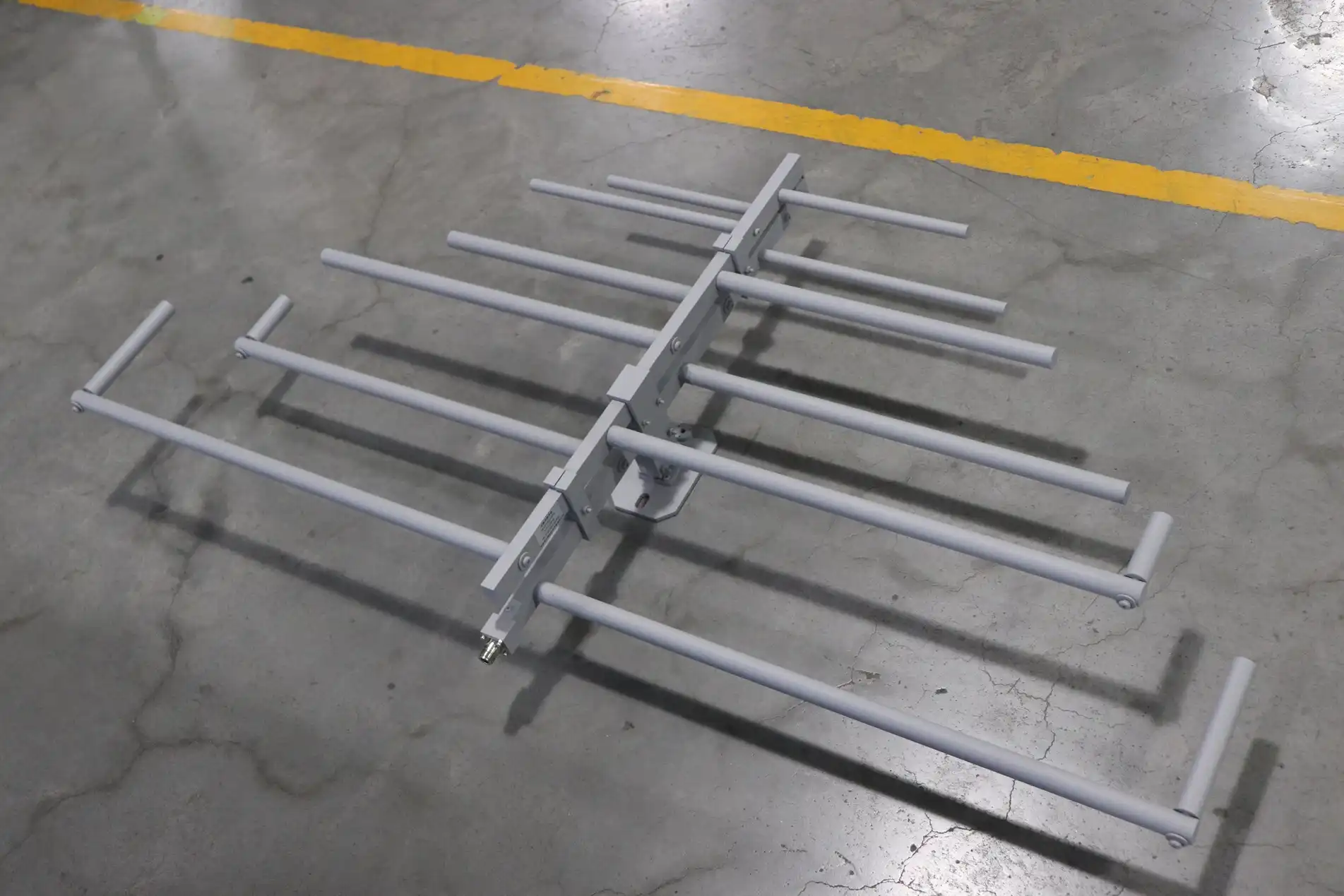
Broadband Frequency Coverage Eliminates Equipment Switching
The fundamental advantage of Log Periodic Antenna technology in testing laboratories stems from its logarithmically scaled dipole element arrangement. Unlike resonant antennas such as Yagis that perform optimally only within narrow frequency bands, the Log Periodic Antenna achieves broadband operation through its carefully designed geometric progression of element lengths and spacings. At any given frequency, only a specific section of the antenna becomes electrically active, creating a smooth transition of the active region as frequency changes. This architectural approach enables testing engineers to conduct comprehensive EMC scans across entire regulatory frequency ranges without interrupting test sequences to reconfigure equipment. For laboratories validating consumer electronics, telecommunications equipment, or industrial control systems, this translates directly into shorter test cycles and higher throughput. Advanced Microwave Technologies Co., Ltd. has leveraged over 20 years of microwave engineering expertise to optimize Log Periodic Antenna designs specifically for testing applications. Their antennas cover critical frequency ranges including UHF, L-band, S-band, C-band, and X-band, accommodating everything from cellular communications at 300 MHz through satellite downlink frequencies exceeding 10 GHz. The company's 24-meter Microwave Darkroom facility enables precise far-field characterization of these antennas, ensuring that radiation patterns, gain flatness, and cross-polarization performance meet the stringent requirements of international testing standards. Each antenna undergoes rigorous quality control procedures in laboratories equipped with measurement capabilities extending to 110 GHz, guaranteeing specification compliance before delivery to customers worldwide.
Consistent Impedance and VSWR Performance Across Frequency Ranges
Testing accuracy depends critically on antenna impedance stability and low voltage standing wave ratio performance. The Log Periodic Antenna maintains remarkably consistent 50-ohm impedance across its entire operating bandwidth, typically achieving VSWR values better than 2:1 and often reaching 1.3:1 or lower. This impedance stability ensures efficient power transfer between test equipment and the antenna, minimizing measurement uncertainty caused by impedance mismatches. When conducting radiated immunity testing, where precise field strength generation is essential for regulatory compliance, the Log Periodic Antenna's stable impedance characteristics enable accurate calibration and repeatable test results. The antenna's low return loss performance also reduces signal reflections that could otherwise introduce standing wave patterns within test chambers. These reflections create measurement ambiguity and can cause devices under test to fail certification unnecessarily. By minimizing such artifacts, the Log Periodic Antenna helps testing laboratories achieve more reliable results while reducing the need for time-consuming troubleshooting sessions. Advanced Microwave Technologies Co., Ltd. validates VSWR performance across the full frequency range of each antenna using their Antenna Plane Near and Far Field Measuring Recombination Chamber, providing customers with detailed calibration data that can be directly integrated into automated measurement systems. This meticulous characterization supports laboratories seeking accreditation to ISO/IEC 17025 standards, where measurement traceability and uncertainty quantification are mandatory requirements.
Advantages of Log Periodic Antenna Technology for EMC Compliance Testing
Electromagnetic compatibility testing represents one of the most demanding applications for antenna technology. EMC test standards require measurements across multiple octaves of frequency spectrum, with strict limits on antenna factor variation, cross-polarization discrimination, and pattern stability. The Log Periodic Antenna excels in these requirements through its inherent design characteristics. The logarithmic scaling of dipole elements creates relatively flat antenna factor curves across the operating bandwidth, which simplifies the conversion from received voltage to electric field strength. This flat response reduces the computational complexity of measurement systems and decreases the likelihood of calculation errors during compliance documentation. Testing laboratories conducting certification work for international markets must validate products against diverse regulatory frameworks including FCC regulations in North America, CE marking requirements in Europe, and various telecommunications standards in Asia-Pacific regions. The Log Periodic Antenna's broad frequency coverage allows a single antenna to support testing across multiple regulatory domains. For instance, the 300 MHz to 10 GHz range encompasses FCC Part 15 Class B limits for unintentional radiators, CISPR 11 industrial equipment standards, EN 55032 multimedia equipment requirements, and telecommunications testing needs for cellular, Wi-Fi, and satellite communication devices.
Superior Directional Gain for Precise Field Strength Measurements
The directional radiation pattern of the Log Periodic Antenna provides several critical advantages in testing environments. With beamwidth typically ranging from 30 to 50 degrees depending on frequency and specific design, the antenna concentrates radiated energy in the forward direction while suppressing signals from other directions. This directivity improves the signal-to-noise ratio when measuring weak emissions from devices under test, enabling detection of spurious signals that might fall below the noise floor with omnidirectional or lower-gain antennas. The front-to-back ratio of quality Log Periodic Antennas often exceeds 20 dB, ensuring that reflections from chamber walls behind the antenna do not significantly contaminate measurements. For radiated immunity testing, the Log Periodic Antenna's directional characteristics enable efficient coupling of electromagnetic energy to the device under test while minimizing wasted power. This efficiency becomes particularly important when testing to high field strength levels such as 10 V/m or 20 V/m specified in automotive EMC standards like ISO 11452. The antenna's gain characteristics, typically ranging from 8 dB to 18 dB depending on frequency, reduce the required amplifier power to achieve specified field strengths, lowering equipment costs and power consumption. Advanced Microwave Technologies Co., Ltd. designs their Log Periodic Antennas with optimized element configurations that maximize forward gain while maintaining the broadband performance essential for comprehensive testing. The company's ISO 9001:2015 certified quality management system ensures consistent manufacturing precision, delivering antennas with tightly controlled gain specifications that enable laboratories to achieve measurement repeatability within 1 dB across the full frequency range.
Lightweight Construction and Compact Integration
Despite their broad frequency coverage, modern Log Periodic Antennas achieve remarkably compact form factors through advanced materials and optimized structural design. Advanced Microwave Technologies Co., Ltd. constructs their antennas using aerospace-grade aluminum, copper, and stainless steel, delivering exceptional strength-to-weight ratios. This lightweight construction simplifies installation on positioning systems, reduces mechanical loading on rotators and elevation heads, and enables rapid reconfiguration of test setups. The company's antennas typically weigh significantly less than comparable broadband alternatives, facilitating manual handling during setup procedures while maintaining the structural rigidity necessary for stable radiation pattern performance. The compact design proves particularly valuable in smaller test chambers where space constraints limit antenna-to-device separation distances. Shorter antennas reduce the minimum separation distance required to achieve far-field conditions at lower frequencies, enabling compliant testing in 3-meter or even 1-meter chamber configurations. Advanced Microwave Technologies Co., Ltd. can customize antenna dimensions to match specific chamber geometries, ensuring optimal performance within available facility constraints. All antennas meet IP65 environmental ratings, providing protection against dust ingress and water spray, which enables their use in outdoor test ranges or environmental chambers where temperature and humidity conditions vary significantly. The robust construction withstands the mechanical stresses of repeated positioning cycles, delivering long-term reliability that reduces total cost of ownership for testing facilities.
Practical Applications of Log Periodic Antennas in Laboratory Testing Environments
Testing laboratories employ Log Periodic Antennas across diverse measurement scenarios spanning commercial product certification, defense system validation, and research applications. For radiated emissions testing, the antenna receives electromagnetic energy radiated by the device under test, with the received signal amplitude converted to field strength values using calibrated antenna factor data. The Log Periodic Antenna's broadband capability enables continuous frequency scans from initial prescan measurements through detailed compliance testing at specific frequencies where emissions approach regulatory limits. This seamless operation accelerates testing workflows while maintaining the measurement accuracy required for regulatory submissions. Radiated immunity testing reverses the signal flow, using the Log Periodic Antenna to transmit electromagnetic fields that illuminate the device under test. The antenna's power handling capability up to 100 watts supports field strength generation for immunity standards without requiring external power amplification systems in many cases. For higher immunity levels, the antenna's efficient coupling characteristics minimize the amplifier power needed to achieve specified field strengths, reducing equipment costs and thermal management requirements in the test chamber.
Antenna Range Measurements and Pattern Characterization
Antenna manufacturers and research institutions rely on Log Periodic Antennas as reference standards when characterizing radiation patterns of antennas under development. The well-defined and stable radiation pattern of the Log Periodic Antenna provides a reliable reference against which other antennas can be measured. Advanced Microwave Technologies Co., Ltd. utilizes this principle in their own 24-meter Microwave Darkroom, where Log Periodic Antennas serve as both transmit and receive elements for comprehensive antenna measurements. The facility's Antenna Plane Near and Far Field Measuring Recombination Chamber enables precise characterization of antenna gain, radiation patterns, and polarization properties across the full 0.5 GHz to 110 GHz measurement range. The broadband nature of Log Periodic Antennas makes them ideal for measuring frequency-agile antennas such as phased arrays, reconfigurable antennas, and ultra-wideband communication systems. A single Log Periodic Antenna can serve as the measurement antenna across all operating frequencies of the device under test, eliminating the measurement uncertainties introduced when switching between multiple narrowband reference antennas. This consistency proves essential for research programs developing next-generation communication systems for 5G, 6G, and beyond, where antenna performance across wide bandwidths directly impacts system capacity and coverage.
Radar System Testing and Validation
Radar development programs require comprehensive validation of transmitted signal characteristics, receiver sensitivity, and overall system performance across operational frequency bands. The Log Periodic Antenna supports radar testing at both component and system levels, serving as a calibrated source for receiver testing or as a measurement antenna for characterizing transmitter output. The antenna's directional pattern and high front-to-back ratio minimize clutter signals in test environments, improving measurement dynamic range and enabling accurate characterization of radar system parameters such as sensitivity, selectivity, and spurious response rejection. For ground-based radar systems operating in L-band, S-band, C-band, or X-band, the Log Periodic Antenna provides frequency coverage spanning entire operational bands plus margin for measuring harmonics and spurious emissions. Advanced Microwave Technologies Co., Ltd. has extensive experience supporting defense and aerospace customers developing advanced radar systems for air traffic control, weather monitoring, and surveillance applications. The company's X-Band Feed Network products complement their Log Periodic Antenna offerings, providing complete antenna solutions for customers developing sophisticated microwave systems. Custom X-Band Feed Networks enable ultra-sharp beamforming for accurate target tracking and detection, while Log Periodic Antennas serve as versatile test instruments ensuring that feed networks and complete antenna systems meet stringent performance specifications before deployment.
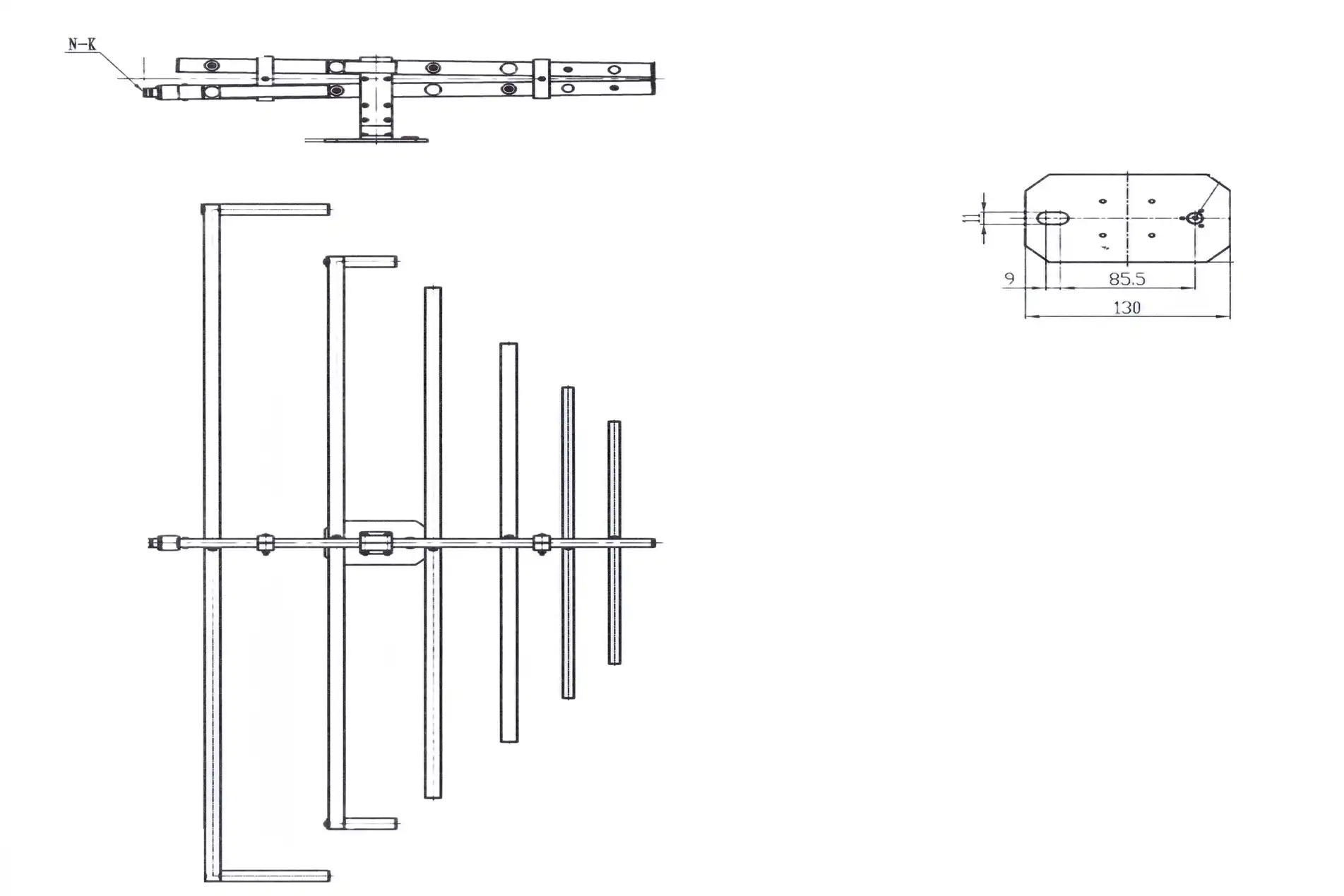
Cost-Effectiveness and Long-Term Value of Log Periodic Antenna Investment
When evaluating antenna procurement decisions, testing laboratories must consider total cost of ownership rather than simply initial purchase price. The Log Periodic Antenna delivers exceptional long-term value through several mechanisms. First, its broadband capability eliminates the need to purchase multiple narrowband antennas covering different frequency ranges. A single high-quality Log Periodic Antenna replaces three to five specialized antennas, reducing capital equipment expenditure while simultaneously decreasing the storage space required for antenna inventory. This consolidation also simplifies calibration management, as laboratories maintain calibration records and schedules for fewer antenna assets. Second, the Log Periodic Antenna's robust construction and quality materials ensure extended operational life with minimal maintenance requirements. Advanced Microwave Technologies Co., Ltd. constructs antennas using corrosion-resistant materials and high-reliability connectors such as N-type, SMA, or TNC configurations based on customer specifications. The IP65 environmental rating protects internal components from contamination and moisture, maintaining electrical performance even in challenging environmental conditions. Many testing laboratories report operational lifetimes exceeding ten years for quality Log Periodic Antennas, delivering excellent return on investment compared to antennas requiring frequent replacement due to wear or environmental degradation.
Reduced Testing Time Increases Laboratory Throughput
Laboratory productivity directly impacts profitability and customer satisfaction. Testing facilities that complete certifications faster can process more projects annually, increasing revenue while reducing turnaround times for customers with critical time-to-market objectives. The Log Periodic Antenna accelerates testing workflows by eliminating antenna change operations during frequency scans. For comprehensive EMC tests covering frequency ranges from 30 MHz to 6 GHz, traditional testing approaches might require three or four antenna changes to cover sub-bands with dipole antennas, biconical antennas, and log-periodic or horn antennas. Each antenna change consumes 15 to 30 minutes accounting for physical swap time, cable reconnection, height positioning, and system verification measurements. A broadband Log Periodic Antenna eliminates these interruptions, enabling continuous automated testing from initial prescan through final compliance measurements. For laboratories processing hundreds of devices annually, the cumulative time savings can amount to weeks of productive capacity. This efficiency advantage becomes particularly significant for laboratories supporting rapid development cycles in industries such as consumer electronics, where compressed product schedules demand accelerated certification timelines. Advanced Microwave Technologies Co., Ltd. works closely with testing laboratories to specify Log Periodic Antenna configurations optimized for specific testing workflows, ensuring that antenna performance characteristics align with predominant frequency ranges and test standards encountered in daily operations.
Conclusion
Log Periodic Antennas deliver unmatched versatility and performance for testing laboratories requiring precise measurements across wide frequency ranges with minimal equipment changes and maximum measurement reliability.
Cooperate with Advanced Microwave Technologies Co., Ltd.
Advanced Microwave Technologies Co., Ltd. stands as your trusted China Log Periodic Antenna factory, China Log Periodic Antenna supplier, and China Log Periodic Antenna manufacturer, offering High Quality Log Periodic Antenna with competitive Log Periodic Antenna price and flexible China Log Periodic Antenna wholesale options. With over 20 years of microwave expertise, our Log Periodic Antenna for sale delivers exceptional performance backed by ISO 9001:2015, ISO 14001:2015, and ISO 45001:2018 certifications. Our state-of-the-art 24-meter Microwave Darkroom and test capabilities extending to 110 GHz ensure every antenna meets stringent specifications. Whether you need standard products or custom OEM solutions tailored to your testing requirements, our experienced engineering team provides comprehensive technical support throughout design, prototyping, and production. From satellite communications and defense to aerospace and telecommunications, our Log Periodic Antennas serve critical applications worldwide with fast delivery and exceptional after-sales support. Contact us today at craig@admicrowave.com to discuss your specific requirements and discover how our expertise can enhance your testing capabilities.
References
1. Isbell, D.E., and DuHamel, R. "Broadband Logarithmically Periodic Antenna Structures." IRE International Convention Record, 1957.
2. Mayes, P.E. "Frequency-Independent Antennas and Broad-Band Derivatives Thereof." Proceedings of the IEEE, vol. 80, no. 1, 1992.
3. Balanis, C.A. "Antenna Theory: Analysis and Design." Fourth Edition, John Wiley & Sons, 2016.
4. Paul, C.R. "Introduction to Electromagnetic Compatibility." Second Edition, Wiley-Interscience, 2006.
5. Williams, T. "EMC for Product Designers: Meeting the European EMC Directive." Fifth Edition, Newnes, 2017.