





How a Voltage Controlled Phase Shifter Enables Next-Gen 5G and Radar Systems?
When engineers face the challenge of precise beam steering in 5G networks or need to achieve millimeter-level accuracy in radar tracking systems, the Voltage Controlled Phase Shifter emerges as the critical solution. This advanced component transforms how modern communication and defense systems operate by providing unprecedented control over electromagnetic signal phases through simple voltage adjustments.
Understanding Voltage Controlled Phase Shifter Technology in Modern RF Systems
The Voltage Controlled Phase Shifter represents a breakthrough in radio frequency engineering, offering engineers the ability to manipulate signal phases with exceptional precision. Unlike traditional mechanical phase shifters that require physical adjustments, voltage controlled variants respond instantaneously to electronic control signals, making them indispensable in applications where millisecond-level response times determine system performance. The fundamental operation principle involves varying the electrical characteristics of specialized components through applied voltage, which directly translates into controlled phase shifts across the RF signal path. This technology has become particularly crucial as communication systems migrate toward higher frequencies where traditional mechanical solutions become impractical due to size constraints and response time limitations. The architecture of a Voltage Controlled Phase Shifter typically incorporates varactor diodes or ferroelectric materials whose capacitance changes proportionally with applied voltage. This voltage-dependent capacitance variation alters the electrical length of the transmission path, resulting in precise phase adjustments. Advanced implementations utilize sophisticated control algorithms that compensate for temperature variations and frequency-dependent characteristics, ensuring stable performance across diverse operating conditions. Engineers selecting these components must carefully evaluate specifications including phase linearity, control voltage range, and temperature stability to ensure optimal system integration. Modern designs achieve phase shift ranges exceeding 360 degrees while maintaining insertion losses below 2 dB, representing significant improvements over earlier generation components.
Critical Performance Parameters That Define System Capabilities
When evaluating Voltage Controlled Phase Shifter performance, insertion loss stands as the primary concern for system designers because excessive loss degrades overall signal-to-noise ratios and reduces effective range in radar applications. Contemporary high-performance units achieve insertion losses under 1.5 dB across multi-octave bandwidths, accomplished through careful impedance matching and low-loss transmission line design. Return loss specifications equally demand attention, as poor input/output matching generates standing waves that distort phase accuracy and potentially damage upstream components. Premium Voltage Controlled Phase Shifter implementations maintain return loss values exceeding 18 dB across their operational bandwidth, ensuring minimal signal reflection and maximum power transfer efficiency. Phase accuracy and linearity determine how precisely the Voltage Controlled Phase Shifter can position electromagnetic beams in phased array applications. Non-linearities in the phase-versus-voltage relationship introduce beam pointing errors that accumulate across large antenna arrays, potentially rendering the system ineffective for precision tracking applications. High-quality units employ linearization circuits that maintain phase accuracy within ±3 degrees across the full control range, even under varying temperature conditions. The control voltage range itself represents another critical specification, with most professional systems operating between 0 and 20 volts to balance sensitivity against noise immunity. Lower control voltages simplify driver circuitry but increase susceptibility to electromagnetic interference, while higher voltages demand more sophisticated control electronics but offer enhanced noise margins.
Frequency Range Considerations for Diverse Applications
The operational frequency range of a Voltage Controlled Phase Shifter fundamentally determines its application suitability, with different technologies optimized for specific frequency bands. Devices covering 500 MHz to 6 GHz serve traditional communication systems and lower-frequency radar applications, utilizing PIN diode or varactor-based architectures that offer excellent phase linearity and low insertion loss. Mid-band units spanning 6 to 18 GHz address X-band and Ku-band satellite communication requirements, employing more sophisticated designs that maintain performance across wider fractional bandwidths. The most challenging applications operate in millimeter-wave frequencies from 18 to 40 GHz and beyond, where even minor parasitics significantly impact performance. Advanced Microwave Technologies Co., Ltd. provides Voltage Controlled Phase Shifter solutions covering DC to 30 GHz with customizable specifications tailored to specific application requirements. These units leverage decades of microwave engineering expertise to deliver components that meet the demanding performance standards of modern 5G infrastructure and next-generation radar systems. The broad frequency coverage enables system designers to standardize on a single vendor while maintaining performance consistency across diverse projects. Custom designs accommodate special frequency ranges or unique mounting configurations, ensuring optimal integration into space-constrained systems where mechanical flexibility proves essential.
Enabling Next-Generation 5G Communication Networks
The deployment of 5G networks demands revolutionary approaches to signal management, with Voltage Controlled Phase Shifter technology serving as the cornerstone of massive MIMO antenna systems. These systems employ hundreds of antenna elements working in concert to create focused electromagnetic beams that track individual users as they move through the coverage area. Traditional mechanical beam steering approaches prove wholly inadequate for 5G's requirement to simultaneously serve dozens of users while maintaining gigabit data rates. Voltage Controlled Phase Shifter arrays enable electronic beam steering that responds within microseconds, dramatically improving spectral efficiency and user experience. The technical demands placed on Voltage Controlled Phase Shifter components by 5G systems extend beyond simple phase control. Millimeter-wave 5G implementations operating around 28 GHz and 39 GHz require phase shifters maintaining stable performance across temperature extremes while consuming minimal power. Base station deployments may involve hundreds of phase shifter channels, making power dissipation a critical design constraint that directly impacts operational costs. Advanced designs incorporate low-power control circuitry that maintains full functionality while drawing less than 100 milliwatts per channel, crucial for large-scale deployments where total power budgets must remain within practical limits.
Beamforming Applications in Dense Urban Environments
Urban 5G deployments face unique propagation challenges including multipath interference, building penetration losses, and user density fluctuations that demand sophisticated beamforming strategies. Voltage Controlled Phase Shifter arrays enable adaptive beamforming algorithms that continuously optimize signal paths based on real-time channel conditions. These systems employ sophisticated signal processing techniques that analyze received signal characteristics and compute optimal phase adjustments for maximum signal strength at each user location. The result manifests as dramatically improved coverage in challenging environments where conventional omnidirectional antennas fail to deliver acceptable service quality. The integration of Voltage Controlled Phase Shifter technology into 5G infrastructure extends beyond base stations to encompass customer premise equipment and mobile devices. Smartphone manufacturers increasingly incorporate simplified phased array systems that enhance signal reception in marginal coverage areas, enabled by compact phase shifter implementations that fit within stringent size and power constraints. These consumer applications demand cost-effective solutions that maintain adequate performance while meeting aggressive price targets. Advanced Microwave's expertise in customization enables tailored Voltage Controlled Phase Shifter designs that balance performance against cost for specific deployment scenarios, whether serving premium infrastructure installations or cost-sensitive consumer markets.
Revolutionizing Radar System Capabilities
Modern radar systems demand unprecedented accuracy in target detection and tracking, requirements that push Voltage Controlled Phase Shifter technology to its performance limits. Phased array radar implementations achieve simultaneous multi-target tracking by electronically steering multiple independent beams across the surveillance volume, accomplished through sophisticated phase shifter control algorithms that coordinate thousands of individual elements. The ability to instantaneously reposition beams enables track-while-scan capabilities essential for defense applications where split-second decisions determine mission success. Automotive radar systems similarly leverage Voltage Controlled Phase Shifter technology to achieve the centimeter-level accuracy required for autonomous vehicle operation. Weather monitoring radar represents another critical application where Voltage Controlled Phase Shifter capabilities directly impact public safety. These systems employ phased array antennas that rapidly scan vertical and horizontal planes to build three-dimensional precipitation maps updated every few seconds. Traditional mechanically scanned radar requires several minutes to complete volumetric coverage, introducing dangerous gaps in severe weather monitoring. Electronic beam steering via precision Voltage Controlled Phase Shifter arrays reduces update intervals to under 60 seconds, providing meteorologists with near-real-time atmospheric observations that enable earlier and more accurate severe weather warnings.
Military Surveillance and Electronic Warfare Systems
Defense applications place extreme demands on Voltage Controlled Phase Shifter performance, requiring operation across wide temperature ranges while withstanding shock, vibration, and electromagnetic interference levels that would incapacitate commercial components. Military radar systems must maintain full functionality from arctic cold to desert heat, accomplished through careful component selection and thermal management design. Advanced Microwave Technologies Co., Ltd. manufactures Voltage Controlled Phase Shifter units specifically qualified for defense applications, tested to rigorous military standards that verify performance under conditions simulating combat deployment. Electronic warfare systems leverage Voltage Controlled Phase Shifter technology to implement sophisticated jamming and deception techniques that protect friendly forces while degrading enemy sensor effectiveness. These applications demand exceptionally wide bandwidth phase shifters capable of operating across multiple frequency bands simultaneously, combined with power handling capabilities sufficient for high-energy transmission requirements. The ability to rapidly reconfigure phase relationships enables frequency-agile jamming techniques that adapt to evolving threats in real-time. Specialized Voltage Controlled Phase Shifter designs for electronic warfare incorporate enhanced power handling through innovative thermal management approaches and ruggedized construction that maintains hermetic sealing under extreme environmental stress.
Precision Tracking for Air Traffic Control Systems
Civil aviation radar systems represent perhaps the most safety-critical application of Voltage Controlled Phase Shifter technology, where component failure could have catastrophic consequences. Air traffic control radar must reliably detect and track hundreds of aircraft simultaneously while discriminating targets separated by mere kilometers. Modern systems employ phased array antennas incorporating thousands of Voltage Controlled Phase Shifter elements that work together to create multiple simultaneous pencil beams covering the entire surveillance volume. The exceptional beam control afforded by precision phase shifters enables discrimination between closely spaced aircraft that would appear as single targets to conventional radar systems. Weather penetration capabilities prove essential for air traffic control radar, as detection performance must remain reliable during storms that obscure visibility. Voltage Controlled Phase Shifter arrays enable adaptive null steering that suppresses ground clutter and weather returns while maintaining sensitivity to aircraft targets. This sophisticated signal processing relies on accurate phase control across all array elements to properly form the complex beam patterns required for clutter rejection. Advanced Microwave provides Voltage Controlled Phase Shifter components that meet aviation-grade reliability standards, incorporating redundancy features and continuous self-test capabilities that ensure safe operation throughout the product lifecycle.
Technical Specifications That Enable Superior Performance
Advanced Microwave Technologies Co., Ltd. manufactures Voltage Controlled Phase Shifter products engineered to exceed the demanding requirements of contemporary communication and radar systems. The specification suite begins with frequency coverage spanning 500 MHz to 40 GHz, accommodating virtually every modern wireless application from traditional UHF communications through millimeter-wave 5G implementations. This exceptionally broad bandwidth coverage eliminates the need for multiple component families across different frequency bands, simplifying inventory management and reducing qualification costs for system manufacturers. Custom frequency ranges can be accommodated for specialized applications operating outside standard bands, leveraging Advanced Microwave's in-house design capabilities and extensive measurement facilities. Phase shift control specifications demonstrate the precision achievable with modern Voltage Controlled Phase Shifter technology. Full 360-degree phase coverage with control voltage ranges from 0 to 20 volts provides the flexibility required for diverse beamforming applications. The linear voltage-to-phase relationship simplifies control system design by eliminating complex compensation algorithms that would otherwise consume valuable signal processing resources. Temperature stability specifications ensure consistent performance across industrial temperature ranges from -40°C to +85°C, critical for outdoor infrastructure installations and mobile platforms subject to environmental extremes. These thermal performance guarantees reflect sophisticated internal compensation techniques that maintain phase accuracy despite ambient temperature variations.
Integration Advantages in Complete System Designs
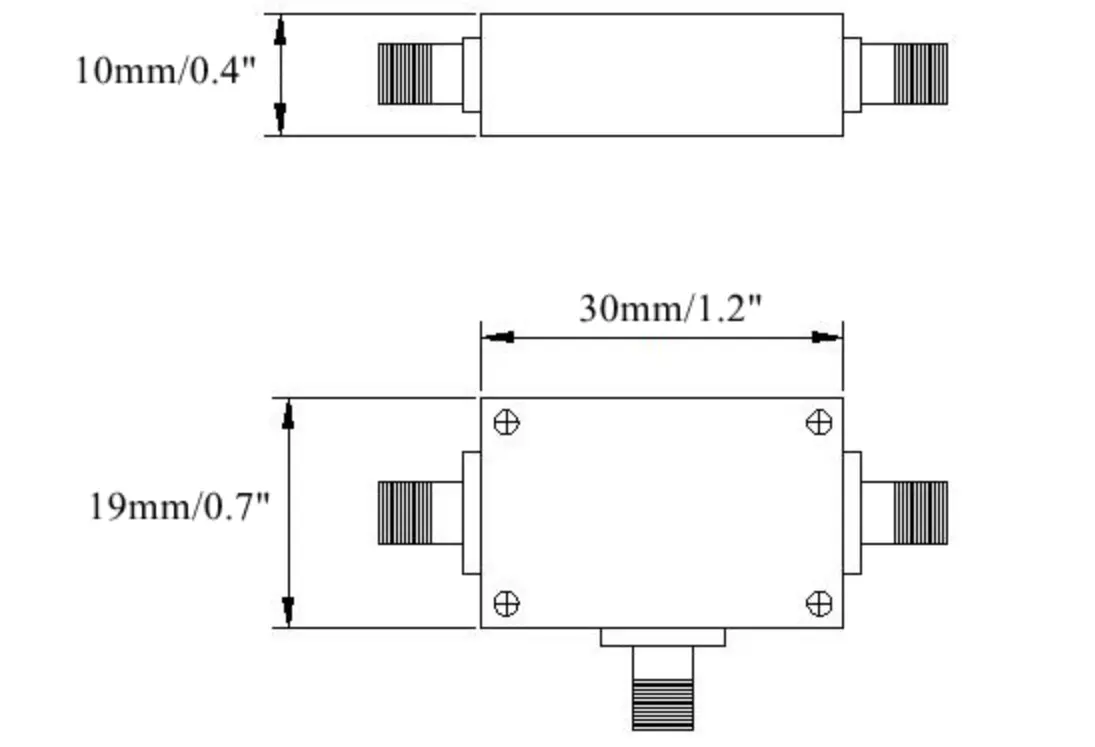
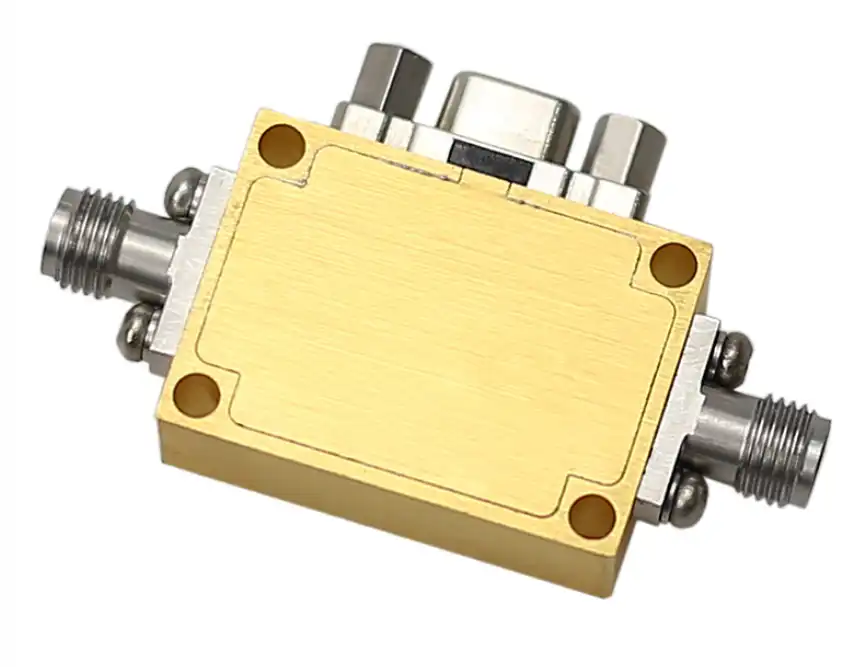
The mechanical packaging of Voltage Controlled Phase Shifter components significantly impacts system integration complexity and overall reliability. Advanced Microwave offers both surface-mount and PCB-mount configurations that accommodate diverse assembly approaches from automated high-volume production to custom hand-assembled systems. Surface-mount packages minimize board space consumption while facilitating automated assembly processes that reduce manufacturing costs and improve consistency. PCB-mount variants provide enhanced thermal management through direct chassis mounting, beneficial for high-power applications where heat dissipation determines maximum operational ratings. Customization capabilities extend beyond frequency and packaging to encompass specialized mechanical configurations that solve unique integration challenges. Compact form factors enable incorporation into space-constrained environments where standard components physically cannot fit, opening applications previously considered impractical due to size limitations. Specialized connectorization accommodates unconventional cable types or mounting orientations, eliminating the need for adapter assemblies that introduce additional insertion loss and potential failure points. Advanced Microwave's engineering team collaborates directly with customers to develop Voltage Controlled Phase Shifter solutions optimized for specific system requirements, leveraging comprehensive measurement facilities including the state-of-the-art 24-meter microwave darkroom for validation testing.
Satellite Communication System Applications
Satellite communication ground stations employ large phased array antennas that track moving satellites while maintaining continuous high-bandwidth data links. These systems demand Voltage Controlled Phase Shifter components that maintain precise phase relationships across hundreds of array elements despite temperature variations and aging effects that could otherwise degrade pointing accuracy. Beam steering accuracy directly determines link quality, with even minor phase errors potentially causing signal dropouts that interrupt critical communications. Advanced phase shifter designs incorporate temperature compensation and long-term stability features that maintain performance throughout multi-year deployment periods without requiring recalibration. The transition toward higher satellite communication frequencies including Ka-band and Q-band places increasing demands on Voltage Controlled Phase Shifter performance characteristics. Atmospheric attenuation increases dramatically at these frequencies, necessitating highly directive antennas that maximize effective radiated power and receiver sensitivity. Phased array implementations using precision Voltage Controlled Phase Shifter elements enable adaptive beam shaping that optimizes link performance under varying atmospheric conditions. During precipitation events that severely attenuate signals, the array pattern can be dynamically adjusted to concentrate energy along the most favorable propagation path, maintaining connectivity that would otherwise be lost.
Low Earth Orbit Satellite Constellation Tracking
The proliferation of low Earth orbit satellite constellations for global internet coverage creates unprecedented tracking challenges that traditional mechanically steered antennas cannot adequately address. These satellites traverse the sky in minutes, requiring ground station antennas that can rapidly slew between targets while maintaining uninterrupted service. Voltage Controlled Phase Shifter based phased arrays enable near-instantaneous beam repositioning that facilitates seamless handoffs between satellites as they pass overhead. The electronic beam steering eliminates mechanical wear concerns that limit the operational lifetime of conventional tracking systems, particularly important for remote installations where maintenance access proves difficult and costly. Advanced Microwave Technologies Co., Ltd. provides specialized Voltage Controlled Phase Shifter solutions optimized for satellite tracking applications, incorporating features specifically tailored to the unique requirements of space communications. Enhanced phase linearity specifications ensure accurate beam pointing across the full hemispherical coverage required for satellite tracking, while wide temperature range qualifications accommodate outdoor installations subject to daily thermal cycles. Customized control interfaces simplify integration with existing ground station infrastructure, reducing development time and accelerating deployment schedules. The comprehensive OEM services offered by Advanced Microwave include prototyping support that allows system designers to validate performance in their specific configuration before committing to production quantities.
Conclusion
The Voltage Controlled Phase Shifter stands as the enabling technology behind next-generation 5G networks and advanced radar systems that define modern communication and defense capabilities. Advanced Microwave Technologies Co., Ltd. delivers proven solutions that meet the exacting requirements of these demanding applications through decades of microwave engineering expertise and comprehensive testing capabilities.
Cooperate with Advanced Microwave Technologies Co., Ltd.
Advanced Microwave Technologies Co., Ltd. brings over 20 years of specialized experience as a China Voltage Controlled Phase Shifter manufacturer and China Voltage Controlled Phase Shifter supplier, delivering High Quality Voltage Controlled Phase Shifter products with exceptional performance. Our China Voltage Controlled Phase Shifter factory maintains ISO 9001:2015, ISO 14001:2015, and ISO 45001:2018 certifications, ensuring every Voltage Controlled Phase Shifter for sale meets international quality standards. As a leading China Voltage Controlled Phase Shifter wholesale provider, we offer competitive Voltage Controlled Phase Shifter price structures with customization capabilities spanning DC-30GHz frequency ranges. Our 24-meter microwave darkroom and advanced measurement equipment up to 110 GHz enable comprehensive validation testing that guarantees reliable performance. Whether you need prototype development, technical consultation, or volume production, our expert engineering team provides comprehensive OEM services including custom mechanical configurations, specialized frequency ranges, and application-specific optimizations. Contact our team today at craig@admicrowave.com to discuss your specific requirements and discover how our Voltage Controlled Phase Shifter solutions can enhance your system performance. Save this page for quick reference when selecting components for your next RF design challenge.
References
1. Barton, D. K., & Sherman, S. M. (2011). Monopulse Principles and Techniques. Artech House Publishers.
2. Koul, S. K., & Bhat, B. (1991). Microwave and Millimeter Wave Phase Shifters: Volume II - Semiconductor and Delay Line Phase Shifters. Artech House Microwave Library.
3. Skolnik, M. I. (2008). Radar Handbook, Third Edition. McGraw-Hill Education.
4. Stutzman, W. L., & Thiele, G. A. (2012). Antenna Theory and Design, Third Edition. John Wiley & Sons.
YOU MAY LIKE
 VIEW MOREInflatable Straight Waveguide
 VIEW MORERight Angle Double Ridged WG To Coaxial Adapter
 VIEW MORERight Angle Waveguide to Microstrip Adapter
 VIEW MOREWG Termination
 VIEW MOREDouble Ridge Waveguide Termination
 VIEW MOREWaveguide Power Divider
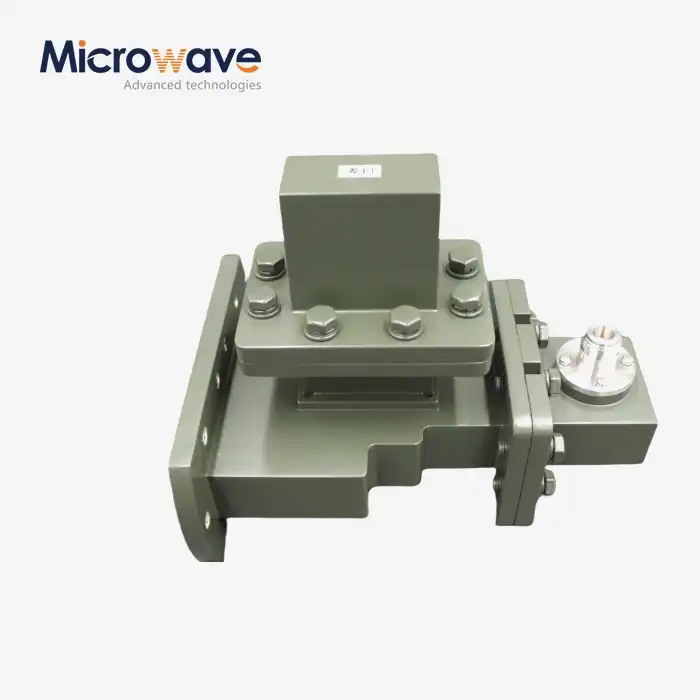 VIEW MOREE-Plane Tee
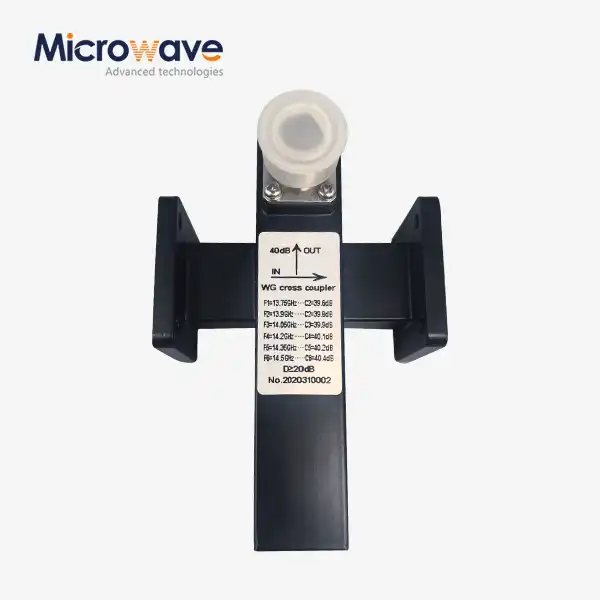 VIEW MORECrossguide Directional Coupler