





BLOG
Does Flange Type Affect H Plane Tee in Microwave Port Matching?
July 9, 2026
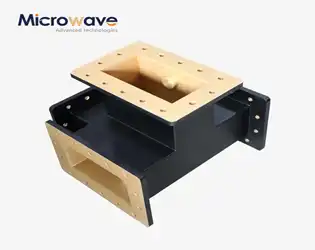
Yes, the type of flange has a significant impact on the performance of the H plane tee in microwave ports. Impedance continuity at junction points is directly affected by the shape of the flange, how flat the interface is, and how accurate the measurements are. This affects the VSWR and insertion loss features. When a waveguide H-Plane Tee has flange standards that don't match, like when you connect a UG-style flange to a PDR-style interface, mechanical gaps appear and degrade S-parameters. Advanced Microwave Technologies Co., Ltd. makes H-Plane Tees with precision-machined flanges in standard types, such as FDP and FBP configurations. These ensure seamless integration and optimal signal integrity in satellite, defense, and aerospace applications.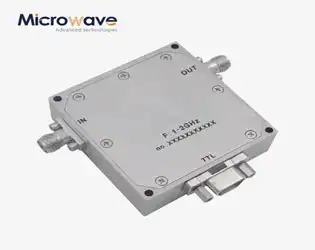
Analog vs Digital Beamforming in 5G Antenna with Phase Shifter
July 8, 2026
Analogue or digital beamforming is a crucial decision for procurement engineers when building a 5G antenna with phase shifter. Analogue beamforming uses RF phase shifters to direct beams before they are converted to signals. It is cost-effective and uses little power, making it ideal for small cell placements. Digital beamforming works on signals in the baseband, which lets multiple beams be controlled at the same time and allows for adjustable nulling. This makes it perfect for large MIMO systems that need to be very efficient with spectrum. The choice you make will rely on how complicated your application is, how much power you have, and how fast it needs to run.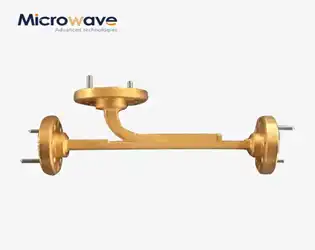
Why Broadwall Coupler Dominates in Satellite Test Equipment?
July 8, 2026
The broadwall coupler is the most trusted choice in the business when satellite test systems need to be very precise and reliable. These passive microwave parts are great at sampling directional power because they can give directivity levels above 40dB and keep coupling flatness within ±0.5dB across all operating bandwidths. Broadwall directional couplers use precision-machined apertures on parallel waveguide broad walls to split forward and reflected waves without interfering with main signal routes. This is different from coaxial couplers, which can cause voltage arcing in high-power situations. This design benefit makes it possible to measure VSWR accurately, keep an eye on transmitters, and set automatic level control loops. These are all very important features in places like radar testing facilities, defense communication systems, and satellite ground stations, where the integrity of signals directly affects mission success.
How to Spot Directivity Errors After Directional Coupler Calibration
July 8, 2026
It's necessary to check key performance factors in a planned way after directional coupler calibration in order to find mistakes in the direction of the signal. First, use a calibrated vector network analyzer to check the separation between the linked and isolated ports. Then, compare the results to the manufacturer's instructions. Directivity mistakes usually show up as bad isolation readings, strange changes in coupling across frequency ranges, or return loss patterns that aren't symmetrical. Environmental factors, such as changes in temperature or worn-out connectors, can cause measurement drift during directional coupler calibration. This is why post-calibration testing is so important for mission-critical applications that need accurate measurements.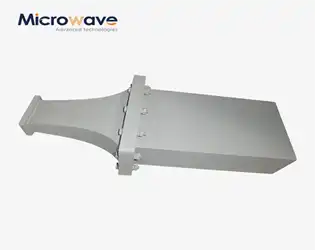
Why Average Power Rating Matters in Termination Waveguide Selection?
July 7, 2026
It's not just picking a part from a catalogue when choosing a termination waveguide—it's about keeping expensive RF systems from getting damaged in a way that can't be fixed. The average power number tells you how much constant power a termination waveguide can safely take in and send out without breaking down or losing its performance. If procurement teams don't pay attention to this standard, the results can be anything from signal distortion and higher VSWR to total component failure, which could damage sensitive equipment upstream, like solid-state power amplifiers or travelling wave tube amplifiers. Knowing the average power rate is important for mission-critical systems like radar, satellite ground stations, and aircraft communication systems, where downtime directly costs money and operations.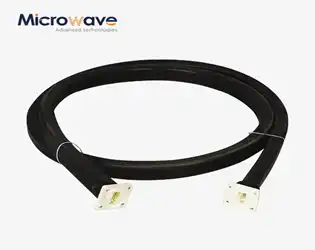
Waveguide Cable Applications in Radar and Satellite Systems
July 7, 2026
In radar and satellite systems, sending signals reliably at high frequencies is still very important for mission success. Waveguide cable systems are special kinds of communication lines that let electromagnetic waves travel at high speeds and with little loss at microwave and millimeter-wave frequencies. These strong and flexible parts connect hard waveguide sections in complicated setups where there are problems with alignment, mechanical movement, or heat expansion. Waveguide cables keep the integrity of signals across bands up to 110 GHz, while traditional coaxial cables have trouble above 18 GHz. This makes them essential for current defense, aerospace, and telecommunications systems.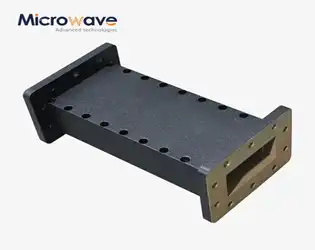
How Corrugation Depth Shapes Waveguide Low Pass Filter Rejection
July 7, 2026
In waveguide low pass filters, the corrugation depth is the most important physical factor that affects how well they reject waves. Engineers can change how electromagnetic waves interact inside the waveguide structure by carefully adjusting the depth of the internal curved ridges. This has a direct effect on the stopband attenuation levels and cutoff characteristics. Deeper corrugations make capacitive gaps that are stronger, which makes it easier to get rid of annoying harmonic frequencies while keeping insertion loss in the passband as low as possible. Because of this basic connection between corrugation geometry and filter response, depth optimization is very important for applications that need very pure spectral lines, like satellite uplinks and high-power radar systems, where even small harmonic leakage can damage the signal or break the rules.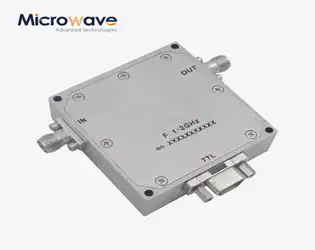
What Phase Resolution Does a 5G Antenna with Phase Shifter Need?
July 7, 2026
Depending on the rollout situation, a 5G antenna with phase shifter usually needs a phase resolution of 4 to 6 bits, or 22.5° to 5.625° steps. 5 to 6 bits of resolution is best for urban macro-cell networks and mmWave apps that need precise beamforming. This lets you move the beam accurately and reduce interference. 4-bit precision works well for small cells and indoor operations because it strikes a good balance between cost and performance. The resolution you choose has a direct effect on signal quality, network capacity, and system complexity. Because of this, it is a very important standard for buying teams that are looking at antenna systems for very important communications infrastructure.