




Key Benefits of Dual Linear Broadband Dual Circular Polarization Horn Antenna
In today's satellite communications and radar systems, signal degradation caused by polarization mismatch and atmospheric interference results in costly data loss and compromised system reliability. The Dual Linear Broadband Dual Circular Polarization Horn Antenna solves these critical challenges by offering unparalleled flexibility in polarization modes, ensuring optimal signal reception across vast distances regardless of transmission conditions. This advanced antenna technology combines the proven reliability of traditional horn designs with cutting-edge dual polarization capabilities, delivering exceptional performance for aerospace, defense, telecommunications, and research applications where signal integrity cannot be compromised.
Understanding Dual Polarization Technology in Modern Horn Antennas
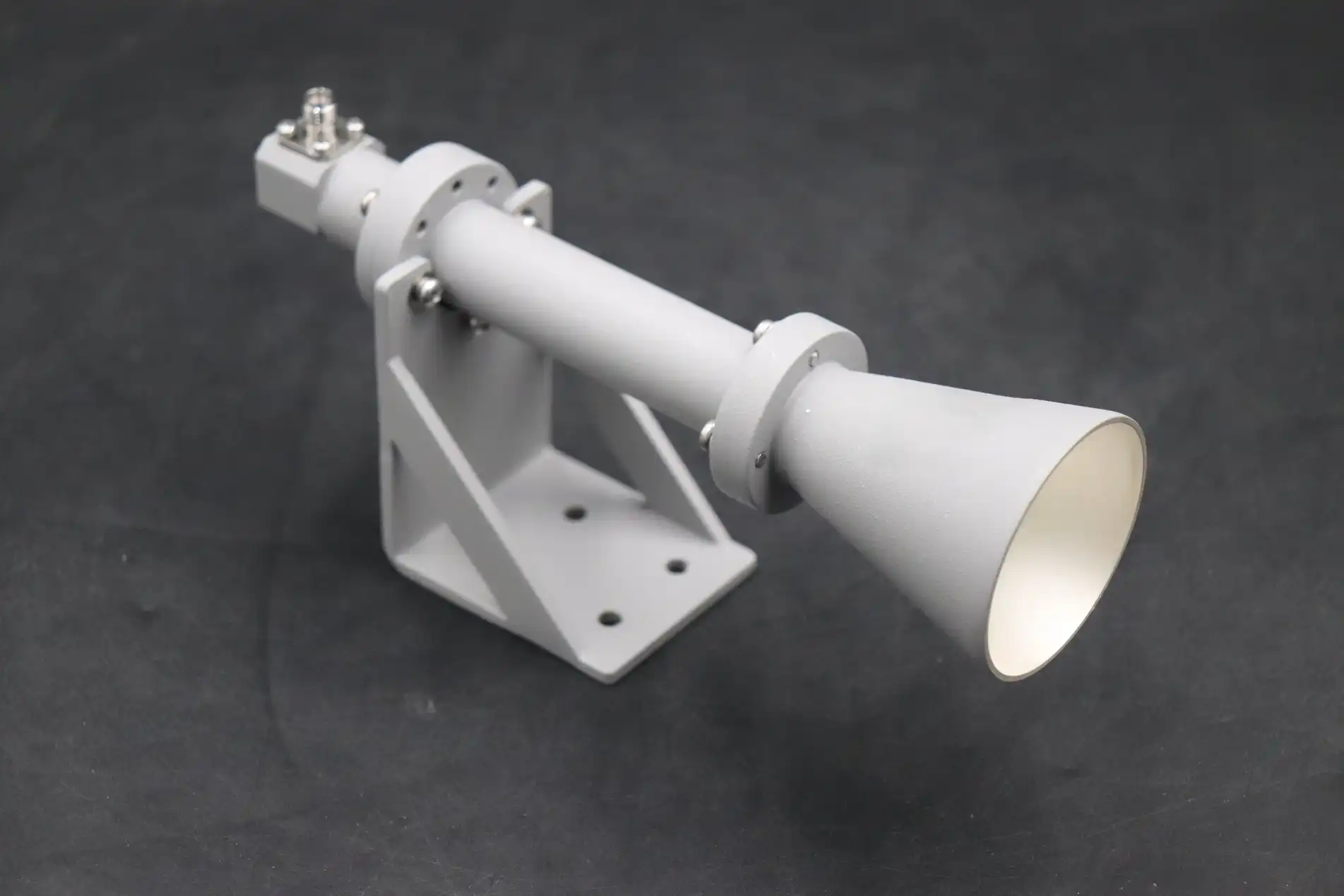
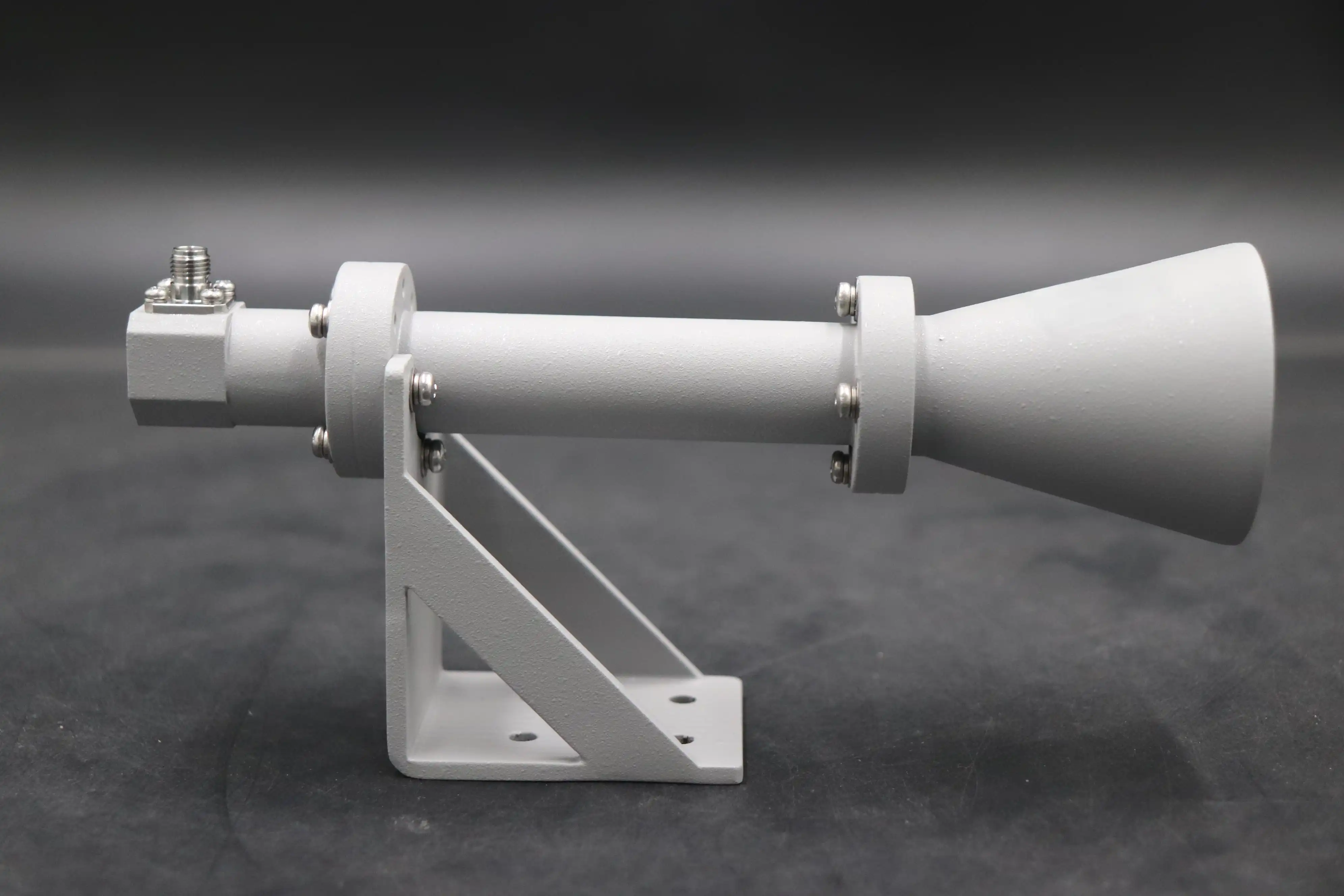
The fundamental architecture of the Dual Linear Broadband Dual Circular Polarization Horn Antenna represents a significant breakthrough in microwave engineering principles. Unlike conventional single-polarization systems, this antenna incorporates sophisticated orthomode transducers and polarization switching networks that enable seamless transitions between linear and circular polarization modes. The internal feed network design plays a crucial role in achieving this dual functionality, maintaining excellent isolation between polarization modes while preserving broadband characteristics across the entire operational frequency range. This engineering innovation addresses one of the most persistent challenges in modern communication systems where transmitted signals may arrive with varying polarization states due to atmospheric conditions, satellite rotation, or multipath propagation effects. The dual polarization capability ensures optimal signal reception regardless of the transmitted signal's polarization state, significantly reducing the risk of signal loss due to polarization mismatch. In practical applications, this translates to more reliable communication links, especially in satellite ground stations where signals must traverse vast distances through the ionosphere. The Faraday rotation effect, which causes linearly polarized signals to rotate as they propagate through the Earth's ionosphere, no longer poses a critical challenge when using Dual Linear Broadband Dual Circular Polarization Horn Antenna systems. The antenna's ability to switch between linear and circular polarization modes dynamically allows system operators to select the optimal polarization configuration for prevailing atmospheric conditions, maximizing link availability and data throughput.
Broadband Performance Across Critical Frequency Ranges
One of the most compelling advantages of the Dual Linear Broadband Dual Circular Polarization Horn Antenna lies in its exceptional broadband performance characteristics. The antenna's carefully optimized horn structure provides smooth impedance transitions across wide frequency ranges, typically spanning from UHF frequencies through millimeter-wave bands up to 110 GHz. This broad operational bandwidth makes these antennas particularly valuable for multi-band operations where legacy communication systems operating at lower frequencies must coexist with next-generation technologies utilizing higher frequency allocations. The precision-engineered waveguide transitions and impedance matching networks ensure minimal reflections and maximum power transfer efficiency throughout the entire frequency spectrum. Advanced materials and manufacturing techniques employed in producing the Dual Linear Broadband Dual Circular Polarization Horn Antenna ensure consistent performance characteristics even under extreme environmental conditions common in aerospace and defense applications. The antenna maintains stable radiation patterns, gain characteristics, and polarization purity across temperature variations, humidity changes, and mechanical stress conditions that would degrade the performance of conventional antenna systems. This reliability stems from rigorous quality control procedures and advanced measurement capabilities, including testing in state-of-the-art facilities such as Advanced Microwave Technologies' 24-meter microwave darkroom, where far-field behavior can be meticulously observed and analyzed across the entire operational frequency range.
Superior Signal Quality and Operational Advantages
High Gain Performance for Long-Range Communications
The Dual Linear Broadband Dual Circular Polarization Horn Antenna typically achieves gain values ranging from 15 to 25 dBi across operational frequency bands, with specialized designs reaching even higher levels for specific applications. This high-gain performance is essential for establishing reliable communication links in satellite communications, where substantial path losses must be overcome to maintain adequate signal-to-noise ratios. The antenna's carefully designed aperture and flare geometry concentrate electromagnetic energy into highly directional beams, maximizing effective radiated power in the desired direction while minimizing unwanted radiation in other directions. This directivity not only improves transmission efficiency but also reduces interference with adjacent systems operating in the same frequency bands. In satellite ground station applications, the exceptional gain characteristics of the Dual Linear Broadband Dual Circular Polarization Horn Antenna translate to tangible operational benefits that significantly exceed those available from conventional antenna technologies. The ability to maintain strong signal levels across vast distances enables ground stations to communicate reliably with satellites in geostationary orbit, low Earth orbit, and medium Earth orbit configurations. The high gain also provides sufficient link margin to accommodate atmospheric attenuation during adverse weather conditions, ensuring continuous operation during rain, snow, or heavy cloud cover. This reliability is particularly critical for mission-critical applications in defense systems, emergency communications networks, and broadcast services where communication interruptions cannot be tolerated.
Minimized Signal Loss and Enhanced Reliability
Low transmission loss represents another key benefit of the Dual Linear Broadband Dual Circular Polarization Horn Antenna, ensuring minimal signal degradation between the antenna feed point and the radiating aperture. The antenna's precision-machined waveguide components and high-quality materials minimize resistive losses and dielectric absorption throughout the signal path. This efficiency is particularly important in high-frequency applications where even small losses can significantly impact overall system performance and link budgets. The antenna's low voltage standing wave ratio across the operational bandwidth indicates excellent impedance matching, which prevents signal reflections that would otherwise reduce transmitted power and introduce measurement uncertainties in test and measurement applications. The weather-resistant design of the Dual Linear Broadband Dual Circular Polarization Horn Antenna ensures reliable operation in extreme environments, making it suitable for both terrestrial installations and space-based platforms. Protective radomes and environmental sealing techniques prevent moisture ingress, which could otherwise cause corrosion, dielectric breakdown, or performance degradation over time. The robust mechanical construction withstands wind loading, ice accumulation, and thermal cycling without deformation or misalignment that would compromise electromagnetic performance. This durability reduces maintenance requirements and extends operational lifetime, providing superior total cost of ownership compared to less robust antenna solutions.
Versatile Applications Across Multiple Industries
Satellite Communications and Ground Station Operations
In satellite communication systems, the Dual Linear Broadband Dual Circular Polarization Horn Antenna serves as an ideal solution for ground station antennas requiring maximum flexibility and performance. The antenna's dual polarization capability enables simultaneous transmission and reception of orthogonally polarized signals, effectively doubling channel capacity without requiring additional frequency spectrum allocation. This frequency reuse technique is essential for maximizing the efficiency of crowded satellite communication bands where spectrum is a valuable and limited resource. The antenna supports both uplink and downlink operations across multiple frequency bands, accommodating Ka-band, Ku-band, and C-band satellite services with a single antenna system when properly configured. The circular polarization mode of the Dual Linear Broadband Dual Circular Polarization Horn Antenna proves particularly valuable in satellite applications by eliminating signal fading caused by Faraday rotation effects as signals propagate through the ionosphere. This advantage becomes increasingly significant for low-elevation satellite passes where signals must traverse longer paths through the ionosphere, experiencing greater rotation of their polarization plane. Ground stations equipped with these advanced horn antennas can maintain consistent signal quality throughout satellite passes, maximizing data transfer opportunities during limited contact windows. The antenna's wide beamwidth characteristics, when configured appropriately, also facilitate satellite tracking during acquisition and handover phases of communication sessions.
Radar Systems and Defense Applications
Military surveillance radars and defense systems benefit tremendously from the advanced capabilities of the Dual Linear Broadband Dual Circular Polarization Horn Antenna. The ability to transmit and receive signals in different polarization modes enables sophisticated target discrimination techniques that improve detection capabilities against low-observable targets and reduce false alarm rates caused by environmental clutter. Circular polarization modes prove particularly effective for detecting rotating targets such as aircraft propellers or helicopter rotors, whose rotating metal components create distinctive polarization signatures that can be exploited for target identification and classification purposes. Air traffic control radar systems utilize the ultra-sharp beamforming capabilities of the Dual Linear Broadband Dual Circular Polarization Horn Antenna for accurate aircraft tracking even in challenging weather conditions. The antenna's high gain and narrow beamwidth enable precise angular resolution, allowing controllers to distinguish closely spaced aircraft and maintain safe separation standards in congested airspace. The dual polarization capability also supports weather radar functionality, enabling simultaneous air traffic surveillance and precipitation detection with a single antenna system. This integration reduces infrastructure costs and simplifies radar installation at airports and air traffic control facilities where space and mounting locations may be constrained.
Telecommunications Infrastructure and Wireless Networks
In telecommunications applications, the Dual Linear Broadband Dual Circular Polarization Horn Antenna optimizes long-distance signal propagation in point-to-point and point-to-multipoint wireless communication systems. The antenna's characteristics make it ideal for use in cellular network base stations, microwave backhaul links, and fixed wireless access systems serving rural and underserved areas. The high gain performance extends coverage ranges, enabling communication links across challenging terrain where line-of-sight propagation must traverse long distances or overcome obstacles such as hills and valleys. This extended reach reduces the number of relay stations required for network deployment, lowering infrastructure costs and simplifying network management. The Dual Linear Broadband Dual Circular Polarization Horn Antenna supports emerging technologies including 5G millimeter-wave communications and future 6G systems operating at even higher frequencies. The antenna's broadband characteristics accommodate the wide channel bandwidths required for high-speed data transmission, while the dual polarization capability enables MIMO techniques that multiply spectral efficiency and network capacity. Industrial IoT applications also benefit from the antenna's reliable performance, providing robust connectivity for remote monitoring systems, automated manufacturing facilities, and smart infrastructure deployments where communication reliability directly impacts operational efficiency and safety.
Technical Excellence and Manufacturing Standards
Precision Engineering and Quality Assurance
The manufacturing of the Dual Linear Broadband Dual Circular Polarization Horn Antenna requires sophisticated precision engineering techniques and stringent quality control procedures to ensure consistent performance across production units. Advanced Microwave Technologies Co., Ltd. employs state-of-the-art computer-aided design tools and electromagnetic simulation software to optimize antenna geometries before manufacturing, minimizing design iterations and ensuring first-pass success in prototype development. The company's experienced engineering team combines theoretical expertise with practical knowledge gained through decades of antenna development, enabling innovative solutions to complex electromagnetic challenges that arise in broadband, dual-polarization antenna systems. Every Dual Linear Broadband Dual Circular Polarization Horn Antenna undergoes comprehensive testing in Advanced Microwave Technologies' advanced measurement facilities, which include a remarkable 24-meter microwave darkroom equipped with an Antenna Plane Near and Far Field Measuring Recombination Chamber. This state-of-the-art facility enables precise characterization of antenna radiation patterns, gain characteristics, polarization purity, and impedance parameters across the entire operational frequency range from 0.5 to 110 GHz. The extensive measuring distance allows accurate far-field measurements even for large antenna apertures and high-frequency applications where conventional compact ranges might introduce measurement uncertainties. This testing capability ensures that every antenna meets rigorous performance specifications before delivery to customers.
Compliance with International Standards
Advanced Microwave Technologies Co., Ltd. maintains ISO 9001:2015 certification, demonstrating commitment to quality management systems that ensure consistent product quality and customer satisfaction. This international standard governs all aspects of business operations, from initial customer inquiries and technical consultations through design, manufacturing, testing, delivery, and after-sales support. The company's quality management system incorporates continuous improvement methodologies that drive ongoing enhancement of products, processes, and customer service capabilities. Regular internal audits and external surveillance audits verify continued compliance with ISO requirements and identify opportunities for operational excellence. The company's ISO 14001:2015 environmental management certification reflects dedication to sustainable manufacturing practices and minimizing ecological impact throughout operations. Environmental considerations influence material selection, manufacturing processes, energy consumption, waste management, and end-of-life disposal planning for antenna products. The Dual Linear Broadband Dual Circular Polarization Horn Antenna is designed for longevity and reliability, reducing replacement frequency and minimizing environmental impact over the product lifecycle. RoHS compliance ensures that hazardous substances are eliminated from manufacturing processes, protecting both employees during production and end users during operation and disposal of antenna systems.
Customization and OEM Services
Tailored Solutions for Specific Requirements
Advanced Microwave Technologies Co., Ltd. recognizes that diverse applications require customized antenna specifications to achieve optimal performance in specific operational scenarios. The company offers comprehensive OEM services that enable customers to specify custom frequency ranges, gain requirements, polarization characteristics, and mechanical configurations for their Dual Linear Broadband Dual Circular Polarization Horn Antenna systems. The engineering team works collaboratively with customers from initial concept development through final product delivery, providing technical expertise and design guidance that ensures customized solutions meet all performance requirements while maintaining cost-effectiveness and manufacturability. Custom antenna designs may incorporate specialized features such as integrated weather protection, custom mounting configurations, hermetically sealed waveguide interfaces, or specialized connector types that facilitate integration with existing system infrastructure. The flexibility to specify custom aperture sizes enables optimization of antenna gain and beamwidth characteristics for specific application requirements, whether maximizing directivity for long-range point-to-point links or providing broader coverage for surveillance and monitoring applications. Frequency range customization accommodates specialized communication bands, research frequencies, or multi-band operation requirements that cannot be addressed by standard catalog products.
Rapid Prototyping and Technical Support
The company's rapid prototyping capabilities enable quick turnaround on custom Dual Linear Broadband Dual Circular Polarization Horn Antenna designs, allowing customers to evaluate performance characteristics before committing to full-scale production. Prototype antennas undergo the same rigorous testing procedures as production units, ensuring that measured performance accurately predicts production antenna characteristics. This prototyping phase provides valuable opportunities to refine designs based on measured results, optimizing performance before production tooling investments are made. The iterative design process benefits from Advanced Microwave's extensive measurement capabilities and experienced engineering team, accelerating development timelines while minimizing technical risks. Comprehensive technical support accompanies every Dual Linear Broadband Dual Circular Polarization Horn Antenna system, including installation guidance, integration assistance, and troubleshooting support throughout the product lifecycle. The company's engineers provide detailed technical documentation, including measured performance data, mechanical drawings, and integration guidelines that facilitate smooth system implementation. When technical questions arise during installation or operation, responsive technical support ensures rapid resolution of issues, minimizing downtime and maximizing system availability. This commitment to customer success extends beyond initial product delivery, establishing long-term partnerships that support ongoing customer needs as systems evolve and requirements change.
Conclusion
The Dual Linear Broadband Dual Circular Polarization Horn Antenna delivers unmatched versatility, reliability, and performance for mission-critical communication systems across satellite, aerospace, defense, and telecommunications applications.
Cooperate with Advanced Microwave Technologies Co., Ltd.
As a leading China Dual Linear Broadband Dual Circular Polarization Horn Antenna factory and trusted China Dual Linear Broadband Dual Circular Polarization Horn Antenna supplier, Advanced Microwave Technologies Co., Ltd. brings over 30 years of expertise in microwave component manufacturing. Our ISO-certified facilities and 24-meter microwave darkroom ensure every High Quality Dual Linear Broadband Dual Circular Polarization Horn Antenna meets rigorous international standards. Whether you need China Dual Linear Broadband Dual Circular Polarization Horn Antenna wholesale solutions or custom designs, our expert team delivers competitive Dual Linear Broadband Dual Circular Polarization Horn Antenna price quotes and rapid prototyping services. Contact our China Dual Linear Broadband Dual Circular Polarization Horn Antenna manufacturer team at craig@admicrowave.com to discuss your specific requirements and discover how our Dual Linear Broadband Dual Circular Polarization Horn Antenna for sale can optimize your communication systems. Bookmark this page for easy reference when planning your next antenna procurement.
References
1. Balanis, Constantine A. "Antenna Theory: Analysis and Design, Fourth Edition." John Wiley & Sons, 2016.
2. Clarricoats, P.J.B. and Olver, A.D. "Corrugated Horns for Microwave Antennas." Institution of Engineering and Technology, 1984.
3. Granet, Christophe and James, Graeme L. "Design of Corrugated Horns: A Primer." IEEE Antennas and Propagation Magazine, Volume 47, 2005.
4. Olver, A.D., Clarricoats, P.J.B., Kishk, A.A., and Shafai, L. "Microwave Horns and Feeds." Institution of Electrical Engineers, 1994.
5. Thomas, Brian M., Olver, A.D., and Smith, M.S. "Dual-Mode Horn Antennas for Satellite Ground Stations." IEE Proceedings on Microwaves, Antennas and Propagation, Volume 133, 1986.