





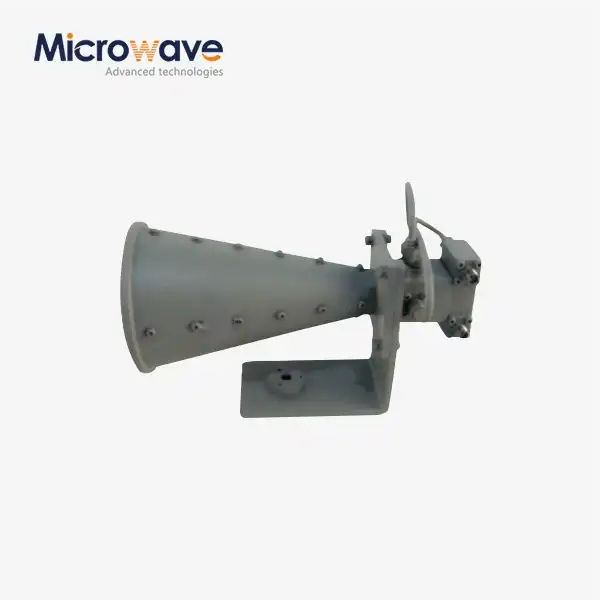
Dual Linear Broadband Dual Circular Polarization Horn Antenna
Dual Linear Broadband Dual Circular Polarization Horn Antenna
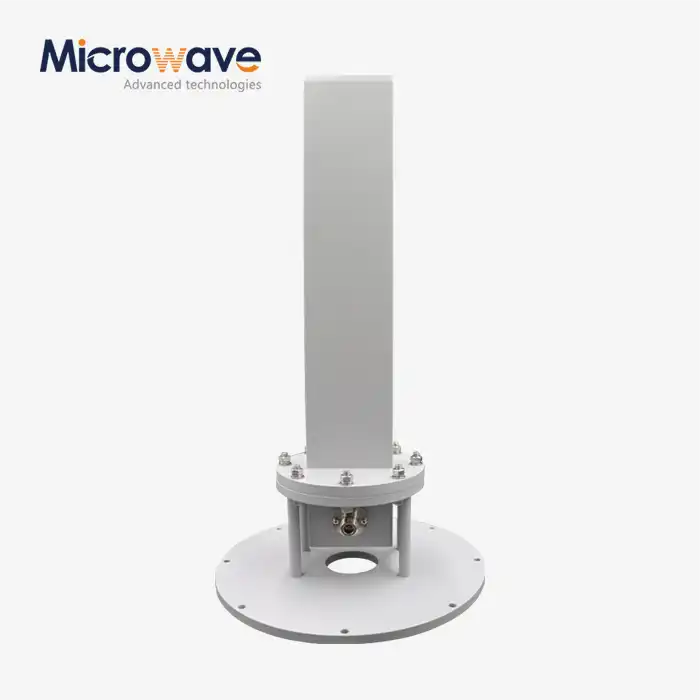
The Dual Linear Broadband Dual Circular Polarization Horn Antenna from Advanced Microwave Technologies (ADM) uses a quad-ridged horn structure with two orthogonal feed ports to support both vertical/horizontal linear polarizations and — when connected to a 90° hybrid coupler — Left-Hand Circular Polarization (LHCP) and Right-Hand Circular Polarization (RHCP) across 1 GHz to 40 GHz. It is suited for EMC testing, satellite TT&C, RCS measurement, and 5G/6G OTA evaluation where switching between polarization states without replacing hardware is a practical requirement.
What Makes This Dual Linear Broadband Dual Circular Polarization Horn Antenna Different?
Standard horn antennas handle only one polarization at a time. Swapping or rotating hardware during testing introduces measurement error and adds setup time.
This antenna addresses that constraint by integrating an Orthomode Transducer (OMT) or quad-ridged waveguide feed with a 90° hybrid coupler network. Both orthogonal polarization vectors are accessible from a single aperture, allowing you to switch between linear and circular polarization without changing hardware or repositioning your test setup.
Core Technical Specifications
Parameter | Specification |
Frequency Range | 1 GHz – 40 GHz |
Polarization | Dual Linear (V & H) / LHCP & RHCP |
Feed Structure | Quad-Ridged Horn / OMT + 90° Hybrid Coupler |
Axial Ratio (CP Mode) | < 1–3 dB |
Return Loss | > 10 dB (VSWR < 2.0) |
Key Features and Design Highlights
Broad Range from 1 GHz to 40 GHz
The broadband design of the Dual Linear Broadband Dual Circular Polarization Horn Antenna spans from traditional communication bands through millimeter-wave frequencies. It is possible to test across this range without having to switch antennas between frequency bands.
Dual Polarization in One Aperture
Two feed ports that are not parallel to each other let you handle both vertical and horizontal components at the same time. This lets the full vector nature of the incoming wave be captured, including the magnitude and phase of both the V and H components. This can then be processed into any polarisation state that is needed.
Circular Polarization via 90° Hybrid Coupler
It is natural for the horn to be dual-linear. When you connect it to an internal or external 90° hybrid coupler, RHCP and LHCP are made. This lowers polarisation mismatch loss in tasks like tracking satellites and analysing radar cross-sections.
Small Structure
The antenna has a small size, even though it has a wide working range. This makes it useful for installations in anechoic chambers, small test fixtures, and portable field setups.
Application Scenarios
Satellite TT&C and Signal Monitoring
When using fixed linear polarisation, signals that go through the ionosphere experience Faraday rotation, which makes the signals fade. With circular polarisation, this antenna stays in place even as the satellite signal's polarisation vector moves around.
EMC Testing for Cars and Planes
Used in echo-free rooms to test for radio immunity and emissions in line with CISPR 25 and MIL-STD-461. Because it is broadband, there is no need to change the receiver during frequency sweeps. In CP mode, emissions can be picked up no matter what direction the DUT is facing. This means that emission peaks may be found that a fixed linear antenna would miss.
How to Measure Radar Cross Section (RCS)
Both polarisation states are needed for full scattering matrix measurements. Getting them all in one setup cuts down on the number of test configurations needed and the measurement error that comes with them.
5G and 6G OTA Test
To test MIMO performance and polarisation diversity, the antenna shows the 3D radiation patterns of user equipment (UE). Cross-polarization discrimination (XPD) in complex antenna arrays can be studied separately with the help of synthetic circular polarisation.
Quality Control Process
ADM operates a 24 m microwave darkroom and an antenna near-field/far-field recombination chamber that support performance validation across 0.5 GHz to 110 GHz.
Each unit goes through a structured inspection process:
· Axial Ratio Verification — Confirmed via rotating source measurement. An axial ratio below 3 dB indicates the antenna is not degrading into elliptical polarization during CP operation.
· VSWR and Return Loss Sweep — VNA sweeps across the full band confirm return loss > 10 dB (VSWR < 2.0), validating the internal matching network.
· Port Isolation Testing — S21 measurement between both input ports verifies that vertical and horizontal components remain orthogonal, which is required for accurate CP vector calculation.
· Gain and Pattern Calibration — Compared against Standard Gain Horns using the 3-Antenna Method. Reports include gain curves and 3D radiation patterns confirming main lobe symmetry and side-lobe levels.
· Mechanical Tolerance Inspection — Ridge gaps and connector interfaces are inspected to a machining tolerance of 0.01 mm to limit impedance discontinuities at high frequencies.
About ADM
ADM has over 20 years of experience in microwave technology, covering waveguide components, microwave antennas, Dual Linear Broadband Dual Circular Polarization Horn Antenna, satellite communication products, and test components. The company is headquartered in Xi'an, Shaanxi, with branch offices in Chengdu, Beijing, Tianjin, and Shijiazhuang.
Engineering and R&D teams follow structured testing procedures. ADM serves communication, satellite, aerospace, and microwave test applications.
Custom frequency ranges, connector types, and integrated polarizer configurations are available on request. Contact craig@admicrowave.com with your technical requirements.
FAQ
Q: Does the antenna naturally send out circle polarisation?
A: Not really. The horn is itself two-linear. Connect it to a 90° hybrid coupler, which can be external or built in, to make RHCP or LHCP. If you need an integrated polariser, make sure you specify this when you place your order.
Q: What is the best way to test this antenna's ability to handle high power?
A: The amount of power it can handle depends on the type of connection (N-type vs. SMA) and the size of the internal ridge gap. For high-field-strength EMC testing, you should ask ADM for the hybrid coupler sub-assembly's specific Continuous Wave (CW) and peak power ratings.
Q: What's better about this antenna than a spiral antenna?
A: Spiral antennas are naturally polarised in a circle, but they usually have less gain at the low end of the band. This product has a higher gain, can handle more power, and can still be switched back to linear polarisation readings if needed.
Q: Can this antenna be used to measure polarisation diversity?
A: Yes. When you connect your receiver to both ports at the same time, you get a full vector representation of the incoming wave, including the magnitude and phase of both the V and H components. This can then be processed to any polarisation state you need.
Q: How stable is the phase center over a wide frequency range?
A: When the frequency changes in a quad-ridged horn, the phase center moves along the line. ADM gives phase center calibration data for precision radar applications so that correction factors can be used right away in your measurement setup.
Q: Can I make changes to certain frequency bands or connector types?
A: Yes, ADM can be set up in any way you want, including changing the frequency range, the connector link, or adding a 90° hybrid coupler. Craig@admicrowave.com is the address to send your technical needs.
Contact Us
Reach ADM at craig@admicrowave.com to request a datasheet, discuss custom configurations for the Dual Linear Broadband Dual Circular Polarization Horn Antenna, or get a quote.
YOU MAY LIKE
 VIEW MOREPoint Focusing Horn Lens Antenna
 VIEW MOREFeed Fired Lens Antenna
 VIEW MOREWideband Double-ridged Horn Antenna
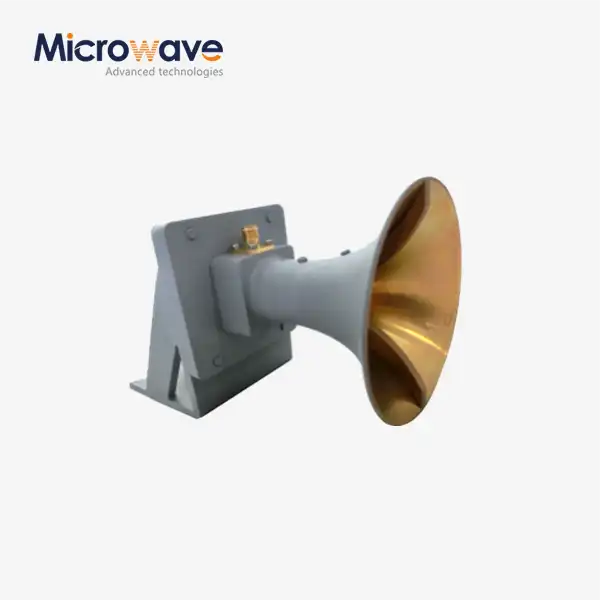 VIEW MOREUltra Double-ridged Horn Antenna
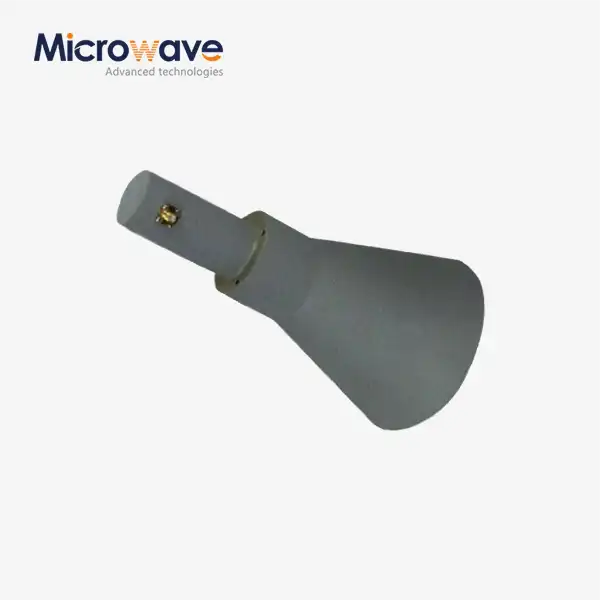 VIEW MORELadder Membrane Conical Dual circular Polarization Horn Antenna
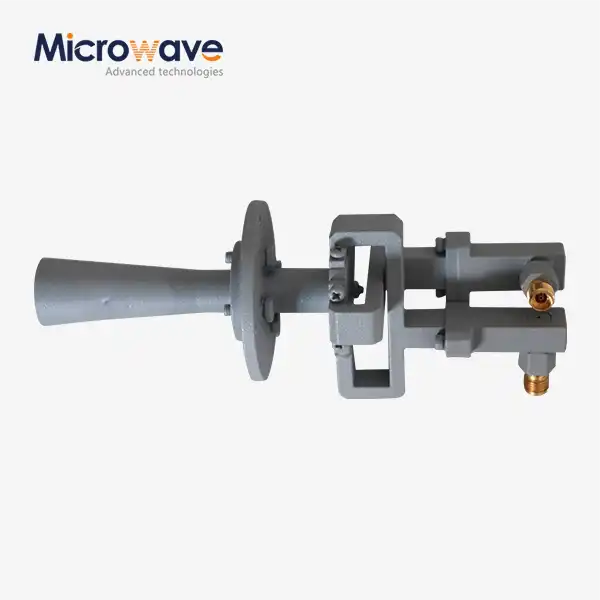 VIEW MOREConical Linear Polarization Horn Antenna
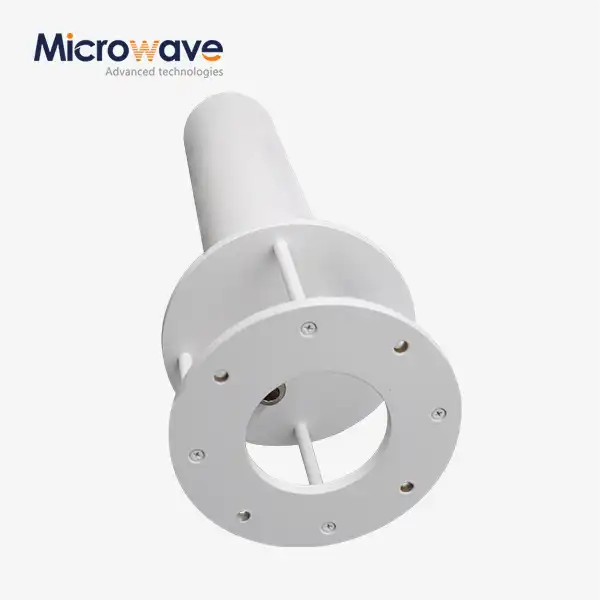 VIEW MOREQuadrifilar Helix Antenna
 VIEW MOREAntenna Near Field Measurement Probe