




How to Choose Twistable Waveguides for Your Application
Selecting the right twistable waveguides requires careful evaluation of technical specifications, material composition, and supplier capabilities. Procurement teams must prioritize frequency band compatibility, insertion loss performance, and polarization rotation accuracy to ensure seamless integration into radar, satellite, or microwave heating systems. Understanding the distinction between flexible routing capabilities and rigid polarization adjustment helps engineers match component characteristics to installation constraints. Environmental durability, power handling capacity, and certification compliance directly impact long-term reliability in mission-critical applications. Partnering with manufacturers offering customization, testing documentation, and responsive technical support minimizes procurement risk while optimizing system performance.
Understanding Twistable Waveguides and Their Working Principles
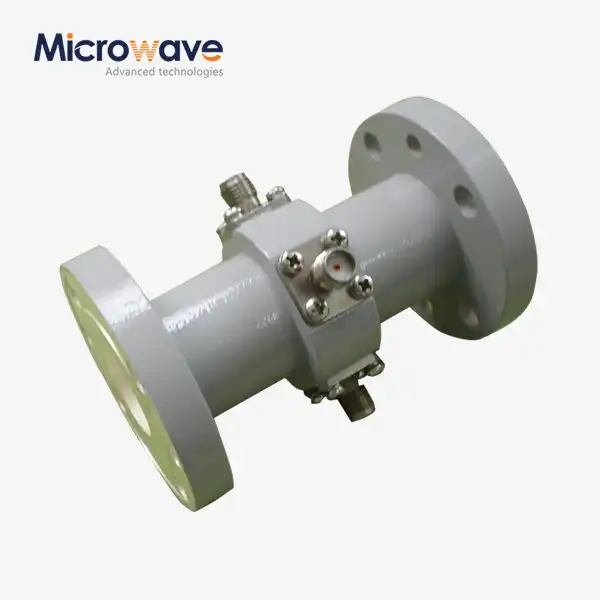
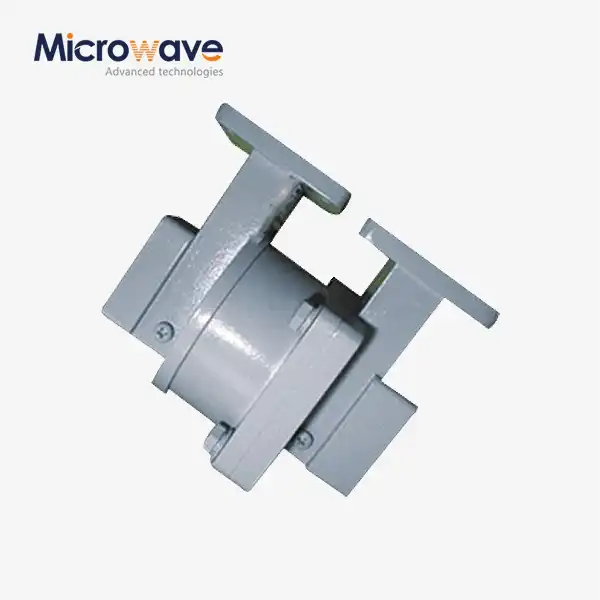
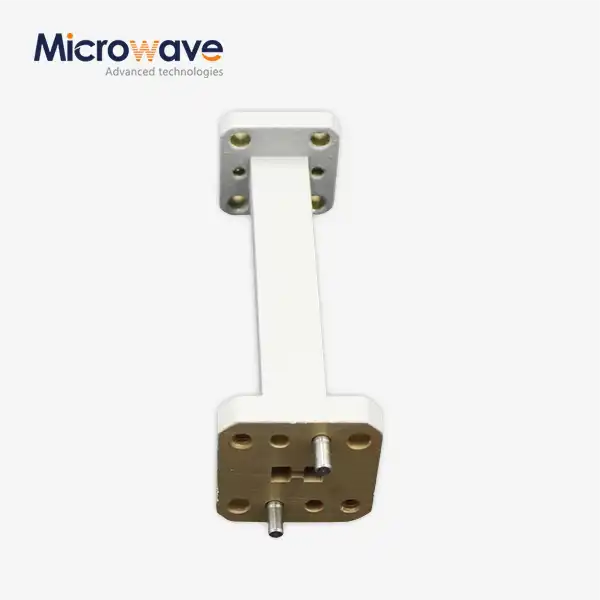
Twistable waveguides represent a specialized category of RF transmission parts that can change the direction of electromagnetic waves without affecting the data quality too much. Unlike most waveguide sections, which stay in one place, these devices can rotate the polarization by 90° or 180° by precisely milling the inside geometry. The gradient structure along the inside wall of the waveguide slowly changes the direction of the electric field as the signal travels, keeping the impedance matching during the change.
How Polarization Rotation Works
The contactless spinning system doesn't use mechanical movement, but rather changes in geometry. With five-axis CNC cutting, a spiral taper is made inside the waveguide. This makes the electromagnetic mode spin as it moves through the device. This method gets rid of the losses and wear patterns that are caused by friction in rotary joints, so the insertion loss stays below 0.1dB across all operational bandwidths. The two-layer electromagnetic protection structure stops outside interference from messing up the controlled polarization state. This keeps the signal pure even in places with a lot of electrical noise.
Thermal and Mechanical Stability
Strong thermal control is needed for high-power uses. In more advanced models, heat-dissipating fins or liquid cooling channels are used to keep the performance stable even when the continuous wave power load is between 1kW and 50kW. Material choice is very important. For flying systems, aluminum is a good choice because it is lightweight, while copper is better for ground-based high-power setups because it conducts heat more efficiently. Stainless steel versions offer better protection from rust for use in harsh environments or at sea. The working temperature range of -40°C to +85°C makes sure that it works reliably in a wide range of climates without performance shift.
Signal Integrity Preservation
Twistable waveguides keep their low VSWR requirements by carefully controlling the resistance at the points where the waves meet. The gradient inner wall design stops abrupt breaks that would cause reflections. This makes sure that power is transferred efficiently from 2.2GHz to 110GHz. This wide bandwidth support for multi-band system designs lowers the need for component inventory and makes operations easier for procurement teams that have to deal with different platform types.
Core Criteria for Selecting Twistable Waveguides
To find the best polarization rotation solution, you need to carefully look at the electrical, mechanical, and operational factors that are related to the needs of the application.
Frequency Band Matching
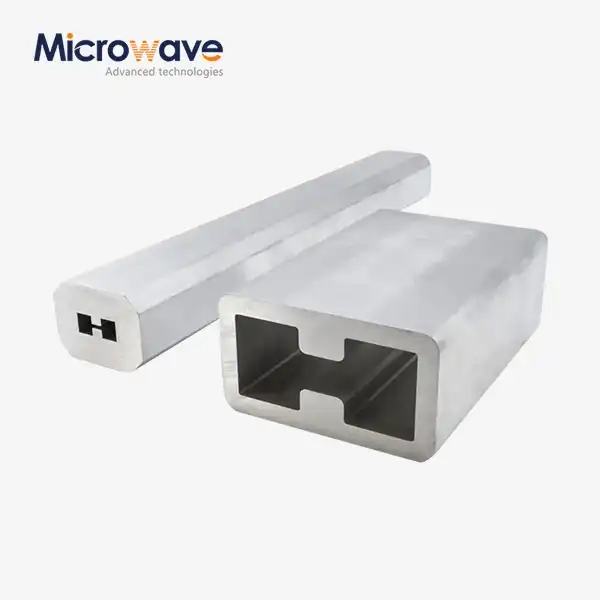
Waveguide structures naturally have electric properties that change with frequency. Standard rectangular waveguide sizes are WR-650 for L-band uses and WR-10 for W-band millimeter-wave systems. These sizes match different frequency bands. The requirements for procurement must make sure that the chosen gadget works across the whole operating spectrum without losing performance at the edges of the spectrum. When supporting systems that work across neighboring frequency allocations, wideband compatibility cuts down on the need for multiple versions of components.
Power Handling Requirements
Choices about system architecture are directly limited by continuous wave and peak power ratings. High-power radar transmitters and industrial microwave heating systems need parts that can handle average power levels of kilowatts without overheating or dielectric breakdown. Field failures can be avoided by checking the power handling specifications in the worst possible environmental conditions. For demanding defense and industry uses, devices that can run continuously at 50kW provide a lot of safety cushion.
Mechanical Integration Constraints
Physical building settings make it hard to choose the right components. Precision-machined twistable waveguides can be used in small system layouts because they have a smaller form factor than equivalent rotary joint assemblies. Mechanical integration is made easier when the flange works with the current infrastructure, whether it's standard UG/CPR connections or special connector schemes. When it comes to aerospace uses, where every gram affects fuel economy and payload capability, weight is important.
Environmental Durability Standards
For mission-critical systems to work in uncontrolled settings, their parts must have passed strict approval tests. Military-grade environmental adaptability, proven by salt fog exposure, thermal cycling, and vibration testing, makes sure that radar systems on naval ships, in the air, and in the field work reliably. Compliance with RoHS standards and construction without lead are legal requirements for both business and government contracts. Expected lifecycles of more than 100,000 hours lower the total cost of ownership by lowering the number of times that parts need to be replaced.
Customization and Interface Flexibility
Off-the-shelf options don't always perfectly meet the needs of a specific system. OEM partnerships that let you change parameters like polarization angles, non-standard flanges, or better material specifications give you the best performance for your specific needs. Manufacturers that offer electromagnetic simulation support during the design phase help customers make sure they have made the right component choices before they commit to making the production tools. This lowers the risk of development and the cost of iterations.
Comparing Twistable Waveguides with Alternative Solutions
Figuring out what other transmission technologies are out there makes polarization rotation devices in system architectures stand out more.
Rigid Waveguide Assemblies
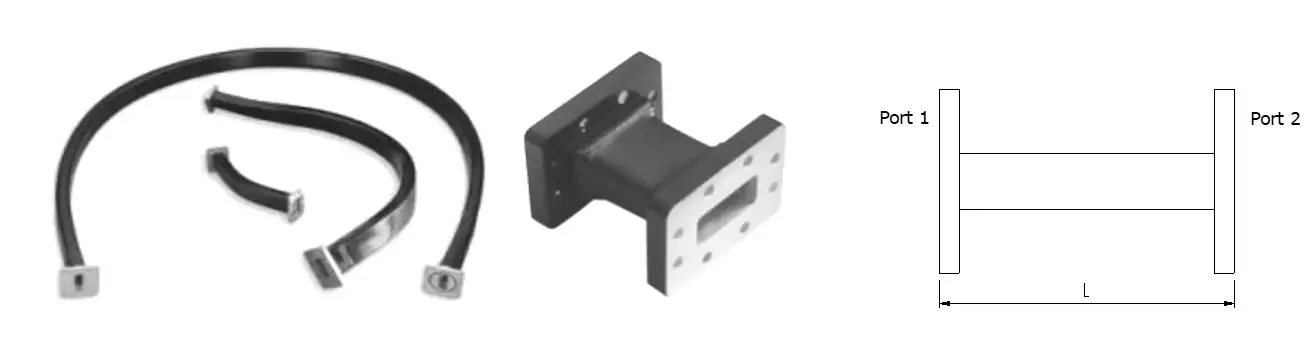
Traditional solid rectangular waveguide has the lowest insertion loss and can handle the most power, but it is not mechanically flexible. For complicated routing paths, multiple bends and twists need to be made as separate sections that are joined with flanges. Each link adds a small amount of insertion loss and could cause VSWR decline. Rigid assemblies work great in set placements with lots of room, but they don't work well when dynamic alignment changes or small packaging is what the designer wants. As the geometry gets more complicated, costs and lead times go up because custom bend angles need special tools.
Flexible Coaxial Cables
Coaxial transmission lines are very flexible when it comes to routing and are easy to find in standard formats. Even tho they have these benefits, they have more insertion loss per unit length than waveguide structures, mainly at millimeter-wave frequencies. Coax is not good for high-power or low-noise uses that need to be completely isolated from outside interference because the shielding loses its usefulness after repeated bending. When insertion loss penalties aren't a big deal and connector ecosystems are well-established, coaxial solutions can still compete in lower-frequency uses.
Rotary Joints and Flexible Waveguide
Rotary joints make it possible for moving and fixed parts of a system to keep turning mechanically. This is very important for rotating radar antennas. Compared to fixed waveguide sections, these devices add more insertion loss and VSWR, and their performance gets worse over time as the bearings and chokes wear out. A flexible corrugated waveguide can handle physical error, but it can't control the spin of the polarization. Putting together rotary joints and flexible parts solves some problems, but it makes the system more complicated, costs more, and needs more upkeep than combined polarization rotation solutions.
When making procurement choices, combining performance, cost, and delivery times is easier when these options can be clearly compared. When precise control of polarization is needed, but motorized rotary systems are too complicated, twistable waveguides fill a specific need.
How to Choose the Ideal Twistable Waveguide Supplier
Choosing the right supplier affects not only the quality of the parts, but also the stability of the system over time and the total cost of ownership.
Certification and Quality Standards
Getting ISO 9001:2015 approval shows that you are dedicated to managing quality in a planned way during the entire planning, production, and testing processes. Meeting the requirements of ISO 14001:2015 for environmental protection and ISO 45001:2018 for workplace safety shows that the business has matured in its approach to running its business. RoHS approval makes sure that the building is free of lead and that the materials used can be tracked back to their source. This meets the rules for both business and defense purchases. Instead of hiring outside contractors, manufacturers who have in-house test capabilities that go up to 110GHz can do a full check of performance.
Technical Expertise and Customization Capability
Suppliers who have been making microwave parts for more than 20 years know how to deal with the subtle design problems that come up in high-frequency applications. Access to advanced measurement tools, like 24m microwave darkrooms that let you characterize far-field antenna patterns, shows that you can check how well a component works in real-world situations. Engineering teams that are good at electromagnetic modeling and thermal analysis can improve unique designs before they are made. This cuts down on the number of iterations and the time it takes to build something.
After-Sales Support and Warranty
Full technical support, including installation instructions, troubleshooting guides, and training in maintenance, makes sure that integration goes smoothly and performance lasts. A warranty that covers more than the standard in the industry shows that the maker is confident in the product's reliability. When problems come up out of the blue, responsive customer service teams that can handle urgent field issues keep systems from going down. Accurate system-level performance modeling is possible when suppliers provide thorough technical datasheets with measured performance curves across working frequency bands.
Production Scalability and Lead Times
The ability to quickly make prototypes helps with testing early on, before committing to full-scale production. When manufacturing capacity is scalable, it can handle both small-lot specialized needs and high-volume OEM orders without affecting delivery times. Managing your inventory and supply chain well can cut down on the time it takes to buy things. This is especially important for projects with tight release dates or quick production ramp-ups.
Advanced Microwave Technology Co., Ltd is a good example of this type of supplier because it has ISO-certified quality management and a wide range of customization options for frequencies from 2.2GHz to 110GHz. Our in-house measurement tools and five-axis CNC machines allow us to control polarization precisely, with insertion loss requirements below 0.1dB.
Final Recommendations and Application Use Cases
Real-life examples of usage show how waveguide polarization rotation can be used to solve engineering problems in a wide range of fields.
Radar System Polarization Diversity
Using polarization variation in phased array radar designs improves the ability to find and tell apart targets. To make orthogonal transmit modes without cross-polarization contamination, antenna feed networks need to be rotated precisely 90°. Twistable waveguides built into the beamforming network keep the amplitude and phase of all the elements in the array perfectly matched, which allows for coherent signal processing. The ruggedized design and environmental longevity of military observation radars help them keep working well during long field missions in harsh conditions like temperature changes and vibrations.
Satellite Ground Station Optimization
The antenna systems on Earth stations have to make sure that the polarization direction matches the configurations of the satellite transponders, which can be different for each frequency band and orbital point. Ground-based twistable waveguides let you change the polarization without having to deal with the complexity of motorized feed rotation systems. The small size makes it easy to fit into equipment bunkers that are already full, and the high power handling capacity lets multi-kilowatt uplink emitters work. Low insertion loss protects the link buffer, which is especially important for Ka-band and higher frequency bands where system performance is already limited by atmospheric attenuation.
Industrial Microwave Energy Applications
Optimized energy coupling into process chambers is needed for microwave heating systems used to process materials, sterilize food, and start chemical reactions. Changing the polarization makes absorption work best for materials with uneven dielectric properties. There are twistable waveguides that work at ISM band frequencies and can handle high amounts of power while still performing reliably in hot settings. Customized configurations can work with non-standard chamber shapes and the interface needs of proprietary processing equipment.
Medical Imaging and Therapy Systems
MRI systems and microwave therapy devices change the polarization of electromagnetic fields to get the best contrast for imaging or the best therapeutic energy delivery. Precision polarization control raises the signal-to-noise ratio in diagnostic settings and makes treatment more effective in restorative ones. Medical equipment cases are limited in space, but small waveguide components can fit inside. RoHS compliance meets the rules for medical devices. The contactless rotation mechanism gets rid of any places where a machine could break down and put patient safety or diagnostic accuracy at risk.
Procurement managers evaluating these use cases should prioritize frequency compatibility, heat endurance, and customization freedom at the top of their list of priorities when matching component specs to application needs. Finding the right balance between up-front cost, lifecycle reliability, and supplier support capabilities helps make procurement decisions that deliver long-term value for the whole system's operational life.
Conclusion
To choose the right polarization rotation components, you need to look at their electrical performance, mechanical limitations, durability in harsh environments, and the supplier's abilities. Twistable waveguides are very useful in situations where exact polarization control, high power handling, and low insertion loss are all needed. Partnering with experienced makers that offer flexible customization, thorough testing validation, and quick technical help throughout the lifecycles of products is good for procurement teams. Matching the frequency band coverage, material specifications, and interface compatibility to the needs of the application guarantees the best system performance while keeping the total cost of ownership low. The choice framework shown lets you choose parts with confidence, making sure they meet both short-term project goals and long-term reliability goals.
FAQ
1. What polarization angles are available in waveguide twist components?
Standard setups offer orientation movement of 90° and 180°, which meets most system needs. Custom angles can be made for specific uses that need polarization states that aren't standard. The 90° version changes the direction of linear polarization between two orthogonal axes. This is often needed in systems with two different types of antennas. In some radar and transmission systems, the 180° setup is useful because it flips the polarization sense. Manufacturers who can do their own electromagnetic modeling can find the best middle angles when the needs of the application require non-standard solutions.
2. How does insertion loss compare to rigid waveguide sections?
With high-precision manufacturing methods, insertion loss is kept below 0.1dB across all operational bandwidths, which is close to the performance of straight rigid waveguide sections that are straight. The gradient inner wall shape keeps impedance changes smooth, without sudden breaks that could cause echoes. Even tho it's a little more than for exactly straight runs, the smaller size and lack of multiple flanged connections often lead to lower system-level loss than systems that need a lot of rigid bends and changes. Before launch, performance testing using vector network analysis makes sure that the specs are met across the whole frequency range.
3. Can these components withstand outdoor environmental exposure?
Military-grade qualification testing confirms performance in conditions like salt fog, temperature cycling, humidity, and vibration that are typical of harsh field environments. The operating temperature range, from -40°C to +85°C, covers climates from the Arctic to the desert. Choosing the right materials, especially types of stainless steel, makes marine structures less likely to rust. Using environmental gaskets to properly seal the flange stops water from getting in, which would lower the electrical performance. Regular inspection plans that are based on how bad the deployment setting is make sure that reliability lasts for the whole operating life.
Partner with ADM for Your Twistable Waveguide Needs
Advanced Microwave Technologies Co., Ltd. makes twistable waveguides that are precisely designed to meet the needs of challenging military, defense, and industrial uses. Our ISO-certified manufacturing methods and 110GHz testing skills in-house make sure that the performance of our parts meets the strictest requirements. Our experienced engineering team can help with electromagnetic simulation, rapid prototyping, and scalable production to meet tight deadlines, no matter if your project needs standard configurations or completely unique designs. As a reliable provider of twistable waveguides with more than 20 years of experience in microwave components, we offer full technical support from the first idea to the final product in the field. Email craig@admicrowave.com to talk about your polarization control needs and get access to detailed datasheets that show how committed we are to quality, dependability, and customer success.
References
1. Balanis, Constantine A. Advanced Engineering Electromagnetics, 2nd Edition. Hoboken: Wiley, 2012.
2. Collin, Robert E. Foundations for Microwave Engineering, 2nd Edition. New York: IEEE Press, 2001.
3. Pozar, David M. Microwave Engineering, 4th Edition. Hoboken: Wiley, 2011.
4. Ramo, Simon, John R. Whinnery, and Theodore Van Duzer. Fields and Waves in Communication Electronics, 3rd Edition. New York: Wiley, 1994.
5. Saad, Theodore S. Microwave Engineers' Handbook, Volume 1. Dedham: Artech House, 1971.
6. Montgomery, C. G., Robert H. Dicke, and Edward M. Purcell. Principles of Microwave Circuits. New York: McGraw-Hill, 1948.
_1733738410152.webp)