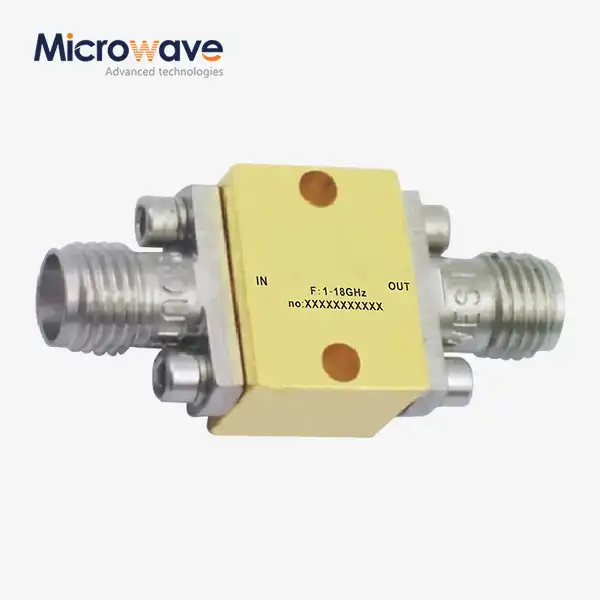





Precision Phase Shifters for High-Accuracy Beamforming
Precision phase shifters represent fundamental building blocks in modern beamforming architectures, enabling dynamic control over electromagnetic wave propagation. These devices adjust the phase relationship between multiple signal paths without altering amplitude, allowing systems to steer radiating beams electronically toward desired directions. In high-accuracy beamforming applications—from phased array radar to 5G massive MIMO base stations—the ability to achieve phase shifts with minimal error directly determines system resolution, target discrimination, and spectral efficiency. When evaluating these components, procurement professionals must consider phase accuracy, insertion loss, frequency bandwidth, and environmental resilience as core performance indicators that define mission-critical reliability.
Understanding Precision Phase Shifters: Principles and Applications
Core Operating Principles
Phase shift technology changes how long an RF signal takes to move through a communication medium. These devices change the phase angle of a signal compared to a reference by adding controlled changes in the length of the electrical paths or changes in the reactive components. Some important performance parameters are phase accuracy (usually given as ±2 to ±5 degrees), insertion loss (how much the signal weakens when the phase is changed), and frequency range (which determines the operational bandwidth). How well it works for high-power radar or sensitive satellite communication lines is also determined by its return loss and power handling capabilities.
Technology Classification
Voltage-controlled phase shifters use varactor diodes or ferroelectric materials to provide constant analog tuning while using little DC power. These devices work great for tasks that need smooth phase changes, like adaptive beamforming on platforms in the air, where quick tweaks are needed to account for the movement of the airplane. Digitally controlled phase shifters use switched networks of transmission lines or loaded lines to provide discrete phase states that are more stable and repeatable. Defense contractors like digital architectures in Active Electronically Scanned Arrays because the performance of thousands of elements needs to be synchronized and predictable across a wide range of temperatures and vibration levels. High-power radar uses ferrite phase changers, which use magnetic materials to handle kilowatts of RF energy and keep insertion loss low at microwave frequencies.
Mission-Critical Applications
Precision phase shifters are used in military aerospace to track hypersonic vehicles. Microsecond beam steering keeps targets from slipping away during moves to avoid them. These parts are put together by satellite ground stations into uplink beamformers. These direct the power that is sent toward geostationary satellites and block out interference from orbital spots next to them. For 5G telecommunications, huge MIMO base stations with hundreds of phase shifters per panel are used to shape millimeter-wave beams on the fly so they can reach mobile users in crowded cities. Research groups that study radio astronomy and atmospheric sensors use homemade phase shifter kits to make aperture sizes that are bigger than the physical measurements of antennas. This lets them get angular resolutions that were not possible with single-dish systems before.

Comparing Precision Phase Shifters: Making the Right Choice
Analog vs. Digital Architectures
When algorithms need fine beamforming changes, analog devices are helpful because they have infinite phase precision across their tuning range. Because varactor-based designs do not convert as much AM to PM as switching networks do, noise performance tends to be better, and phase jitter is lower. Insertion loss stays pretty constant across phase states, which makes it easier to figure out link budgets. Digital phase shifters balance with deterministic phase states that stop phase drift over temperature and time. This is very important when calibration cycles need to go beyond the annual maintenance windows. In advanced radar modes, their switching speed, which is often less than 100 nanoseconds, lets pulse-to-pulse beam shifting happen. Noise concerns shift to reducing transient spikes during state changes, which can be done with absorptive switch topologies.
Selection Criteria for Next-Generation Systems
To meet the Error Vector Magnitude requirements for 256-QAM modulation, 5G infrastructure needs devices that can operate between 24 and 71 GHz, have insertion loss below 2 dB per bit, and have phase accuracy within ±3 degrees. Low-latency control interfaces, like SPI or parallel buses, need to update beams within 10 microseconds to keep up with the movement of vehicles. Metrics for reliability include a Mean Time Between Failures that is more than 100,000 hours of constant operation and is backed by approval testing to AEC-Q200 or MIL-STD-883 standards. To stay in geostationary orbit for a long time, satellites need to be able to handle a total ionizing dose of more than 100 krad. Phase resolution often determines beamwidth accuracy. For wide coverage, a 5-bit shifter with 11.25-degree steps might be enough, but 8-bit or 10-bit devices with sub-degree granularity are better for imaging radar.
Performance Benchmarking
Leading products on the market from specialized companies show phase accuracy to within ±1 degree from X-band to Ka-band, along with insertion loss of less than 1 dB per state and VSWR better than 1.5:1. Calibration stability over operating temperatures ranging from -40°C to +85°C guarantees consistent performance on ships and airplanes that go through thermal cycling. Modern models have built-in control software and non-volatile memory that stores calibration factors to account for differences in manufacturing and environmental drift. By knowing these standards, procurement teams can tell the difference between commercial-grade parts and ruggedized modules that meet aerospace qualification standards.
Procurement Guide: How to Source High-Quality Precision Phase Shifters
Evaluating Technical Documentation
Full datasheets for precision phase shifters show insertion loss versus frequency curves, phase error distributions across all states, and power compression characteristics that define linear operating regions. S-parameter files let you simulate electromagnetic fields within bigger system models, which lets you guess intermodulation products and harmonic output before putting the prototype together. Procurement managers should check that all the paperwork is complete, such as test conditions, measurement uncertainty, and compliance certifications for quality management (ISO 9001), hazardous substance limits (RoHS), and chemical safety (REACH).
The level of expert help a supplier offers is what sets strategic partnerships apart from normal business deals. During the integration steps, it is faster to fix problems when you have access to application engineers who know about phased array designs. The time it takes to make a prototype is cut by weeks when evaluation kits with driver boards and measurement software are available. This lets system designers test how well the prototype works in their specific RF chain layout before placing large orders.
Custom Manufacturing Partnerships
Standardized catalog products don't usually meet specific needs, like hermetically sealed systems for space-rated applications or control ASICs that work with custom beamforming algorithms. Before you can work with custom makers, you need to write down specific requirements for things like frequency coverage, phase resolution, switching speed, temperature stability, and mechanical interface needs. During the prototyping phase, electromagnetic simulations are used to look at the design and predict how it will work. Next, the first units are built and tested in the customer's lab to make sure they work. Before moving on to production tools, this iterative process makes sure that the agreed-upon values for insertion loss, phase accuracy, and power handling are met.
Supplier Landscape Insights
We know that procurement teams look at a lot of vendors to find the best balance between price, performance, and delivery reliability. Working with defense companies and satellite operators has taught us that they both want clear prices without any hidden NRE charges, lead times that match program goals, and warranty terms that cover problems in the field. Our ISO 9001:2015-certified processes guarantee constant quality, and our 24-meter microwave darkroom lets us check antenna patterns in the far field over a range of frequencies, from 0.5 to 110 GHz. This is what makes complete RF system validation different from testing only individual components.
Optimizing Precision Phase Shifter Performance for High-Accuracy Beamforming
Calibration Methodologies
Systematic calibration methods are needed to keep the phase stability across hundreds of array elements. In the initial factory calibration, correction factors are stored in non-volatile memory to show how each phase shifter's real phase shift compares to its commanded state. Field calibration uses built-in test signals that are sent through couplers to measure the relative phase differences between elements and change the drive voltages or switch timings to account for drift. This task is done automatically by software tools that connect to beamforming control systems and plan calibration for times when there are maintenance windows or when performance measures show that the system isn't working as well as it should.
Noise Reduction Strategies
Keeping the amount of additive phase noise in the LO distribution network as low as possible stops spectrum spreading, which hurts radar systems' Doppler sharpness and makes communication links more prone to constellation errors. When a low-phase-noise amplifier is built into a phase shifter module, it keeps switching transients from affecting sensitive varactor bias networks. When choosing components, transistors with low 1/f noise corners and passive elements with low temperature coefficients are given the most weight. When putting phase shifters into small phased array tiles, it's important to keep electromagnetic coupling from nearby digital control logic at bay. Shielding and grounding techniques do this.
Environmental Resilience and Future Innovations
Phase drift caused by temperature is caused by changes in the capacitance of the semiconductor junction and the substrate's thermal expansion. Some ways to fix problems are to use thermistor-based bias adjustment or an algorithmic correction method that uses integrated temperature monitors and reference tables. To reduce electromagnetic interference, shielded enclosures that meet MIL-STD-461 radiated emission limits and ferrite beads on DC supply lines are used. This is especially important when mounting phase shifters next to high-power amplifiers. New technologies use AI to predict when phase shifters will lose performance, which allows them to schedule preemptive calibration before errors get too big for the system to handle. Machine learning algorithms look at historical data like temperature profiles, switching cycle counts, and voltage rail changes to predict how long parts will last.
Conclusion
When choosing precision phase shifters, you need to carefully look at their phase accuracy, insertion loss, frequency range, and ability to work in harsh environments, all of which need to be tuned to the needs of your beamforming application. To make sure that system performance meets mission goals, it is important to understand the trade-offs between analog and digital designs, set strict purchase criteria that include technical documentation and source skills, and use calibration strategies. New technologies offer better dependability and adaptability, which makes these parts long-lasting enablers of advanced RF systems in the research, military, aerospace, and telecommunications industries.
FAQ
1. What frequency ranges do precision phase shifters typically cover?
Devices cover the L-band to the W-band, with most commercial options falling between 2 GHz and 40 GHz for radar and telecommunications use. There are specialized versions that go up to 110 GHz for new millimeter-wave devices, such as satellite crosslinks and car sensors. Broadband designs can reach octave or multi-octave bandwidths, while narrowband units work to minimize insertion loss within certain ranges.
2. How do precision phase shifters improve beamforming accuracy compared to traditional methods?
Latency in mechanical steering is measured in seconds, and motor parts wear out over time, which limits scan rates and dependability. Electronic phase control lets you move the beam in microseconds without any moving parts, and it can create multiple beams at the same time to track targets that are spread out or serve multiple users at the same time. Beam pointing accuracy below 0.1 degrees is maintained by phase accuracy within a few degrees. This is important for long-range radar discrimination and high-throughput data lines.
3. What steps ensure fast delivery and consistent quality from manufacturers?
Check the supplier's certifications, like ISO 9001 or AS9100 for aerospace, and ask for qualification test reports that show how well the product works in harsh environments. For high-volume projects, set up vendor-managed inventory and make sure that buffer stock works with production plans. Set up acceptance testing procedures that include checking the phase accuracy and measuring insertion loss before the system is shipped. This will help keep mistakes in the field to a minimum and speed up the integration process.
Partner with ADM for Your Custom Phase Shifter Requirements
Advanced Microwave Technologies Co., Ltd. (ADM) makes precise phase shifter solutions for defense, aerospace, satellite, and telecommunications uses that need the best performance possible. Our ISO 9001:2015-certified production methods and 24-meter microwave darkroom facility allow full validation from 0.5 GHz to 110 GHz. We have more than 20 years of experience making microwave components. Our expert team works together to turn your requirements into production-ready assemblies, whether you need voltage-controlled analog devices for adaptive radar systems or digitally controlled modules for huge MIMO infrastructure. We can keep your program's deadlines on track with our fast prototyping services, custom OEM partnerships, and global shipping support. Email our engineering team at craig@admicrowave.com to talk about your beamforming problems. Find out how working with a reliable company that makes precision phase shifters can speed up the process of going from idea to implementation, giving you peace of mind about quality, dependability, and technical excellence.
References
1. Skolnik, Merrill I. Radar Handbook, Third Edition. McGraw-Hill Education, 2008.
2. Mailloux, Robert J. Phased Array Antenna Handbook, Third Edition. Artech House, 2017.
3. Balanis, Constantine A. Antenna Theory: Analysis and Design, Fourth Edition. Wiley, 2016.
4. Pozar, David M. Microwave Engineering, Fourth Edition. Wiley, 2011.
5. Haupt, Randy L. Antenna Arrays: A Computational Approach. Wiley-IEEE Press, 2010.
6. IEEE Transactions on Microwave Theory and Techniques, Volume 68, Special Issue on Phased Arrays for 5G and Beyond, 2020.
_1733809032116.webp)