




_1733738410152.webp)
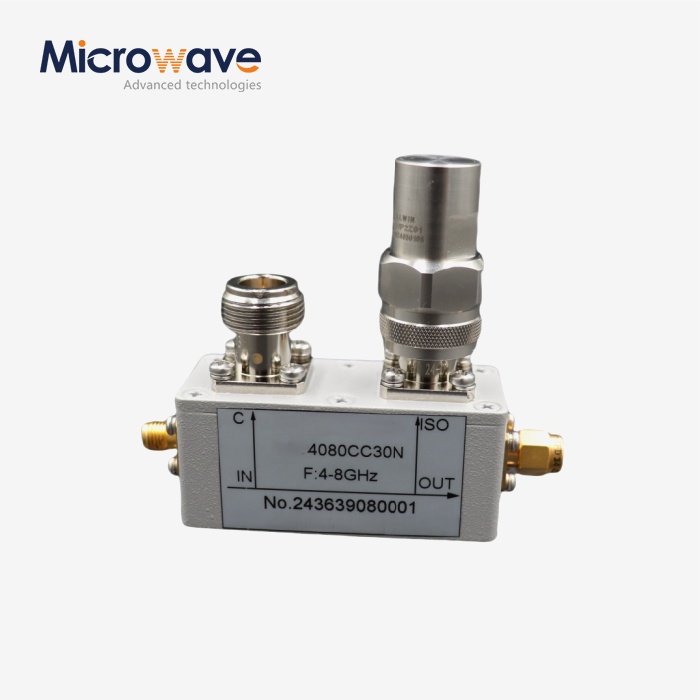
Coaxial Power Divider
Coaxial Power Divider for RF Signal Distribution — High Isolation, Low PIM, Precision Power Splitting
The Advanced Microwave Technologies Co., Ltd. (ADM) creates and produces passive RF breaking parts for tough microwave systems. Our range of Coaxial Power Dividers works with frequencies from DC to 18 GHz and beyond. They come with 50Ω or 75Ω impedance options, isolation that is usually better than 20 dB, amplitude balance that is within ±0.2 dB, and phase balance that is within ±2 degrees. ADM has been working as a microwave engineer for more than 20 years and can test things from 0.5 GHz to 110 GHz in-house.
What Is a Coaxial Power Divider?
A product is a passive RF or microwave part that either splits an input signal into two or more output signals or joins several signals into one channel. It's not just a simple join of wires.
To make sure that all ports have the same impedance, professional designs use either Wilkinson or resistive circuit schemes. This stops signal reflection, lowers VSWR degradation, and leaves insertion loss close to the theoretical lowest level, which for a standard 2-way split is 3 dB.
There are three main issues that a well-made barrier fixes:
· Signal reflection caused by unmatched impedance during splitting
· Cross-talk between output ports, managed through high inter-port isolation
· Insertion loss, kept minimal to protect signal integrity in power-sensitive systems such as 5G base stations and DAS


Circuit Topology: Wilkinson vs. Resistive
Choosing the right topology directly affects system performance.
Topology | Bandwidth | Insertion Loss | Best Application |
Wilkinson | Narrowband (specific comms bands) | Low (near theoretical split loss) | LTE, 5G NR, satellite comms |
Resistive | Ultra-wideband (DC to GHz) | Higher (~6 dB for 2-way) | Test & Measurement labs |
Wilkinson dividers provide low insertion loss and high output port isolation, which makes them a common choice for cellular and satellite signal distribution. Resistive dividers carry higher insertion loss but cover extremely wide frequency ranges, so they are often used in R&D environments where a single source feeds multiple instruments at the same time.
Key Technical Specifications
Parameter | Specification |
Frequency Range | Broadband DC–18 GHz; specific 5G / Wi-Fi 6E / mmWave bands available |
Insertion Loss | Theoretical split loss + excess loss ≤ 0.5 dB |
Isolation | Typically >20 dB between output ports |
VSWR | ≤ 1.25:1 |
Amplitude Balance | ±0.2 dB |
Phase Balance | ±2 degrees |
PIM Rating | ≤ −160 dBc (Low PIM models available) |
Power Handling | 10 W to 500 W+ CW (model dependent) |
Impedance | 50Ω or 75Ω |
Connector Options | N-Type, SMA, 4.3-10, 7/16 DIN |
Housing Material | Aluminum or brass with silver or ternary alloy plating |
Dielectric Material | PTFE |
Operating Temperature | −55°C to +85°C |
Construction and Materials
The Coaxial Power Divider's housing is made of aluminium or brass that has been plated with silver or a ternary alloy to make it both electrically conductive and resistant to corrosion. Inside electronics, PTFE dielectrics are used to keep things running smoothly over a wide range of temperatures and frequencies.
The choice of connector has a measured effect on how well high-power and low-power devices work. When systems need 100 W or more with Low PIM, 7/16 DIN or 4.3-10 connectors are better because they have bigger contact areas and better torque retention than SMA or N-Type connectors. This makes them better for those situations.
Application Scenarios
Telecommunications and In-Building DAS
In cities with lots of people, the divider sends signals from a main donor unit to several remote radio heads or ceiling antennas. To keep uplink crosstalk from happening in full-duplex systems like TETRA and P25 public safety networks, the PIM performance must be below −160 dBc.
Radar, Space, and Defence
For accurate beamforming, phased array radars and electronic warfare simulations need to balance phase and amplitude very precisely. Units must be able to handle being at high altitudes and shaking while sending multiple antenna elements at the same time.
Laboratory for Tests and Measurements
A signal from a signal generator can go to both a spectrum analyser and a power meter at the same time in R&D settings with wideband resistive models. This gets rid of the need to switch cables between measurements, which helps keep things consistent and lowers calibration drift.
Quality Control Process
Each unit undergoes the following inspection steps before shipment.
· S-Parameter Verification using a Vector Network Analyzer (VNA), validating S21 insertion loss, S11/S22 return loss, and S23 isolation across the full specified bandwidth
· PIM Testing at 2×43 dBm carrier levels per IEC 62037, a primary acceptance criterion in telecom procurement
· Power Handling and Burn-in Tests to confirm that internal resistors dissipate heat correctly under maximum load without parameter drift
· Environmental Stress Screening (ESS) including salt spray testing per ASTM B117, thermal cycling from −55°C to +85°C, and vibration testing for outdoor and mobile deployments
ADM's in-house 24 m Microwave Darkroom supports antenna near-field and far-field measurement with frequency coverage from 0.5 GHz to 110 GHz, enabling component-level and system-level validation without relying on third-party facilities.
Customization and Supply Information
ADM supports custom Coaxial Power Divider configurations based on your system requirements. Options include specific frequency bands, split ratios (equal or unequal), connector types, power ratings, and housing dimensions. Engineering teams work directly with customers during the specification phase to confirm compatibility before production.
If your project requires a non-standard configuration — such as a 3-way or 4-way divider, a specific Low PIM model, or a unit rated above 500 W — send your technical requirements, including target frequency range, power level, and connector type, to the ADM team for evaluation.
FAQ
Q: What's the difference between a resistive power divider and a Wilkinson power divider?
A: Wilkinson dividers have low insertion loss and good isolation, but they only work with certain frequency ranges. If you want to send a signal, resistive dividers are not the best choice because they have a higher insertion loss (about 6 dB for a 2-way split) and can only handle DC to GHz.
Q: Why does it matter to have phase balance?
A: In interferometry or phased array antennas, even a small difference in phase between ports can change the shape of the antenna beam or mess up measurement data. With a phase balance of ±2 degrees, these effects stay within reasonable ranges.
Q: Can a power divider work as a combiner?
A: Yes. Most Wilkinson dividers work both ways and can mix signals. The messages must have the same phase and frequency to work together. The isolation resistor takes in extra power if they are not coherent. If the power level goes over its rating, it can damage the resistor.
Q: How does low PIM affect how well a network works?
A: High PIM makes the noise level higher in the uplink band, which makes LTE and 5G networks less reliable and slows down data transfer. A score of ≤ −160 dBc helps make sure that the divider itself doesn't cause interference.
Q: Which connector is best for uses that need a lot of power?
A: 7/16 DIN or 4.3-10 connectors are best for power levels of 100 W or more and low PIM needs. They work better in high-power settings than SMA or N-Type because they have bigger contact areas and better torque retention.
Q: What rules govern testing for quality?
A: IEC 62037 is used for PIM testing. ASTM B117 is used for salt spray corrosion tests. A VNA is used to test the S-parameters over the whole bandwidth that was given. Thermal cycling and shaking testing are two types of environmental screening.
Contact Us
Send your Coaxial Power Divider technical specifications to craig@admicrowave.com. ADM's engineering team will review your requirements and follow up directly.
_1733809032116.webp)