




How to Choose the Right Twisted Waveguide for Your System
Before you choose the right twisted waveguide, you should know what frequency range you need to work in and what kind of polarization rotation your system needs. Next, make sure you know the flange's length, twist angle, direction of rotation, and type. Next, check out the whole band to see how much VSWR, insertion loss, and phase stability there are. Also, make sure that the design works with the pressure, temperature, and vibration that you have. But that's not all. Before you place an order, ask the supplier to look over the drawing and give you measured test data. From the point of view of an RF manufacturer, this guide walks you through each step. That way, you can match a twisted waveguide to your system without having to redesign it, and you can send ADM a full inquiry.
Understand the Twisted Waveguide Structure and Define Your System Requirements
How a Twisted Waveguide Works
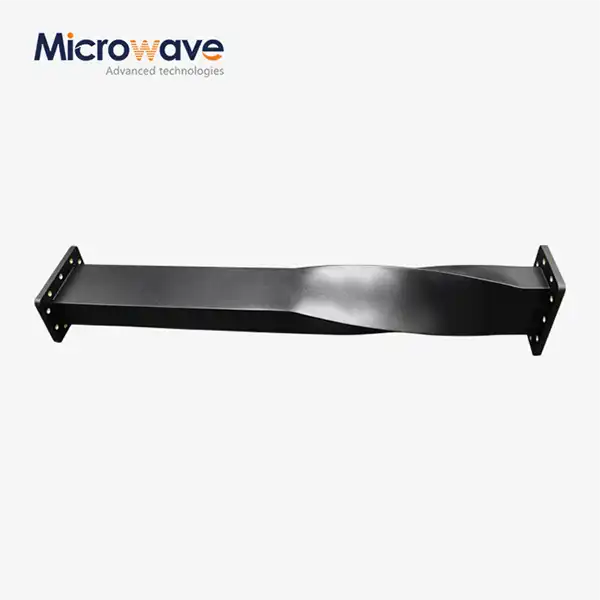
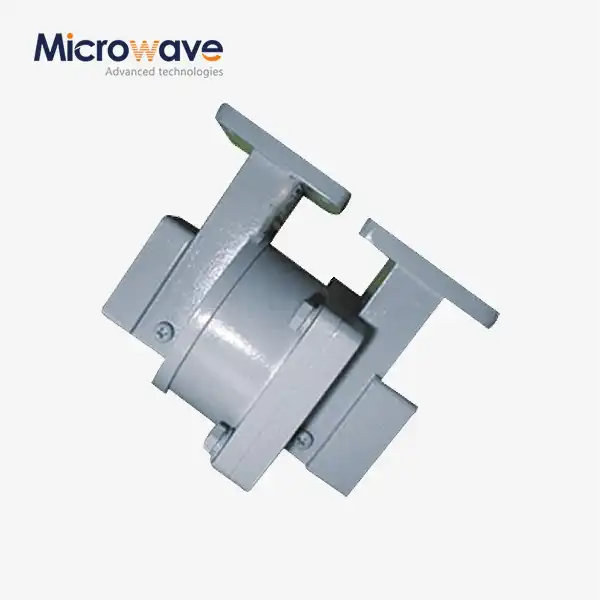
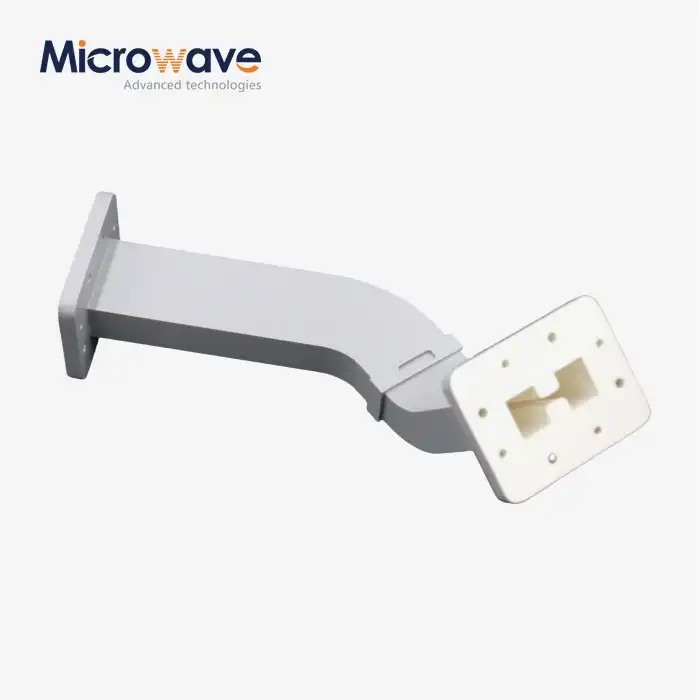
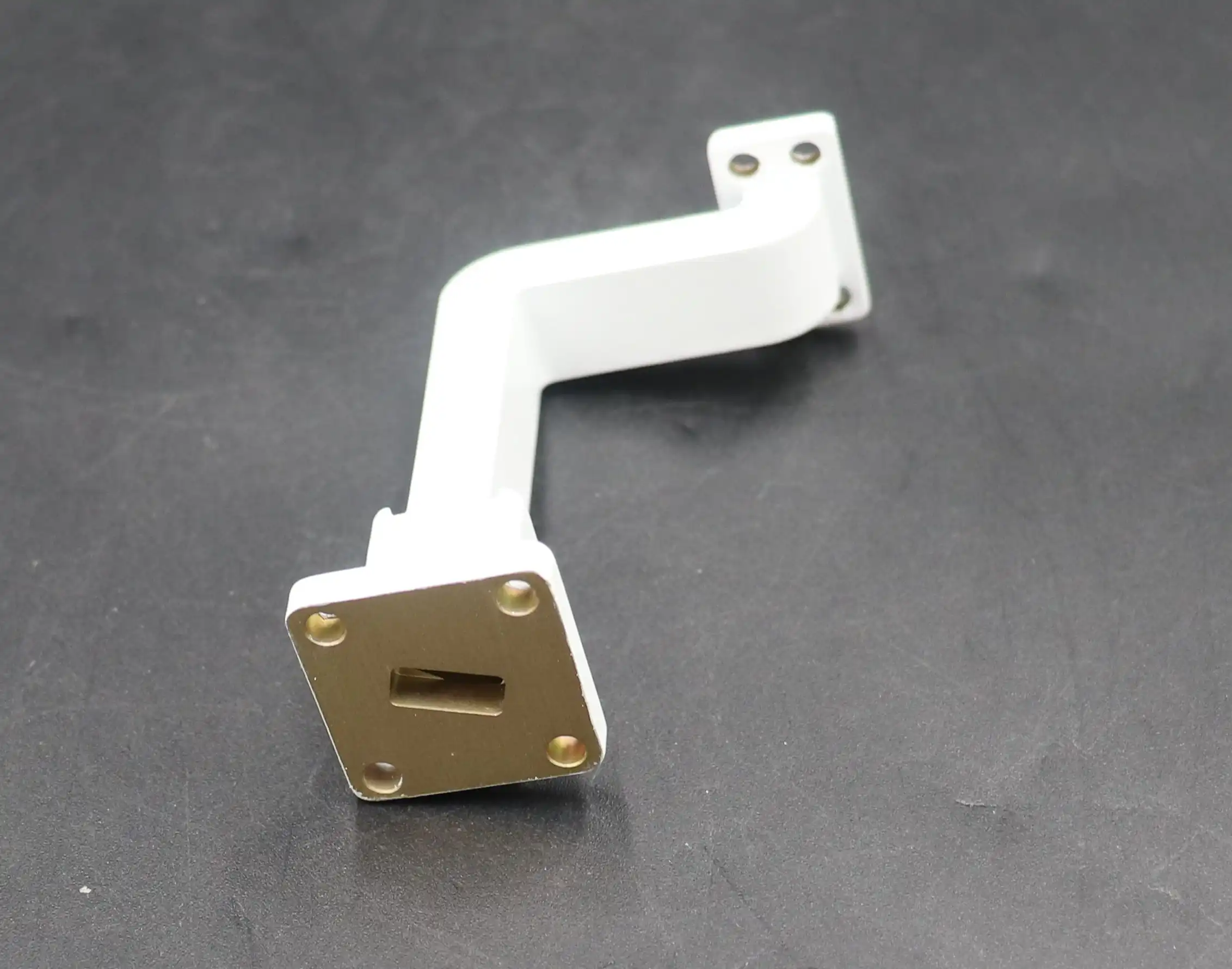
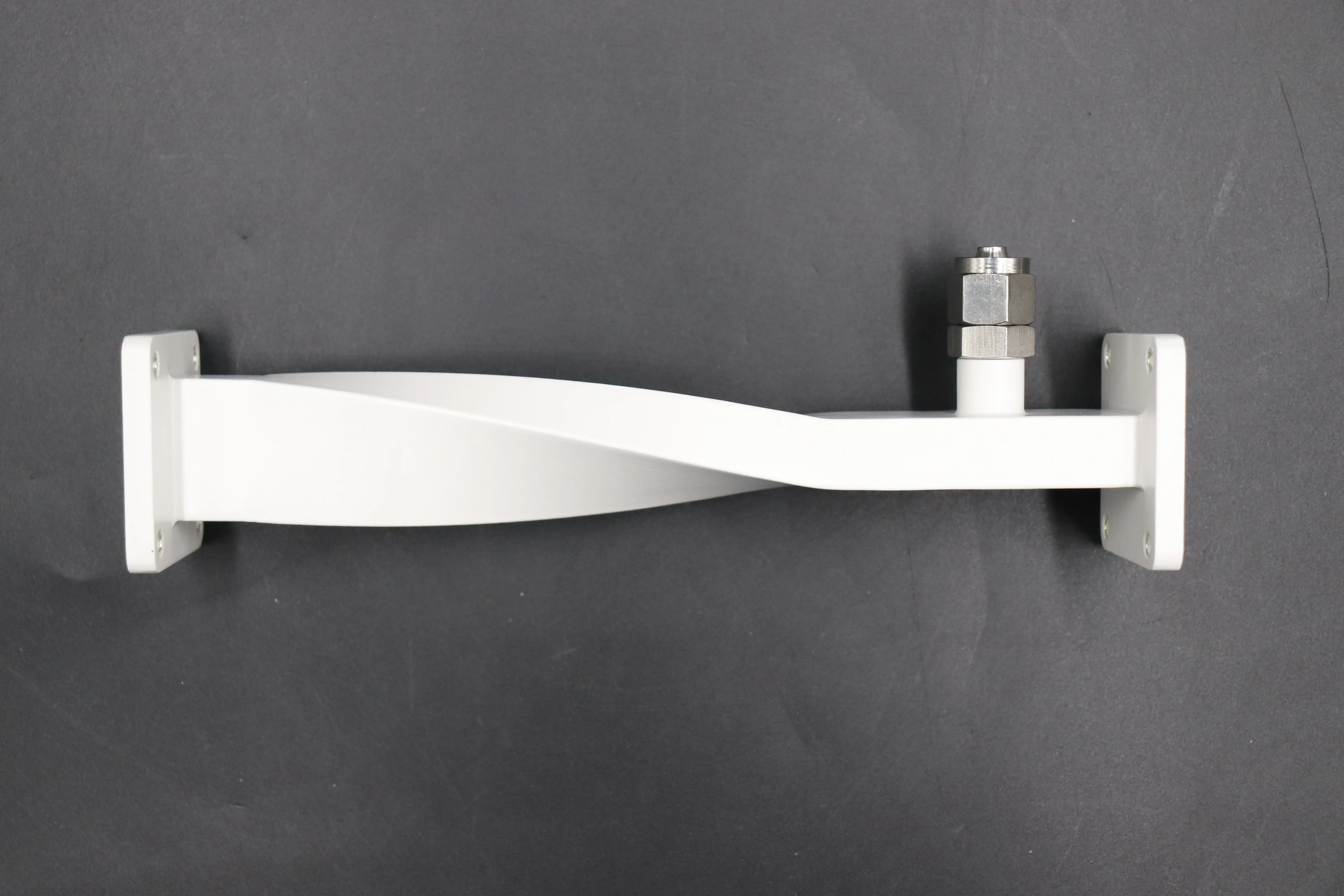
A twisted waveguide is a hollow metal guide that has a cross-section that turns slowly along its length. The main TE10 mode keeps its electric field parallel to the narrow walls of a square or rectangular guide. As the guide turns, the field moves with it. In this case, a 90-degree turn changes the polarization from vertical to horizontal. Because changes that happen quickly cause reflections, the twist has to happen slowly over a number of guide wavelengths. The waveguide body, the flanges on both ends, the mounting points, and the sealing features are the main parts. The twist angle, twist length, and frequency all affect how well the field stays in the mode it was meant to be in and how smooth the impedance stays.
Twisted, Flexible, and Bent: Know the Difference
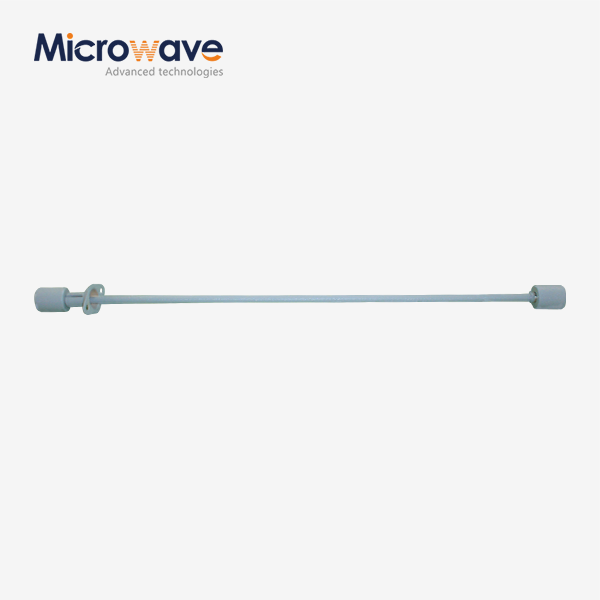
People who buy things often mix up the three parts. When a fixed twist is put on polarization, it turns at a set angle. When an E-plane or H-plane bend changes direction, the field doesn't turn. Flex waveguides have bumps or holes in their walls that allow them to bend and twist in some designs. If you need to bend and twist waveguides from ADM that are rectangular and flexible, you can use them. There are also double-ridged soft waveguides that we make. The standard model has a Neoprene jacket that keeps the pressure inside. If your system needs to rotate precisely and over and over at the same point, a rigid twist section is usually better. The flexible type is better if your layout needs to be able to bend, can handle being out of place, or has a narrow path.
Define Your Requirements Before You Request Quotes
For a twisted waveguide, making a list of all the needs ahead of time saves time. You should write down the frequency range, the length, the width, the type of flange, how it should be mounted, and the direction of the twist. You should also write down the frequency range. Type in the range of temperatures, vibrations, humidity, exposure to corrosion, vacuum or pressure, and service life. Which type of polarization does the system have? Also, please let us know if low cross-polarization is important. Set pass targets for VSWR and insertion loss to do this. These things must be thought about before a supplier can give you a good suggestion for a standard or custom part. It's also helpful to have a picture or drawing of the installation area because it can show problems with clearance that words alone might not.
Evaluate Electromagnetic Performance and Compare Alternatives
Check Insertion Loss and VSWR Across the Full Band
When you judge performance, don't just look at the center frequency. Look at the whole operating band. The insertion loss of a part tells you how much signal it takes in. It says that between 8.20 and 12.40 GHz, the ADM-100WEL flexible twistable waveguide has an insertion loss of 0.40 dB/m or less. That's about 9% of the power that each meter loses. VSWR tells you how much energy bounces back when there are faults. The return loss is about 23 dB, or 0.5% of the power that is reflected, if the VSWR is 1.15. Loss also goes up as frequency goes up. Between 3.22 and 4.90 GHz, the ADM-40WEL works at or below 0.15 dB/m, and between 26.5 and 40.0 GHz, the ADM-320WEL works at or below 2.00 dB/m.
Ask Where the Performance Data Comes From
Not each and every number on a sheet of data is important. There are fake values, average values, guaranteed values, and values that are based on testing each unit. Figure out what kind of book you're reading. The design is based on simulations, but the real results may be different depending on how the parts are machined, plated, contacted, and how the assembly is lined up. Also, the part is only a small part of the RF path; flanges, adapters, and transitions add their own loss and reflection. Space, radar, and phased-array programs should ask for data that can be tracked and measured. Our 24m Microwave Darkroom can test antennas from 0.5 GHz to 110 GHz, and our labs have microwave measurement tools that can go up to 110 GHz.
Compare a Twisted Waveguide With Other Options
Link the part to the job. The simplest and least expensive waveguide is a straight one, but it can't change the polarization. This kind of bend only goes in one direction. You can use a circular waveguide for rotary functions, but it can be hard to change the mode. A flexible waveguide can handle being out of place, vibrating, and changing temperatures, which is helpful for installations that are tight or that are moving. It's not possible to change the direction of a rigid twisted waveguide, but it is possible to choose the path of a flexible twistable type. Look at how much each one costs, how it can be customized, how it is routed, how much insertion loss it has, how stable it is mechanically, and how well it works with flanges. Price by itself doesn't always help you make the right choice. What your system needs and how much work it takes to add it will determine the answer.
Match the Twisted Waveguide to Your Application
Radar, Defense, Satellite, and Aerospace Needs
A twisted waveguide can provide a lot of power, stable phase, low loss, and accurate polarization—some of the things that radar and defense systems need. Things that are often added to satellite and space programs are low mass, thermal stability, resistance to vibration, and records that can be tracked. You can bend and twist our waveguides to make them work with spacecraft, satellites, and defense systems like radar and navigation systems. You can also work with us on aviation, shipboard systems, weather monitoring, security check systems, UAVs, and finding your way. For this type of work, a flexible link can keep hard parts from breaking when the machine moves or gets hot. Make environmental tests and paperwork more important right away. If you tell our engineers about your platform and how it will be used, they can tell you if a standard model or a custom length will work.
Antenna Feeds, Telecom, Laboratories, and OEM Projects
The antenna feed networks need to protect the gain, beam shape, axial ratio, and cross-polarization. This is why it's most important to get the polarization right. For phone service, base stations and transmission networks must always work and be simple to set up. In labs, it's important that things work the same way every time and with all kinds of calibrations. Our bendable waveguides are used in research and development projects and for experiments. Many times, industrial OEMs have to find a balance between price, delivery time, customization, and keeping the supply going. ADM also makes custom feed networks, like X-Band units for radar that are used for phone links, military surveillance radar, and air traffic control. If the design is right for the job, you don't have to redesign because it wasn't done right or because it was too specific. Write down your two most important goals right away. Then, let them help you make all of your decisions.
ADM Flexible Twistable Waveguide Line
There are 13 different types of rectangular flexible twistable waveguides that we sell. They can be used in systems that need to bend and twist. Most of them have a Neoprene jacket that keeps the pressure inside. We can make double-ridged soft waveguides in any length you need. Each band has its own set of rules. The ADM-100WEL can work from 8.20 GHz to 12.40 GHz, has a VSWR of 1.15 or less, can bend at least 66 mm (E-plane) and 127 mm (H-plane), and can twist up to 240 degrees per meter. It also comes with FBP/FBM flanges. The ADM-400WEL can reach 35 to 100 GHz with an FUGP flange. Our goods are made with high-quality, low-loss materials and coatings that don't rust. They are also ISO 9001 certified and RoHS compliant. In bad weather, they also last a long time.
Review Manufacturing Quality and Build a Procurement Checklist
Look at Manufacturing Control and Documentation
For a good design, it's still important to make something well. Check out how the supplier handles the internal waveguide's shape, twist angle, twist length, flange alignment, surface flatness, and interface concentration. Protect against corrosion; the plate, seal, and materials that are used must be safe for the environment. You should ask for the RF test procedures, inspection records, and material certificates. We at ADM have been making microwave items for over 20 years, and ISO 9001 certifies our quality system. We also have ISO 45001 for health and safety at work and ISO 14001 for taking care of the environment. Also, our goods follow RoHS rules. It is possible for distributors and OEM buyers to use these records to help them check their own work.
Look for Engineering Support From Prototype to Production
A lot of help from engineers speeds up development. Before you buy a lot, make sure you have simulations, drawings, 3D models, builds of prototypes, and reviews of the design for manufacturing. Changes to the engineering, repeat orders, and export paperwork should all be easy for the supplier to handle. If they can't, the whole process should not have to start over. As part of our OEM service, we offer quick prototypes for testing and evaluation, technical support from engineers who can help set up and fix issues, and production and delivery that are quick and easy. In R&D, we work with both small teams and big companies from around the world. Design approval, RF validation, consultation, and written inspection criteria are all good ways to get from a good prototype to production. When both sides agree on these steps right away, they both know what success means.
Use a Weighted Checklist for Your Decision
One place where technical, business, and supply-chain factors are kept is on a list. Some technical things to think about are waveguide size, twist angle, rotation direction, interfaces, insertion loss, VSWR, power handling, temperature, sealing, and vibration. As a business, you have to pay for things like a prototype, tools, a minimum order quantity, a lead time, a warranty, paperwork, shipping, and volume pricing. As an example, 30% of the weight should go to RF performance, 25% to mechanical fit, 20% to quality, 15% to delivery, and 10% to the total cost. After that, give each supplier a score between 1 and 5 and add them all up. It's fine if your weights are different. The quality, engineering, and purchasing teams will be able to all look over a written record.
Avoid Common Selection Mistakes and Make the Final Decision
Five Mistakes That Cause Rework
A lack of knowledge, not a broken part, is what makes many things go wrong. Look for five mistakes. First, choosing based only on frequency band without considering loss, phase, or flange needs. When you enter the wrong rotation or twist angle, the polarization doesn't match up. Third, without taking any extra steps, using a flexible waveguide instead of a fixed twisted waveguide. Fourth, Trusting data from simulations that don't take into account changes in machining, plating, and flange contact. Fifth, looking only at the price per unit and not at the price of the whole project or the installation tolerances. Early on, look over the drawings, ask for test data that has been measured, and make a list of clear criteria for acceptance before production starts. A short review call between your engineer and ours can find these problems before any metal is cut.
Choose Between a Standard Model and a Custom Design
First, make sure that a standard model meets all the needs. Standard parts save time, money, and work in engineering and delivery when the frequency, length, flanges, and working conditions are known ahead of time. It's best to have custom work done for interfaces and materials that aren't common, as well as for tight assemblies and polarization or phase limits. In our flexible, twistable line, you can get soft waveguides with two ridges and any length you need. Send us the drawing, the target RF values, and the quantity when you want a custom design. This way, we can give you a correct quote. You can see how the lead time, cost, and performance of a standard option and a custom option compare when you ask for both at the same time.
Five Questions to Ask Before You Order
Before you place an order, look at these five things. What about power, phase, polarization, loss, and VSWR? RF performance: Does it stay the same across the whole band? Are the measurements, how the flange is mounted, and the tolerances right for your system? As far as temperature, vibration, moisture, corrosion, vacuum, and sealing go, does the part work for you? Can they get the same results every time they make a batch? Will the supplier help you with test results, ways to keep track of the goods, and quick answers after the delivery? If you can say yes to all five, the risk of your project goes down. One answer that isn't clear? Ask the supplier about it before you sign the order.
Conclusion
When choosing a twisted waveguide, it's all about how well it fits the function, performance, mechanics, and supplier's abilities. You should first choose what your system should do. The polarization can be turned with a fixed twist, and you can bend and route freely with a flexible twistable type. Each step after the first one is based on a full set of conditions, such as environment, frequency, flange, and twist. To check performance across the whole band, you should use VSWR and insertion loss. It's also important to know where the data came from. In the lab, radar, satellite, antenna feed, and OEM work are some of the tasks that are given the most attention. If you can keep track of production, help with prototypes, and control production, you can see if a design can be used again and again in production. There is a weighted checklist, a standard vs. custom review, and five final questions that help make the choice objective and reduce the amount of work that needs to be redone.
FAQ
Q1: What Is a Twisted Waveguide Used For?
In this case, it changes the polarization of a signal or lines up waveguide ports that aren't lined up straight without adding a transition. How far the electric field can turn is determined by the direction of the twist. Because the twist sections are fixed, the rotation can be done again and again.
Q2: How Does a Twisted Waveguide Differ From a Flexible One?
A fixed twist has a fixed angle and looks like a stick. A flexible twistable waveguide is good for moving and tight routes because it can bend and twist. ADM gives you the flexible type.
Q3: What Should I Send With My Inquiry?
You need to send the price, schedule, target insertion loss and VSWR, waveguide size, length, flange type, environment, and frequency range. A picture or drawing of the installation site is helpful.
Q4: When Should I Choose a Custom Design?
It is best to go with custom if you need a unique interface, strict polarization or phase limits, unique materials, or a small space. ADM can also make our waveguides in any length you need since they are flexible and can be twisted.
Request a Twisted Waveguide Recommendation From ADM
If you tell ADM about your environment, twist, flange, and frequency, our engineers will come up with a flexible, twistable waveguide or a design that works well for you. We can help with global projects that need twisted waveguides because we have been working with microwaves for over 20 years, are ISO 9001 certified, follow RoHS rules, make quick prototypes, and work with OEMs. Send an email to craig@admicrowave.com to get drawings, technical documents, or a quote.
References
1. Microwave Engineering, 4th Edition (Wiley), 2011
2. Foundations for Microwave Engineering, 2nd Edition (IEEE Press), 2001
3. Antenna Theory: Analysis and Design, 4th Edition (Wiley), 2016
4. Radar Handbook, 3rd Edition (McGraw-Hill), 2008
5. Waveguide Handbook (McGraw-Hill), 1951
6. MIL-STD-810H, Environmental Engineering Considerations and Laboratory Tests (U.S. Department of Defense), 2019