




How Many Reuse Cycles Can EMI Waveguide Gaskets Tolerate?
If you work with waveguide assemblies or RF enclosures, you've probably asked this question at least once: how long can an EMI shielding gasket actually last before it needs replacement? The answer isn't a single number — it depends on material, environment, and how carefully the gasket is handled. In our experience working with defense, satellite, and telecom procurement teams, EMI waveguide gaskets made from beryllium copper or stainless steel typically withstand between 50 and 200 compression cycles under controlled conditions. Polymer-based and conductive elastomer variants generally fall in the 20–100 cycle range before measurable shielding effectiveness degradation occurs.
Understanding EMI Waveguide Gaskets and Their Reuse Challenges
What They Are and Why They Matter
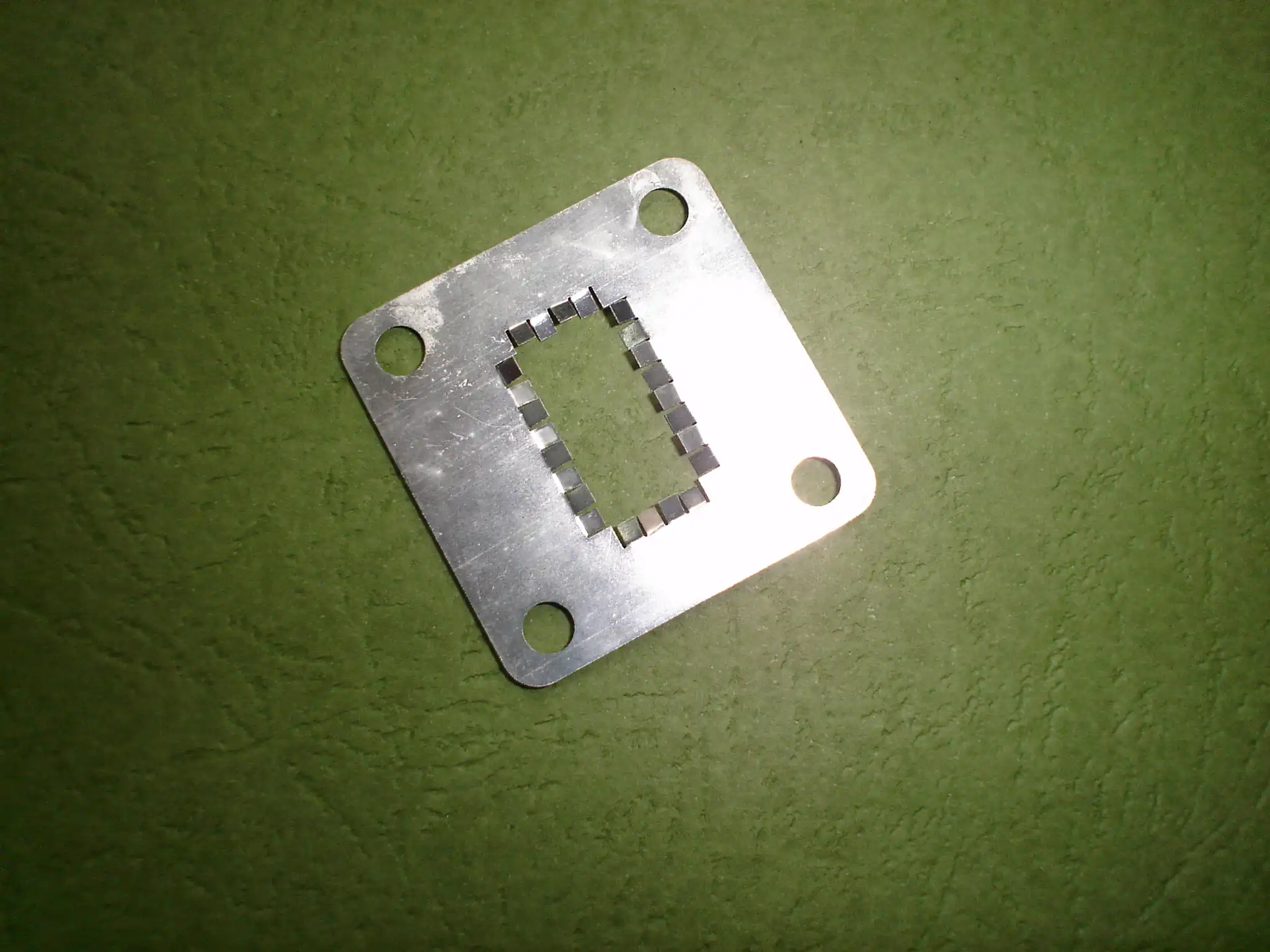
EMI waveguide gaskets are precise sealing elements that are put at the interface of waveguide flanges to stop electromagnetic leakage and keep the integrity of the signal. They are often used in defense electronics, radar systems, and satellite ground stations where even small amounts of RF leakage are not acceptable. They do both mechanical and electrical work; they fill in holes and keep a line of electricity flowing through the joint.
Construction Types and Material Variants
In real life, there are three main types of construction: metallic gaskets (made of beryllium copper, phosphor bronze, or stainless steel), polymer-based gaskets (made of silicone that has silver or nickel bits added to it), and combination designs that have a metal core and an elastomeric layer on the outside. Different types of wear behave in different ways. Metal seals are better at handling high-frequency use and don't deform permanently. While conductive plastics are softer, they break down more quickly when they are repeatedly compressed.
Common Failure Mechanisms That Limit Reuse
Repeated compression leads to two main types of failure. First, when the gasket is compressed and doesn't return to its original height, it leaves gaps at the flange interface that let RF leak through. Second, surface oxidation and touch resistance get worse over time, especially in places that are wet or that change temperatures often. Even if the gasket looks fine, it may have already lost 10–15 dB of its protecting power, which can't be seen without trying it properly.
Factors Influencing the Number of Reuse Cycles for EMI Waveguide Gaskets
Material Selection and Fatigue Resistance
The single most important factor that affects refill life is the choice of material. Nickel-coated elastomers don't always have better spring-back qualities than beryllium copper finger-stock seals. Independent tests by gasket manufacturers have shown that beryllium copper EMI waveguide gaskets keep more than 85% of their shielding power after 150 cycles, while silicone-based versions start to lose their effectiveness around cycles 60 to 80. When it comes to high-cycle uses, metal construction makes the most sense.
Gasket Profile, Thickness, and Compression Design
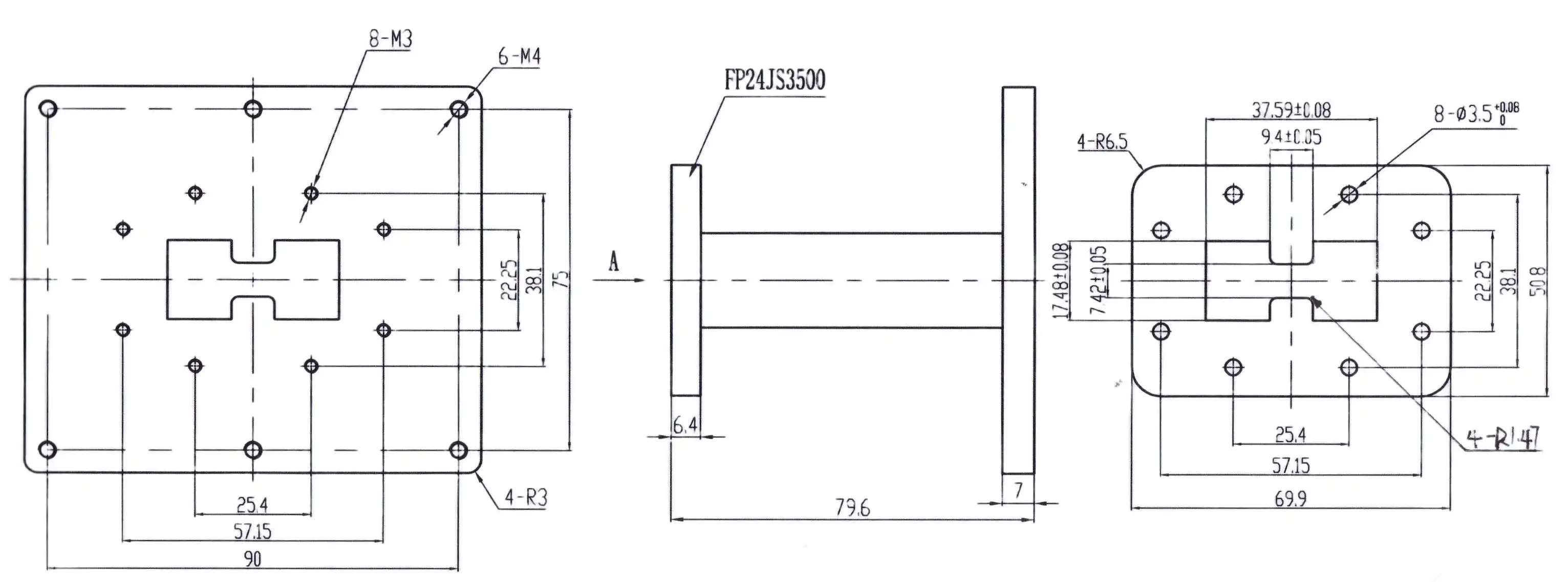
The shape of the gasket is more important than many buying teams think. Over-compression, which is a main cause of increased fatigue, can be stopped by a thicker profile with a well-designed compression stop. Gaskets that are made to bend within certain limits, like 20–30% of their free height, last a lot longer than ones that are squeezed past those limits. How widely stress is spread across the gasket is directly related to the design of the flange, the torque requirements for the bolts, and the total tolerance of the assembly.
Installation Practices and Handling Discipline
A lot of seal problems happen too soon because they weren't installed correctly. When parts are put together incorrectly, they can score the gasket surface, which damages conductive coatings. When bolt pressure is too low or too high, it causes uneven compression. Putting seals away in places with a lot of humidity before installing them speeds up the rusting process. When buying gaskets for uses that will be used more than once, procurement teams should normally ask sellers for installation paperwork and torque specs.
Testing and Verifying Reuse Cycles of EMI Waveguide Gaskets
Mechanical Compression and Relaxation Testing
To check for durability in the lab, cyclic compression tests are used to mimic how things are put together and taken apart in real life. Hundreds of times, gaskets are pushed to the point where they deflect, kept for a short time, and then released. By measuring the dimensions after every test block (usually every 25 cycles), you can keep track of the height loss caused by the compression set. This tells you how many rounds a gasket can go through before it loses enough contact force to be useful as a shield.
Shielding Effectiveness Verification After Repeated Cycles
RF performance can't be confirmed just by mechanical soundness. The attenuation is measured in decibels (dB) before and after cycling in shielding effectiveness (SE) tests that follow IEEE 299 or MIL-STD-461 standards. A gasket that is rated at 100 dB SE when it is first made may drop to 80 dB after 100 cycles. This is still good enough for some uses, but not for others. When procurement teams run SE tests at regular cycle times, they have real data to use instead of guesswork to set replacement plans.
Environmental Stress and Field Monitoring
In environmental testing, temperatures are changed from -55°C to +125°C, humidity is exposed to 95% RH, and the product is shaken according to MIL-STD-810. These tests speed up the aging process and show weaknesses that can't be seen with simple compression tests. When used in the field, repair teams can spot problems early on without having to take the whole unit apart by visually inspecting it and measuring the contact resistance (which should be less than 10 milliohms according to MIL-DTL-83528).
Comparative Insights: EMI Waveguide Gaskets Versus Other EMI Gasket Types on Reusability
Metallic vs. Conductive Polymer Gaskets
In high-cycle, high-frequency situations, metal finger-stock and made-metal EMI waveguide gaskets usually work better than conductive elastomers. Because the material reliably returns to its original shape after each compression, they can be used more than once. Conductive elastomers are great at sealing off dust and moisture, but they set in a way that can't be undone as quickly, especially when the temperature is high. Metal seals are generally better for waveguide parts that work above 18 GHz.
How Manufacturer Quality Affects Reuse Life
The quality of the manufacturer's specifications has a direct effect on how long a seal lasts. Parker, Laird, and EShield are some of the suppliers that put out detailed compression-deflection curves, cycle life data, and surface resistance specifications. Defense and satellite programs run the risk of buying gaskets from suppliers that don't have testing data that can be tracked. A lot of experienced RF system designers make sure that all of the materials they use are fully certified and have test results.
Application Environment and Trade-offs
Metal gaskets aren't always needed in certain situations. In telecom equipment that is used on the ground and doesn't need to be serviced very often, a cheaper silver-loaded silicone seal may work well until the next service interval. The choice between the two depends on the working frequency band, cycle frequency, environmental risk, and the total cost of ownership. When the procurement team knows about these factors, they can make better decisions about where to get things and avoid over-engineering or under-specifying the sealing solution.
Best Practices for Maximizing the Reuse Cycles in Procurement and Application
The steps that can be taken to make gaskets last longer are well known in the business. The things that always make a difference are listed below:
- Source from suppliers with documented cycle-life data: Always request compression set and SE retention data at target cycle counts. Undocumented gaskets introduce unnecessary uncertainty into your maintenance schedule.
- Follow torque specifications precisely during assembly: Over-torquing accelerates compression set; under-torquing leaves conductive gaps. Use a calibrated torque wrench and record values at assembly.
- Store gaskets in controlled conditions: Keep unused gaskets in sealed packaging away from UV light, ozone, and humidity. Improper storage degrades elastomeric and metallic surfaces before the gasket ever sees service.
- Implement cycle logging for high-service assemblies: Tracking how many times a gasket joint has been disassembled enables data-driven replacement decisions rather than time-based guesswork.
Cycle logging should be used for high-service assemblies: By keeping track of how many times a gasket joint has been taken apart, repair decisions can be based on facts instead of guessing.
Conclusion
EMI waveguide gaskets are not parts that can be used over and over again, but procurement teams can get a lot of use out of each unit by choosing the right materials, installing them correctly, and checking in on a regular basis. Most of the time, metal gaskets have better cycle tolerance, but conductive polymers are cheaper when demand is low. Testing to IEEE 299 and MIL-STD-461 guidelines gives you unbiased information for planning when to replace things. In challenging RF systems, knowing about these factors helps lower lifetime costs and keep signals intact.
FAQ
How many reuse cycles can a typical EMI waveguide gasket handle?
Metal covers made of beryllium copper or phosphor bronze can usually handle 50 to 200 rounds before they lose enough of their shielding power to be considered unsafe. Depending on the compression load and the surroundings, conductive elastomers usually work well for 20 to 100 rounds.
What is the biggest factor reducing gasket reuse life?
Most of the time, early failure is caused by a compression set. Gaps form at the flange contact when a gasket doesn't return to its normal height after being compressed many times. This makes RF leakage worse. Too much bolt torque during assembly speeds this up permanently.
Can I test EMI gasket performance without a full RF test setup?
Yes. A useful field test is to measure contact resistance with a milliohm meter. If the reading across the gasket contact area is more than 10 milliohms, it usually means that the surface is wearing down. For important uses, testing the shielding's efficiency according to IEEE 299 gives more complete information.
Does operating frequency affect how often gaskets need replacement?
When working at a higher frequency, contact gaps become more noticeable. This means that seals in Ka-band or millimeter-wave systems may need to be checked more often than those used at lower frequencies like S-band or C-band, even if the number of mechanical cycles is the same.
Partner With ADM for EMI Waveguide Gaskets That Perform Across Cycles
ADM has been making waveguide assemblies and RF sealing solutions for more than 20 years. We're a reliable EMI waveguide gaskets supplier, and our products are ISO 9001-certified. We also offer OEM customization, fast delivery, and a strong supply chain. Our engineering team is ready to help you with your purchase needs, whether you need standard or custom-profile gaskets for defense, satellite, or telecom uses. For more information and group prices, email us at craig@admicrowave.com.
References
1. Hemming, L. H. Architectural Electromagnetic Shielding Handbook. IEEE Press, 2000.
2. Paul, C. R. Introduction to Electromagnetic Compatibility. Wiley-Interscience, 2006.
3. Parker Hannifin Corporation. EMI Shielding Design Guide. Parker Chomerics Division, 2018.
4. MIL-STD-461G. Requirements for the Control of Electromagnetic Interference Characteristics of Subsystems and Equipment. U.S. Department of Defense, 2015.
5. IEEE Std 299-2006. Standard Method for Measuring the Effectiveness of Electromagnetic Shielding Enclosures. IEEE, 2006.
6. Laird Technologies. EMI Gasketing Material Selection Guide. Laird Performance Materials, 2020.