




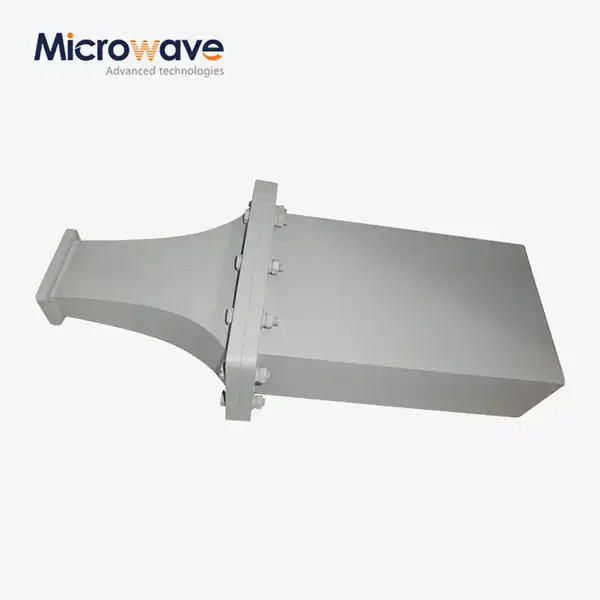
Double Ridge Waveguide Termination
Double Ridge Waveguide Termination — Wide-Band Matched Load Solutions
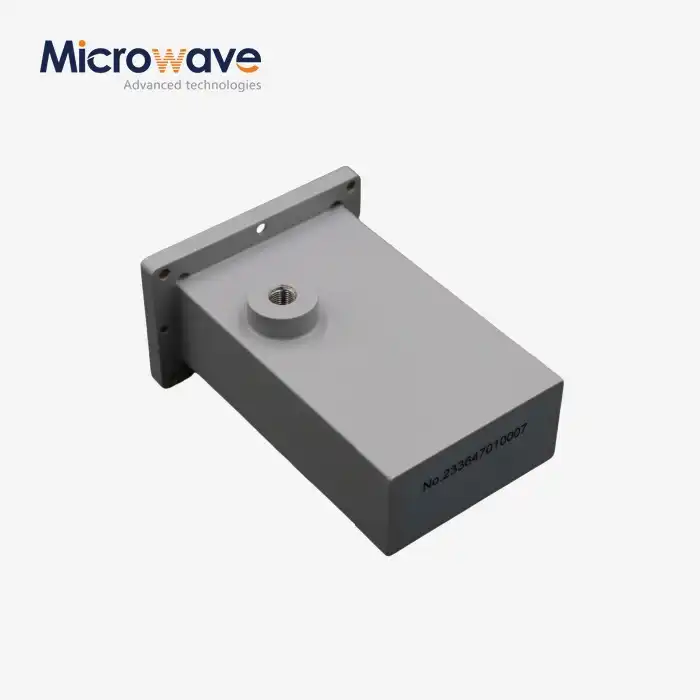
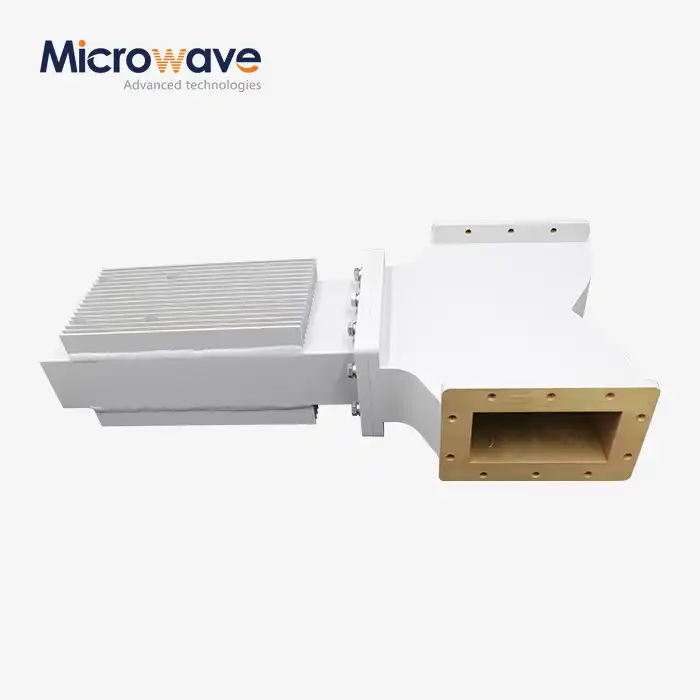
Advanced Microwave Technologies Co., Ltd. (ADM) manufactures Double Ridge Waveguide Termination products covering standard WRD sizes including WRD-650 (6.5–18 GHz), WRD-750, and other configurations. Over 99% of the energy that hits these matched loads is absorbed, keeping the maximum VSWR at 1.10:1 or 1.15:1 across the whole operating band. The housings are made from aluminium 6061-T6 or copper/brass and have SiC or filled epoxy absorber elements inside them. Before being sent out, each unit goes through full-band VNA sweep testing. For radar, EW, SATCOM, and antenna testing, ADM offers both standard and custom termination options.
What Is a Double Ridge Waveguide Termination?
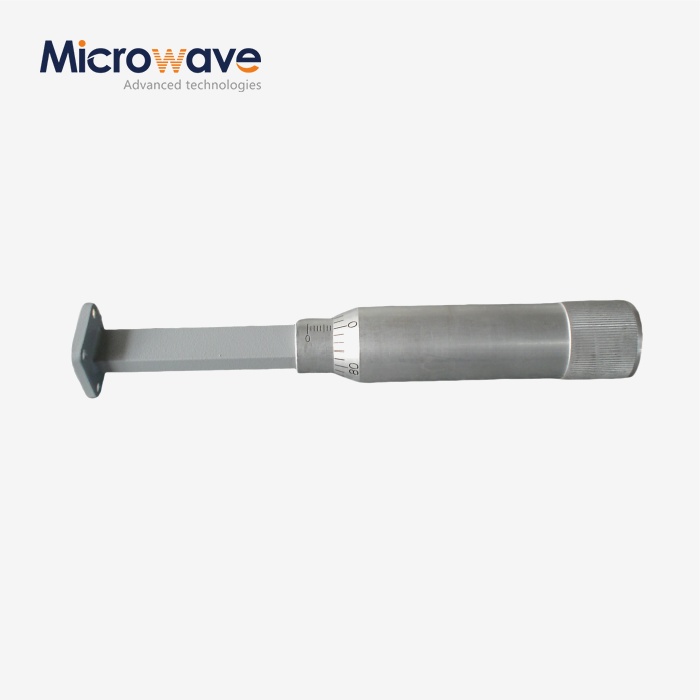
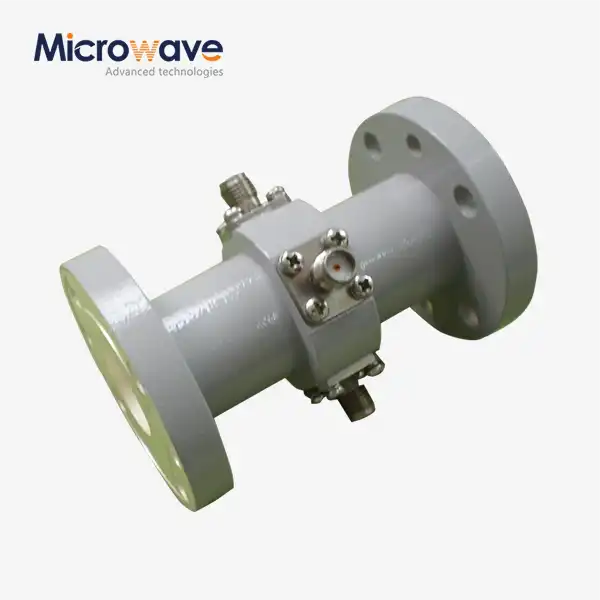
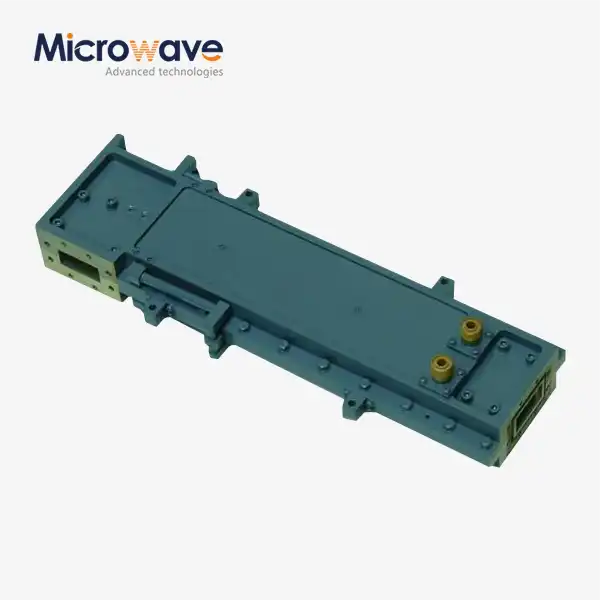
A product, which is also called a matched load or fake load, is a passive microwave part that takes in electromagnetic energy as it moves through a double-ridged waveguide and gives it off as heat.
Standard rectangular waveguide terminations usually work with a frequency ratio of about 1.5:1. With double ridge designs, metal lines inside lower the cutoff frequency. This lets them work with multi-octave bandwidths like 2.4:1 or 3.6:1 ratios. This means that a single part can cover more than one standard waveguide band, which lowers the number of parts needed for the whole system.
The termination fits the waveguide line's characteristic impedance, which is usually 50 ohms. This stops signal reflections and standing waves. Managing reflected power is an important part of designing systems that use high-power sources like Klystrons or Travelling Wave Tubes (TWTs).I don't know what to say.


Key Technical Specifications
Parameter | Specification |
Waveguide Type | Double Ridge (WRD), Single Ridge, Rectangular, Square, Circular |
Standard Sizes | WRD-650, WRD-750, and others |
Frequency Range (WRD-650) | 6.5 – 18 GHz |
Bandwidth Ratio | Up to 2.4:1 or 3.6:1 |
Max VSWR | 1.10:1 or 1.15:1 across full band |
Energy Absorption Rate | >99% |
Power Handling | Milliwatts (precision) to Kilowatts CW / Megawatts Peak |
Cooling Options | Natural convection, forced air, liquid-cooled |
Housing Material | Aluminum 6061-T6, Copper, Brass |
Absorber Material | Silicon Carbide (SiC), Carbon Iron, loaded epoxy resin |
Flange Options | Flat cover, grooved |
Surface Finish | Chromate conversion or Silver plating |
Environmental Standard | MIL-STD-202 (shock, vibration, thermal cycling) |
Operating Temperature | -55°C to +85°C (ESS tested) |
Customization | Available per customer requirements |
Material and Structural Design
The housing of each unit is machined from Aluminum 6061-T6 or Copper/Brass, selected for their thermal conductivity and structural durability. High-power versions use copper housings with liquid cooling channels to handle kilowatt-level heat dissipation.
Absorber elements — wedge or tapered profiles made from SiC or loaded epoxy resins — are bonded with controlled tolerances to limit the risk of cracking under thermal cycling. The internal ridges concentrate the electric field near the center of the guide, keeping the component footprint compact relative to wavelength while addressing broadband impedance matching requirements.
Flange dimensions and ridge gap geometry are laser-measured to micron-level tolerances. Small dimensional mismatches can produce impedance discontinuities, so ADM applies dimensional metrology checks to each unit before delivery.
Quality Control Process
Every double ridge waveguide termination produced at ADM goes through a multi-stage quality control process before shipment.
Full-Band VNA Sweep: Each unit is swept across its full specified WRD band using a Vector Network Analyzer. VSWR must remain below the rated limit — typically 1.10:1 — with no resonance spikes at any measured frequency point.
Power Burn-In Test: High-power units are operated at full rated power for 2–4 hours to verify thermal stability and confirm that the absorber material does not outgas or crack under sustained heat load.
Dimensional Metrology: Flange interfaces and ridge gap dimensions are laser-measured to micron tolerances to confirm impedance matching and reduce arcing risk.
Environmental Stress Screening (ESS): For aerospace-grade requirements, units undergo random vibration testing and thermal shock cycling from -55°C to +85°C to verify that internal absorber bonding remains intact under field conditions.
Surface Finish Inspection: Flanges are inspected for flatness and treated with chromate conversion or silver plating to maintain low electrical contact resistance and resist oxidation.
ADM's testing facility includes a 24 m Microwave Darkroom with near-field and far-field measurement capability, supporting testing from 0.5 GHz to 110 GHz across the product range.
Application Scenarios
Electronic Warfare (EW) and ECM Systems
Airborne jamming systems work in places with a lot of vibration over a wide range of frequencies. To keep circulators and isolators separate in these systems, double-ridge matched loads are used. This lowers the chance that reflected signals will reach the emitter. Compliance with MIL-STD-202 takes into account the mechanical and thermal needs of airborne installation.
Testing of Broadband Radar and Antennas
When calibrating broadband horn antennas in echoless chambers, matched loads linked to Hybrid Tee couplers stop open-port reflections that could change the accuracy of VNA measurements.
SATCOM Tuning for High-Power Transmitters
In satellite uplink systems that use double-ridged waveguide feeds for multi-band transmission, water-cooled terminations let engineers soak up the whole transmitter output while the system is being aligned. This lets the system be tuned at full power without sending signals into the spectrum.
Customization and Supply Options
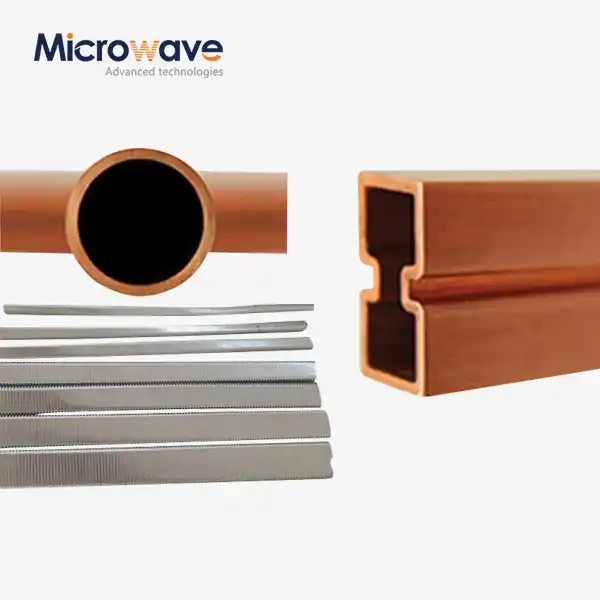
ADM can work with waveguides that aren't standard double ridge shapes. These include square, circular, rectangular, flat rectangular, and medium flat rectangular waveguides, as well as double ridge waveguide termination.
For non-standard frequency bands, special flange interfaces, higher power needs, or certain mechanical form factors, custom designs are possible. You can get either a single-band or a multi-band configuration that fits your needs. Talk to the engineers at ADM about your frequency range, power level, cooling method, and flange setup.
FAQ
Q: What's the difference between a product and a regular rectangular termination?
A: The main difference is the amount of bandwidth used. Most rectangular terminations cover a bandwidth ratio of about 1.5:1. Double ridge designs can handle 2.4:1 or 3.6:1 ratios, which means that a single component can cover more than one waveguide band, which lowers the number of parts that need to be in the system.
Q: What determines the amount of power that can be handled?
A: The amount of power it can handle relies on the type of absorber material (SiC vs. Carbon Iron), the type of housing material (aluminium vs. copper), and the type of cooling method (natural convection, forced air, or liquid cooling). Peak power is also limited by the dielectric strength across the ridge gap; going over this limit can lead to arcing.
Q: What's the point of VSWR in a termination?
A: If the VSWR is close to 1, it means that almost all of the power that comes in is being absorbed. When VSWR is high, energy is reflected back into the transmission line. This can cause standing waves, make oscillators less stable, and over time, put a lot of stress on high-power amplifiers.
Q: Can a WRD-650 termination be used in a WRD-750 system?
A: Not usually, no. Even though some frequency bands may overlap, each WRD designation has a different physical flange size, bolt circle pattern, and ridge gap geometry. When you use a unit that isn't matched, it causes shadows and could even cause arcing. Always make sure that the WRD number works with your system.
Q: What kind of upkeep does a liquid-cooled termination need?
A: Check the pH and conductivity of the coolant on a regular basis to keep the flow channels from rusting. Check to see if the flow rates meet the requirements. At every repair interval, check the flange gaskets for coolant and RF leaks.
Q: Can ADM make custom terminations for frequency ranges that aren't standard?
A: Yes, ADM makes custom product designs based on what the customer wants, such as non-standard WRD sizes, custom flange configurations, wider frequency coverage, and specific power handling needs.
Contact Us
Have a technical requirement or need a quotation for Double Ridge Waveguide Termination? Reach ADM's engineering team at craig@admicrowave.com — we support custom specifications and standard product inquiries.