





How Does a Waveguide Low-Pass Filter Function in Electronics
A Waveguide Low Pass Filter is a special kind of passive RF part that lets electromagnetic signals below a certain frequency pass through but weakens signals with higher frequencies. It's not like other coaxial filters because it uses the physical features of waveguide structures, like curved ridges or waffle-iron shapes, to handle more power and have less insertion loss. For this reason, it is very important in mission-critical areas like space, radar systems, and satellite communications, where signal integrity and high-energy flow must be maintained.
Understanding Waveguide Low-Pass Filters
Waveguide Low Pass Filters are highly precise machines that manage the flow of signals in high-frequency systems. Engineers and procurement workers can make better choices about merging and buying when they understand how they work.
Fundamental Operating Principles
These filters rely on electromagnetic waves travelling through hollow metal structures. A signal entering the waveguide can only flow through the passband at frequencies below the cutoff. Internal features, including ridges, irises, and corrugations, reflect or lose energy, causing impedance issues at higher frequencies. Maxwell's equations underlie these selective reduction principles. The waveguide's physical measurements determine its electromagnetic modes at a particular frequency.
The cutoff frequency is mathematically related to the waveguide cross-sectional size. Engineers calculate this quantity to ensure the filter passes the fundamental frequency while blocking harmonics. With modern computer tools like HFSS or CST Microwave Studio, you may properly simulate field patterns and make adjustments before constructing a prototype.
Construction and Materials
Most Waveguide Low Pass Filters are built of high-conductivity copper, brass, or aluminium alloys like 6061-T6. Internal regions are treated with silver or gold to reduce skin layer loss and corrosion. Choosing the proper metal material influences electrical performance and durability in severe environments. Silver has the lowest insertion loss, but gold resists corrosion in moist or salty circumstances.
Internal structural sections are properly sized for reactive resistance. Ridges in corrugated patterns vary in characteristic resistance, which affects dominant mode propagation. Some waffle irons include horizontal holes to reduce higher-order modes and boost stopband rejection. These mechanical parts must stay within micrometres to meet electrical performance requirements.
Design Considerations and Simulation
Cutoff frequency, bandwidth, insertion loss, and return loss are key design variables. Buying teams should ensure suppliers provide comprehensive S-parameter data from the whole operating range. Insertion loss should be less than 0.1 dB in the passband and stopband rejection higher than 60 dB at harmonic frequencies.
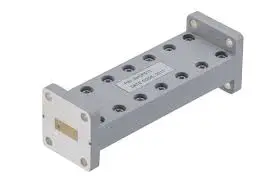
The environment influences design decisions. Outdoor satellite ground station filters must be hermetically sealed and pressure-tested to keep water out. Lightweight materials and pressure- and temperature-resistant flanges are needed for aircraft applications. Simulation tools estimate how well something will perform under stress before it is created to meet these standards.
Advantages and Applications of Waveguide Low Pass Filters
There are strong reasons why these parts are better than other filter methods, especially in tough working conditions. Knowing about these benefits helps buying pros make the case for investments.
Performance Advantages Over Alternatives
In a number of important ways, Waveguide Low Pass Filters work better than coaxial and flat systems. Their hollow structure can handle much higher power levels—from kilowatts in continuous-wave uses to megawatts in pulsed radar systems—without losing energy or getting too hot. Insertion loss stays very low, usually less than 0.1 dB in the passband, so signal strength stays the same over long transmission lines.
Another important benefit is the stopband rejection. In contrast to linear filters, which can only attenuate by 40 dB, waveguide designs can often block harmonics by 60 dB or more. In satellite uplinks, where unwanted emissions could mess up nearby frequency assignments, this level of spectral purity is very important. It's also very strong mechanically; the hard metal design can handle shock, pressure, and high and low temperatures without losing any of its performance.
Waveguide Low-Pass designs are better than cavity filters because they cover a wider range of frequencies and are easier to add to current waveguide systems. Because there are no impedance-matching changes in the straight flange connection, the system is simpler, and there are fewer places where it could go wrong.
Real-World Applications
The application portfolio for these filters spans multiple high-stakes industries. In satellite transmission systems, they put them after the high-power boosters at the ports on Earth. Their job is to let the basic uplink frequency through, whether it's Ku-band or Ka-band, but stop any harmonics that would go against the rules for emissions or mess up communication with nearby satellites.
Waveguide Low Pass Filters keep the spectral agreement of defence radar systems. Air traffic control radars and military observation platforms send out very strong peak power waves. The filter has to stop out-of-band sounds without arcing, even in settings with pressure or no pressure. For systems to work in contested electromagnetic settings, they have to have this ability.
Another tough use case is medical linear accelerators. To excite the speeding structure, these cancer treatment tools need clean RF energy. To keep the source magnetron safe from reflected harmonic energy, the Waveguide Low Pass Filter makes sure that only the exact drive frequency gets to the cavity. Because of the high radiation and tight standards, the parts must work well.
These screens are also good for the infrastructure of telecommunications. They clean the emitter output on long-haul microwave backup links so that harmonic interference doesn't happen with channels next to it. When millimetre-wave systems get close to 110 GHz, waveguide technology's accuracy and ability to handle power become more important as other filter types hit their physical limits.
How to Choose the Right Waveguide Low Pass Filter for Your Needs?
Selecting the appropriate filter requires careful alignment of technical specifications with operational requirements and supplier capabilities.
Technical Specification Matching
First, procurement teams should decide on the cutoff frequency based on how the system is built. This value needs to be able to handle the largest basic signal component while still leaving enough room before the stopband starts. Power handling is just as important—both peak and continuous-wave power levels must be higher than the worst-case working conditions, with the right amount of downsizing for temperature and wear and tear.
Specifics about the environment cannot be ignored. For outdoor use, filters need to have housings that are resistant to weather, finishes that don't fade in UV light, and airtight seals that can be checked for leaks using helium. MIL-STD approval testing, which includes random tremor patterns and thermal shock cycles, is needed for aerospace uses. In industrial study settings, consistency and low passive intermodulation might be more important than ruggedisation.
Supplier Evaluation Criteria
Checking supplier trustworthiness prevents supply chain issues and poor quality. Companies with ISO 9001 accreditation have a quality management system. ISO 14001 certification indicates environmental concern, which is increasingly significant in corporate sustainability reporting. Sellers should observe ITAR and maintain clearances for defence usage.
Case studies and consumer comments demonstrate real-world operations. Technical risk is reduced when a vendor can demonstrate successful integration in similar applications with measurable data and customer feedback. Support before and after sales is crucial. Quick, skilled installation and troubleshooting assist avoid costly project delays.
All Advanced Microwave Technologies Co., Ltd. products are ISO 9001:2008-certified and RoHS-compliant. Our 24-meter microwave lab measures from 0.5 to 110 GHz to ensure all parts satisfy established requirements before shipping.
Filter Type Comparison and Trade-offs
Knowing how Waveguide Low Pass Filters stack up against other options makes their value offer clearer. While high-pass filters are useful for spectrum tracking, they are not good for harmonic reduction because they stop low frequencies but let high frequencies through. Bandpass filters only let a certain range of frequencies pass through. This is great for choosing the channel, but it doesn't help when broad passband communication is needed.
Although cavity filters are very good at blocking noise, they add a lot of weight and space. Planar filters have small sizes, but they can't handle high power levels or get as low an insertion loss as waveguide designs. These things need to be weighed against budget limits and the need for real merging in the trade-off analysis.
Procurement Logistics
Budgets should include unit cost, wait times, and customisation fees. Most EIA-compliant waveguide diameters (WR-90, WR-187, etc.) arrive faster and cost less than bespoke designs. Custom filters with specified cutoff frequencies or non-standard flanges have longer lead times but higher performance.
Contacting fast-prototyping vendors speeds up development. OEM services allow design modifications without committing to a fixed quantity of units. ADM's development services provide speedy testing and evaluation, allowing clients to confirm ideas before ordering.
Procuring Waveguide Low Pass Filters: Suppliers and Brands
To find the right suppliers, you need to know who consistently offers quality and how to work with them effectively.
Leading Manufacturers and Supplier Reputation
Worldwide, microwave manufacturers have been around for decades. Most well-known companies have vast catalogues of typical waveguide forms and frequency ranges. Their reputation is built on meeting deadlines and standards.
New suppliers may provide lower rates or unique characteristics like larger frequency bands or materials. Survey data, quality standards, and customer references are needed to assess these possibilities. A provider who provides S-parameter files, mechanical models, and test data is honest and knowledgeable.
Advanced Microwave Technologies Co., Ltd. has been making microwaves for over 20 years. Our laboratories have testing instruments from DC to 110 GHz to test every filter we create. Due to our knowledge, we can ensure that our waveguide parts fulfil defence, rocket, and satellite communications requirements.
Purchase Channels and Partnership Models
There are different ways to get goods, such as through approved wholesalers or direct ties with manufacturers. Distributors make it easy to get standard parts quickly, but they might not have the expert knowledge to help with unique uses. When you work directly with makers, you can talk about specifications in depth and get expert help during integration.
The most in-depth amount of cooperation is found in OEM arrangements. Suppliers work with your engineering team like an extension of it, reviewing designs and coming up with the best solutions for each application. This model works especially well for defence companies and system designers who are in charge of complicated projects that last for years.
Quality Standards and Certifications
Following well-known norms lowers risk and makes sure that systems can talk to each other. MIL-DTL-85 approval means that filters can handle harsh conditions in the military. ISO 9001 approval shows that quality management is done in a planned way, and RoHS compliance shows that a product meets environmental standards in global markets.
When it comes to defence uses, DFARS compliance and local buying rules may affect which suppliers are chosen. By understanding these legal frameworks, you can avoid having to make expensive changes or deal with supply chain problems late in the program's performance. Our ISO-certified processes and written traceability at ADM help our customers meet these strict standards.
Troubleshooting and Optimisation Tips for Waveguide Low Pass Filters
To keep speed at its best, you need to know how common failure modes work and follow best practices throughout the lifecycle of a component.
Common Performance Issues
Insertion loss changes often result from flange connection issues. Surface rust or mechanical damage to matching flanges increases impedance gaps, loss, and return loss. Frequent flange inspection and cleaning can prevent these issues. Force standards that match the ring size keep the electrical contact steady without damaging the metal.
Weather-related dimensional changes might create bandwidth discrepancies. When heated and cooled, aluminium waveguides stretch more than copper or invar, changing cutoff frequencies. Thermal adjustment techniques or materials with similar thermal expansion coefficients are preferable for operating at several temperatures.
Environmental variables worsen issues. Unsealed Waveguide Low Pass Filter loses efficiency due to corrosion and dielectric loading. Pressurising outdoor systems with dry nitrogen or neutral gas prevents mist. A vibration might dislodge flange hardware. In high-shock environments, locking screws or safety wire secure the connection.
Installation and Integration Best Practices
Proper fitting begins with flange alignment. Misaligned flanges induce mode shift and increase the voltage standing wave ratio. Alignment pins or accurate attachment surface milling ensure concentration. Waveguide gaskets should be suitable. Conductive rubber seals keep RF running while blocking the environment.
Grounding and protection are needed when integrating into larger systems. To prevent external electromagnetic interference, waveguide sections must be directly linked to the chassis ground. Bonding straps or conductive seals create low-impedance shield current channels.
Simulations may be used for more than planning. They also enhance functionality. Field vector network tester measurements can be compared against simulation estimations to discover installation issues. Time-domain reflectometry identifies disruptions to resolve issues.
Emerging Technology Trends
Material and manufacturing advances are continually transforming the waveguide industry. Standard cutting couldn't manufacture items with intricate interior forms, but additive manufacturing can. These 3D-printed waveguides integrate numerous filter functions into one section, simplifying construction and optimising field distributions for electrical performance.
Miniaturisation tries to solve space and air travel size and weight issues. Ridge-loaded waveguides and bending forms reduce cross-sectional area without affecting electrical performance. New substrate-integrated waveguide technologies bridge the gap between flat circuit integration and classic waveguides.
New materials like ceramic-loaded alloys are lighter and thermally stable. Satellites, where every gram matters, and temperatures can shift by hundreds of degrees, benefit from these fluctuations. By following these trends, buying teams may employ new abilities as they emerge.
Conclusion
Waveguide Low-Pass Filters are still very important in high-frequency electrical systems that need to keep the data clean, handle a lot of power, and be reliable. Because they have low insertion loss, excellent stopband rejection, and strong mechanical construction, they are the best choice for military radar, aircraft systems, satellite communications, and advanced telecommunications infrastructure. For buying to go well, technical requirements must be matched with application needs, provider skills and licenses must be evaluated, and best practices for merging must be understood. As production methods improve, these filters keep changing to meet the needs of next-generation radio systems, which are becoming more and more specific.
FAQ
Q1: What frequency ranges do waveguide low-pass filters typically cover?
Depending on the size and shape of the waveguide, Waveguide Low Pass Filters can handle frequencies from about 1 GHz to well over 110 GHz. According to standard EIA names, waveguide cross-sections need to be bigger for lower frequencies. Our monitoring tools at ADM can go up to 110 GHz, which lets us accurately describe the whole band.
Q2: Can waveguide low-pass filters be customised for specific applications?
Customisation happens a lot and is often needed to meet the needs of the system. Cutoff frequencies, stopband reduction levels, power handling, and flange configurations can all be changed by engineers. The number of internal hollow sections changes the rejection slopes so that attenuation nulls are precisely placed at harmonic frequencies. Depending on how complicated the design is, custom orders usually add a few weeks to the wait time.
Q3: What certifications should I look for when sourcing these filters?
Give more weight to providers who have ISO 9001 certification for quality management and ISO 14001 certification for environmental management. Applications for the military need to meet MIL-STD standards and may need to be registered with ITAR. RoHS compliance makes sure that environmental rules are followed in places around the world. To make sure the published specs are correct, ask for test data that includes readings of S-parameters and the results of high-power tests.
Partner with ADM for Your Waveguide Low Pass Filter Needs
Advanced Microwave Technologies Co., Ltd. can help you with your high-frequency system needs by providing you with precisely designed waveguide parts. We are a well-known company that has been making Waveguide Low Pass Filters for over twenty years. The parts we make meet the strict requirements of satellite communications, defence systems, and aerospace uses. Our ISO 9001:2008-certified methods guarantee consistent quality, and our 24-meter microwave lab lets us test from 0.5 to 110 GHz, making sure the performance is good before shipping.
Our engineering team works closely with your technical staff to make sure that plans are the best they can be for your needs, whether you need standard stock items or fully customised solutions. We offer quick prototypes, reasonable prices, and reliable delivery times, all backed by production methods that work well. Get in touch with craig@admicrowave.com right away to talk about your Waveguide Low Pass Filter needs and find out how ADM's mix of technical excellence and customer-focused service can help your project move forward with confidence.
References
1. Pozar, David M. Microwave Engineering, 4th Edition. Wiley, 2011.
2. Matthaei, George L., Leo Young, and E.M.T. Jones. Microwave Filters, Impedance-Matching Networks, and Coupling Structures. Artech House, 1980.
3. Marcuvitz, Nathan. Waveguide Handbook. MIT Radiation Laboratory Series, McGraw-Hill, 1951.
4. Collin, Robert E. Foundations for Microwave Engineering, 2nd Edition. Wiley-IEEE Press, 2001.
5. Ragan, G.L. Microwave Transmission Circuits. MIT Radiation Laboratory Series, McGraw-Hill, 1948.
6. IEEE Standard 148-1959. IEEE Standard Definitions of Terms for Waveguide Components. Institute of Electrical and Electronics Engineers, 1959.
YOU MAY LIKE
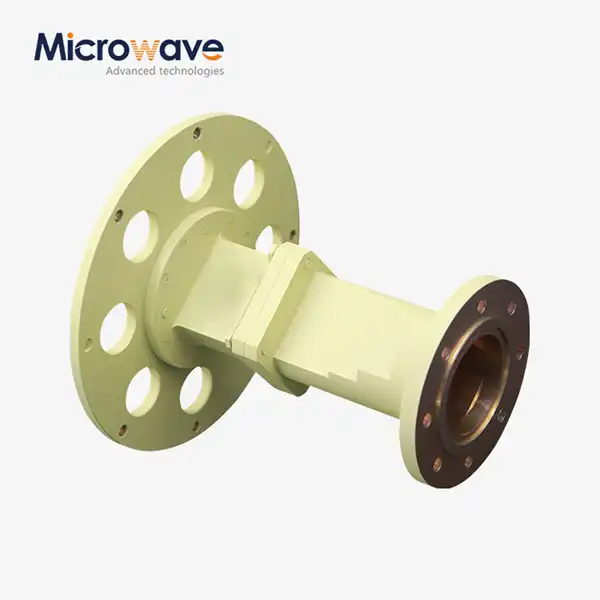 VIEW MORECircular Waveguide Transition
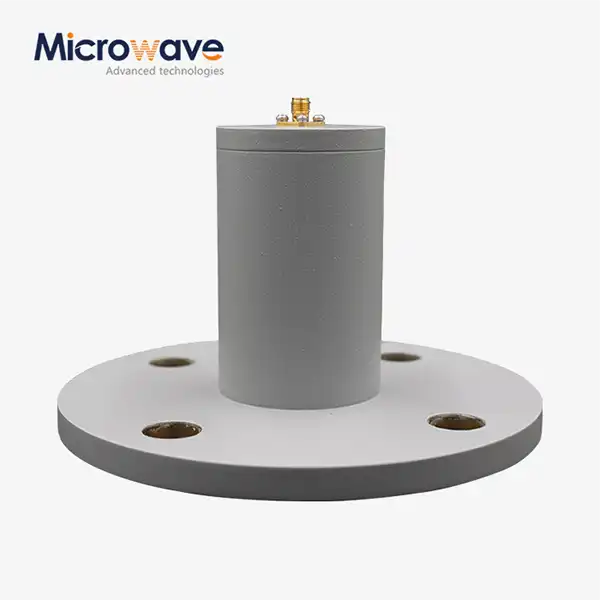 VIEW MORECircular Waveguide To Coaxial Adapter
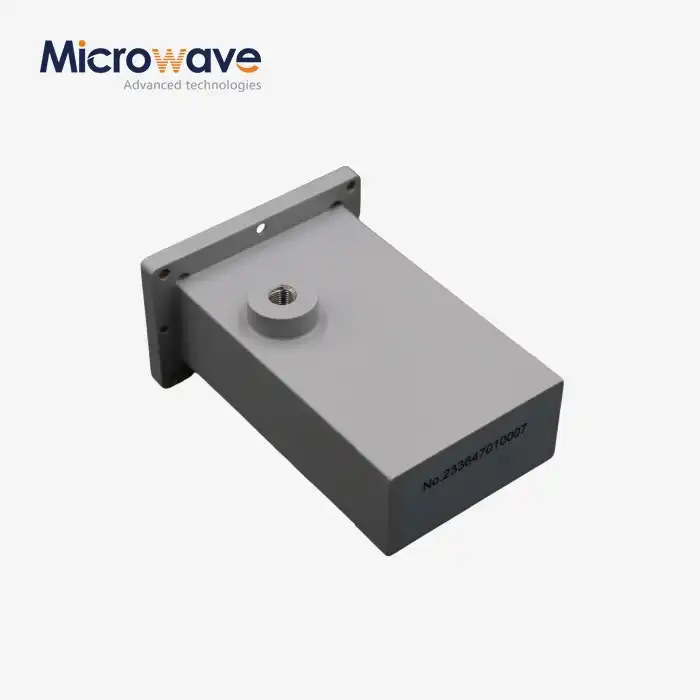 VIEW MOREWG Termination
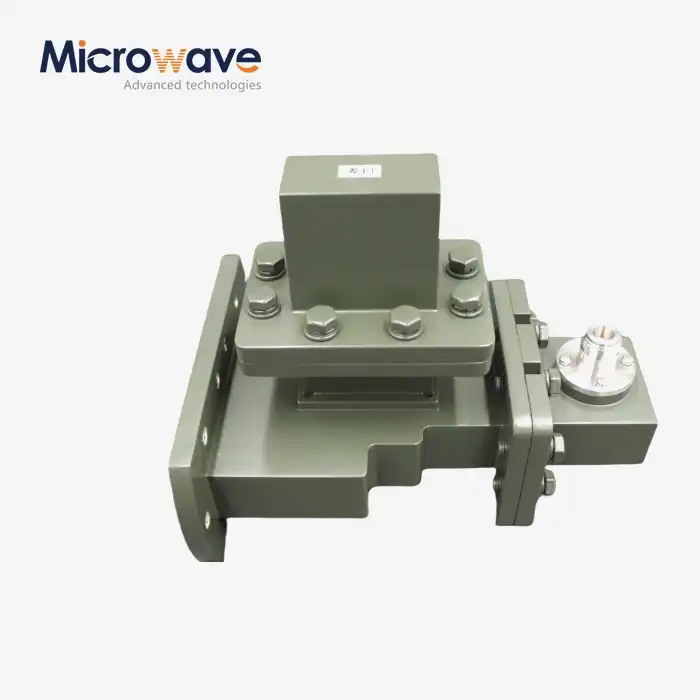 VIEW MOREE-Plane Tee
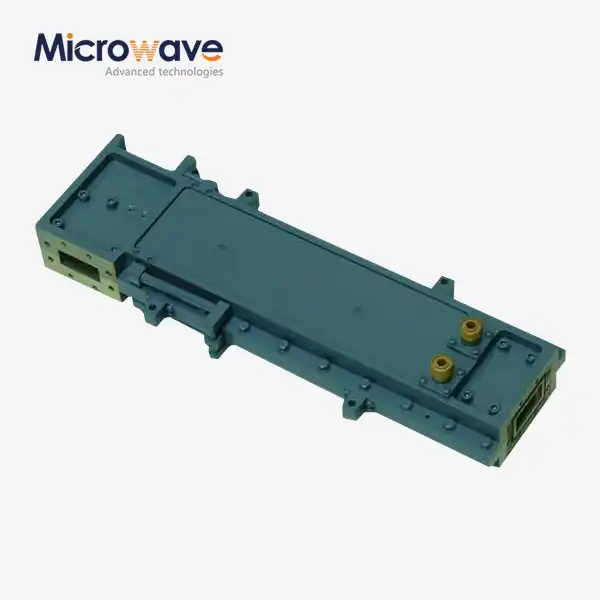 VIEW MOREHigh Power Waveguide Differential Phase Shift Circulator
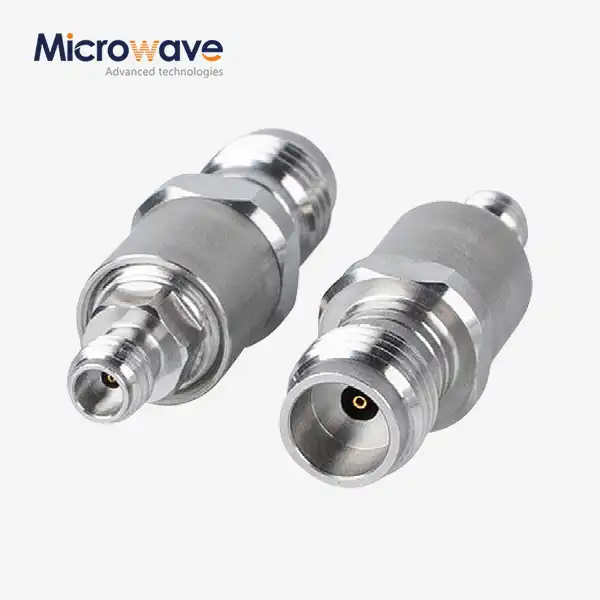 VIEW MORECoaxial Cable Adapter
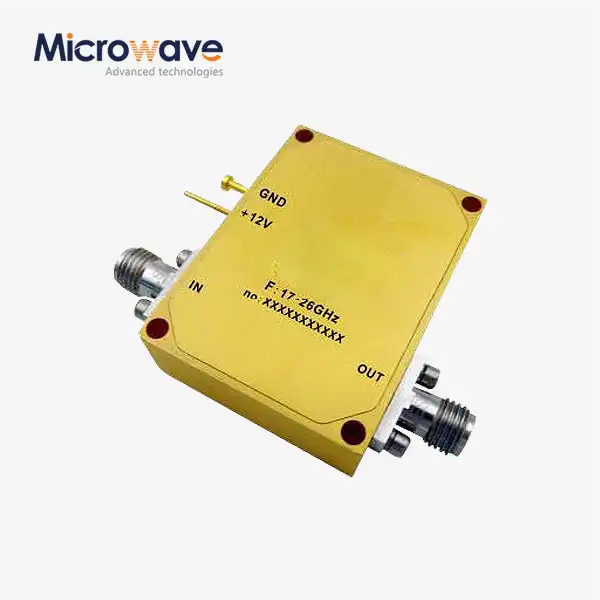 VIEW MORELow Phase Noise Amplifier
 VIEW MOREDual Linear Broadband Circular Polarization Horn Antenna
