





What is an advantage of a slotted antenna planar array over a parabolic reflector?
When considering antenna technologies for mission-critical uses, a slotted waveguide antenna clearly beats a parabolic reflector because it is smaller, has a lower profile, and can handle more power. The slotted waveguide antenna is different from big parabolic dishes because it has the feed network and emitting elements built into a flat, tough metal structure. This eliminates atmospheric drag and reduces the antenna's physical size. This design lets it be mounted smoothly on the fuselages of aeroplanes, military ships, and mobile platforms, where limited room and exposure to the elements require longevity and effectiveness. The waveguide-based architecture also reduces the feed loss that happens in high-frequency microstrip designs. This makes it work very well in radar and satellite transmission systems that use X-, Ku-, and Ka-band frequencies.
Introduction
The correct antenna technology affects radar, satellite transmission, and security system performance, reliability, and cost. Signal quality, weather resistance, integration complexity, and lifetime maintenance costs depend on antenna choice. Parabolic reflectors have long been utilised for high gain and narrow beamwidth. In contemporary compact and transportable systems, their huge size, wind load sensitivity, and sophisticated feed architecture make them less practical. However, slotted waveguide antennas—especially those using waveguide technology—are wonderful because they combine electromagnetic efficiency with mechanical strength in a tiny size. This paper examines slotted waveguide antennas' technical and operational advantages over parabolic reflectors. It provides procurement managers and engineers with data to make informed sourcing selections that fulfil performance and budget targets.
Understanding Slotted Antenna Planar Arrays and Parabolic Reflectors
In high-frequency microwave uses, both antenna designs do different things, but their basic working principles and physical properties are very different. When buying, teams know about these changes, and they can choose antennas that meet the performance needs of specific applications.
Core Operating Principles
Parabolic reflectors send electromagnetic waves to the dish's central feed horn. Signals combine at the feed after hitting the conical surface. This concentrates energy for maximum growth and direction. The feed and mirror surfaces must be aligned and deep enough for this reflecting device to operate. However, slotted waveguide antennas emit waves straight from holes carefully etched into the broad wall of a rectangular waveguide. Each slot is a regulated hole that enables directed wave electromagnetic energy into unoccupied space. The gearbox medium and structural radiator is the waveguide. No separate feed networks are needed, reducing insertion loss.
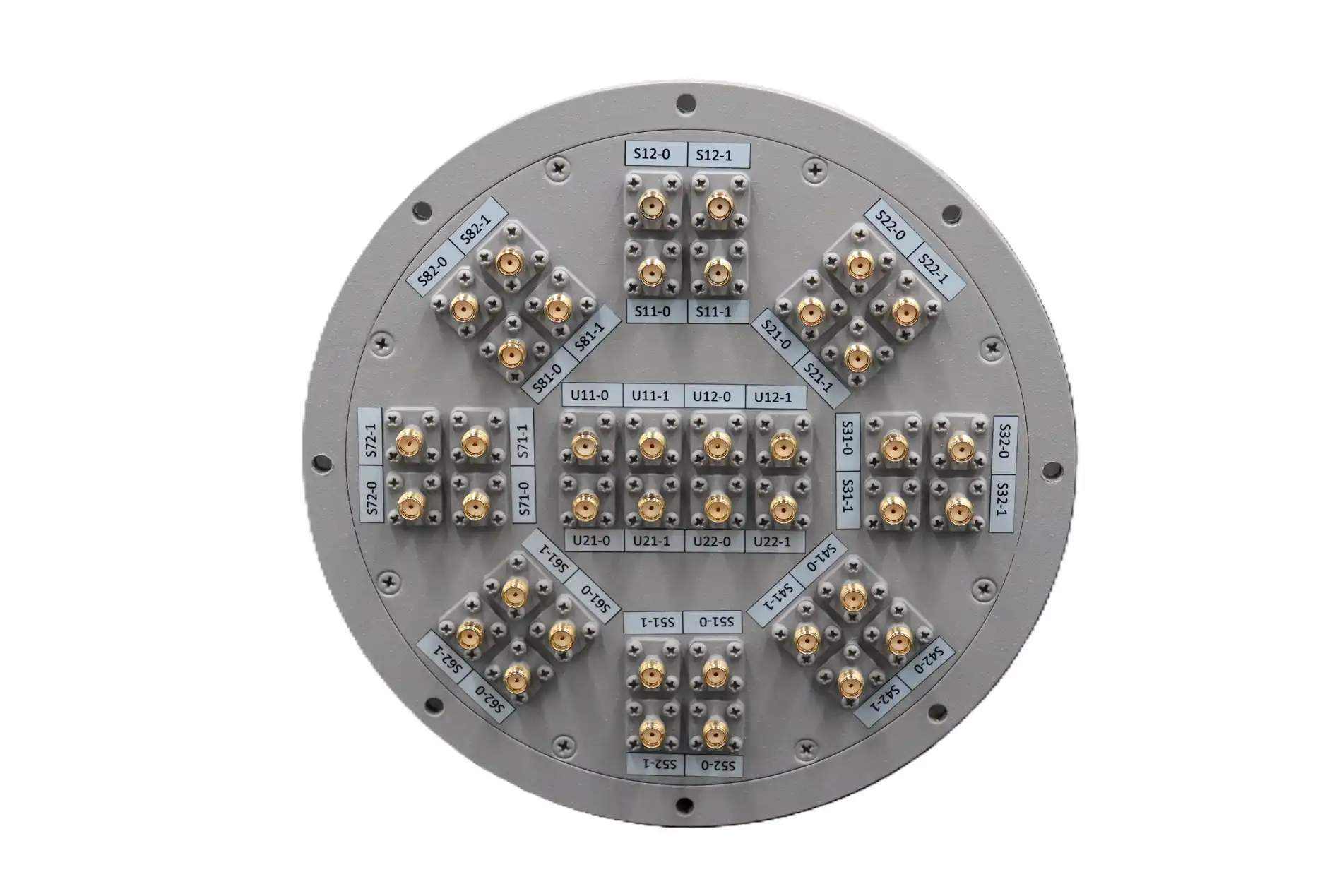
Structural Composition and Physical Design
Parabola dishes have a lightweight metal or polymer reflector, a boom, and polarisers or orthomode transducers in the feed system. Installation requires mechanical balance and wind, icing, and temperature expansion protection. The three-dimensional profile drags mobile apps and makes them tougher to fit in tight places. Slotted waveguide antennas have a flat, one-piece aluminium or copper frame that is silver-plated inside for better transmission. No structures protrude from the compact, flat shape of cars, radio masts, and radomes. This streamlined design reduces radar cross-section for defence and makes sealing against moisture and rust simpler.
Industry Applications Across Sectors
In stable ground stations for deep-space communication, radio astronomy, and point-to-point microwave communications, parabolic reflectors are still the most frequent since opening efficiency matters more than size. Slotted waveguide antennas are used in airborne radars, naval tracking and observation radars, high-speed rail communication lines, and phased-array locations where space is restricted, mechanical endurance, and high power handling. Defence corporations use these antennas for synthetic aperture radar on UAVs, and phone companies employ them in 5G millimetre-wave backup networks that demand durable, low-maintenance outside hardware.
Comparative Analysis: Advantages of Slotted Antenna Planar Arrays Over Parabolic Reflectors
A thorough scientific comparison shows that slotted waveguide antennas work better than parabolic mirrors in many ways, especially in tough industrial, military, and defence settings. These benefits have a direct effect on the system level, lowering the cost of installation, making it more available for use, and lowering the complexity of operations over time.
Size, Weight, and Form Factor Benefits
Slotted waveguide antennas have far less space and weight than equivalent-gain parabolic reflectors. A typical X-band parabolic antenna with 30 dBi gain requires a dish width of almost one metre, a supporting structure and a feed mechanism, which adds weight and wind stress. A slotted waveguide antenna with a flat aperture less than 10 centimetres thick has the same gain. This considerably decreases aeroplane drag and simplifies mechanical positioning. It fits into small locations, ships cheaply, and can be swiftly put up in tactical or mobile circumstances with limited room.
Enhanced Beamforming and Bandwidth Capabilities
While making a slotted waveguide antenna, you may adjust its dispersed aperture's amplitude and phase distribution by changing slot sizes, spacing, and orientation. This allows advanced Taylor or Chebyshev amplitude tapering to drop sidelobe levels to -30 dB, which helps remove radar trash and operate with electronic countermeasures. Travelling-wave slotted waveguide antennas provide broader instantaneous bandwidths than resonant parabolic feeds. They support frequency-agile radar and numerous transmission channels in one opening. Multi-polarisation is possible with cross-slot or dual orthogonal arrays. These enable simultaneous transmission and reception, improving speed and spectrum efficiency.
Environmental Resilience and Maintenance Simplicity
Metal slotted waveguide antennas are sealed to resist harsh weather without dielectric surfaces that absorb moisture or thermally cycle. Once set up, slotted waveguide antennas don't need much maintenance, unlike parabolic mirrors, which need their feed line checked and surfaces polished often to maintain gain. The grounded metal frame prevents lightning and electric discharge, eliminating the need for complex lightning diverters on uncovered parabolic systems. They endure longer in maritime environments than composite reflectors because salt-fog corrosion prevention is better. MIL-STD-810 vibration and shock testing ensures the reliability of high-performance aeroplanes and vehicles under mechanical stress.
These technological advantages make slotted waveguide antennas a durable and cost-effective solution for modernising military radars, enhancing commercial satellite ground infrastructure, and providing 5G backhaul. Procurement teams know that precision-machined slotted waveguide antennas cost more initially, but they last longer, require less maintenance, and require less maintenance than mechanically complex parabolic systems.
Design and Performance Considerations for Slotted Planar Arrays
To get the best performance from slotted waveguide antennas, you have to pay close attention to the electromagnetic design factors and manufacturing errors. During the development process, engineering teams have to find a balance between different goals, such as gain, bandwidth, sidelobe reduction, and physical limitations.
Electromagnetic Design Fundamentals
The radiation pattern depends on the waveguide aperture's slot opening distribution. Resonance at the design centre frequency requires fine-tuning the slot length, which is normally half the guided wavelength. The coupling strength, which affects element volume, depends on the slot's distance from the waveguide's axis. Resonant antennas use a short circuit to create standing waves and enhance efficiency within narrow bandwidths, while travelling-wave antennas use a matched load to expand bandwidth but reduce efficiency. Which mix to choose depends on whether the application demands maximal power-aperture product or frequency agility. Above 70% aperture efficiency is typical, and well-designed systems can achieve 85% to 90%. This is far superior to millimetre-wave dielectric loss-prone microstrip patch antennas.
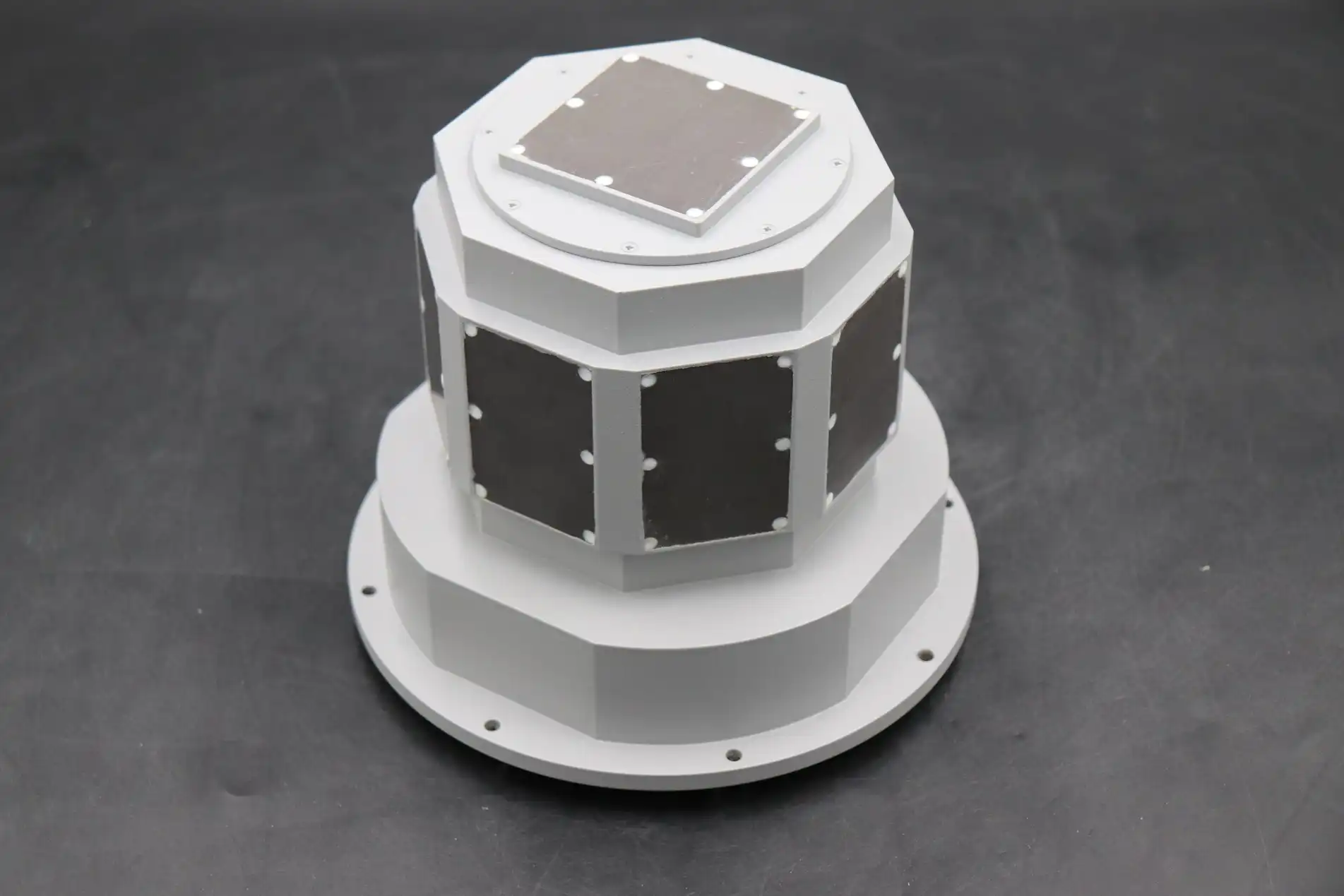
Simulation Tools and Optimisation Techniques
Modern antenna developers employ full-wave electromagnetic tools like ANSYS HFSS, CST Microwave Studio, and FEKO to model complex waveguide designs and anticipate radiation patterns before building the antenna. These tools let you identify the ideal hole sizes, spacing, and orientation for sidelobe levels and cross-polarisation discrimination. In specific anechoic chambers, near-field scans evaluate predicted patterns, and back-projection programs discover manufacturing faults or dimension variations. Our 24-meter microwave facility at Advanced Microwave Technologies Co., Ltd. offers the greatest 0.5–110 GHz measuring instruments. It can also characterise far-field huge aperture antennas for radar and satellite communications validation.
Performance Metrics and Real-World Case Studies
Gain (usually 25 to 40 dBi depending on aperture size), beamwidth (inversely proportional to aperture size), voltage standing wave ratio (VSWR below 1.5:1 ensures efficient power transfer), and sidelobe level are important procurement specs. Polarisation clarity (>25 dB cross-polarisation separation) is necessary for two-way data connections. Slotted waveguide antennas can withstand kilowatts without dielectric breakdown issues like PCBs. Airborne synthetic aperture radar systems can resolve ground targets down to the metre level from more than 10 kilometres away using small slotted waveguide antennas, and shipboard navigation radars can pick out small maritime targets among the clutter at sea using carefully controlled low-sidelobe patterns that aren't possible with parabolic reflectors in small mounting spaces.
Procurement Insights and Choosing the Right Antenna Solution
To buy antennas successfully, you need to find a mix between technical requirements and the vendor's skills, quality control methods, and infrastructure for help after delivery. When making buying choices, smart people look at the track records of suppliers and how flexible they are with adaptation. They also think about the needs of the specific application.
Matching Technical Specifications to Application Needs
For radar to work, the beamwidth needs to be tightly controlled, the sidelobe levels need to be low to get rid of clutter, and the polarisation purity needs to be high to tell the difference between target returns and external backscatter. To keep track of moving spaceships, satellite ground stations put a high value on gain stability across a wide range of temperatures, accurate circular polarisation, and multi-band compatibility. For high data rates to work without signal loss, telecommunications backup links need to have modest gain and good VSWR across wide bandwidths. According to MIL-STD standards, buying things for the military comes with extra strict requirements for electromagnetic compatibility, lightning protection, and weather approval. To make sure that the vendor covers all performance-critical factors, procurement engineers must turn practical situations into numerical antenna specifications. These specifications should include frequency range, gain goals, beamwidth limits, and weather exposure levels.
Evaluating Manufacturers and Product Quality
Leading global providers like Kathrein, HUBER+SUHNER, and Cobham offer standard slotted waveguide antenna goods with datasheets that describe how they work electrically and mechanically. But mission-critical apps often need custom designs that work best with the limitations of the platform they're running on. When evaluating a vendor, you should look at their electromagnetic modelling tools, their precision machining margins (slot dimensions should be accurate to within tens of micrometres), the quality of their surface finish, which affects how much conductivity they lose, and their measurement infrastructure for electrical proof. ISO 9001:2015 approval makes sure that quality control methods are always the same, and RoHS compliance makes sure that material limits are followed. Total cost of ownership estimates are affected by warranty terms, the average time between failures, and the availability of extra parts. Advanced Microwave Technologies Co., Ltd has been making products for more than 20 years and has a lot of testing facilities. This lets them make quick prototypes, make sure their products work well, and make a lot of them for the defence, aerospace, and satellite communication markets.
Customisation, Lead Times, and Cost Considerations
Catalogue antennas work well for standard setups, but they don't always work best for platforms that aren't standard. Custom designs can handle different mounting options, frequency distributions, polarisation needs, and weather conditions. During the customisation process, the first electromagnetic modelling takes two to four weeks, the prototype is built and tested for four to eight weeks, and the design is changed based on the results of the tests before it goes into production. Lead times for large orders rely on how much can be made and how complicated the work needs to be. For precision slotted waveguide antennas, this time range is between 8 and 16 weeks. Unit costs include the cost of materials like aluminium or copper stock and silver finishing, the time it takes to machine the parts using CNC programming and multi-axis milling, and the time it takes to test the parts in an echo chamber and make sure they are of good quality. When negotiating volume pricing, you should weigh the costs of buying tools up front against the costs of making units over time. Usually, there are price breaks at 10, 50, and 100 units. When making budgets for purchases, it's important to include one-time engineering fees for designing electric and mechanical connections that are unique to the needs of the system integration.
Case Studies Highlighting the Real Advantages
Real-world examples of usage show how slotted waveguide antennas turn technical benefits into measurable operational gains in a wide range of application areas. These case studies show what makes people choose to switch from parabolic mirrors to slotted waveguide antennas as an antenna technology.
Airborne Radar System Integration
A defence contractor who was updating surveillance platforms for unmanned aerial vehicles swapped out nose-mounted parabolic radar antennas for conformal slotted waveguide antennas. The change cut down on air drag by 35%, which extended the mission's longevity and increased its working range. The flat shape made it possible to place the antennas flush within the composite body. This kept the structure strong and reduced radar cross-section for covert surveillance flights. Sidelobe suppression improvements made ground mapping more accurate in crowded cities, and the waveguide's better power handling allowed for longer detecting ranges without any problems with heat management. Compared to the old parabolic system, which needed regular feed alignment checks after high-vibration flight patterns, maintenance intervals were increased.
Telecommunications Infrastructure Deployment
A regional phone company that was setting up 5G millimetre-wave backup links across hilly areas chose ruggedised slotted waveguide antennas over standard parabolic dishes. The small size made it easier to place the tower and lessened the wind load on existing infrastructure, so expensive structural supports weren't needed. Multi-band flexibility within a single opening allowed for both old microwave links and new millimetre-wave channels, which made it easier for antennas to work at cell sites with a lot of people. Environmental sealing survived high-altitude snow buildup and temperature changes without lowering performance, keeping the link available more than 99.95 per cent of the time every year. Compared to conical options that needed fine mechanical alignment and guy-wire support, the cost of installation work dropped by 40%.
Maritime Surveillance Application
A military systems engineer suggested a slotted waveguide antenna guidance radar for rough-sea coastal patrol vessels. Older composite parabolic mirrors rusted due to salt-fog, but the all-metal design reduced maintenance costs and extended service periods. Since lightning strike resistance increased, antenna repairs were less frequent than with dielectric radomes protecting parabolic feeds. The low-profile design stabilised the ship by reducing its top weight. The antenna's mechanical rigidity protected it from hurricane-force winds during storm transit without damage or performance degradation. Due to precise sidelobe management, target detection in stormy seas was better than parabolic predecessors, improving maritime domain awareness in congested shipping channels.
Conclusion
Slotted waveguide antennas provide clear benefits over parabolic reflectors in terms of size, weather resilience, maintenance requirements, and system integration. Waveguide-based designs offer superior power management, lower insertion loss, and mechanical stability in a tiny package for transportable devices with limited space. Parabolic dishes are still effective for stationary ground station applications that need the maximum aperture efficiency, while slotted waveguide antennas are suitable for aerial radar, shipboard systems, and tactical deployments that demand durability and reliability in difficult situations. When buying antenna modifications, buyers should choose suppliers with electromagnetic design, accurate manufacturing, and a thorough testing system to ensure performance targets are satisfied.
FAQ
Q1: What frequency ranges do slotted waveguide planar arrays support?
Microwave and millimetre-wave bands, such as X-band (8 to 12 GHz), Ku-band (12 to 18 GHz), and Ka-band (26.5 to 40 GHz), can be successfully crossed by slotted waveguide antennas. For specific radar and image uses, custom designs can go into the W-band (75 to 110 GHz). Frequency coverage depends on the size and shape of the waveguide and slots. In travelling-wave setups, bandwidth can reach 10 to 20 per cent of the centre frequency.
Q2: How do maintenance costs compare between slotted arrays and parabolic reflectors?
Because they are made of protected metal and don't have any open lines or alignment-sensitive reflectors, slotted waveguide antennas don't need much upkeep. Parabolic systems need to have their surfaces cleaned, their feed line checked, and their radomes replaced regularly, which raises the costs over their entire life. According to figures from the industry, slotted waveguide antennas have upkeep costs that are 30 to 50 per cent lower over a 10-year period of running.
Q3: Can slotted waveguide antennas be customised for specific beam shapes?
Through slot size optimisation and amplitude reduction, advanced production methods make it possible to precisely control radiation patterns. Shaped beams for sector coverage, cosecant-squared patterns for ground mapping radar, and ultra-low sidelobe distributions for electronic warfare can all be built into custom designs. Engineering teams use electromagnetic modelling tools to make patterns that fit the needs of each task.
Partner with ADM for Your Slotted Waveguide Antenna Requirements
Advanced Microwave Technologies Co., Ltd has been developing and making high-performance slotted waveguide antennas for the defence, military, and satellite communication markets for more than twenty years. Our experienced engineering team works closely with sourcing experts to create unique solutions that meet exact technical requirements, environmental standards, and integration limitations. As a reliable company that makes slotted waveguide antennas, we follow strict ISO 9001:2015 quality standards during development and production. We also test all of our products thoroughly in our state-of-the-art 24-meter anechoic facility, which works from 0.5 GHz to 110 GHz. You can email craig@admicrowave.com to talk about your specific antenna needs, get technical datasheets, or get detailed quotes that fit your project's schedule and budget.
References
1. Skolnik, M. I. (2008). Radar Handbook, Third Edition. McGraw-Hill Education.
2. Elliott, R. S. (1981). Antenna Theory and Design. Prentice-Hall, Inc.
3. Balanis, C. A. (2016). Antenna Theory: Analysis and Design, Fourth Edition. John Wiley & Sons.
4. Johnson, R. C., & Jasik, H. (1984). Antenna Engineering Handbook, Second Edition. McGraw-Hill.
5. Mailloux, R. J. (2005). Phased Array Antenna Handbook, Second Edition. Artech House.
6. Silver, S. (1949). Microwave Antenna Theory and Design. McGraw-Hill Book Company (MIT Radiation Laboratory Series).
YOU MAY LIKE
 VIEW MOREMiter Bend Waveguide
 VIEW MOREFlexible Waveguide
 VIEW MOREWaveguide Switch
 VIEW MORECircular Straight Waveguide
 VIEW MOREHigh Power Waveguide Differential Phase Shift Circulator
 VIEW MOREWG Harmonic Filter
 VIEW MORECoaxial Cable Connector
 VIEW MORELow Side Lobe Diagonal Linear Polarization Horn Antenna