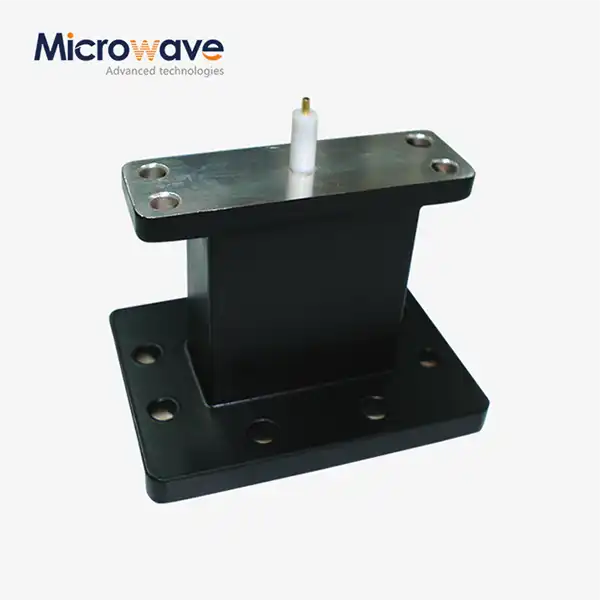
How Does a Twisted Waveguide Improve Signal Performance?
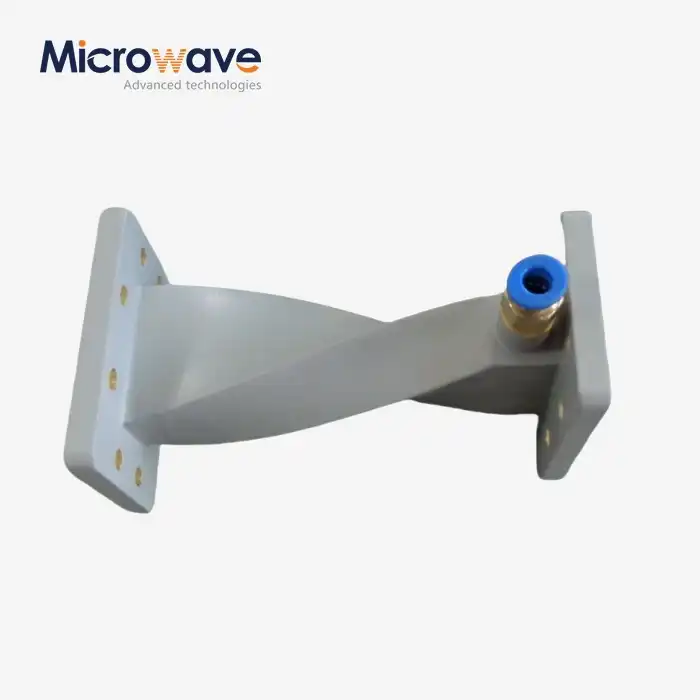
A twisted waveguide improves signal performance by introducing a controlled helical rotation along the transmission path, which manipulates the electromagnetic field distribution to minimize polarization mismatch and reduce mode conversion losses. This geometric twist ensures smoother transitions between components with differing orientations, maintaining signal integrity across complex routing scenarios. By controlling the rate of rotation and optimizing internal dimensions, these flexible transmission lines achieve lower VSWR (Voltage Standing Wave Ratio), reduced insertion loss, and enhanced bandwidth stability—critical factors for high-frequency applications in satellite communications, radar systems, and aerospace platforms where rigid waveguides cannot accommodate mechanical constraints or dynamic positioning requirements.
Understanding Twisted Waveguides and Their Role in Signal Transmission
When it comes to flexible microwave transmission lines, twisted waveguides are a special kind that were made to deal with both electrical and mechanical problems in current RF systems. In contrast to regular rigid rectangular waveguides, these parts have a helical twist built into them that lets the waveguide cross-section slowly spin along its length. This new design makes it possible for fixed equipment to connect to rotating antennas or for system modules that aren't lined up right to talk to each other without any abrupt breaks that hurt the signal quality.
The Physics Behind Helical Rotation
The main idea behind how twisted waveguides work is called "gradual mode transformation." The main TE10 mode stays in the same position with respect to the waveguide walls as electromagnetic waves move through a standard rectangular waveguide. When you add a twist, the electromagnetic field pattern rotates in the same way. But because this rotation is slow (usually between 108 and 530 degrees per meter, depending on the frequency band), it doesn't cause higher-order parasitic modes to become excited, which would distort the signal.
Polarization Control and Cross-Coupling Reduction
In satellite ground stations and phased array radar systems, the overall efficiency depends on how well the feed networks and antenna elements are aligned with respect to polarization. When waveguides are twisted, they allow for smooth polarization rotation without the reflected losses that come with sudden changes or big mechanical rotating joints. This feature is especially useful for tracking tasks where antenna groups need to follow moving targets while keeping the signal strong throughout the operational arc.
Material Selection and Construction Methods
Advanced Microwave Technologies makes bendable waveguides out of precisely made brass or phosphor bronze, which are chosen for their high electrical conductivity and durability. The helically wound or convoluted construction gives it freedom while keeping the internal measurements under control, which is important for accurate impedance matching. A secure Neoprene jacket does two things: it seals off the environment from moisture and strengthens the structure to maintain pressure integrity during bent operations. When you combine high-quality metals with engineered polymer coatings, the product will work reliably in temperatures ranging from -40°C to +85°C, meeting the strict needs of aerospace and defense applications.
Identifying and Overcoming Signal Transmission Challenges in Traditional Waveguides
Even tho rigid waveguide assemblies work very well for straight-line installations, they have a lot of problems when it comes to integrating systems in the real world. Knowing these limitations makes it clear why flexible twisted waveguides are so important in modern microwave engineering.
Mechanical Inflexibility and Installation Complexity
When using traditional rectangular waveguides, the matching flanges must be perfectly lined up with each other. To keep reflections to a minimum, angular misalignment margins are usually set to within 0.5 degrees. In complicated installs, like connecting transmitting cabinets to cellular base station rooftop antenna arrays, this alignment can only be done with rigid parts that are made to order and have a lot of elbows and twist sections. With each extra joint, there are more places where signals could leak, and insertion losses could build up. Skilled technicians have to spend a lot of time measuring, cutting, and fitting these rigid plumbing networks, which adds time to the project and costs more in labor.
Vibration-Induced Failure Modes
When they are in use, military radar systems that are on navy ships or mobile bases on the ground are constantly vibrating. In these situations, rigid waveguide links can separate at the flanges, fasteners can come loose, and metal can wear out at stress points. These problems show up as signal loss or complete transmission path interruptions, which puts mission-critical communication links at risk. Because they are flexible, twisted waveguides can absorb rotational energy. This keeps sensitive RF parts from being affected by mechanical shock loads.
Thermal Expansion Mismatch
A lot of heat is made by high-power transmitter systems, which makes metal structures expand. When rigid waveguide runs go for several meters between racks of equipment that are working at different temperatures, the different temperatures cause mechanical stress at fixed mounting points. This stress can change the cross-sections of waveguides, which can change the resonant frequencies and make impedance matching worse. In the past, engineers dealt with this problem by adding expansion joints, which are special flexible parts spaced out at regular intervals. However, these are expensive and hard to use. Integrated flexible twistable waveguides get rid of the need for separate expansion correction, so the whole transmission line is naturally thermally flexible.
Validation Through Advanced Testing
At Advanced Microwave Technologies, we have a 24-meter Microwave Darkroom with both near-field and far-field testing tools that let us fully check the performance of flexible waveguide systems. Network tester tests from 0.5 GHz to 110 GHz show that insertion loss stays within the allowed range, even when samples are twisted to their fullest extent and bent to their smallest radius at the same time. Environmental stress screening, which includes temperature cycling, humidity exposure, and vibration testing, makes sure that production units meet the high standards of dependability that aerospace and defense customers demand. In addition to electromagnetic modeling during the design phase, these empirical validation methods give procurement teams written proof of how well the system works in real-world situations.
Comparative Analysis: Twisted Waveguide Versus Alternative Solutions
Selecting the optimal transmission medium for a specific microwave application requires careful evaluation of electrical performance, mechanical suitability, and total cost of ownership. Advanced Microwave Technologies' flexible twisted waveguides have VSWR values between 1.10 and 1.45 across their working frequency bands. This is better than stiff waveguide VSWR values between 1.05 and 1.15.
Electrical Performance Metrics
In straight-line installations, rigid assemblies have a small electrical advantage. However, the small increase in VSWR for flexible versions isn't noticeable when you consider the extra losses caused by the many rigid joints and transitions that are needed in complex routing situations. The insertion loss per meter, which is between 0.15 dB/m at S-band and 3.0 dB/m at Ka-band, is about the same as that of semi-rigid coaxial cables, but it can handle more power. For kilowatt-level high-power radar transmitters, waveguide structures get around the problems of dielectric breakdown and thermal limits that come with coaxial designs.
Mechanical Robustness and Installation Efficiency
When you compare the startup methods, you can see that they are very different in real life. A normal rigid waveguide placement between a ground equipment cover and a satellite dish on top of a building might need 12 to 18 carefully made pieces with the right flanges, gaskets, and bolts. For installation to go smoothly, two technicians must work for several hours to make sure the right alignment and torque levels are met. One technician can make the same connection using a flexible twistable waveguide in less than an hour, since the continuous flexible run can handle changes in the path without the need for custom fabrication. The difference in material costs can be justified by the time and money saved on labor alone over dozens of installations in a network growth project. Flexible waveguides can also withstand repeated bending—our tests show reliable operation through 10,000+ bend cycles at minimum radius—so they can be used again and again when the system needs to be reconfigured, which would require replacing rigid assemblies completely.
Material Science and Longevity Considerations
Copper and brass metals used to make waveguides are very good at conducting electricity, but they need to be treated on the outside to keep them from oxidizing, which raises resistance losses over time. Specialized passivation coatings are used by Advanced Microwave Technologies to stop corrosion in marine and industrial settings with sulfur chemicals. The Neoprene jacket protects you from the elements even more while staying flexible in a range of temperatures. Comparative accelerated aging tests show that properly maintained flexible waveguides keep their electrical specifications for 15 years or more in outdoor installations. This is the same amount of time that the electronic equipment they are connected to works and longer than the durability of unprotected rigid assemblies in corrosive environments.
Practical Applications and Case Studies in Industrial and OEM Contexts
Real-life examples of how twisted waveguides are used show how useful they are in many different fields across diverse industries.
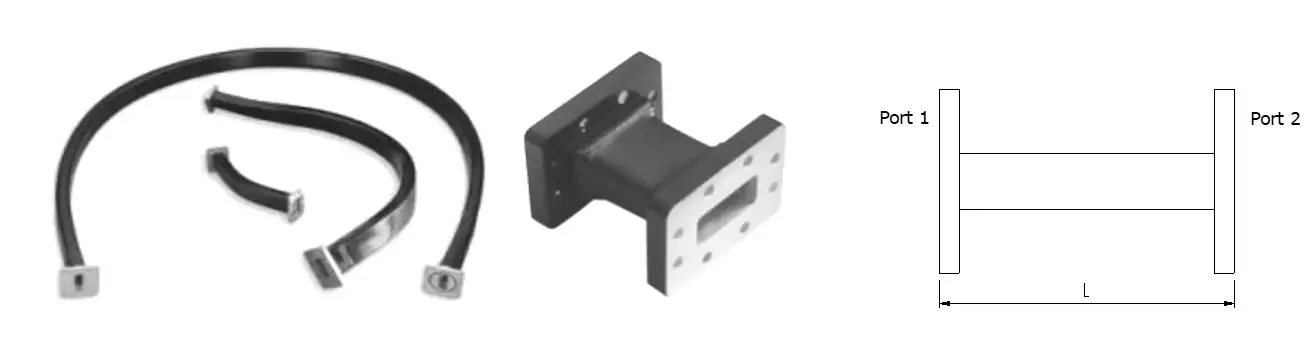
Satellite Communication Ground Stations
A European phone company that was upgrading its satellite tracking facility had trouble connecting fixed RF equipment to motorized antenna pedestals that needed to be tilted and moved all the time. Using spinning joints in the past caused 0.8 dB of insertion loss and needed repair every three months to fix mechanical wear. Using Advanced Microwave Technologies' flexible twistable waveguides got rid of the need for a rotary joint completely. This cut insertion loss to 0.3 dB across the 12 GHz to 18 GHz frequency range while still allowing for ±180-degree rotation in the azimuth direction and 0 to 90-degree elevation range. The installation made it easier to handle the cables and cut the cost of yearly upkeep by 60%. After three years of constant use, there was no signal degradation.
Aerospace Radar Integration
A defense contractor working on an airborne early warning radar system needed movable RF links between the pressurized electronics bay of the plane and antenna arrays on the wings. Rigid waveguide systems were not possible because of lack of space and vibration loads from jet engines. Flexible waveguides that were custom-made and worked in the X-band (8.2 to 12.4 GHz) and had double-ridged internal structures gave the needed bandwidth while keeping insertion loss below 0.4 dB/meter. The design was flexible enough to handle the airframe bending during moves in the air, which kept sensitive electrical parts from being stressed mechanically. Environmental tests confirmed operation at an altitude of 50,000 feet and temperature changes from -55°C to +85°C, which meets the requirements of DO-160 for aircraft qualification.
5G Infrastructure Deployment
When telecom companies put millimeter-wave 5G base stations in cities, they need to install small antennas on the sides of buildings and on utility lines. In these limited-space places, connecting remote radio units to multibeam antennas requires flexible routing around building obstructions. Advanced Microwave Technologies provided Ka-band flexible waveguides (26.5 to 40 GHz), which let workers work in small spaces while keeping the low loss that is needed to keep the signal-to-noise ratio in high-frequency wireless links. End-to-end system insertion loss readings in the field were within 0.5 dB of what theorists predicted. This proved that the design method was correct and allowed for widespread use in metropolitan networks.
Installation Best Practices
Successful integration of bendable, twistable waveguides requires attention to several practical issues. Installers shouldn't go over the maximum twist rates and minimum bend radius limits listed in the product datasheets. This is because too much mechanical stress can change the shape of the internal cross-section and lower the electrical performance. When running through cable trays or tubing, make sure there are enough support spaces, usually every 0.5 meters, to keep the cable from falling and making bends where they shouldn't. When connecting flanges, use measured torque tools to get the clamping force stated by the maker. This will make sure that the gasket is compressed properly to seal the environment without changing the shape of the waveguide hole. Advanced Microwave Technologies helps customers with the rollout process by giving them detailed installation guides, CAD models for planning the mechanical integration, and application engineering support.
How to Procure and Partner for Twisted Waveguide Solutions
Selecting a waveguide manufacturer involves evaluating technical skills, the reliability of their supply chain, and the possibility of a long-term partnership that goes beyond just buying parts. Our line of bendable twisted waveguide products from Advanced Microwave Technologies can be customized in a lot of ways.
Specification Development and Customization
To start, procurement teams should make a list of all the practical requirements that need to be met. These should include the frequency range, the maximum insertion loss that can be tolerated, the VSWR limits, the total length and necessary bend/twist angles for the cables, as well as the environmental conditions and power handling needs. These products cover frequencies from 3.22 GHz (S-band) to 50.1 GHz (Ka-band). Standard flange options include FDP/FDM and FBP/FBM types, and for unique system architectures, custom interface configurations are also possible. During the specification phase, our engineering team works together to make sure that designs are the best they can be in terms of both performance and ease of production. They often find ways to cut costs by standardizing some parameters while keeping important custom features.
Lead Time and Supply Chain Considerations
Our flexible waveguide portfolio has standard catalog items that usually ship within two weeks of order confirmation. This is because we keep an inventory of popular setups on hand. For initial quantities, custom-engineered solutions require design validation and prototype testing, which adds to the lead time of six to eight weeks. Our established supply chain for precision metal making and polymer components helps us scale up production for large orders. This lets us produce hundreds of units on time to meet customer project deadlines. Advanced Microwave Technologies sets up dedicated production lines with quality hold points that are coordinated with customer inspection requirements for large defense or telecommunications infrastructure programs that need thousands of assemblies. This makes sure that delivery performance stays the same over multi-year contracts.
Quality Assurance and Documentation
With ISO 9001:2015 certification, we can manage quality in a planned way throughout the whole manufacturing process, from inspecting new materials as they come in to doing final electrical tests and getting ready to ship. Each flexible waveguide unit is tested using a network analyzer to make sure that the insertion loss, return loss, and frequency response are all within the acceptable ranges. The test data is then stored so that it can be tracked. RoHS compliance paperwork is sent with shipments to European markets, and REACH declarations and conflict minerals reporting help companies with their sustainability efforts. Our AS9100 manufacturing practices back up the full material certifications, dimensional inspection reports, and environmental test data that defense and aerospace customers need for their qualification processes.
Long-Term Partnership Benefits
Advanced Microwave Technologies does more than just supply parts. OEM customers working on next-generation systems value the ongoing technical collaboration that the company offers. Our 24-meter Microwave Darkroom offers antenna and feed network evaluation services, which lets customers check the quality of whole RF systems without having to buy expensive test labs. Engineering teams take part in design reviews and use their 20 years of experience with waveguides to improve the performance of the whole system. As a customer's product lines go through different generations, our Application Engineering team keeps up with the design paperwork and suggests ways to make parts better by using the newest advances in material science and production methods. Long-term connections like these lower the technology risk for customers and speed up the time it takes to bring new products to market.
Conclusion
Twisted waveguides that can be twisted are an important piece of technology for current microwave systems that need to be both electrically and mechanically flexible. These precision-engineered parts get around some of the main problems with rigid waveguide assemblies by allowing smooth polarization rotation, working with complicated routing geometries, and absorbing mechanical stresses. Performance validation through thorough testing, advances in material science in conductive alloys and protective coatings, and manufacturing expertise gained over decades of production all contribute to the reliable operation of mission-critical systems in defense systems, satellite communications, aerospace radar, and telecommunications infrastructure. Procurement professionals benefit from partnering with established manufacturers offering customization options, strong supply chains, and technical collaboration throughout the lifecycles of products.
FAQ
1. What advantages do twisted waveguides offer compared to straight rigid waveguides?
Misalignment, vibration, and thermal expansion are all things that would cause rigid assemblies to break, but flexible twisted waveguides can handle them. The helical twist design allows polarization rotation without the insertion loss problems that come with mechanical rotary joints. The flexible construction also makes installation easier in tight spaces by getting rid of the need for multiple precision-fabricated rigid sections and flanged connections.
2. How long does custom twisted waveguide fabrication typically require?
Flexible waveguides from Advanced Microwave Technologies' standard range are shipped in two weeks. For custom-engineered solutions with special flanges, frequency bands, or double-ridged internal structures, design validation and prototype testing are needed. This makes wait times longer, to six to eight weeks for initial production numbers. When orders are placed in bulk for ongoing programs, manufacturing processes are streamlined, which shortens the time between deliveries of each unit.
3. Can flexible waveguides integrate directly into existing microwave systems designed for rigid components?
Flexible twistable waveguides use standard flange interfaces, such as FDP/FDM and FBP/FBM types, so they can be directly connected to rigid waveguides that are already in use. When you put something in correctly and follow the manufacturer's instructions for the minimum bend radius and maximum twist rate, you can keep the electrical performance specs. This lets you use drop-in replacements that improve the mechanical flexibility of the system without changing the RF characteristics.
Partner with ADM for Superior Flexible Waveguide Solutions
Advanced Microwave Technologies delivers industry-leading twisted waveguide options engineered for your most demanding applications. Our ISO-certified manufacturing facility produces customized RF transmission components supporting frequency ranges from S-band through Ka-band, backed by rigorous testing in our 24-meter Microwave Darkroom. Whether you require standard catalog configurations or fully custom OEM designs, our experienced engineering team provides technical consultation from initial specification through production scaling and field support. Procurement managers seeking a reliable twisted waveguide manufacturer with proven aerospace, defense, and telecommunications expertise can request detailed specifications, CAD models, and project quotations by contacting our technical sales team at craig@admicrowave.com. Discover how our precision-engineered flexible waveguide solutions enhance your system performance while reducing installation complexity and total ownership costs.
References
1. Pozar, David M. Microwave Engineering, 4th Edition. Wiley, 2011.
2. Ramo, Simon, John R. Whinnery, and Theodore Van Duzer. Fields and Waves in Communication Electronics, 3rd Edition. Wiley, 1994.
3. Collin, Robert E. Foundations for Microwave Engineering, 2nd Edition. Wiley-IEEE Press, 2001.
4. Marcuvitz, Nathan. Waveguide Handbook. Institution of Engineering and Technology, 1986.
5. Saad, Theodore S. Microwave Engineers' Handbook, Volume 1. Artech House, 1971.
6. Montgomery, C. G., Robert H. Dicke, and Edward M. Purcell. Principles of Microwave Circuits. Institution of Engineering and Technology, 1987.