




How Does a Broadband RF Circulator Improve Signal Isolation?
A broadband RF circulator improves signal isolation by leveraging the non-reciprocal electromagnetic properties of ferrite materials to route signals unidirectionally across multiple ports while suppressing reverse energy flow. Unlike narrowband devices that rely on resonance at specific frequencies, broadband designs employ sophisticated ferrite matching networks and magnetic biasing architectures to maintain high isolation—typically exceeding 40 dB—across wide frequency spans such as 2-18 GHz or even DC to 110 GHz. This capability prevents reflected signals from re-entering transmitter ports, protects sensitive receiver components from high-power interference, and reduces crosstalk between system modules, ensuring signal integrity in mission-critical applications.
Understanding Broadband RF Circulators and Signal Isolation
What Is a Broadband RF Circulator?
Broadband RF circulators are inactive devices with three ports that move electromagnetic signals from one port to the next in a certain order (Port 1 to Port 2, Port 2 to Port 3). They stop signals from going backward, though. The name "broadband" comes from the fact that these circulators can work well across a wide range of frequencies, unlike narrowband circulators that are only set to a few frequencies. At the heart of these gadgets is a ferrite junction that is hit by a static magnetic field made by permanent magnets. Because of this magnetic skew, the ferrite material has non-reciprocal features, which means that the way an electromagnetic wave behaves depends on which way it is traveling.
The Importance of Signal Isolation in RF Systems
Signal separation measures how well a device stops unwanted signals from leaking between ports. There are a number of very important problems that happen when separation isn't good in current RF systems that support 5G base stations, satellite ground terminals, and electronic warfare platforms. Power amplifiers can be damaged by signals that are reflected from loads that aren't matched, receiver sensitivity drops when transmit signals get into receive chains, and inter-channel interference slows down data flow. Effective isolation, which is measured in decibels, keeps forward signal transmission unchanged while lowering backward signal levels to almost nothing. This protects both hardware and system performance.
Why Broadband Performance Matters
More and more, procurement workers and system integrators like broadband circulators because they get rid of the need for various narrowband units that work at different frequencies. One broad device that works from 6 to 18 GHz, like those built on coaxial or waveguide platforms, makes the system simpler, lowers the amount of insertion loss that builds up, and takes up less space. This is especially helpful in uses with limited space, weight, and power (SWaP), like airborne radar, unmanned aerial vehicles (UAVs), and portable communication devices, where every square inch and watt counts.
Challenges in Signal Isolation and How Broadband RF Circulators Solve Them
Common Signal Isolation Problems
Engineers working on advanced RF architectures often run into signal reflection issues because of antenna impedance mismatches. This is especially true when antennas work over wide bandwidths or in environments that change all the time. When two parts don't have the same frequency, they cause resonance peaks that make separation worse at certain bands. Traditional RF switches have insertion loss and switching delays, and standard isolators are only good for working with a few frequencies and don't work well across a wide range of frequencies.
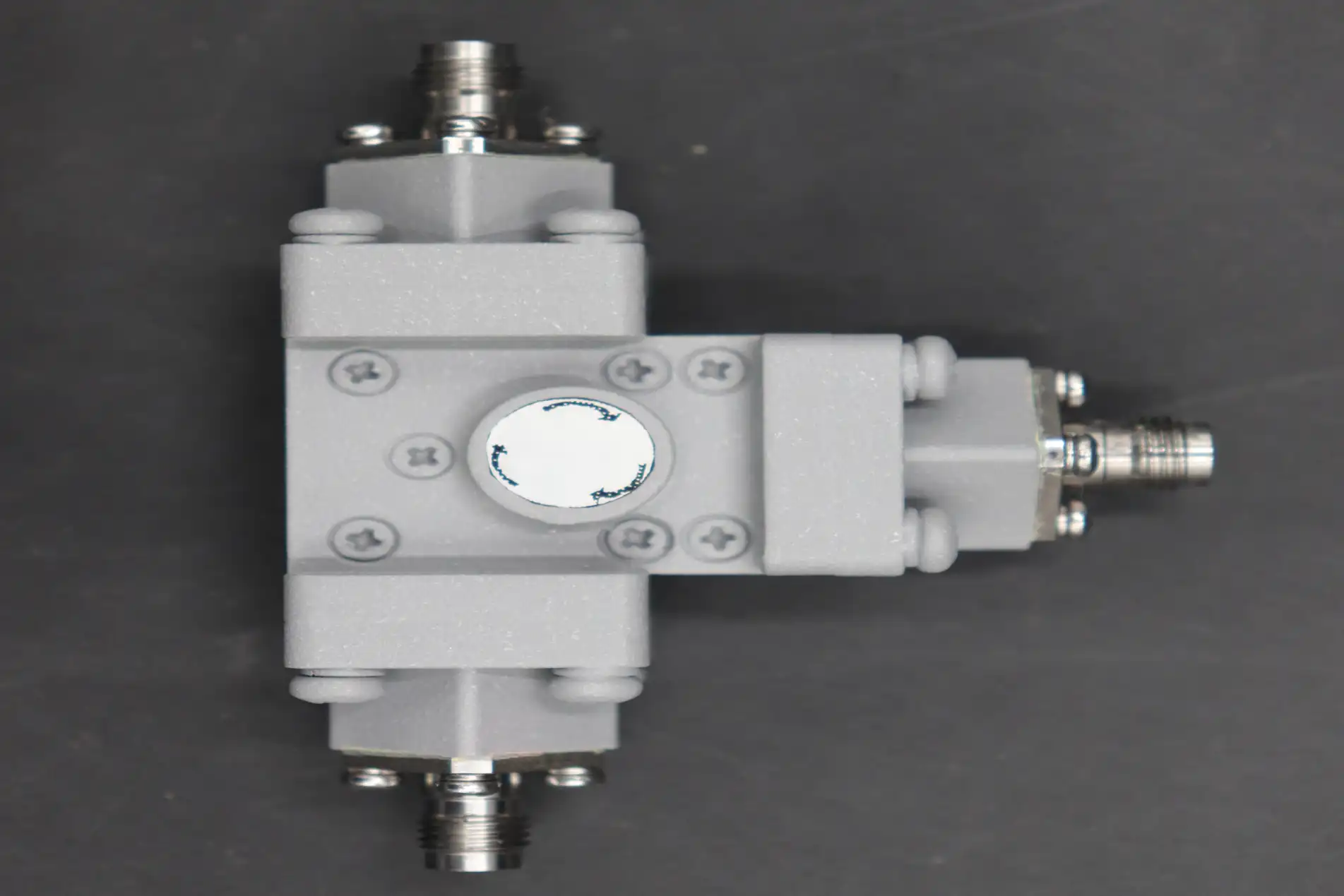
Advanced Design Principles in Broadband Circulators
Several new technologies have helped modern broadband RF circulators get around these problems. Gradient impedance transition structures at the input and output ports keep the Voltage Standing Wave Ratio (VSWR) low throughout the whole operating band. VSWR is usually ≤1.2 at the input and ≒1.3 at the output. A precise magnetic circuit design uses fixed magnets with a uniform magnetic field distribution to keep the performance of the ferrite core stable and to stop it from detuning due to changes in temperature or magnetic interference from outside the circuit.
High-purity ferrite materials with the best magnetic saturation qualities (4πMs) allow for a wider bandwidth while keeping insertion loss low, usually below 0.5 dB. Modern magnetic biasing designs find a good balance between increasing bandwidth and isolation, making sure that reverse isolation stays ≥40 dB even at the edges of the band. The end result is a device that can handle normal powers of 10–500 W and peak powers of up to 10 kW. Some ruggedized types can handle 50 kW of peak power for radar and electronic countermeasure uses.
Real-World Performance Gains
Defense companies that add broadband circulators to Active Electronically Scanned Array (AESA) radar systems say that the systems' ability to find targets and track them more accurately has gotten better. Since a single circulator can now handle C-band, X-band, and Ku-band communications without having to be manually reconfigured, satellite ground station operators have fewer service delays during multi-band operations. When telecom equipment makers use 5G massive MIMO base stations, inter-channel interference is reduced. This directly leads to higher data throughput and better coverage quality in cities.
Comparing Broadband RF Circulators with Alternative RF Components
Isolators vs. Circulators
RF isolators are basically three-port circulators with a matching load at the end of the third port. Isolators keep sources from getting power from reflections, but they can't send messages to more than one place. Circulators give you more options because they let you send and receive signals at the same time through a single receiver, which is very important in radar duplexing and full-duplex communication systems.
RF Switches and Their Limitations
Both mechanical and solid-state RF switches can route signals, but they have some problems. Limits on switching speeds, which are often measured in milliseconds, are not acceptable for uses that need transmit-receive transitions to happen instantly. Each switch in a chain adds to the insertion loss, and they usually handle less power than circulators. When switches are under a lot of power, they also cause intermodulation distortion (IMD), which makes transmission receivers less sensitive.
Key Performance Parameters for Procurement
Procurement teams must look at a variety of technical specifications when evaluating broadband RF circulators. Insertion loss has a direct effect on the system gain budget; every 0.5 dB drop in loss saves power and increases the operating range. How well the device protects sensitive parts is based on reverse isolation. For example, 40 dB isolation means that reverse signals are weakened to 1/10,000th of their original power. The frequency range must match the needs of the system. For example, a device that covers DC to 110 GHz is good for lab instruments, while one that covers 2-18 GHz is good for electronic warfare platforms. Both continuous wave (CW) and peak power handling must be better than the worst-case operating situations to stop thermal runaway or magnetic saturation. The operating temperature range, especially -40°C to +85°C for aerospace uses, ensures that the system works reliably in harsh conditions.
Procurement Guide for Broadband RF Circulators: Best Practices and Tips
Defining Your Technical Requirements
The first thing OEM buyers should do is connect system-level requirements to component data. To keep beam steering accurate, radar system integrators need circulators with little phase deviation across the bandwidth. To keep devices from interfering with neighboring receive bands, satellite communication providers need them to meet certain Passive Intermodulation (PIM) limits, which are usually less than -150 dBc. Research organizations often put a high value on the ability to be customized, looking for custom port configurations or mounting interfaces for experimental setups.
Supplier Selection Criteria
In places where reliability is important, brand image is very important. Established companies with decades of experience and ISO 9001:2008 certification show that they always keep quality control in mind. Different providers offer different warranty terms and levels of technical support. It's very helpful to be able to talk to field application experts who can help with system integration and troubleshooting. Delivery speed affects project timelines. Suppliers who keep standard configurations in stock or offer rapid prototyping services (which usually take two to four weeks) have an advantage over their competitors.
Sample procurement
Getting samples is necessary before agreeing to large sales. By asking for pre-production units with full datasheets, Vector Network Analyzers (VNA) can be used for in-house confirmation to check S-parameters across the entire frequency range. Testing for environmental stress, such as thermal cycling between -55°C and +100°C and vibration testing according to MIL-STD-202, makes sure that the mechanical stability is good for use in defense and aircraft.
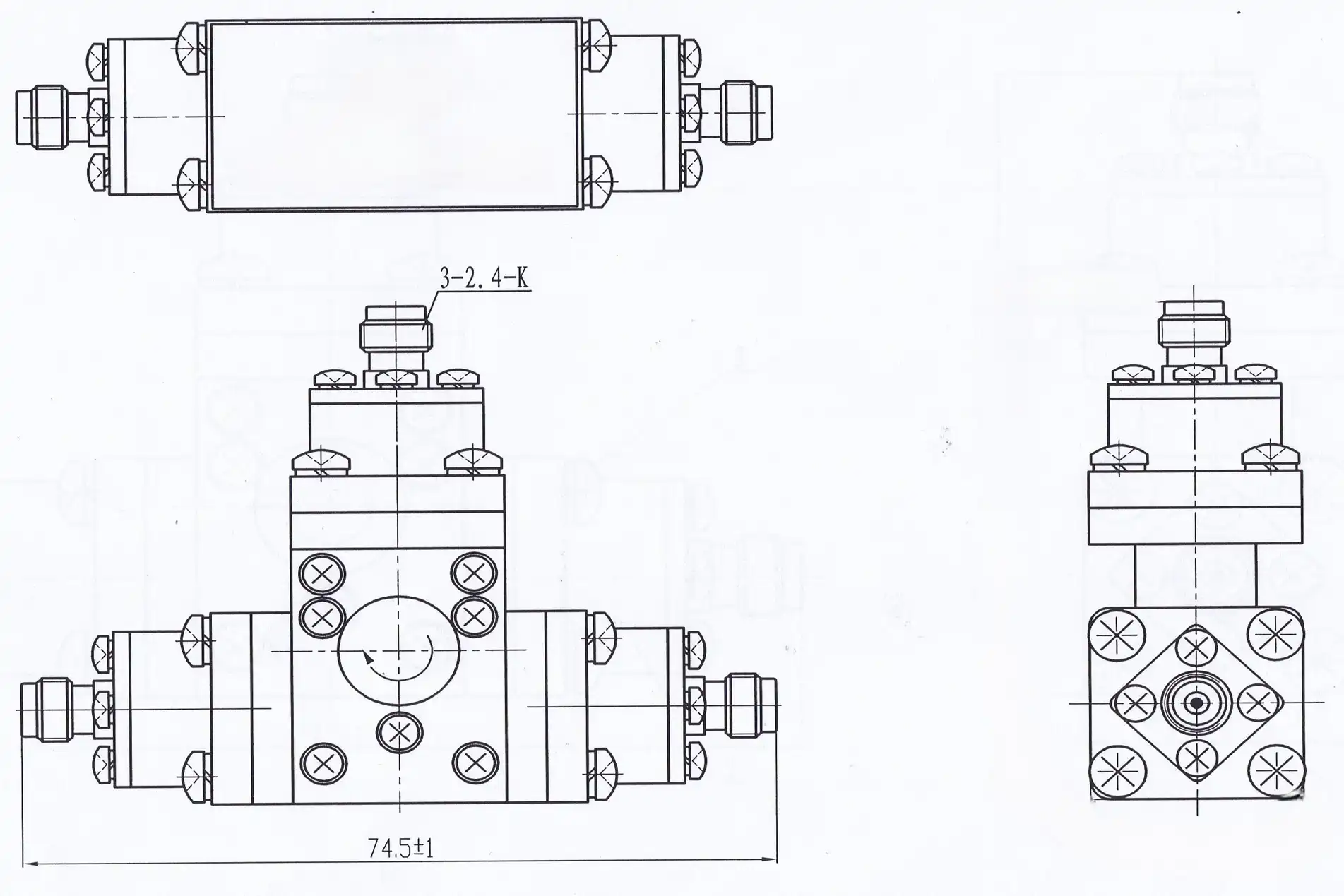
Cost Considerations and Negotiation Strategies
Broadband RF circulators have a wide range of prices that depend on their frequency range, power handling, and amount of customization. Standard cable units that cover frequencies between 2 and 18 GHz usually cost between $500 and $2,000 each. On the other hand, custom waveguide models for millimeter-wave bands (40 to 110 GHz) can cost more than $5,000 each. When you buy in bulk, you can get big savings. Buyers who commit to yearly amounts of 100 or more units can often get 20–30% off. When you sign a long-term partnership agreement that includes circulators with other RF parts like antennas and cable assemblies, you save more money and make logistics easier.
Compliance and International Standards
Paying attention to regulations is important when doing global buying. RoHS certification makes sure that gadgets follow the rules set by the European Union about dangerous substances, which is important for foreign markets. For controlled technology transfers, defense contractors must make sure that suppliers follow ITAR rules. AS9100 approval and tracking documents for all materials and production processes are needed for products that will be used in aircraft. By knowing these requirements ahead of time, you can avoid delays that cost a lot of money during qualification audits and customs clearance.
Future Trends and Innovations in Broadband RF Circulators
Materials Science Breakthroughs
Researchers working on temperature-compensated ferrite compounds are hoping to make circulators that work well at a wider range of temperatures. This will mean that space-based systems won't have to actively manage temperature as much. Thin-film magnetic circuits make it possible to make things smaller. Newer designs can reduce the volume by 30% compared to older cavity-based designs. For 5G small cells and IoT gateways, these small form factors are necessary to fit circulators into RF front-end modules that are packed closely together.
Integration with Smart RF Systems
A big change has happened with the combination of circulators and digital control interfaces. In the future, devices might have built-in sensors that check for insertion loss and separation in real time. This could set off repair alerts before performance drops below what was expected. Integration with Software-Defined Radio (SDR) platforms lets signal flow change on the fly based on spectrum reading, which makes the best use of cognitive radio networks' resources.
Market Growth and Supplier Ecosystem Evolution
According to market research, the broadband RF circulator market will grow at a rate of 7.2% per year until 2030. This is because 5G infrastructure will be put in place, satellite constellations will grow, and military electronic warfare systems will be updated. The landscape of suppliers is changing because of this growth. It is becoming easier for system integrators to do their jobs because traditional component sellers are now able to offer turnkey subsystems, which are pre-integrated circulator kits with matching antennas and low-noise amplifiers. Regional supply chains are becoming more diverse as companies in the US, Europe, and China invest in more advanced manufacturing facilities to keep up with rising demand and quality standards.
Conclusion
Broadband rf circulators are important parts of current RF systems because they provide better signal separation through non-reciprocal ferrite technology and precise magnetic circuit design. Because they can handle high power levels and keep a high level of separation over a wide frequency range (from DC to 110 GHz), they are perfect for mission-critical uses in defense, aerospace, satellite communications, and next-generation wireless networks. System integrators and procurement professionals can get big benefits from choosing suppliers with a track record of success, extensive customization options, and strict quality control procedures. Organizations can make smart sourcing choices that improve system performance and operational reliability by staying up to date on new trends, understanding technical specs, and doing thorough reviews of suppliers.
FAQ
What frequency ranges do broadband RF circulators typically cover?
Depending on the type of building, broadband RF circulators cover a wide range of frequency bands. For electronic warfare and wideband communication systems, coaxial designs usually cover frequencies between 2 and 18 GHz. Waveguide setups cover frequencies from 6 GHz to 110 GHz and are used for millimeter-wave tasks in satellite systems and car radar. For lab instruments and test tools, specialty types can work from DC (direct current) to 40 GHz. The exact range chosen depends on the architecture of the system and the needs of the target application.
How do you validate isolation effectiveness in a working system?
As part of validation, a Vector Network Analyzer (VNA) is used to measure S-parameters across the operating frequency band. These are S21 for insertion loss, S12 for isolation, and S11/S22 for return loss. Testing with Passive Intermodulation (PIM) makes sure that the circulator doesn't send out false messages when there are more than one channel. Thermal cycling and power stress tests show that the performance stays stable even in harsh environments. Isolation should be higher than 40 dB, and insertion loss should stay below 0.5 dB, which is what the datasheet says should happen.
Can circulators be customized for unique industrial applications?
Modern companies let you make a lot of changes, like using non-standard port configurations, special flanges for waveguide connections that aren't available anywhere else, and custom frequency bands that work with your own systems. Power handling needs can also be customized, and structures with better heat dissipation can be made with aluminum alloy or copper alloy cavities. Environmental protection, like IP67/IP68-rated casings, makes circulators suitable for use on offshore sites and in outdoor settings. Depending on how complicated the design is, the wait time for procurement for unique designs is usually between 6 and 12 weeks.
Partner with a Trusted Broadband RF Circulator Manufacturer
Industry-leading broadband RF circulator systems are provided by Advanced Microwave Technologies Co., Ltd. (ADM) to meet the needs of challenging business-to-business buyers. We work with defense companies, satellite communication providers, and OEM system developers all over the world. We have been making things for more than 20 years and are ISO 9001:2008 certified. We have products that work from DC to 110 GHz and have reverse isolation of ≥40 dB and insertion loss of ≤0.5 dB. All of our products have been tested thoroughly in our state-of-the-art 24m Microwave Darkroom. Our expert team can help you with fast prototyping, thorough datasheets, and timely engineering support, whether you need standard configurations or fully customized designs with specific power handling and environmental ratings. Get in touch with craig@admicrowave.com right away to talk about your signal isolation problems and get free samples that show why top aerospace and telecom companies choose ADM as their preferred RF component supplier.
References
1. Pozar, David M. Microwave Engineering, 4th Edition. John Wiley & Sons, 2012.
2. Linkhart, Douglas K. Microwave Circulator Design, 2nd Edition. Artech House, 2014.
3. IEEE Transactions on Microwave Theory and Techniques. "Broadband Ferrite Circulators for Multi-Octave Applications", Volume 68, Issue 5, May 2020.
4. Military Standard MIL-STD-202. "Test Methods for Electronic and Electrical Component Parts", U.S. Department of Defense, 2015.
5. International Organization for Standardization. "ISO 9001:2015 Quality Management Systems — Requirements", Geneva, Switzerland, 2015.
6. Helszajn, Joseph. The Stripline Circulator: Theory and Practice. Wiley-IEEE Press, 2008.