




Slotted Waveguide Array Antenna Applications in Defense Systems
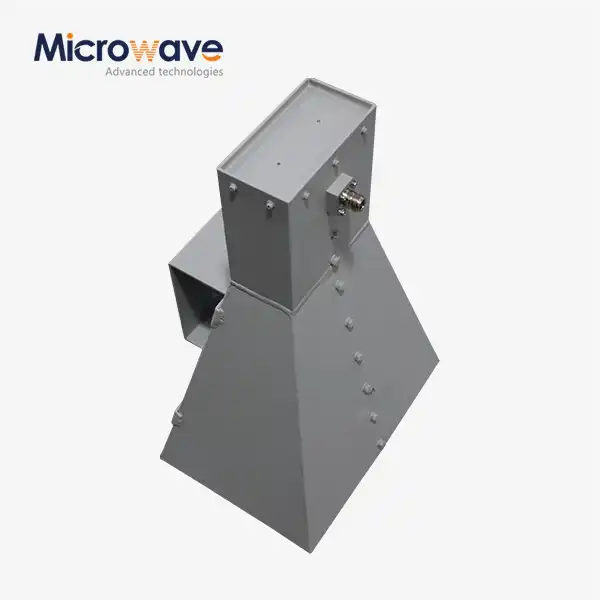
Defense contractors and aerospace system integrators increasingly rely on Slotted Waveguide Array Antennas to achieve mission-critical performance in radar, surveillance, and secure communications. These antennas combine exceptional power-handling capabilities, mechanical durability, and precise beam control within a low-profile, all-metal structure. Unlike microstrip arrays or horn antennas, the slotted waveguide architecture integrates the transmission line and radiating elements into a unified assembly, delivering superior electromagnetic efficiency while withstanding extreme operational conditions. Understanding the technical distinctions, application scenarios, and procurement strategies for these components empowers B2B buyers to make informed sourcing decisions that align with long-term defense program requirements.
Understanding Slotted Waveguide Array Antennas: Principles and Performance
Slotted Waveguide Array Antennas work by cutting slots of exact sizes into the wide or thin walls of a rectangular waveguide. As the guided wave moves along the frame, these slots work as magnetic dipoles and send out electromagnetic energy. The phase and amplitude spread across the aperture are set by the spacing, length, and offset angle of each slot. This affects the antenna's transmission pattern and direction.
Operating Principles and Key Design Parameters
The main benefit of this design is that it can keep feed network losses to a minimum. Dielectric losses that happen on printed circuit board surfaces are not there because the waveguide itself is both the transmission line and the radiating part. This trait is very important at higher frequencies like Ku-band (12–18 GHz), Ka-band (26.5–40 GHz), and W-band (75–110 GHz), where signal loss in microstrip lines can make the system work much less well. Slot shape and waveguide dimensions need to be carefully managed; small changes of 10 microns in slot length can change the resonance frequency and mess up phase alignment, which lowers the quality of the pattern. Surface finish on the inside is also important. A smooth surface with a low Ra value lowers resistance losses and stops high-power arcing, which is very important for radar uses that use peak power levels over a few kilowatts.
Radiation Patterns and Bandwidth Characteristics
Whether a Slotted Waveguide Array Antenna uses resonant or traveling-wave principles determines the pattern of waves it sends out. When you end a resonant array with a short circuit, you get a standing wave that sends power evenly across all the spots. They have better efficiency and lower sidelobe levels, which are usually kept at or below -30 dB with Taylor or Chebyshev weighting. However, their bandwidth is smaller—usually only 5–10% fractional bandwidth. When traveling-wave arrays are ended with a matching load, they cover a wider frequency range, but they cause beam squint, which is when the main beam direction changes as the frequency changes. In frequency-scanning radars, this feature can be used, but in fixed-target comms, it needs to be balanced out. Aperture efficiency is usually between 70% and 90%, which is better than many reflector designs and takes up much less space.
Advantages Over Patch, Microstrip, and Horn Antennas
Slotted Waveguide Array Antenna systems work better in high-power situations than patch and microstrip arrays. When the power level goes above a few hundred watts, the dielectric in microstrip antennas breaks down. But waveguide arrays can handle signals up to a few kilowatts without the substrate failing. The all-metal design also protects against lightning and static electricity, so complex lightning diverters are not needed on airplane surfaces that are exposed to lightning. Slotted arrays are better than horn antennas because they have a flat, low-profile shape that makes them perfect for conformal installation on the fuselages of airplanes, ships, or ground vehicles where radar cross-section and aerodynamic drag are important factors.
Core Applications of Slotted Waveguide Array Antennas in Defense Systems
Slotted Waveguide Array Antennas are the building blocks of many different types of defense technologies, from surveillance in the air to fire control on ships. Because they are strong and have a high gain, they are essential in places where dependability can't be ignored.
Airborne Radar and Synthetic Aperture Radar (SAR)
SAR systems are used by both unmanned aerial vehicles (UAVs) and manned reconnaissance aircraft to map the ground with great detail, find targets, and study the terrain. The antenna's flat shape reduces aerodynamic drag, which lets it be built into wing structures or belly fairings without affecting the plane's ability to fly. When the radar has high peak power handling, it can get through clouds, rain, and trees to get clear images even when the weather is bad. The narrow beamwidth—often less than 2 degrees—ensures accurate angular resolution, which lets you tell the difference between objects that are close together and keeps the background scenery from getting in the way.
Marine Navigation and Fire Control Radar
Slotted Waveguide Array Antennas are used as rotating bar antennas on commercial ships and military warships for navigation and surface search. The antenna has to be able to handle years of work in salt fog, hurricane-force winds, and constant mechanical spinning. The all-metal construction is much more resistant to damage from the environment than dielectric substrates, which break down over time when they absorb water. In crowded coastal areas, where echoes from land, sea, and many ships make the electromagnetic background more complicated, naval fire control systems need even tighter sidelobe control to avoid false target locks.
Electronic Warfare and Tactical Communications
Slotted Waveguide Array Antennas are used in electronic warfare devices to jam, capture, and find the path of signals. Attackers can't use secondary radiation patterns to find the emitter or receiver because the antenna can achieve very low sidelobes. The array's ability to adapt to different frequencies and its small size make it possible for secure data links between ground units, aircraft, and command centers. These networks include new 5G-enabled battlefield systems. The antenna is mechanically stable, so it works the same way even when it's being shaken or shaken up. It meets MIL-STD-810 standards for installation on ground vehicles and rotorcraft.
Real-World Case Studies
Top defense companies have successfully put Slotted Waveguide Array Antennas in platforms like the E-2D Advanced Hawkeye, which uses a rotating array for early warning from the air, and the AN/SPY-1 radar on destroyers with Aegis. It has been shown that this technology works well in mission-critical situations where failing is not a choice.
Comparing Slotted Waveguide Array Antennas with Alternative Technologies
To find the best technology for a job, procurement workers have to compare the pros and cons of Slotted Waveguide Array Antennas and other antenna designs.
Slotted Waveguide vs. Microstrip Arrays
Through photolithographic methods, microstrip arrangements can be made cheaply and with light materials. They work well for low-power defense uses and mass-produced consumer gadgets. Slotted Waveguide Array Antennas, on the other hand, are better at handling power, staying stable at high temperatures, and being able to handle harsh environments. At X-band and above, microstrip feed network losses are more than 1-2 dB, but waveguide losses stay below 0.3 dB. This means that radar range is increased and emitter power needs are decreased.
Slotted Waveguide vs. Horn and Parabolic Antennas
While horn antennas have great gain and bandwidth, they need a lot of depth, which means they can't be flush-mounted. Parabolic reflectors have a high gain, but they are more difficult to build, get damaged by wind, and have a smaller radar cross-section. Slotted Waveguide Array Antennas take advantage of both the high gain of reflectors and the low profile of microstrip to provide better electromagnetic performance while taking up very little space.
Scenario-Based Selection Guidance
Slotted Waveguide Array Antennas are best for platforms that are in the air because they help with aerodynamics and lightning protection. Traveling-wave designs are used by ground-based radars that need to be able to scan frequencies, while resonant arrays are preferred by shipboard systems for maximum efficiency and sidelobe suppression. Custom-engineered systems can combine these features by changing the size of the waveguides, the width between the slots, and the way the connections are made to fit specific use cases.
Procurement Considerations for B2B Defense Clients
To find slotted waveguide array antennas, you have to deal with complex manufacturing processes, the logistics of the supply chain, and strict quality control rules.
Custom Manufacturing and Engineering Support
Most Slotted Waveguide Array Antennas are custom-built because each defense application has specific needs when it comes to frequency band, gain, beamwidth, and polarization. Reliable providers offer fast prototyping services, making the first pieces in 4 to 6 weeks so that the design can be tested and confirmed. Engineering teams work with buyers to improve slot geometry, make sidelobes work better, and add mounting interfaces. Technical data packages should have detailed mechanical drawings, the results of electromagnetic simulations, and antenna patterns that were measured in an anechoic chamber.
Bulk Order Logistics and Lead Times
Defense-grade antennas usually take between 12 and 20 weeks to make, based on how many are needed and how complicated they are. Because of economies of scale, bulk sales lower the cost per unit by 15 to 30 percent compared to the price of a sample. High-purity aluminum metals, precision CNC cutting services, and silver plating methods can be quickly sourced by suppliers with established supply chains. RoHS compliance takes care of environmental rules for European and international contracts, while ISO 9001 certification makes sure that the process is always controlled the same way.
Quality Assurance and Testing Protocols
Dimensional metrology is used to make sure that slot tolerances are within 10 microns. Borescopes are used to check the inside of the part, and electrical tests are done in anechoic rooms. To find flaws in the manufacturing process, near-field cameras measure aperture field distribution and back-project mistakes. High-power multipaction testing shows that there is no voltage breakdown at working power levels, which is important for vacuum or high-altitude uses. Heating and cooling the metal from -40°C to +85°C proves that it doesn't change the center frequency.
Identifying Credible Suppliers
Advanced Microwave Technologies Co., Ltd is a good example of the skills needed to buy things for the defense industry. ADM provides mission-critical parts to the aerospace, military, and satellite communication industries. They have more than 20 years of experience, are ISO 9001:2008 certified, and have a 24-meter anechoic chamber that can handle measurements up to 110 GHz. Our technical team helps with both rapid prototyping and mass production, making sure that each Slotted Waveguide Array Antenna meets strict requirements for both electrical and mechanical design.
Future Trends and Innovations in Defense Antenna Systems
New technologies are changing how Slotted Waveguide Array Antennas are made and how they are used, which gives the defense new options.
AI-Driven Beam Steering and Adaptive Nulling
In order to improve beam patterns in real time and react to changing threat settings and clutter conditions, machine learning techniques are being added to radar processing chains. In the future, Slotted Waveguide Array Antennas might have elements that can be tuned or feeds that can be rearranged. This would let the sidelobe levels and null placement be changed dynamically without using mechanical steering.
5G and 6G Integration
Antennas that work with millimeter-wave frequencies, very low latency, and massive MIMO architectures are needed for next-generation tactical networks. Slotted Waveguide Array Antennas made at Ka-band and higher frequencies have the bandwidth and directionality needed for battlefield data links that can handle multiple gigabits of data. This allows for real-time video streaming, sensor fusion, and self-coordinating systems.
Enhanced Environmental Resilience
New materials science discoveries, like corrosion-resistant metals, nanocoatings, and hermetic sealing methods, make antennas last longer in harsh settings. Pressurized waveguide designs that are filled with SF6 gas or dry air stop electrical arcing at high levels and allow even more power to be used.
Strategic Implications for Global Procurement
Because of these new ideas, there is a greater need for providers who can make changes quickly, use advanced modeling tools, and work closely with main contractors. B2B buyers should look at a potential partner's research and development (R&D) skills, testing infrastructure, and history of getting next-generation parts to customers quickly.
Conclusion
Slotted Waveguide Array Antennas are still an important part of defense electronics because they handle power very well, are strong mechanically, and work well with electromagnetic fields in mission-critical situations. Because they can easily be added to platforms in the air, on ships, or on the ground, they are essential for radar, electronic warfare, and secure communications. B2B buyers can easily choose suppliers and define parts that meet strict defense standards if they understand the technical principles, use cases, and best practices for procurement explained in this book. As new technologies keep pushing the limits of RF performance, working with seasoned makers guarantees access to cutting-edge options that give you a competitive edge.
FAQ
What are the primary advantages of slotted waveguide array antennas in defense applications?
Slotted Waveguide Array Antennas are great at handling high power; they can often handle signals in the kilowatt class without dielectric breakdown risks. Their all-metal construction protects against lightning better, stands up to harsh environments better, and stays stable under shock and vibration. Low feed network losses at high frequencies make the radar range better and lower the power needed by the emitter. Ultra-low sidelobe levels make it easier to tell the difference between targets in crowded areas, and the flat profile lowers radar cross-section on naval ships and minimizes aerodynamic drag on airplanes.
How do resonant and traveling-wave slotted waveguide arrays differ?
When a short circuit is used to end a resonant Slotted Waveguide Array Antenna, it creates standing waves that send power evenly across all spots. They work over a smaller bandwidth (5–10%) but are more efficient and have fewer sidelobes. When traveling-wave arrays are terminated with a matched load, they allow a wider bandwidth, but they show beam squint, which means that the main beam angle changes as the frequency changes. For fixed-frequency radar and communications, resonant designs work well, and traveling-wave setups let frequency-scanning radar work.
What should procurement professionals consider when selecting a supplier?
Based on custom engineering help, prototyping speed, and production wait times, you should compare providers. RoHS compliance and ISO 9001 approval show that quality control is always in place and rules are followed. Electrical performance can be checked by using anechoic rooms for both near-field and far-field tests. To make sure that the specifications meet the needs of the program, ask for technical data packages that include simulation results, measured Slotted Waveguide Array Antenna patterns, and detailed mechanical drawings.
Partner with ADM for High-Performance Slotted Waveguide Array Antenna Solutions
Advanced Microwave Technologies Co., Ltd is ready to help with your next defense project by making custom Slotted Waveguide Array Antennas that meet your exact needs. With ISO 9001:2008 approval and a state-of-the-art 24-meter anechoic chamber, our experienced team can do fast prototyping, large-scale production, and full technical support. ADM gives your project the accuracy, dependability, and top-notch service it needs, whether it needs very low sidelobes for fire control radar, high-power handling for SAR systems, or conformal integration for UAV platforms. You can talk to our procurement experts at craig@admicrowave.com about your needs, ask for datasheets, or get a price from a reputable manufacturer.
References
1. Balanis, Constantine A. Antenna Theory: Analysis and Design, 4th Edition. Wiley, 2016.
2. Elliott, Robert S. Antenna Theory and Design, Revised Edition. IEEE Press, 2003.
3. Skolnik, Merrill I. Radar Handbook, 3rd Edition. McGraw-Hill Education, 2008.
4. Mailloux, Robert J. Phased Array Antenna Handbook, 3rd Edition. Artech House, 2017.
5. Pozar, David M. Microwave Engineering, 4th Edition. Wiley, 2011.
6. Stimson, George W. Introduction to Airborne Radar, 3rd Edition. SciTech Publishing, 2014.

_1733809032116.webp)