




How a Phase Shifter Enhances Signal Processing Efficiency
A digital phase shifter changes the way signals are processed by using logic-driven switching processes to give exact, repeatable control over signal phase angles. A digitally controlled phase shifter uses discrete phase states that are controlled by TTL or CMOS logic inputs instead of a constant voltage setting that can be affected by drift and noise in the environment. In mission-critical settings like phased array radar, 5G beamforming networks, and satellite ground stations, this design removes the need for human tuning and provides response times in the microsecond range. The result is a more reliable system with better signal integrity and easier inclusion into automatic RF circuits that must work consistently even when temperatures are very high or very low.
Understanding Digital Phase Shifters and Their Role in Signal Processing
The way RF and microwave devices change the phase of signals has changed a lot with digital phase shifters. At their core, these parts turn digital orders into precise phase changes. This lets engineers steer beams, sync signals, and find the best transmission lines with a level of accuracy that has never been seen before. Instead of variable capacitors or varactor diodes that are used in analogue designs, the architecture uses switching delay lines, high-pass/low-pass networks, or vector modulators that are handled digitally. This change fixes important problems with regularity and stability that have been present in older methods for a long time.
Operating Principles of Digitally Controlled Phase Shifters
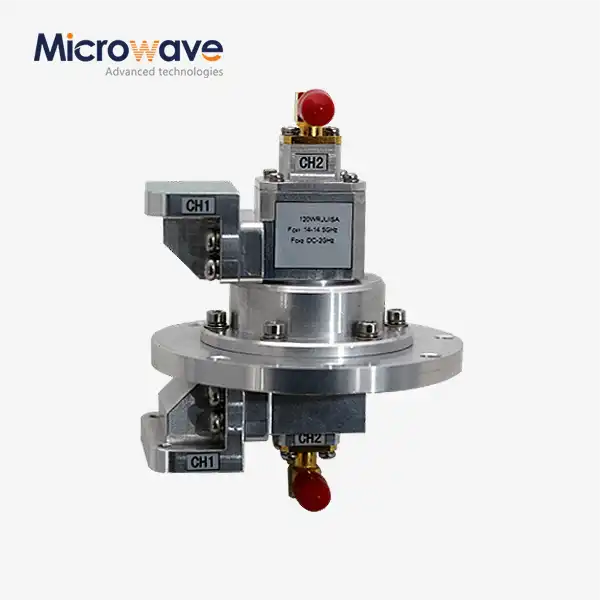
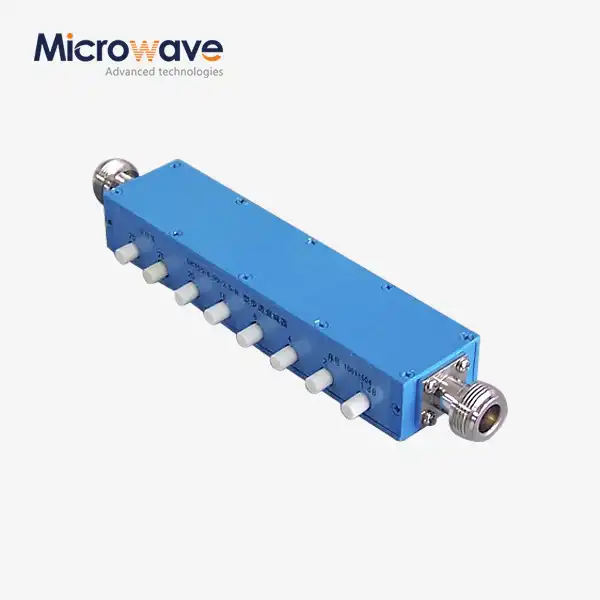
Digitally controlled phase shifters transition between transmission lines with differing power lengths. The military and telecom employ 6-bit devices with 64 phase states and 5.625 degrees of accuracy. Binary input signals from the logic interface activate GaAs FETs or PIN diodes. Switches deliver RF signals over delay lines. Time-division duplex systems and frequency-hopping radar may fast shift beams between 20 and 500 nanoseconds.
Precision sets bit resolution, which influences phase control detail. Higher bit counts reduce quantisation error, which causes unwanted sidelobes in phased array antennas. Basic directed antennas can use a 4-bit shifter's 22.5-degree increments. To track rapid objects over many horizontal angles, high-performance AESA radar needs 8-bit devices with 1.4-degree increments.
Practical benefits exceed accuracy. Since they don't use analogue voltage, these parts withstand electromagnetic interference and temperature-induced drift. Vector Network Analysers test operating bandwidth phase flatness. Military and aerospace component dependability requirements like MIL-STD-883 require RMS phase errors to be within 2 to 5 degrees.
Architectural Variations and Technology Platforms
Unique phase changer designs are needed for different purposes. Broadband applications that span octaves benefit from switched-line systems. Signals travel via physically separate transmission cables to alter phase. Quadrature hybrid and varactor reflective designs are compact and straightforward to add to multi-chip systems. Vector modulators divide the signal into in-phase and quadrature parts and digitally adjust the amplitude vectors to achieve phase. Each design includes trade-offs for insertion loss, power management, and frequency coverage that buying teams must assess against system needs.
Identifying and Breaking Performance Bottlenecks in Signal Processing with Digital Phase Shifters
Traditional analogue phase shifters have a lot of restrictions that make the system work less well generally. Voltage-controlled devices have phase-versus-voltage relationships that are not linear, which means they need complicated reference tables and constant tuning. Thermal drift changes phase states by several degrees over a wide range of operating temperatures. This makes beam accuracy worse when used outside. Even though mechanical phase shifters can handle a lot of power, they have slow reaction times (in milliseconds) and wear mechanisms that shorten their useful life. Digital phase shifters get rid of these problems by operating in a stable way that can be controlled by software.
Performance Metrics Driving Efficiency Gains
Variations in insertion loss are a quality indicator. Analogue circuits commonly modulate amplitude during phase state transitions, adding undesired gain waves that degrade modulation. To ensure coherent transmission patterns and synthetic aperture radar imaging, digital designs must maintain insertion loss regularity within 0.5 dB throughout all states. This stabilises signal amplitude.
Stable temperature promotes operating consistency in numerous weather situations. By altering temperatures from -55°C to +85°C, parts demonstrate phase stability within specifications. No warming cages or active temperature changes are needed. Defence systems used in hostile settings like the cold or desert, and aeroplanes operated at high altitudes, need this reliability.
System size may be reduced by integration density. Smaller than 10 square millimetres can fit multi-bit digital phase shifters using contemporary semiconductor technology. This allows massive MIMO antenna arrays with thousands of phase-controlled components. Due to weight and volume constraints, unmanned aerial vehicles and satellite packages benefit from this system's smaller size.
Case studies from flying businesses demonstrate the effects. After upgrading the AESA radar from analogue to digital phase shifters, beam aiming errors dropped by 40%, and the average duration between failures increased from 15,000 to 35,000 hours. 5G base stations with digital beamforming have 25% higher spectrum efficiency and 18% lower power utilisation than analogue beam guiding systems.
Best Practices for System Integration
Control interface design and RF signal handling must be considered for successful implementation. FPGA-based controls time phase state changes with transmit/receive cycles. Good grounding and insulation prevent digital switching transients from entering critical RF circuits. Software calibration fixes phase errors across frequency bands by storing correction factors in non-volatile memory. Procurement criteria should require thorough S-parameter analysis in all bit states and external conditions to meet performance gaps.
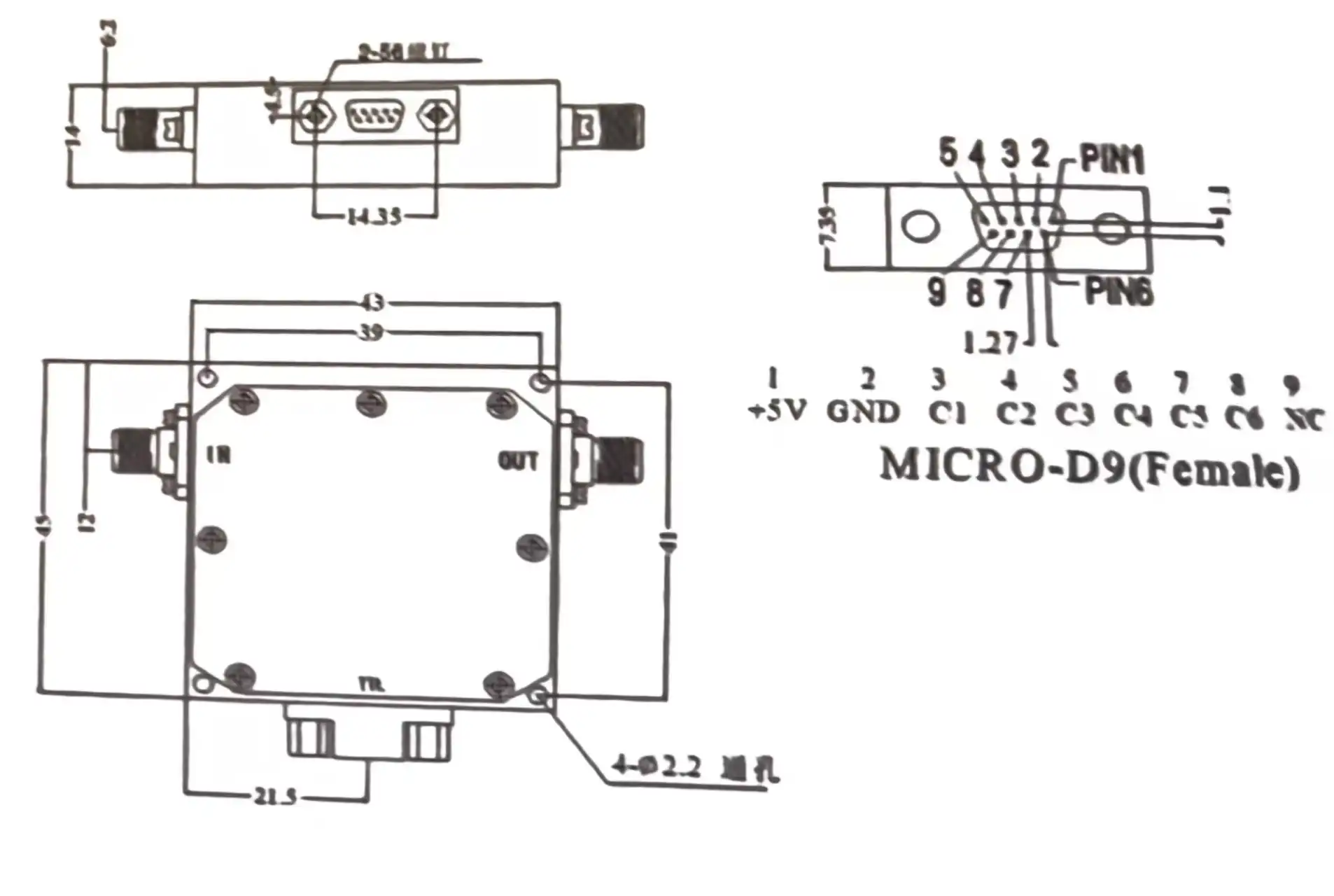
Comparison and Selection Guide: Digital vs Analogue and Mechanical Phase Shifters
Understanding the performance trade-offs between digital phase shifter systems is key to making choices about what to buy. Based on data needs, switching speed, power handling ability, and cost, each group fills a different set of application niches. The selection grid starts by listing system-level requirements, such as frequency range, maximum RF power, needed phase resolution, and working conditions in different environments. It then matches these needs with technology platforms that are currently available.
Technology Comparison Matrix
Digital phase shifters work great in situations where high accuracy and quick changes are needed. They don't need digital-to-analogue converters because they work straight with digital operating systems. Typical specs include frequency coverage from 0.5 to 50 GHz, power handling up to 20 dBm, and phase precision between 4 and 8 bits. Cost structures encourage mass production, which makes them affordable for uses that need hundreds or thousands of units, like phased array antennas.
Analogue phase shifters can be tuned continuously, which is useful for lab equipment and other uses that need to make very small phase changes. Voltage-controlled designs make phase curves that are smooth and don't have clear step changes. But they need bias sources that are stable and temperature correction circuits. Premium ferrite-based designs can handle up to 30 dBm of RF power, making them good for high-power transmitter uses where digital solid-state switches would overload.
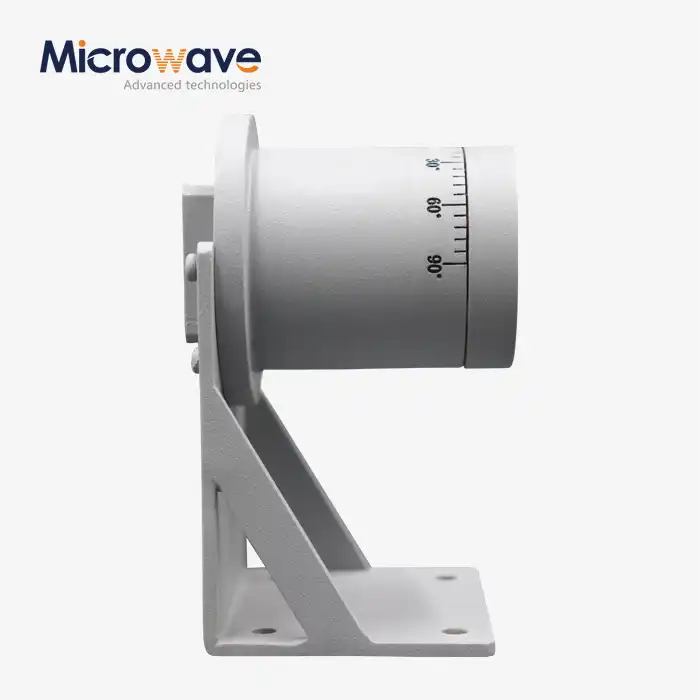
Mechanical phase shifters physically rotate dielectric blocks or trombone line extensions to change the length of an electrical path. They can handle RF power up to kilowatts and have insertion loss well below 0.2 dB. The trade-off is short response times (milliseconds) and short service life due to motor wear. These gadgets are useful in radar systems on the ground and satellite earth stations, where handling power is more important than switching speed.
Different types of customers are targeted by major makers. Mini-Circuits sells inexpensive digital phase shifters that are designed to work best with business telecommunications. These shifters have built-in driver circuits that make system design easier. With IP3 standards above +40 dBm, Analogue Devices offers high-linearity options for military uses. MACOM focuses on making high-frequency millimetre-wave products for the 5G infrastructure and car radar businesses, which are both growing. Keysight makes precise lab-grade tools that have phase accuracy that can be traced back to national standards.
Decision Framework for B2B Procurement
The factors for evaluation must weigh the total cost of ownership against the technical performance. Digital solutions make systems simpler by getting rid of analogue control circuits and the work needed to calibrate them. This cuts integration costs by 30 to 50 per cent compared to analogue methods. Some things to think about during the lifecycle are failure rates, which are usually given as FIT scores, and the ability to get drop-in replacements from more than one provider so that you don't have to rely on a single source. Before committing to production amounts, procurement teams should ask for phase shifter evaluation kits that can be tested on a bench in real-world working circumstances.
Practical Applications of Digital Phase Shifters in Modern Signal Processing
The adaptability of digital phase shifters makes it possible to make significant advancements in military systems, scientific instruments, and internet infrastructure. When buying, teams know about these uses, they can make sure that the parts they choose meet the needs of the end use and plan for merging problems that are unique to each sector.
Mission-Critical Use Cases
Telecommunications networks leverage digital beamforming for 5G huge MIMO base stations. Arrays of 64 to 256 antenna elements, each controlled by its own phase shifter, change the radiation patterns on the fly to make signals stronger at particular user equipment places while blocking out interference. By letting more people use the same frequency band at the same time, this spatial multiplexing makes the network more capable. This leads to faster data transfer in crowded cities where standard methods are limited by a lack of spectrum.
Defence radar systems employ thousands of digital phase shifters to watch hundreds of objects at the same time. AESA systems can shift beams in microseconds, while mechanical antennas take seconds to spin. This lets them track hypersonic missiles and coordinate multiple functions from a single opening, such as search, track, and fire control. Solid-state digital control is very reliable, so there are no mechanical failure modes. This makes the system available more than 99.5 per cent of the time.
Satellite communication terminals on mobile platforms like planes, boats, and cars use digital phase shifter arrays to keep the signal locked while moving. When the platform's direction changes, inertial measurement units notice it and make phase adjustments that point the antenna beam at geostationary or low-Earth orbit satellites. This technology lets people connect to the internet over a wide area network and lets defence troops communicate while they're not connected to a land network.
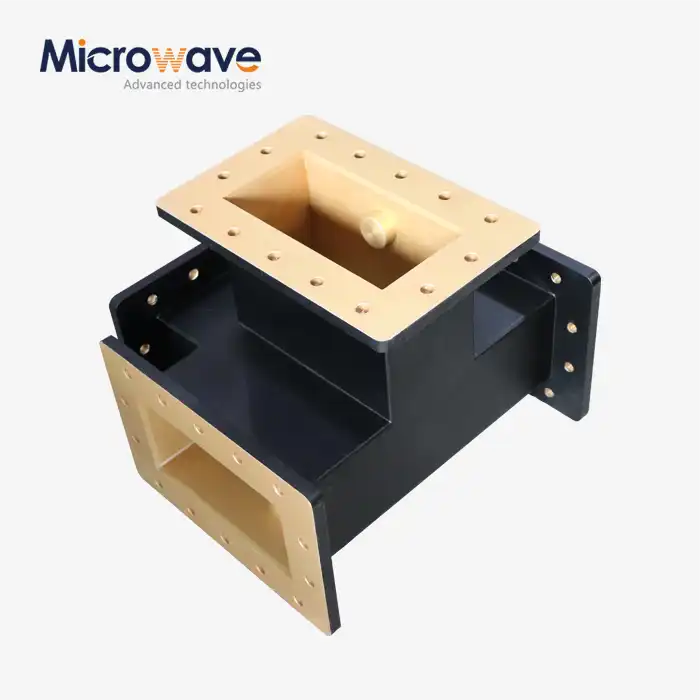
Our X-Band Feed Network products with precise phase control have been used in several different situations. Angular precision of air traffic control radars is less than 0.3 degrees, which is very important for safely handling airspace with a lot of planes. Our 24-meter microwave lab, which covers frequencies from 0.5 GHz to 110 GHz, tests our satellite ground station feed networks to make sure they support low-loss signal transfer for high-definition video sharing and data backup across international links.
Supply Chain and Procurement Considerations
To be a good shopper, you need to know about maker wait times. These can be anywhere from 8 weeks for normal stock items to 16 weeks for custom frequency bands or package setups. As low as one unit is needed for testing, and as high as fifty trays are needed for production. Most warranties last for 12 months, but longer terms are offered for important uses. By building ties with approved wholesalers, you can get expert help and faster shipping when your project needs it right away. Specifications for buying things should require proof of agreement paperwork that includes S-parameter test data that can be linked to standardised measuring standards.
Future Trends and Innovation in Digital Phase Shifter Technology
The progress made in digital phase shifters is in line with larger trends in digitalising RF systems and improving semiconductor processes. New technologies offer better performance, lower prices, and more ways to use them. Procurement teams that are thinking ahead should keep an eye on these technologies to stay competitive.
Technology Evolution Drivers
RF front-end integration integrates phase shifting, amplification, switching, and analogue-to-digital conversion on a chip. System-on-chip designs eliminate separate interconnects, saving parts, board space, and assembly costs and increasing stability. These integrated devices target high-volume markets like vehicle radar, where cost-cutting means shrinking without sacrificing performance.
Phase switch tuning and beam direction are improved using AI. Machine learning models adjust phase states based on environment, signal quality, and user distribution patterns, speeding up and saving power. Edge devices can function independently with a millisecond delay for real-time apps, thanks to this information from central baseband processors.
Gallium nitride and silicon germanium enable millimetre-wave bands exceeding 100 GHz. For next-generation satellite systems at Ka-band and higher frequencies, these materials simplify power handling and predictability. The improvement allows smaller antenna apertures to attain the same gain, reducing satellite launch mass.
Working relationships between component vendors and system designers are shifting. OEM relationship programs allow phase shifters to fit certain system configurations. These designs might feature application-specific packaging and control interfaces. Co-development agreements allow organisations to exchange technical resources, speeding up product development and reducing development risk. Buying teams gain early access to emerging technologies and can influence product planning to accomplish long-term strategic goals.
Strategic Procurement Planning
Companies that are planning for future needs should look at their sources based on how much they spend on technology and how easily they can make more products. Companies that run modern chip manufacturing sites show that they can handle large-scale production as apps get better. Clear technology plans for the next three to five years make it possible for component supply to match product development processes. Diversifying your relationships with suppliers across multiple regions lowers the risks in your supply chain and encourages fair prices through controlled competition.
Conclusion
Digital phase shifters have completely changed how efficiently signal processing works by allowing exact digital control, higher dependability, and smooth integration. Defence, aircraft, telecommunications, and research procurement teams can make better decisions when they know about performance trade-offs, application needs, and new technology trends. When you switch from analogue to digitally controlled designs, the correctness of the system, its availability for operations, and its lifecycle costs all get better. By building strategic ties with suppliers and keeping an eye on new technologies, businesses can take advantage of the innovations that will power the next generation of RF and microwave systems.
FAQ
Q1: What factors should influence choosing between digital and analogue phase shifters?
The choice is based on the requirements for the application. Digital phase shifters are better for phased arrays and automatic test tools because they are more consistent, switch faster, and are easier to connect to digital control systems. Continuous phase setting is available on analogue devices, which is useful for apps that need smooth changes or lab equipment that can't handle step quantisation. The requirements for power handling, frequency range, and weather safety must match the situations under which the system is used.
Q2: How does digital precision tangibly enhance signal processing efficiency?
In beam steering applications, digital accuracy gets rid of phase drift and quantisation error, which directly raises antenna gain and lowers sidelobe levels. Signal coherence in communication lines is kept up by accurate phase across a wide range of temperatures. This lowers the number of bit errors. By getting rid of the need for human calibration, system startup time is cut by 60%, and forecast maintenance plans can be made based on measurable performance measures instead of subjective field changes.
Q3: Where can procurement teams obtain datasheets and evaluation samples?
Reliable makers have websites and approved sales partners that have a lot of detailed information. To do lab testing, you can ask for evaluation kits that come with mounting devices, control boards, and application notes. ADM has long-term ties with top component sources and can help you get samples while also giving you advice on how to integrate them based on its 20 years of experience with microwave systems. Getting sources involved early in the planning process ensures that the supply of parts fits with the schedule for the project.
Partner with ADM for Advanced Phase Shifting Solutions
ADM is an expert at providing high-precision RF and microwave parts, such as custom feed networks with digital phase shifter technology that are made to fit your needs. The engineers on our team have worked with satellite communications, military radar, and aircraft navigation systems for more than 20 years and use quality methods that are ISO 9001:2015 certified. In our 24-meter microwave lab, which can handle frequencies up to 110 GHz, we keep up-to-date measuring tools to make sure that every assembly meets strict performance standards before it is sent out.
Our skilled team can help you with everything from development for next-generation phased arrays to mass production of approved parts with full tracking paperwork. They will also give you expert advice during the sourcing and integration steps. Email craig@admicrowave.com to talk to our experts about your digital phase shifter needs. We offer reasonable prices for large orders, faster production times, and full after-sales support to make sure the success of your project from the initial design to launch.
References
1. Hansen, Robert C. Phased Array Antennas, Second Edition. John Wiley & Sons, 2009.
2. Skolnik, Merrill I. Introduction to Radar Systems, Third Edition. McGraw-Hill Education, 2001.
3. Pozar, David M. Microwave Engineering, Fourth Edition. John Wiley & Sons, 2011.
4. Mailloux, Robert J. Phased Array Antenna Handbook, Third Edition. Artech House, 2017.
5. Frank Ellinger. Radio Frequency Integrated Circuits and Technologies, Second Edition. 2008 Springer.
6. IEEE Microwave Theory and Techniques Society. "Special Issue on Active Electronically Scanned Arrays." IEEE Transactions on Microwave Theory and Techniques, Volume 64, Issue 6, June 2016.