




Best Waveguide Transition Types for Automotive Assembly Workshop
Waveguide Transitions became essential passive microwave devices for vehicle assembly factories' precision RF testing and signal integrity. These pieces enable rectangular waveguides, coaxial cables, and flat microstrip circuits to connect with minimum signal bounce and insertion loss. Car radar testing, 77 GHz collision avoidance system calibration, and V2X transmission validation stations require the right Waveguide Transition. It impacts measurement precision, manufacturing speed, and equipment reliability. Modern auto manufacturing increasingly uses millimeter-wave technology from the X to W bands. Transitions can correct crucial impedance mismatches, maintain electromagnetic mode purity, and make mechanical communication between large test equipment and tiny vehicle modules easier when properly built. Leading companies like Advanced Microwave Technologies Co., Ltd. provide unique solutions with ISO 9001 certification and over 20 years of RF engineering experience. Procurement teams receive parts that fulfill high-quality automobile criteria.
Understanding Waveguide Transitions in Automotive Assembly
Waveguide Transitions act as electromagnetic impedance transformers, connecting different types of transmission media with carefully designed shapes. When used in car production settings, these parts solve basic problems that come up with managing high-frequency signals.
Electromagnetic Principles Applied to Automotive Testing
At frequencies exceeding 10 GHz, used in radar and automobile ADAS, conventional coaxial cables lose dielectric and radiation. Rectangular waveguides can carry greater power and have less attenuation, but they need unique transitions for flexible coaxial test lines or flat circuit boards. Well-designed Waveguide-to-Coaxial Transitions employ probe coupling or ridge structures to match the waveguide's 300–500 Ohm impedance to the 50-Ohm coaxial system. This matching of impedances decreases the voltage standing wave ratio (VSWR), preventing damaging reflections that might damage sensitive signal generators or radar cross-section measurements.
Common Transition Types in Production Lines
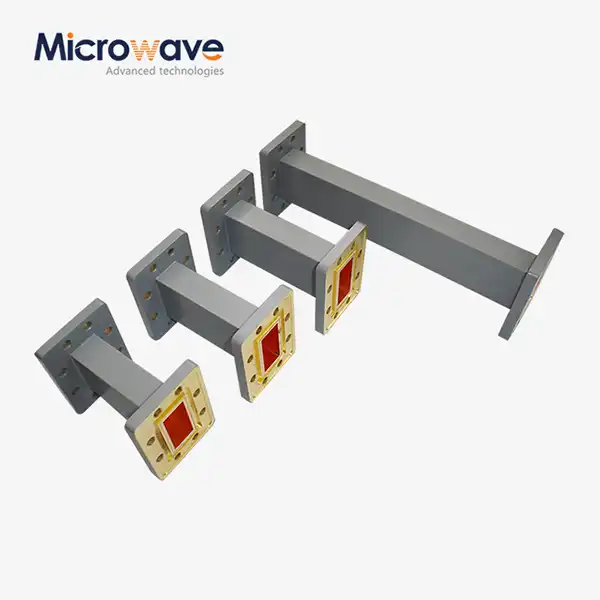
Auto shops employ several Waveguide Transition designs. Waveguide-to-Coaxial Transitions connect vector network analyzers to waveguide-based antenna feed systems for radiation pattern assessment. Radar control units' hollow metal guides and monolithic microwave integrated circuits (MMICs) communicate directly via waveguide-to-microstrip transitions. Mixing waveguide sizes like WR-90 and WR-62 is possible using flange fittings. Test benches can be rearranged when automobile platforms change. Each design makes parts as sturdy as feasible to withstand assembly vibrations and maintain phase stability when temperature changes.
Design Factors for Automotive Environments
Material selection is crucial for heat cycling, EMI, and mechanically shock-exposed cars. Waveguides are usually made of brass or aluminum due to their superior conductivity-to-weight ratios. Gold or silver plating reduces surface resistivity and corrosion. Frequency band standard impacts part size. Ku-band transitions (12–18 GHz) needed for satellite navigation testing may be combined on a bench, whereas X-band components (8–12 GHz) require larger facilities. Dielectric materials in coaxial sections, such as PTFE or low-loss ceramics, must exhibit constant permittivity over the automotive application temperature range of -40°C to +85°C for consistent performance during annual manufacturing cycles.
Lower measurement errors, faster testing, and fewer signal integrity issues result from employing the correct Waveguide Transitions. These components prevent mode conversion and higher-order propagation from disrupting radar return signals or transmission patterns during testing. It's easy to integrate, so manufacturing lines move between car kinds with various RF designs faster. This impacts product efficiency and accuracy.
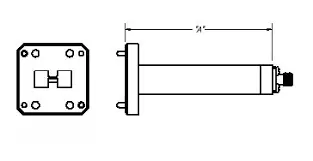
Top 5 Waveguide Transition Types Ideal for Automotive Assembly Workshops
Choosing the best Waveguide Transition type relies on the needs of the production line, the frequency ranges, and the integration limits. Here are the main types of transitions that have been shown to work in car production:
Waveguide-to-Coaxial Transitions
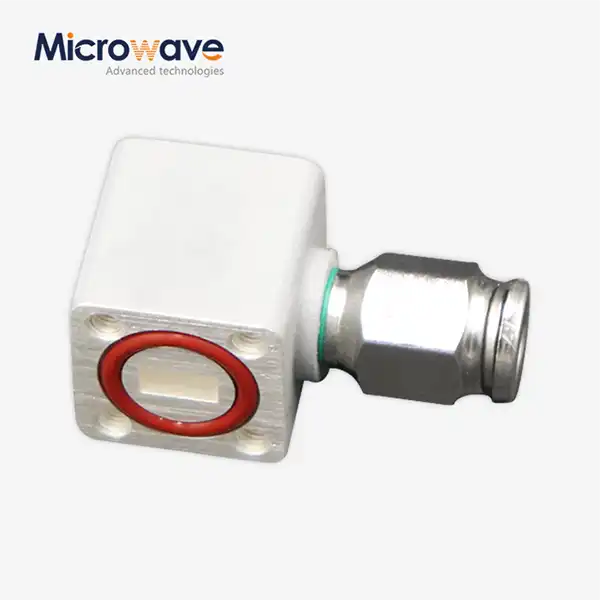
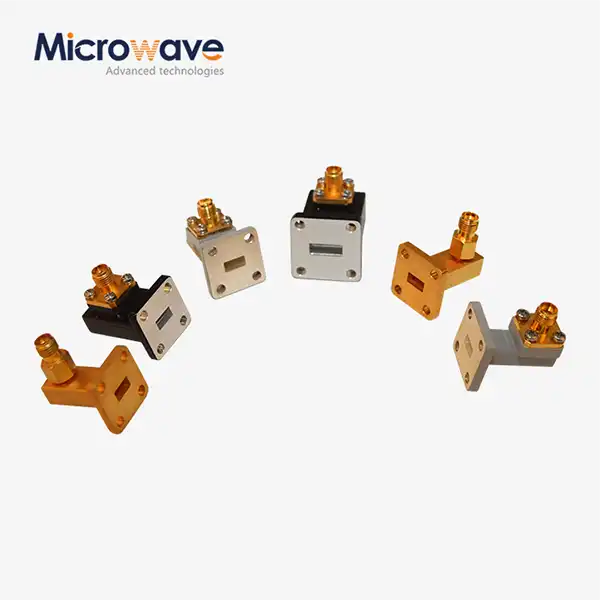
These adapters link rectangular waveguides to coaxial test cables. This connects permanent waveguide test equipment and portable measuring instruments in various ways. A centre probe or loop antenna in the waveguide's E-field maximum activates the coaxial wire's TEM mode and inhibits undesired resonances. Techs employ these transitions to deliver 77 GHz signals from precision waveform generators to anechoic chamber antennas in automobile radar calibration stations without affecting phase noise standards. When changing test sets, its SMA, 2.92mm, or 1.85mm threaded coaxial connections make it easy to disengage. Downtime between manufacturing runs is reduced.
Rectangular-to-Circular Waveguide Adapters
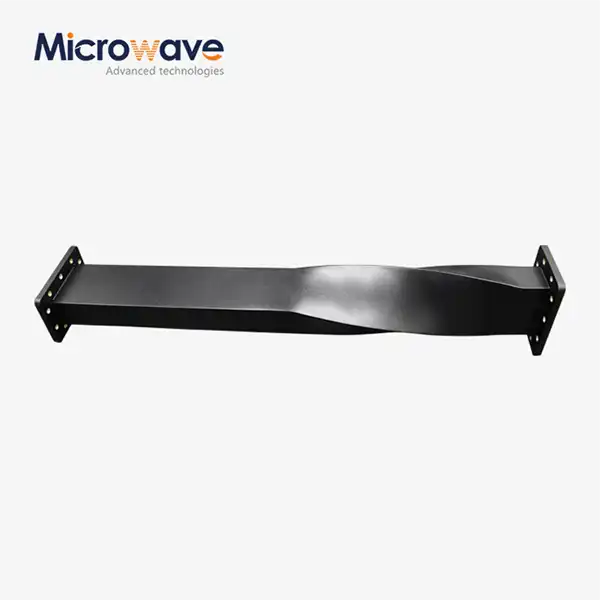
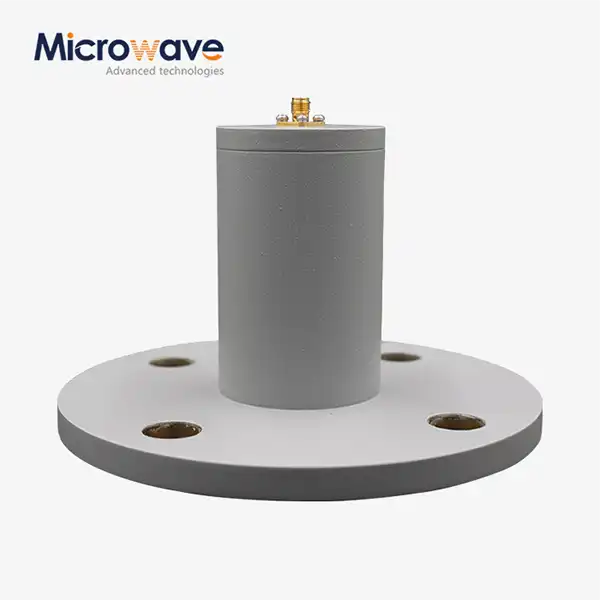
Polarization symmetry makes circular waveguides ideal for testing feedhorns and spinning antennas. When converting from rectangular to circular cross-sections, moderate taper sections or mode-matching irises retain the main TE11 or TE10 modes and reduce the undesirable TE21 or TM01 modes. Automotive satellite communication ground stations utilize these adapters to separate multi-polarization signals above 30 dB while validating vehicle-mounted devices for connected car services. Due to their mechanical simplicity, smooth-walled tapers are more dependable when used continually. A major benefit of high-throughput assembly lines.
Waveguide-to-Microstrip Transitions
Small planar transitions bridge bulk waveguide test instruments and PCB microstrip-based radar modules. Microstrip probes couple energy through aperture holes or ridged features in the waveguide chamber. These transitions allow MMIC amplifiers and mixers to be measured in-line without removing them from production boards in automobile test jigs due to limited vertical space. Test points are frequently less than 15 mm high, so they fit into automatic inspection stations, speeding up quality monitoring.
Stepped Impedance Flange Transitions
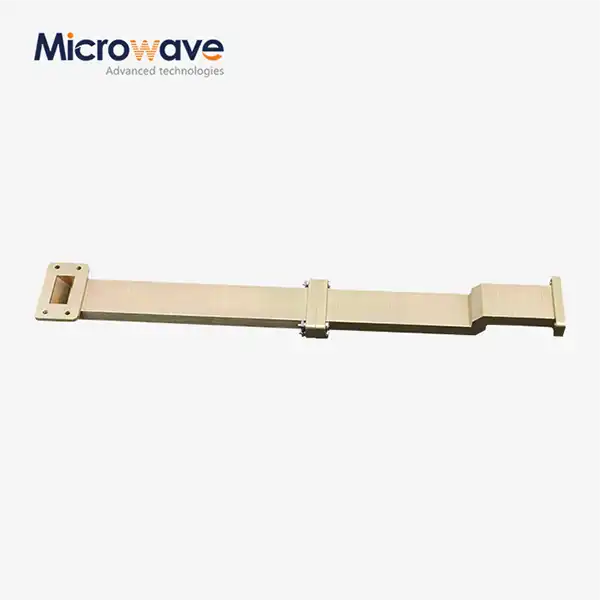
Stepped transitions link waveguides with different flange standards, such as CPR to UG, using multi-section impedance transformers based on Chebyshev or Binomial matching networks. Over several quarter-wavelength sections, these designs vary in resistance. This helps them perform effectively with VSWR sub 1.2:1 across several bandwidths. Auto shops that carry adapters that link European, American, and Asian flange standards are more efficient when dealing with foreign automobile platforms since they don't need extra test equipment when manufacturing lines switch regional standards.
Custom Tailored Transitions for Specialized Challenges
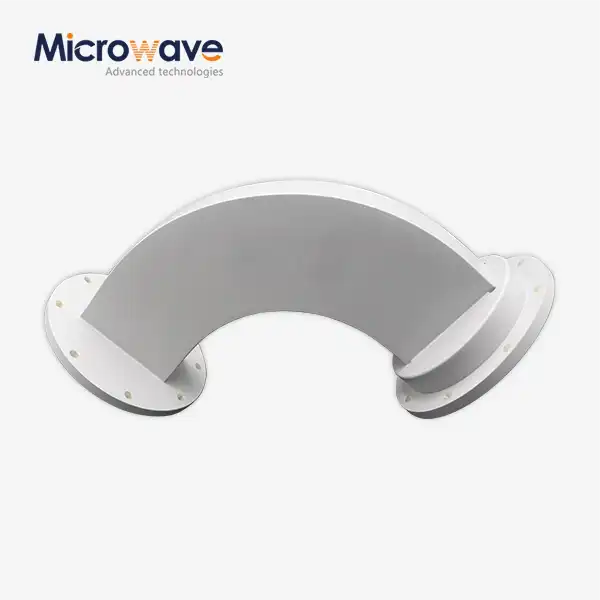
With physical constraints or high-performance demands, off-the-shelf parts may not work. Custom transitions might have right-angle bends, bias tees for active device testing, or hermetic environmental room coverings. When standard components don't suit automobile clients' size or frequency response criteria, Advanced Microwave Technologies Co., Ltd. provides OEM solutions. The electromagnetic simulation of these bespoke designs is done using FEA techniques. The parts are subsequently tested in our 24-meter microwave darkroom, which can reach 110 GHz, to ensure high automobile certification criteria.
Procurement teams may combine transition capabilities with practical objectives like maximum power handling for high-power radar testing or low insertion loss for sensitive receiver characterisation using this wide variety of devices. The systematic approach to component selection maximizes capital equipment return and ensures assembly lines can manage future RF demand.
How to Choose the Best Waveguide Transition for Automotive Assembly?
Making good choices about what to buy depends on matching technical factors with the needs of the application and the supplier's skills regarding the Waveguide Transition.
Frequency Compatibility and Power Handling
The Waveguide Transition parameters should cover your car's radar or transmission system's full range. Due to band-edge resonant discontinuities, a 76–81 GHz shift that works well for European vehicle radar may not function well in North America at 77–81 GHz. Safety restrictions that account for power when impedances don't match need power handling capability to exceed peak send levels. Pulsed and continuous wave (CW) ratings vary. Radar systems with 10% duty cycles need peak power changes, not average power loss.
Insertion Loss and Return Loss Metrics
Insertion loss affects measurement dynamic range and system noise. Premium transitions reduce insertion losses below 0.3 dB in some bands, weakening radar signals from tiny objects. Return loss specifications (typically 20 dB) assess returned power that might disrupt oscillators or calibration standards. Ask for Touchstone-formatted S-parameter data files to test the system before buying a lot.
Installation Constraints and Mechanical Interface
See the varied flanges, mounting hole shapes, and test fixture direction changes. Transitions with rotating flanges can work with misaligned equipment without mechanically stressing the waveguide walls. Take climate into account. Passivated stainless steel flanges may be cleaned with strong chemicals between production runs, and electroless nickel plating doesn't rust in damp assembly facilities.
Comparative Analysis: Waveguide Transitions vs. Coaxial Connectors
Coaxial systems are easier to install but limit power and create larger losses at millimeter-wave frequencies. An identical 1-meter 2.92mm coaxial cable loses 3 dB at 40 GHz, while a waveguide loses 0.1 dB. Waveguide Transitions are more space-consuming and need exact alignment. Hybrid systems with short waveguide sections and flexible coaxial jumpers balance performance and usability for automotive test equipment that needs to be modified regularly.
Supplier Evaluation Criteria
The supplier's Tier 1 automobile experience should be checked with technical datasheets. An ISO/TS 16949 or IATF 16949 license proves you know automobile quality management systems. When automobile platforms need non-standard connections, customization is crucial, and quick prototyping (lead times under 4 weeks) speeds up model launch. Warranty should cover mechanical wear from numerous mating operations. This is especially crucial for pieces that will be joined hundreds of times throughout production. MOQs impact the total cost of ownership. Flexible MOQs distribute capital expenses as production rates rise.
Performance Optimization and Measurement in Waveguide Transitions
Measuring Waveguide Transition performance in numbers keeps measuring uncertainty costs for production lines within acceptable ranges.
Critical Testing Methodologies
By discovering standing wave patterns induced by reflections at signal breakdowns, VSWR values characterize impedance matching strength. Today's vector network analyzers (VNAs) scan VSWR, insertion loss (S21), and return loss (S11) in two ports. Calibration using Short-Open-Load-Thru (SOLT) or Thru-Reflect-Line (TRL) standards establishes reference planes at transition interfaces, eliminating common test line and adapter errors. Automatic VNA systems with robotic probe positioners repeatedly measure statistically significant sample sizes in automotive production. This detects process variations before they influence automobile safety.
Strategies to Minimize Signal Loss
Conductivity controls waveguide wall resistance losses. Silver plating lowers surface resistance by 30% over bare copper. Gold plating is cheaper and better for moderate-loss usage. Ra values below 0.4 micrometers indicate rough interior surfaces. Stops scattering losses that affect high-frequency performance. Loss slope and thermal expansion coefficients must be balanced when choosing coaxial dielectric materials. PTFE composites function well in automobiles at many temperatures, even though they lose more energy than air-dielectric designs.
Electromagnetic Simulation Tools
FEM and MoM solvers predict how a shift works before constructing a prototype. ANSYS HFSS, CST Microwave Studio, and COMSOL Multiphysics allow probe location, taper length, and iris parameter tweaking. Automotive manufacturers utilize these instruments to evaluate transitions against strict requirements. This ensures that mass-produced items satisfy standards despite manufacturing variances. Torqueing transitions to particular flange pressures stop deformation-induced resonance shifts when modeling and mechanical stress analysis are coupled.
Real-World Automotive Case Studies
A major European manufacturer added unique Waveguide-to-Microstrip Transitions with DC bias paths to their 77 GHz radar test line. Eliminating external bias tees simplified assembly by 40% and improved measurement reliability from ±0.5 dB to ±0.15 dB. The transitions' airtight packaging passed AEC-Q200 1000-cycle thermal shock testing. This confirmed their long-term manufacturing suitability. Using stepwise impedance adjustments, a North American assembly facility connected ancient WR-12 test equipment to contemporary WR-10 radar modules. The capital equipment lasted seven years longer and cost $2.3 million less to replace.
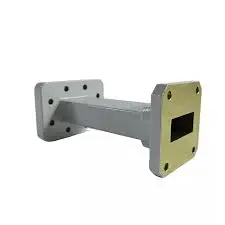
These real-life examples illustrate that accurate Waveguide Transitions increase production parameters, including scrap rates, test cycles, and automotive safety certification, measuring trust.
Procurement Strategies for Waveguide Transitions in the Automotive Industry?
Strategic buying methods make sure that you can always get high-quality parts and keep the total cost of ownership as low as possible for the Waveguide Transition.
Identifying Verified Suppliers
Reputable makers keep their supply lines open and clear, with records of where materials come from and how they are handled to avoid conflict minerals. Platforms and industry-specific directories, such as ThomasNet and GlobalSpec, have lists of ISO 9001-certified providers who have experience with the car business. Instead of just looking at catalogs from distributors, talking to makers' technical teams directly gives you access to application engineers who can suggest the best setups based on your assembly line's needs. Ask for certificates of conformance (CoCs) and performance reports from a third party to back up promises, especially for parts that are part of safety-critical systems.
When Customization Adds Value
Standard catalog changes work for most test bench setups, but custom designs are often needed for vehicles with unique layouts. Customization saves money when dealing with limited space in test setups, combining multiple functions (Waveguide Transition plus filter or coupler) into a single assembly, or meeting strict environmental requirements above commercial grades. With one-week turnaround times, prototyping services let you make changes to your design several times before moving to production tools. This lowers the risk of new apps.
Procurement Parameters and Bulk Purchasing
Standard changes take between two and six weeks to make, while unique designs take between eight and twelve weeks, which includes making a prototype and getting it approved. Setting up blanket buy orders with staggered delivery schedules lines up the supply of parts with predictions for the production ramp, which keeps costs down by avoiding having too much inventory. Volume prices usually start at 50 units. Negotiating tiered pricing systems awards long-term partnerships while still allowing for changes in demand. Payment terms that balance letters of credit (LCs) against net-60 agreements rely on how stable the supplier's finances are and how big the order is.
Initiating Supplier Engagement
Make thorough requests for quotes (RFQs) that list frequency ranges, flange types, power rates, and requirements for use in different environments. Include technical drawings that show the required interfaces and tolerances. Attach target masks with S-parameters that define the allowed ranges of insertion loss and VSWR across all operating bands. The expert team at Advanced Microwave Technologies Co., Ltd. answers questions within 24 hours and gives basic feasibility assessments and price ranges. Set up virtual design reviews to talk about the results of electromagnetic simulations and manufacturing limits. This will help everyone understand what needs to be done before the prototype is made. Support after the sale should include services for recalibration, extra flange kits, and expert help with fixing problems for as long as the product is in use.
Conclusion
Waveguide Transitions are very important for modern car production shops that want to switch to millimeter-wave testing infrastructure. By allowing low-loss, high-fidelity signal connections between different transmission media, these precision components support measurement accuracy that is needed to make sure radar, communication, and sensor systems work. Teams in charge of buying things have to weigh the technical requirements, like frequency compatibility, insertion loss, and mechanical connections, against the suppliers' abilities to customize, get quality approval, and provide quick support. The listed selection criteria, optimization methods, and sourcing strategies help people who work in the car manufacturing industry make smart choices that improve production efficiency, lower measurement uncertainty, and protect test equipment investments against changing RF requirements.
FAQ
Q1: What factors most significantly affect waveguide transition selection for automotive applications?
Matching the frequency range to the vehicle’s RF systems is the top priority. Low insertion loss helps maintain measurement accuracy, while mechanical compatibility reduces infrastructure changes. Thermal and vibration stability ensures reliable operation in automotive environments, and sufficient power handling supports high transmit levels and safe calibration.
Q2: Can waveguide-to-coaxial transitions be interchanged between suppliers without performance compromise?
Standard EIA or MIL flanges allow physical compatibility, but electrical performance can still vary. Differences in probe design, dielectric materials, and internal structures may affect VSWR, insertion loss, and phase stability. Full S-parameter verification is recommended before replacing suppliers, especially in calibrated systems.
Q3: How can procurement teams verify supplier authenticity and product quality before large-volume commitments?
Request certified test reports and verify ISO 9001 or IATF 16949 certifications through official registries. Factory audits, either onsite or virtual, help assess quality control and inspection standards. Pilot orders with incoming inspections can confirm real-world performance before large-scale purchasing.
Partner with ADM for Precision Waveguide Transition Solutions
Advanced Microwave Technologies Co., Ltd. has been a leader in RF engineering for more than 20 years and can help with the difficulties of putting together cars with the right Waveguide Transition. Tier 1 providers and automakers all over the world use our full range of waveguide transition products, which range from standard catalog adapters to fully unique OEM designs. Our 24-meter microwave darkroom has advanced monitoring tools that can go up to 110 GHz. We promise performance standards that have been tested in real-world situations. Every connection with a waveguide transition maker is based on ISO 9001 certification and RoHS compliance. This makes sure that the products work well with your quality control systems. You can email our technical team at craig@admicrowave.com to talk about your specific testing needs for the car industry, get S-parameter data to check for compatibility, or start a custom transition development project. Get the ADM advantage: quick prototyping, low bulk prices, and assistance from applications engineers throughout the lifecycle of a product.
References
1. Pozar, David M. Microwave Engineering, 4th Edition. Hoboken: John Wiley & Sons, 2012.
2. Ramo, Simon, John R. Whinnery, and Theodore Van Duzer. Fields and Waves in Communication Electronics, 3rd Edition. New York: Wiley, 1994.
3. Saad, Theodore S. Microwave Engineers' Handbook, Volumes 1-2. Dedham: Artech House, 1971.
4. Marcuvitz, Nathan. Waveguide Handbook, MIT Radiation Laboratory Series Volume 10. London: Peter Peregrinus Ltd., 1986.
5. IEEE Standard 154-2013. IEEE Standard for Waveguide Transitions. New York: Institute of Electrical and Electronics Engineers, 2013.
6. Collin, Robert E. Foundations for Microwave Engineering, 2nd Edition. New York: McGraw-Hill, 1992.