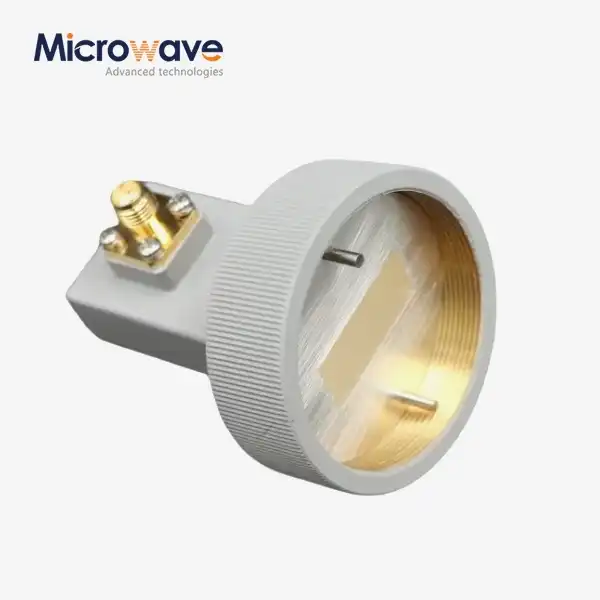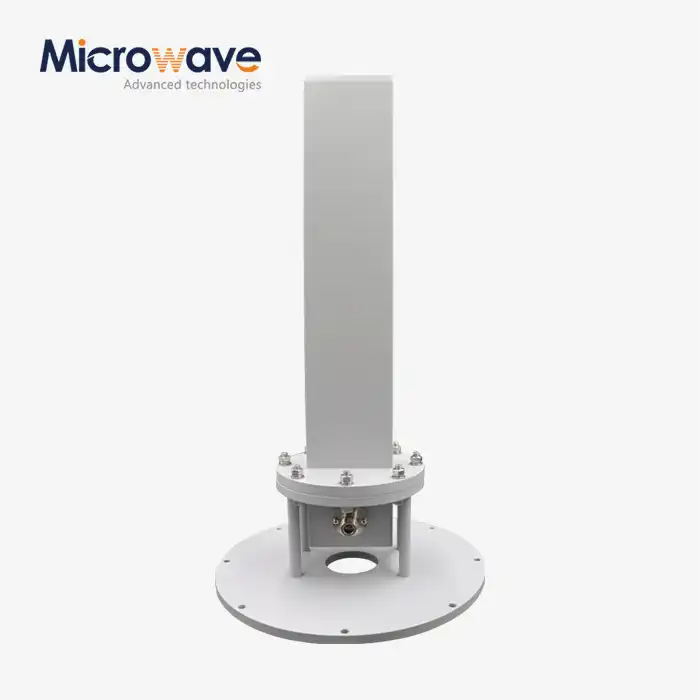





Double Ridge Twist Waveguide vs Standard Double Ridge Waveguide
When comparing Double Ridge Twist Waveguide to standard double ridge configurations, the twist design offers enhanced polarization control and improved signal routing capabilities in constrained spaces. The key difference lies in the twisted geometry that enables 90-degree polarization rotation while maintaining excellent transmission characteristics. Double Ridge Twist Waveguide excels in satellite communications and radar systems where space limitations and precise polarization management are critical requirements.
Modern RF engineers face mounting pressure to deliver compact, high-performance solutions that meet stringent operational requirements. The choice between twisted and standard double ridge waveguide designs significantly impacts system performance, particularly in applications demanding precise electromagnetic wave control.
Understanding Double Ridge Waveguide Technology
Double ridge waveguides represent a significant advancement in microwave transmission line technology. These components feature two parallel ridges inside a rectangular waveguide structure, creating enhanced bandwidth characteristics compared to traditional rectangular guides. The ridge configuration reduces the cutoff frequency while maintaining manageable dimensions. This design enables broader frequency response and improved impedance matching across extended operational ranges.
Three fundamental advantages distinguish double ridge technology:
- Extended bandwidth capability - Supporting frequency ranges from 5 GHz to 110 GHz
- Improved impedance characteristics - Better matching with standard 50-ohm systems
- Compact form factor - Reduced physical dimensions for given frequency ranges
Standard double ridge waveguides excel in applications requiring wide bandwidth without spatial constraints. The straightforward geometry simplifies manufacturing and reduces production costs while delivering reliable performance. Research data from electromagnetic simulation studies shows standard configurations typically achieve VSWR values below 1.3:1 across their operational bandwidth. Insertion loss characteristics remain consistently low, typically under 0.1 dB per wavelength. If you need maximum bandwidth with straightforward integration requirements, then standard double ridge waveguides provide optimal cost-effectiveness and proven reliability.
Double Ridge Twist Waveguide Design Principles
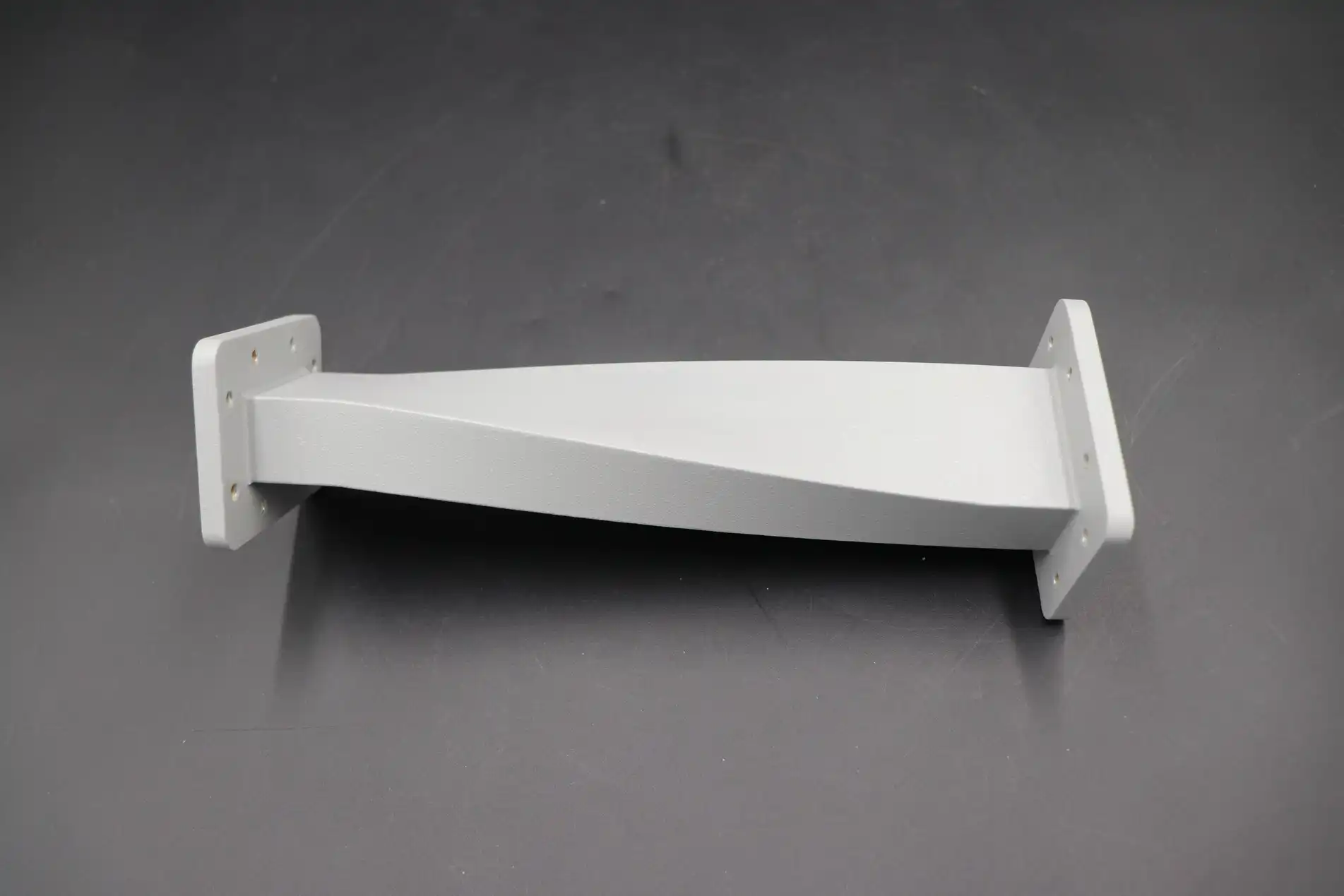
The twisted configuration introduces a controlled geometric rotation along the waveguide's longitudinal axis. This rotation enables polarization conversion while preserving the ridge structure's bandwidth advantages. Advanced manufacturing techniques ensure precise twist angles, typically ranging from 15 to 180 degrees depending on application requirements. The twist rate remains constant throughout the component length, maintaining consistent electromagnetic properties.
Key design parameters include:
- Twist angle precision - Controlled to within ±0.5 degrees
- Ridge profile consistency - Maintained throughout the twist
- Surface finish quality - Critical for high-frequency performance
- Dimensional tolerance control - Essential for predictable characteristics
Electromagnetic field analysis reveals that twisted configurations maintain excellent transmission properties while adding polarization control functionality. The ridge structure prevents higher-order mode excitation that could degrade performance. Laboratory measurements demonstrate that well-designed twisted variants achieve VSWR performance comparable to straight configurations. Typical insertion loss increases by only 0.05-0.1 dB compared to equivalent straight designs. The twist geometry enables compact system architectures where traditional polarization converters would consume excessive space. This advantage proves particularly valuable in satellite ground stations and phased array antenna systems. If you need polarization rotation combined with space-efficient design, then Double Ridge Twist Waveguide configurations deliver superior integration capabilities.
Performance Analysis: Technical Specifications Comparison
Detailed performance analysis reveals distinct characteristics between twisted and standard configurations. Frequency response, signal integrity, and physical constraints represent critical evaluation parameters.
Standard double ridge waveguides typically demonstrate:
- Bandwidth performance: 3:1 to 4:1 frequency ratio coverage
- Insertion loss: 0.08-0.12 dB per wavelength at midband
- VSWR characteristics: Better than 1.25:1 across operational range
- Power handling: Up to 1000 watts CW at lower frequencies
Double Ridge Twist Waveguide specifications show:
- Bandwidth maintenance: Equivalent to standard versions
- Polarization rotation: Precise angular control within ±0.5 degrees
- Insertion loss: 0.10-0.15 dB per wavelength including twist loss
- Cross-polarization isolation: Better than 25 dB typical
Measurement data from Advanced Microwave Technologies' 24m anechoic chamber demonstrates consistent performance across the 0.5-110 GHz test range. Near-field and far-field measurement capabilities ensure comprehensive characterization. The twist design introduces minimal additional loss while providing significant functional advantages. Phase velocity characteristics remain stable throughout the twist, ensuring predictable signal propagation. Impedance matching performance shows excellent consistency in both configurations. The ridge structure maintains controlled impedance transitions, minimizing reflections and standing wave formation. If you need maximum power handling with minimal loss, then standard configurations excel in high-power applications. Alternatively, if polarization control outweighs power considerations, then twisted variants provide superior functionality.
Application-Specific Selection Guidelines
Application Requirements and System Environments
Different applications demand specific waveguide characteristics. Understanding these requirements guides optimal selection between standard and twisted configurations. Ground station applications in satellite communication systems often require polarization switching between linear and circular modes. Twisted configurations enable compact polarization converters, reducing overall system complexity. Standard designs work well in fixed-polarization applications where space constraints are minimal, and the straightforward geometry simplifies maintenance while reducing potential failure points. Radar systems in defense and aerospace applications benefit from twisted waveguides in phased array configurations where space limitations are critical, enabling compact polarization control and advanced beamforming capabilities. Navigation systems typically rely on standard configurations for their proven reliability and simplified logistics, and military specifications often favor designs with extensive operational history.
Industrial Use and OEM Integration
Industrial and research environments also influence configuration choices. Laboratory environments frequently require flexible configurations supporting various measurement scenarios, and twisted designs enable rapid polarization changes without mechanical switching. In contrast, production environments prioritize reliability and cost-effectiveness, making standard configurations attractive for high-volume applications. OEM integration requirements further shape design selection. Contract manufacturers often specify standard designs for their predictable characteristics and established supply chains, while documentation and qualification processes also favor proven technologies. Custom applications may benefit from twisted configurations when unique spatial constraints or performance requirements justify the additional complexity. If proven reliability and established supply chains are required, standard double ridge waveguides provide optimal risk management; however, when space constraints or polarization flexibility are critical, twisted configurations deliver the necessary performance advantages.
Manufacturing and Quality Considerations
Production complexity differs significantly between standard and twisted configurations. These differences impact cost, lead times, and quality assurance requirements. Standard double ridge waveguides utilize conventional machining processes. The straightforward geometry enables efficient production with standard CNC equipment and established quality control procedures.
Manufacturing advantages include:
- Simplified tooling requirements - Standard fixtures accommodate various sizes
- Predictable machining times - Established processes minimize variations
- Streamlined quality control - Proven measurement techniques ensure consistency
- Cost-effective plating processes - Standard silver plating procedures apply
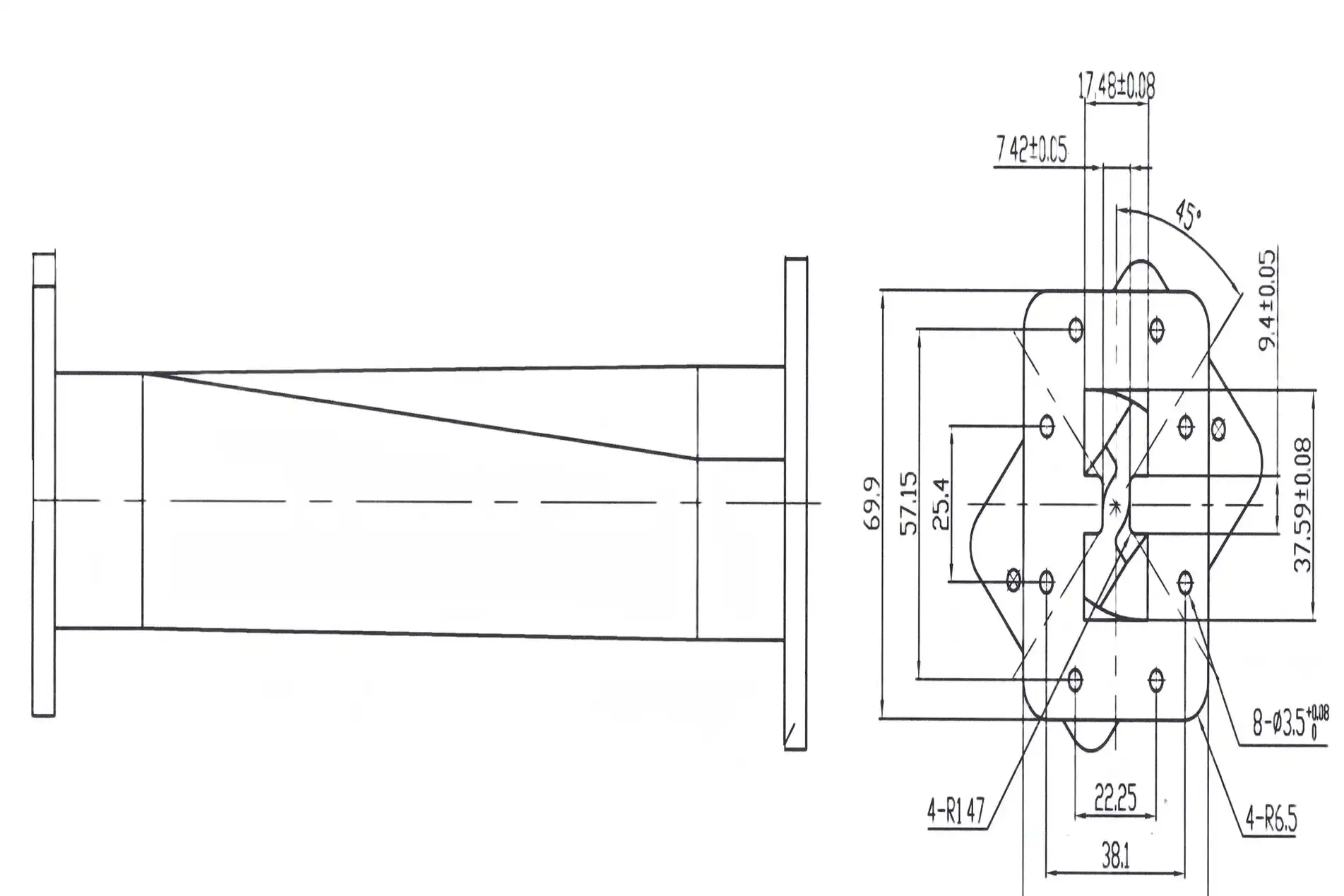
Twisted configurations require specialized manufacturing capabilities. The complex geometry of a Double Ridge Twist Waveguide demands advanced machining strategies and enhanced quality control measures to ensure precise ridge alignment, consistent electrical performance, and reliable operation across the specified frequency range.
Production considerations include:
- Advanced tooling systems - Multi-axis CNC equipment essential
- Precision twist control - Continuous monitoring throughout machining
- Enhanced measurement requirements - Specialized fixtures for quality verification
- Extended processing times - Complex geometry increases production duration
Advanced Microwave Technologies maintains ISO 9001:2015 certification covering both standard and twisted configurations. Our quality management system ensures consistent performance regardless of geometric complexity. Material selection impacts both configurations similarly. High-conductivity aluminum or brass provides excellent electrical properties with cost-effective processing. Silver plating enhances conductivity and environmental protection. Dimensional tolerance control proves critical for both designs. Modern precision machining achieves tolerances within ±0.025mm, ensuring predictable electromagnetic performance.
When rapid prototyping is required, standard waveguide configurations often provide clear advantages because established manufacturing processes, existing tooling, and widely available components help shorten development cycles. Engineers can quickly validate system concepts, perform early testing, and move toward production without the delays associated with custom fabrication. Conversely, when applications demand unique electromagnetic performance, precise signal routing, or space-constrained integration, more complex twisted designs such as Double Ridge Twist Waveguide assemblies become valuable. Although they require additional engineering effort and specialized manufacturing, these designs deliver optimized bandwidth, improved field control, and tailored system performance.
Conclusion
The choice between Double Ridge Twist Waveguide and standard configurations depends on specific application requirements. Standard designs excel in applications prioritizing cost-effectiveness, proven reliability, and high power handling. Twisted configurations provide superior value when polarization control, space constraints, or unique integration requirements justify the additional complexity. Both technologies offer excellent bandwidth characteristics and reliable performance when properly implemented. Understanding these distinctions enables informed decisions that optimize system performance while meeting project constraints and objectives.
ADM's Advanced Double Ridge Twist Waveguide Solutions
Advanced Microwave Technologies Co., Ltd stands as a premier Double Ridge Twist Waveguide manufacturer with over two decades of specialized experience. Our comprehensive product line covers waveguide sizes from WR10 through WR430, featuring both left-hand and right-hand twist configurations. Custom twist angles, directions, and flange types address specific customer requirements, while our ISO 9001:2015 certification and RoHS compliance ensure quality excellence. Contact craig@admicrowave.com to discuss your precise Double Ridge Twist Waveguide specifications and benefit from our proven expertise in mission-critical applications.
References
1. Matthaei, G.L., Young, L., and Jones, E.M.T. "Microwave Filters, Impedance-Matching Networks, and Coupling Structures." Artech House Microwave Library, 1980.
2. Pozar, David M. "Microwave Engineering, Fourth Edition." John Wiley & Sons, 2012, Chapter 3: Transmission Lines and Waveguides.
3. Chen, Tzyh-Ghuang, and Nicolson, A.M. "Measurement of Intrinsic Properties of Materials by Time-Domain Techniques." IEEE Transactions on Instrumentation and Measurement, Vol. 19, No. 4, 1970.
4. Collin, Robert E. "Foundations for Microwave Engineering, Second Edition." IEEE Press Series on Electromagnetic Wave Theory, 2001.
5. Ramo, Simon, Whinnery, John R., and Van Duzer, Theodore. "Fields and Waves in Communication Electronics, Third Edition." John Wiley & Sons, 1994.
6. Gupta, K.C., Garg, Ramesh, Bahl, Inder, and Bhartia, Prakash. "Microstrip Lines and Slotlines, Second Edition." Artech House Microwave Library, 1996.