




Digital Phase Shifter Resolution and Accuracy Guide
To get the best signal control in tough RF settings, you need to know about the precision and accuracy of a digital phase shifter. A digital phase shifter works by turning logic directions into specific phase states. This makes it possible to repeat events in ways that traditional options struggle to achieve. Resolution is the smallest phase shift that can be achieved, which is usually written as the least significant bit (LSB). Accuracy, on the other hand, is a measure of how closely the output value matches the desired value under all operating situations. These factors have a direct effect on beam direction accuracy, signal integrity, and overall system stability, as buying teams that look at parts for phased array radar, satellite ground stations, and 5G massive MIMO systems can confirm. If you don't check the accuracy standards or guess wrong about the resolution, it can cause antenna arrays to have higher sidelobes, phase slip when temperatures get high, and eventually poor mission-critical performance. This guide gives B2B buyers and integration engineers useful information on how to understand specifications, weigh the pros and cons of different technologies, and work with suppliers in order to find parts that will last for decades and offer real value.
Understanding Digital Phase Shifter Resolution and Accuracy
Resolution tells you how finely you can control the phases in a gadget. This is based on the bit level. A 6-bit architecture has 64 discrete states across 360 degrees, which equals 5.625-degree steps. An 8-bit design makes this even more precise, with 1.40625 degrees. Higher bit counts let you make more precise beamforming changes, but they make switching delay line networks and vector modulator circuits more difficult to understand.
In comparison, accuracy shows how true something is to the real world. In commercial-grade units, the RMS phase error is usually between 2 and 5 degrees. This is because of differences in the standards of the parts, the alignment of the layout on the printed circuit board (PCB), and the stability of the insulator over temperature changes. If you don't have correction methods or temperature-stable materials, environmental factors like heat cycle between -55°C and +85°C (which is normal in MIL-STD-883 screening) can cause phase drift.
Digital designs use TTL or CMOS logic connections instead of analog varactor-based designs, which are more likely to be affected by voltage noise. Even though mechanical phase shifters work well in high-power situations, they have slow reaction speeds and accuracy loss due to wear. When procurement workers understand these differences, they can choose parts that are right for the duty cycles of the application, whether it's microsecond-level beam hopping in active electronically scanned arrays (AESA) or static phase correction in test benches with a digital phase shifter.
How Bit Depth Defines System Capabilities
4-bit systems have steps of 22.5 degrees, which is enough for old radar sites that don't need very much sidelobe reduction and where cost is the most important factor in deciding what specifications to use.
6-bit configurations are a good compromise because they provide sub-6-degree precision that works for current military and aircraft systems that need to adapt to jamming threats.
8-bit and higher implementations are used in next-generation technologies like mmWave 5G base stations and flying synthetic aperture radar (SAR), where quantization error needs to be very small compared to the wavelength.
Choosing the appropriate bit depth involves calculating acceptable quantization lobes in the far-field pattern and correlating this with link budget margins and regulatory spectral masks.
Environmental Stability and Calibration
Temperature-induced phase wander is a problem for both open structures and platforms in the air. The temperature coefficients of gallium arsenide (GaAs) and gallium nitride (GaN) semiconductor methods are not the same, so they need to be characterized across all operating bands. Suppliers who offer temperature-compensated lookup tables or real-time adjustment software are very helpful because they cut down on the time needed for field testing and the costs of maintenance for telecom operators and satellite service providers.
Key Technical Dimensions Impacting Phase Shifter Performance
Coverage of the frequency range determines how well it works with application band assignments. X-band (8–12 GHz) devices are used for weather sensors and air traffic control. Ka-band (26.5–40 GHz) devices are used for satellite transfer and 5G backup. When compared to narrowband optimized units, wideband designs that cover more than eight octaves always lose insertion loss flatness and phase uniformity.
When you choose a circuit design, you have to trade off phase sharpness and capacity. Switched delay line designs have good phase flatness but small immediate bandwidth. On the other hand, vector modulator designs that use quadrature hybrids have wider coverage but more insertion loss and amplitude-phase coupling.
Phase noise and jitter show up as spectral spreading around the carrier, which lowers the signal-to-noise ratio (SNR) in receiver chains that are sensitive to it. For coherent radar Doppler processing and high-order quadrature amplitude modulation (QAM) in wireless infrastructure, low-jitter systems with phase-locked loop (PLL) reference distribution and low-noise power sources are a must.
Circuit Topology Considerations
State switches, communication protocols, and troubleshooting data are all managed by digital control ICs and software. Field-programmable gate array (FPGA) integration lets you use adjustable nulling and beamforming techniques in real time, which is very useful for data lines between unmanned aerial vehicles (UAVs) and electronic warfare (EW) systems. Command lag is set by the embedded serial peripheral interface (SPI) or parallel bus design, which is very important when lining up thousands of elements in big phased arrays.
Changes in insertion loss between phase states cause errors in amplitude modulation. Specifications usually promise stability within 0.5 dB, but strict applications need even tighter limits, which can be proven by using a vector network analyzer (VNA) to take readings across all 2^n states.
Comparing Digital Phase Shifters: Choosing the Best Fit for Your Application
When it comes to accuracy, noise protection, and automatic compatibility, digital phase shifters are better than physical ones. It is harder to integrate automated test equipment (ATE) because analog varactor diodes need stable reference voltages and show instability. Mechanical waveguide phase changers can handle kilowatt levels of power, but they can only switch in milliseconds, which is too slow for time-division duplex (TDD) waves.
PLL-based methods create a phase continuously, but they bring group delay ripple and need a complicated loop filter design. In equipment, where frequency movement is more important than immediate switching speed, they work very well.
Application-Specific Selection Criteria
For 5G and military radar phased array antennas to keep their beam pointing accuracy during fast scan patterns, they need switching times of less than one microsecond and low RMS error. Satellite ground stations put uniformity (IP3) at the top of their list of priorities so they can handle high signal variations without intermodulation distortion. RF testing and calibration labs need devices with detailed measurement data and tracking documents so they can make sure the phase accuracy is up to national standards.
Analog Devices and other players in the industry offer high-integration beamformers that combine phase shifters with variable gain amplifiers to cut down on PCB area and part count. Mini-Circuits sells inexpensive units that cover DC to 40 GHz and come with detailed application notes. MACOM and Skyworks work on GaN technology for high-power radar, while Infineon develops MEMS-based solutions that promise very low insertion loss and no DC power use. This could change the game for very large antenna arrays.
Evaluating supplier portfolios requires scrutinizing S-parameter data across temperature, validating control interface compatibility with existing digital infrastructure, and assessing supply chain resilience through dual-source strategies and inventory forecasting transparency.
Practical Applications and Impact of Resolution and Accuracy in Digital Phase Shifters
To make directed beams, phased array antennas need precise phase differences between parts. A 1-degree RMS mistake in a 100-element array raises sidelobes by about 3 dB, which makes it harder to block interference and could break spectrum emission masks. Advanced Microwave Technologies Co., Ltd. solves these problems by creating custom feed networks with digital phase shifters that are adjusted in our 24-meter microwave lab. This lets us validate signals from far away up to 110 GHz.
Aerospace and Defense Applications
Fighter planes' AESA radar units use 6-bit or 8-bit devices to keep an eye on multiple supersonic targets at the same time, blocking out ground junk and jamming signals. Resolution has a direct effect on mainlobe sharpness and null depth. These factors were checked through strict acceptance testing in line with MIL-STD-461 electromagnetic compatibility standards.
Maritime and airborne SATCOM-on-the-move terminals correct antenna pointing in real time as platforms pitch, roll, and yaw. Accuracy under vibration and thermal shock ensures uninterrupted connectivity with geostationary and low Earth orbit (LEO) constellations during critical mission phases.
Next-Generation Wireless Infrastructure
Through spatial multiplexing, massive MIMO base stations can serve dozens of user equipment (UE) at the same time. This is made possible by hundreds of phase shifters. When there isn't enough precision, quantization bands cause co-channel crosstalk, which slows down traffic in crowded cities. Since the waves are shorter at mmWave frequencies above 24 GHz, phase errors are amplified. This is why 7-bit or 8-bit designs are becoming more common.
RF Testing and Calibration
Vector signal analyzers and network analyzers have precise phase shifters built in for multi-port tuning and source-receiver phase consistency. To be traceable to NIST or other international measurement institutes, uncertainty budgets must be written down and often include phase accuracy within 0.5 degrees at reference planes. This can only be done with designs that keep temperatures stable and regular recalibration against transfer standards.
Procurement Guide: Securing Digital Phase Shifters with Optimal Resolution and Accuracy
The first thing that is looked at in a datasheet is the phase step size (LSB), which makes sure that the alignment meets the beamforming precision standards. There needs to be room in the operational frequency range for guard bands and Doppler changes so that the assigned bands are covered. Link budgets are affected by insertion loss, which usually has a value between 4 and 10 dB, based on the structure and frequency.
Specifications for return loss (VSWR) make sure that impedance matching happens, which stops echoes that change standing wave patterns in waveguide feeds. Third-order intercept point (IP3) measures predictability under multi-tone stimuli, which is very important in places with a lot of spectrum noise for digital phase shifters.
Engaging with Manufacturers
The level of technical help is what sets good providers apart from great partners. Advanced Microwave Technologies Co., Ltd offers modeling models that are tailored to specific applications, S-parameter files that are tested across temperature, and development services that are backed by ISO 9001:2015 quality systems. Requesting samples with non-disclosure agreements (NDAs) lets the company test the product in real-world settings before committing to large-scale production.
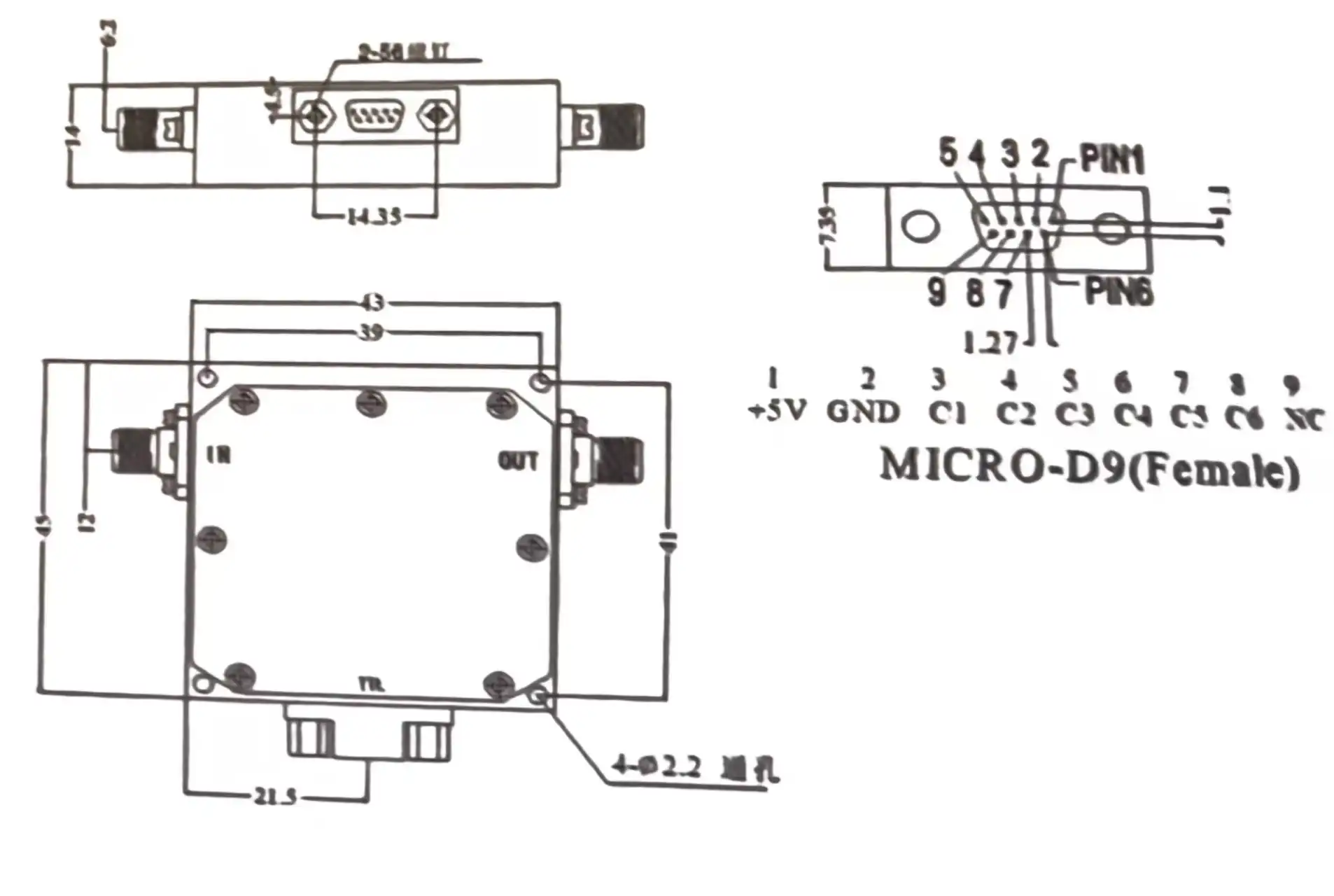
Documentation packages should include test reports traceable to calibrated instrumentation, assembly drawings with critical dimensions, and recommended PCB land patterns. Global logistics support—encompassing export compliance, tariff classification, and expedited shipping for prototype iterations—mitigates schedule risks in time-sensitive programs.
Dual-source strategies reduce supply chain vulnerability. Identifying alternate suppliers with pin-compatible footprints or equivalent electrical performance provides leverage during allocation shortages and the times when parts stop working, which are common in long-lifecycle military projects.
Conclusion
Resolution and accuracy are not just words; they are what make a task successful in phased arrays, satellite links, and wireless infrastructure, where the quality of the signal directly affects the ability to do the job. It's up to the procurement team to find the best balance between bit depth and cost, check the safety of the product in different weather conditions using thermal cycle data, and give top priority to providers who can provide full analysis and fast engineering engagement. By knowing how quantization error shows up in far-field patterns and the flaws of different designs, executives can set up RF systems that meet the needs of today while also being able to adapt to how spectrum and performance change in the future.
FAQ
Q1: What resolution is typical for defense and aerospace phased arrays?
Defense systems often use 6-bit devices with 5.625-degree steps, which balances the accuracy of beamforming with the complexity of the system. More and more, 7-bit or 8-bit designs are needed for next-generation systems that aim for smaller sidelobes and adaptive nulling. This is especially true for X-band and Ka-band radar, where wavelengths are getting shorter and angular resolution requirements are getting higher.
Q2: How does temperature affect phase accuracy in field deployments?
When PCB substrates and semiconductor junctions get hot, they cause phase drift, which is usually between 0.05 and 0.15 degrees per Celsius degree in designs that don't take this into account. Characterization of military-grade parts is performed from -55°C to +85°C, and providers offer adjustment polynomials or built-in temperature monitors to enable real-time compensation. This keeps the drift to less than 0.02 degrees per Celsius across all operating ranges.
Q3: Can phase states be reprogrammed after deployment?
Most digitally controlled devices can receive new commands through SPI, parallel bus, or FPGA connections. This lets them be calibrated over-the-air and their beam patterns optimized as the propagation environment changes. Firmware-based adjustment methods take into account component wear and weather drift without changing the hardware. This makes satellite ground stations and cellular base stations last longer than 15 years.
Partner with ADM for Precision Digital Phase Shifter Solutions
Advanced Microwave Technologies Co., Ltd has been working with microwaves for more than 20 years and is an ISO 9001:2015 recognized company. They can make unique digital phase shifter systems that meet your exact frequency, resolution, and environmental requirements. The performance of our 24-meter anechoic box is tested from 0.5 to 110 GHz, and the accuracy of the S-parameters is checked against international standards. Our engineering team can help you with application-specific designs, quick turnaround, and full technical documentation, whether you need prototypes for the next generation of AESA radar, large quantities for satellite communication ground infrastructure, or specialized feed networks for research institutions. Get in touch with craig@admicrowave.com right away to talk about your needs with our RF experts and ask for samples of our wide range of waveguide, cable, and antenna options. As a reliable provider of digital phase shifters, we give your mission-critical apps the accuracy and dependability they need.
References
1. Bhartia, P., & Bahl, I. J. (2016). Microwave Solid State Circuit Design (2nd ed.). Hoboken, NJ: Wiley-IEEE Press.
2. Hansen, R. C. (2009). Phased Array Antennas (2nd ed.). Hoboken, NJ: John Wiley & Sons.
3. Mailloux, R. J. (2017). Phased Array Antenna Handbook (3rd ed.). Norwood, MA: Artech House.
4. Pozar, D. M. (2011). Microwave Engineering (4th ed.). Hoboken, NJ: John Wiley & Sons.
5. Skolnik, M. I. (2008). Radar Handbook (3rd ed.). New York, NY: McGraw-Hill Education.
6. Visser, H. J. (2005). Array and Phased Array Antenna Basics. Chichester, UK: John Wiley & Sons.