





Cassegrain Antenna Design for Deep Space Networks
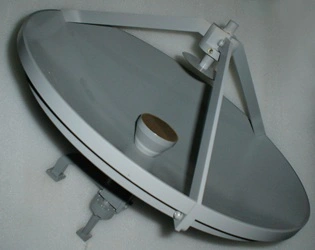
Cassegrain antenna design is still the most important part of communications in deep space, letting missions contact planets, probes, and other spaceships that are billions of miles away. This two-reflector design has a big primary parabolic reflector and a smaller hyperbolic subreflector close to the focus point. Together, they send signals back to feed components that are placed behind the main dish. This design cuts down on insertion loss and greatly enhances the gain-to-noise temperature ratio by getting rid of long waveguide runs between the feed horn and receiver electronics. These are important measurements for tracking spaceships across interplanetary distances, where every decibel counts.
Understanding Cassegrain Antenna Design Principles
The main new idea behind Cassegrain antenna design is the way its optical path folds. Electromagnetic waves come in through the main parabolic reflector and are focused on a convex hyperbolic subreflector. The convergent energy is sent back through a center opening in the main dish by this secondary element. This is where feed horns and low-noise boosters are carefully placed. This setup keeps sensitive receivers close to where the signal comes in, which greatly lowers the transmission line losses that happen with regular prime-focus setups.
Feed Horn Geometry and Signal Path Optimization
The shape of the feed horn has a direct effect on the antenna's efficiency and beamwidth. Engineers figure out the best horn opening width and flare angle by looking at the frequency bands that will be used and the patterns of light they want to cast on the main reflection surface. For X-band frequencies that are often used in tracking things in deep space, exact feed geometry makes sure that the energy is spread out evenly and transfer losses are kept to a minimum. To reach the ideal performance limits, the feed unit has to be physically placed very close to the focus point of the subreflector with micron-level accuracy.
Beamwidth Calculations and Gain Characteristics
There are well-known links between aperture size, wavelength, and antenna gain. These are usually shown by the equation G = (πD/λ)² × η, where D is the dish diameter, λ is the wavelength, and η is the aperture efficiency. Deep space network antennas with 34-meter dishes that work at 8.4 GHz get gains of more than 68 dBi, which lets them talk to satellites far away from Mars. As gain goes up, beamwidth goes down, so tracking systems that are very complex are needed to keep pointing accuracy within a hundredth of a degree.

Advantages Over Traditional Parabolic Configurations
The dual-reflector Cassegrain architecture doesn't have feed blockage like offset-fed or prime-focus parabolic designs, which is a key benefit for getting the most out of the collection area. In most cases, the subreflector barrier only takes up 10–15% of the main aperture. In prime-focus systems, it takes up 25–30% of the aperture. This means that signals can be picked up more efficiently, which is especially helpful when following weak signals from Voyager ships that are now traveling through interstellar space past the heliopause edge of our solar system.
Key Advantages and Practical Considerations in Deep Space Networks
The world tracking stations for NASA's Deep Space Network in California, Spain, and Australia all use Cassegrain antenna designs a lot. These examples show how dual-reflector designs can be used to solve real-world engineering problems that buying teams and system designers need to know about when they are choosing communication infrastructure.
In mission-critical situations, Cassegrain antenna designs are better than other types of antennas in a number of scientific ways. Heavy receiving equipment is placed at ground level instead of being raised at the main focal point by the compact mounting system. This lowers the structural load on the positioning mechanisms and makes it easier to do maintenance. This choice in design works especially well for antennas that need to have their receivers upgraded often, as space missions move to higher frequency bands. The shorter signal path between the feed components and the amplifiers lowers the system noise temperature by 15–20% compared to prime-focus options, which directly improves the communication link margins.
High-gain performance lets smaller dish sizes achieve the same level of performance, which lowers the cost of building and the wind loading factors that affect the cost of base engineering. Narrow beamwidths provide spatial filtering that blocks interference from nearby satellites or terrestrial sources, keeping the signal strong in frequency bands that are getting more crowded. More photons reach the monitor because the opening is more efficient. This extends the mission's lifetime, since spaceship power systems wear out over decades of travel.
Mechanical Precision Requirements
To get ideal efficiency, manufacturing tolerances must be very tight. The accuracy of the primary reflector surface must stay within λ/16 RMS across the whole opening. For Ka-band frequencies, this means limits of less than a millimeter. Subreflector placement systems use laser rangefinding and automated adjustment mechanisms to keep things lined up even when the temperature rises, the earth moves, and the wind blows. Cost differences between normal and high-precision production can be more than 40% of the total project budget, so these tolerances must be made clear in the procurement specs.
Environmental Factors in Space Operations
Temperatures in antenna systems can be very different, ranging from -40°C at night to +60°C when they are directly exposed to the sun. It's important to choose the right material. Aluminum metals have good strength-to-weight ratios and keep their shape, but current designs are using hybrid materials more and more. Feed windows must be able to survive years of UV light without breaking down in a way that would make it impossible for electromagnetic waves to pass through. Radome casings keep sensitive parts safe, but they add extra insertion loss that needs to be taken into account during link analysis by system budgets.
Comparing Cassegrain Antenna Designs: Finding the Best Fit for Your Needs
When procurement teams look at different antenna designs, it's helpful to know how performance changes with each setup. While Cassegrain antenna designs are most common in deep space, Gregorian antennas with ellipsoidal subreflectors can cover a larger area and are better for radio astronomy studies. Prime-focus parabolic dishes are easier to build mechanically, but they have problems with feed blockage, making it hard to get to the receiver. Which one to use relies on the mission description, frequency allocations, and practical needs.
Performance Metrics and Application Matching
Measuring signal quality shows that different forms are different in a way that can be measured. In X-band implementations, Cassegrain antenna designs usually get 70–75% aperture efficiency, while prime-focus designs with the same blockage factors only get 60–65%. Cross-polarization isolation is higher than 30 dB when feed designs include curved horn structures, which are needed to receive orthogonal polarization channels at the same time. Sidelobe reduction below -25 dB keeps interference at bay and meets emission mask requirements for broadcast operations.
For communication purposes, gain and efficiency are the most important things. Radar systems, on the other hand, may be willing to sacrifice efficiency for a bigger immediate bandwidth. Commercial telecom satellite ground stations often need dual-band capabilities, which means they need feed systems that can handle both C-band and Ku-band frequencies through dichroic subreflector surfaces or switchable feed assemblies.
Simulation Tools and Design Validation
Modern electromagnetic modeling software lets you make full predictions about performance before the manufacturing process starts. A number of programs, including GRASP, CST Microwave Studio, and FEKO, can figure out radiation patterns, input resistance, and cross-polarization behavior over a wide range of frequencies. These models check the accuracy of feed horn designs, guess how mechanical tolerances will affect them, and find the best subreflector shape for each coverage need. Antenna measurement facilities, such as our 24-meter microwave lab at Advanced Microwave Technologies Co., Ltd., provide actual proof from 0.5 to 110 GHz, proving that systems that have been made match what theory says they should do.
Through better subreflector shaping, simulation-driven design improvements on NASA's Mars exploration missions were able to cut aiming losses by 0.8 dB. Commercial satellite ground stations used similar optimization methods to boost output by 12% without changing any hardware. They did this by recalculating the best feed position using models of the reflector surfaces that had been measured.
Procurement Guide: Sourcing Cassegrain Antenna Designs and Components
To find your way around the world of specialized suppliers, you need to know the difference between full antenna systems and buying strategies that focus on individual parts. Completely combined options offer responsibility through a single source, but they may make it harder to customize. Using different sources for mirrors, feed systems, and positioners in a modular way can help with efficiency, but it requires more technical oversight during integration. When goal parameters aren't met by normal stock specs, custom engineering is needed. Unique frequency bands, harsh weather conditions, or unusual mounting shapes call for custom development, which can only be done by suppliers who have their own design teams. At ADM, our engineering team has more than 20 years of experience making custom solutions for space agencies and defense companies. These solutions are backed by ISO 9001:2015-approved quality systems that make sure they can be tracked and are reliable. Finding the right Cassegrain antenna design requires careful vendor evaluation.
Supplier Evaluation Checklist
Program plans and performance promises are kept safe by thorough evaluation of vendors. Check the ability to make things by doing site checks that look at weather test rooms, measurement systems, and precision cutting equipment. Ask heritage organizations for proof that similar projects have been finished successfully, along with data on measured performance and lessons learned. Certification reviews and process checks are ways to figure out how mature your quality management is. ISO 9001 provides a basic guarantee, while AS9100 shows aerospace-grade thoroughness. Transparency about lead times is important for planning programs. Depending on the size and tolerance needs, making a reflector usually takes 16 to 24 weeks. Creating a unique feed takes an extra 12 to 16 weeks. Suppliers who keep strategic stockpiles of materials and established casting relationships are better at meeting deadlines than those who rely on spot-market buying. Payment terms and frameworks for reaching milestones should be in line with technical reviews during the design release, manufacturing finish, and final acceptance testing stages.
Cost Drivers and ROI Analysis
When modeling capital expenditures, it's important to include costs that happen over the course of the asset's life. Antenna systems that serve deep space networks work nonstop for 20 to 30 years, so being able to get repairs and extra parts is very important. As chip technologies change, feed component failure is a big risk. Suppliers that offer form-fit-function upgrade paths protect infrastructure investments. Energy economy issues have an impact on running costs, especially for big sites where servo drive power and cooling loads make up a big part of energy costs. When business companies figure out their return on investment, they compare the cost of equipment to the amount of traffic that can be handled. A high-efficiency design with a 3 dB better G/T ratio than options practically doubles channel capacity, which could support a 25–30% capital cost by generating revenue over the life of the system. Mission security and technical performance are very important to government and research applications, and they are willing to pay more for proven stability and full support environments.
Implementation and Future Outlook in Deep Space Communications
For the rollout to go smoothly, planning the deployment of a Cassegrain antenna design must be organized across the mechanical, electrical, and software areas. Fundamental designs need to take into account the weight of the antenna, the force of the wind, and any earthquake issues that are unique to the installation site. It's important to pay close attention to temperature expansion, flexible sections at joint points, and pressurization systems that keep moisture out when moving waveguides between antenna-mounted parts and control room equipment. Integration of the control system links pointing algorithms, tracking devices, and safety interlocks so that they all work together as a single unit. Through holography measurements, gain measurements against celestial radio sources, and regular pointing model building, calibration methods set the standard performance. Ongoing maintenance programs use built-in test tools to keep an eye on important parameters, plan preventative jobs like adjusting and lubricating, and keep extra parts on hand for quick repairs. Environmental tracking devices keep an eye on the temperature, humidity, and wind to figure out what the limits of operation are and to keep tools safe during bad weather.
Emerging Technologies and Strategic Implications
Progress in materials science means that efficiency will get a lot better over the next few years. Compared to metal, carbon fiber composite mirrors are 40% lighter and more thermally stable, which lets current base designs have bigger holes. Additive manufacturing methods can now make complex feed horn shapes that used to need expensive multi-piece systems. This cuts down on lead times and makes fast testing possible during the development process. Active subreflector surfaces with MEMS motors compensate for gravitational deformation in real time, keeping visual precision across all elevation ranges. Adaptive beamforming systems use phased array feeds behind regular mirrors to make spots in the main beam that can be electronically moved. This lets multiple targets be tracked at the same time without having to move the equipment. This feature greatly expands the network's ability to handle tasks that need to talk to multiple spaceships at the same time during important mission stages. These changes in technology affect how things are bought because they encourage sellers to invest in advanced manufacturing and show that they have research partnerships with top universities.
Conclusion
The long-lasting success of Cassegrain antenna design in communicating in deep space is due to basic physics benefits that have not been matched, even though technology has changed a lot over the years. Dual-reflector designs offer better signal-to-noise ratios, smaller mounting shapes, and better use of the opening, all of which directly lead to longer mission reach and faster data flow. When procurement experts look at providers, they need to focus on how precisely they make things, how mature their quality systems are, and how long they have been used in mission-critical apps. As new technologies push the limits of performance through advanced materials and flexible systems, it becomes more valuable for companies that want to push the limits of space exploration and satellite communications infrastructure to form strategic partnerships with suppliers who are at the top of their technical fields.
FAQ
Q1: What distinguishes Cassegrain from offset antenna configurations?
By putting the feed unit outside the main beam path, offset designs get a little better aperture efficiency while completely getting rid of subreflector blocking. This uneven shape, on the other hand, causes higher amounts of cross-polarization and makes mechanical design more difficult. Even though they have some blockage losses, Cassegrain antenna designs are better for tracking in deep space because they provide more pure polarization and are easier to build.
Q2: How critical is feed alignment tolerance for optimal performance?
Tolerances in feed setting have a direct effect on sidelobe traits and productivity. If the lateral misalignment is more than λ/10, the opening efficiency drops by 1% to 2%, and the near-in sidelobes get bigger. Errors in the axial spacing cause phase aberrations across the opening, which makes the main beam wider and lowers the gain. Precision attachment gear and temperature adjustment devices in high-performance systems keep the line within ±0.5 mm.
Q3: Which simulation software best validates antenna designs?
With its full physical optics and physical theory of diffraction models, GRASP is the best tool for analyzing reflector antennas. With finite element and finite integration methods, CST Microwave Studio is great at designing feed components. FEKO's way of moments makes it easy to work with electrically large buildings. The choice is based on the specific needs of the research, the availability of computing tools, and how well the team knows how to use software platforms.
Partner with ADM for Advanced Cassegrain Antenna Design Solutions
Advanced Microwave Technologies Co., Ltd. can help you with your deep-space transmission projects by providing you with well-thought-out Cassegrain antenna design options. Our 24-meter microwave lab lets us test the performance of your systems completely from 0.5 to 110 GHz, making sure they meet the strict mission requirements. As a producer with ISO 9001:2015 and ISO 14001:2015 certifications and a lot of experience making Cassegrain antenna designs, we can guarantee quality and care for the environment during all stages of development and production. Email our engineering team at craig@admicrowave.com to talk about your unique application needs and get thorough technical plans that are made to fit your budget, time limits, and performance standards.
References
1. Imbriale, W.A. (2017). Large Antennas of the Deep Space Network, John Wiley & Sons, Hoboken, NJ.
2. Rahmat-Samii, Y. and Haupt, R.L. (2015). Reflector Antenna Developments: A Perspective on the Past, Present and Future, IEEE Antennas and Propagation Magazine, Vol. 57, No. 2, pp. 85-95.
3. Satoh, T. (2019). Cassegrain Antenna Design for Space Communications, Artech House, Norwood, MA.
4. Baars, J.W.M. (2007). The Paraboloidal Reflector Antenna in Radio Astronomy and Communication: Theory and Practice, Springer Science, New York, NY.
5. Jamnejad, V. and Jorgenson, G.W. (2004). Precision Cassegrain Antenna Analysis and Design Optimization, NASA Tech Briefs, JPL Publication 04-18.
6. Pontoppidan, K. (2020). GRASP Technical Description, TICRA Engineering Consultants, Copenhagen, Denmark.
YOU MAY LIKE
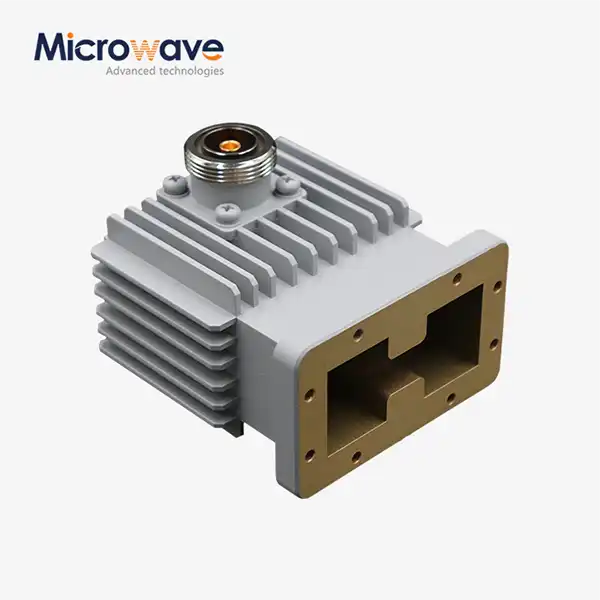 VIEW MOREHigh Power Waveguide to Coaxial Adapter
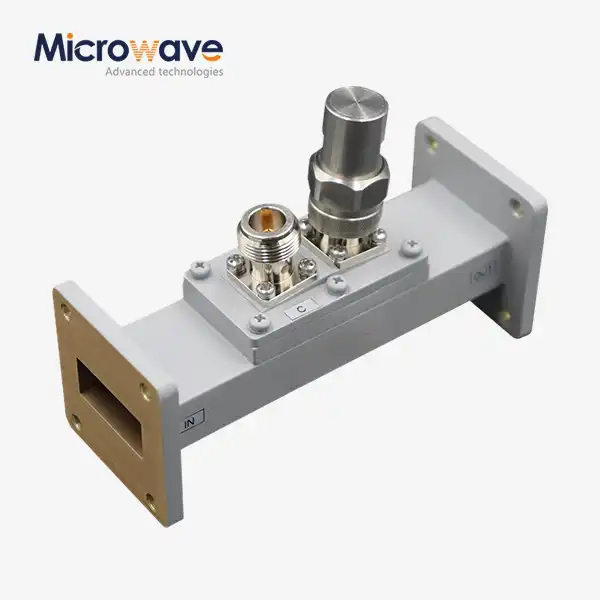 VIEW MOREWaveguide Loop Coupler
 VIEW MOREWG Band Stop Filter
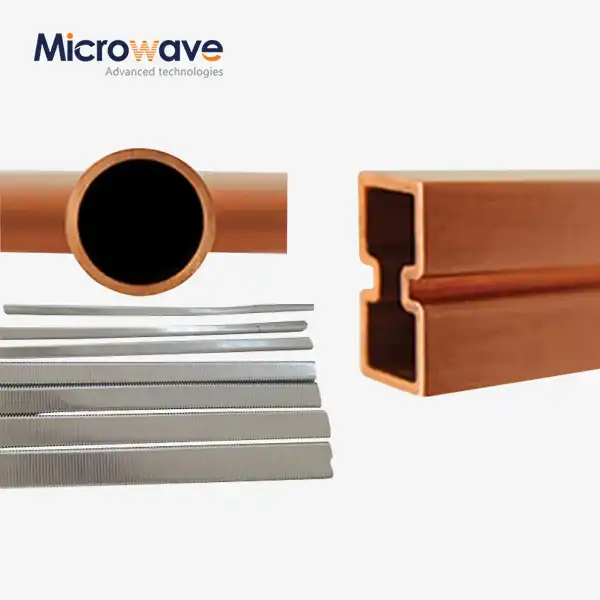 VIEW MOREWaveguide Tube
 VIEW MORELow Phase Noise Amplifier
 VIEW MOREAc Power Amplifier
 VIEW MORECorrugated Horn and Multimode Horn Antenna
 VIEW MOREDual Linear Broadband Dual Circular Polarization Horn Antenna
