





Waveguide Pressure Window Testing and Reliability
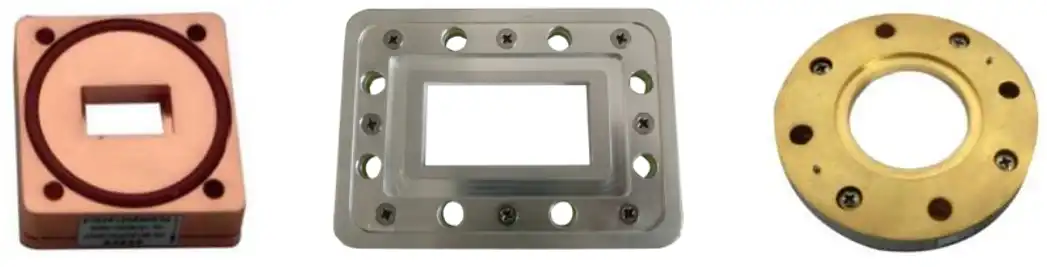
A waveguide pressure window is an important passive microwave part that is designed to keep transmission systems sealed while reducing RF signal loss as much as possible. These special barriers separate areas with different pressures, keeping pressured rooms filled with dry nitrogen or SF6 gas safe from atmospheric or vacuum conditions outside, without affecting the ability of electromagnetic waves to pass through. When radar systems work at high altitudes, satellite ground stations have to deal with water getting in, or particle accelerators need to be kept completely dry. Pressure windows are the first line of defense against dielectric breakdown, rust, and system failure in mission-critical situations.
Understanding Waveguide Pressure Windows and Their Critical Functions
Learning about waveguide pressure windows and how they work is very important.
The main reason for these parts is more than just keeping things separate physically. They fix engineering problems that keep coming up with high-reliability radio systems in science, defense, aircraft, and telecommunications.
Core Operational Principles
Pressure windows work as "invisible electromagnetic barriers," letting radio frequency energy pass through frequency bands from L-band to Ka-band while stopping real impurities. Whether it's PTFE, quartz, or alumina ceramic, the dielectric material is carefully designed to fit the waveguide's characteristic impedance. This keeps echoes to a minimum, which improves VSWR performance.
Internal pressurization stops voltage failure from happening. The dielectric strength of air drops at high altitudes and in places with low pressure. These windows keep the pressure inside the waveguide runs at sea level, which eliminates the risk of arcing in high-power radar receivers that work above 10,000 feet.
Hermetic covering keeps critical parts further down the line safe. Magnetrons, klystrons, and traveling-wave tubes can't handle pollution by water or particles. A single broken seal can cause a tube to fail catastrophically, resulting in replacement costs and downtime that cost tens of thousands of dollars.
These practical needs are directly translated into design standards that purchasing teams must check when they evaluate suppliers.
Application Environments Demanding Reliability
Radars in space have to deal with harsh changes in temperature, from very hot at ground level to very cold in the stratosphere, during a single trip. Defense phased-array systems send out megawatts of peak power, and even tiny surface pollution can cause damaging arcing. Coastal satellite earth stations fight salt fog rust while meeting 99.9% uptime standards. Windows in industrial plasma heating systems are constantly exposed to high average power in environments that are harsh on chemicals.
Each situation needs to be thoroughly tested using standard procedures.
Key Testing Methodologies to Ensure Waveguide Pressure Window Reliability
Liability risks are kept separate from reliable parts by comprehensive quality assurance. At Advanced Microwave Technologies Co., Ltd., our labs use multiple test stages that check for material soundness, electromagnetic performance, and weather resiliency for every waveguide pressure window.
Hermetic Seal Verification
Helium mass spectrometry is the best method available for finding leaks. Tracer gas is used to pressurize parts while spectrometers measure leak rates as low as 1 × 10⁻⁹ standard cubic centimeters per second, which is much lower than the usual 1 × 10⁻⁷ specification limits. This sensitivity makes sure that protected systems work reliably for decades.
Pressure proof testing involves parts being put under 1.5 times their maximum working pressure for long periods of time. This confirms the structure edges in both the dielectric material and the metal-to-ceramic bonded surfaces. This shows that the system is resistant to sudden changes in pressure when it starts up or when there is a problem.
To make sure that the whole system works with everything else, these mechanical tests must be done along with the electromagnetic performance tests.
Microwave Transmission Characterization
The Vector Network Analyzer tests over all operating bandwidths show that VSWR stays below 1.10:1 and insertion loss stays below 0.1 dB. Deviations show problems with the way the product was made, like not enough dielectric thickness, dirty adhesive surfaces, or violations of the measurement standard. Our measurement tools work in climate-controlled rooms from 0.5 to 110 GHz and can be calibrated to national norms.
Thermal and Environmental Stress Testing
Rapid thermal cycling between -55°C and +125°C shows that the thermal expansion coefficients of dielectric materials and steel flanges are not the same. When temperatures change, ceramic-to-metal joints are under the most stress. Good parts can withstand 200 rounds or more without cracking or losing their seal.
Testing for humidity according to MIL-STD-810 guidelines proves that the product won't rust in sea and tropical deployment settings. For long-term dependability problems to be found before they happen in the field, salt fog tanks mimic years of coastal operation in short amounts of time.
Adhering to ISO 9001:2015 and MIL-DTL-85 standards gives purchasing teams faith that sellers keep strict process controls in place during the whole manufacturing process.
Materials and Design Principles Impacting Performance and Durability
The choice of material has a big impact on a waveguide pressure window's ability to handle power, withstand harsh environments, and let electromagnetic waves pass through.
Comparative Material Properties
PTFE (polytetrafluoroethylene) is a cheap material that can be used in low-power uses (less than 10 kW average). Its low dielectric constant (εᵣ ≈ 2.1) and loss vector keep data loss to a minimum, but it can only work at temperatures up to +260°C. PTFE works great in business telecoms and industrial heaters, where it doesn't have to be exposed to harsh environments.
Fused silica and quartz provide better heat transfer, which is important for high-average-power systems that run at more than 50 kW continuously. These materials can handle sudden changes in temperature and keep their low-loss slope across a wide range of frequencies. Quartz windows are often used in military radar and satellite ground station uplinks because they have been shown to be reliable under long-term high-power transmission.
Alumina ceramic (96–99.5% purity) is very strong and works well in a vacuum, which is why it is the best choice for particle collider beamline separation and space-qualified systems. Because the dielectric constant is higher, impedance matching has to be done carefully. However, the temperature stability across -270°C to +1500°C lets it work in harsh settings.
Material choice and physical design work together to get the best electrical performance and mechanical longevity.
Advanced Design Optimization Techniques
To figure out thickness, you have to balance electromagnetic openness against mechanical strength. It is true that thinner dielectrics lower insertion loss, but they also lower the pressure rating and crack resistance. Our engineering team uses finite element analysis to model how stress is distributed under working loads. This helps them find the best thickness that increases safety gaps without lowering performance.
Long-term dependability is greatly affected by edge glue technology. Modern active metal brazing links ceramic dielectrics to metal flanges at the molecular level, instead of using organic glues that break down when exposed to heat or radiation. This way of making things increases operating lifespans from 5 to 7 years to 20 years or more in difficult settings.
In wide-temperature uses, thermal expansion correction is very important. When systems are properly built, they have flexible layers or manufactured stress relief features that allow for different levels of expansion between different materials. This keeps the bond from breaking during sudden changes in temperature.
Procurement Considerations: Choosing Reliable Waveguide Pressure Window Suppliers
To choose reliable waveguide pressure window makers, you need to look at more than just prices. You need to look at their professional skills, quality systems, and supply chain reliability.
Critical Supplier Qualifications
Certification badges offer basic security, but they are also the bare minimum needed to get in. RoHS compliance proves that a company cares about the environment, and ISO 9001:2015 quality control systems show that processes are disciplined. For export-controlled uses, defense companies also need to be registered with ITAR and be able to track the supply chain.
Infrastructure for testing tells the difference between capable sources and component dealers. Detecting helium leaks in-house, having VNA measurement suites that cover working frequency ranges, and temperature cycling rooms are all signs of real production knowledge. Customers take on the quality risk when suppliers don't have the right test tools to make sure their goods are safe before they ship them.
Customization and Engineering Support
Standard stock parts work for most uses, but mission-critical systems often need custom solutions. Check how fast providers' engineering is by having technical conversations about your particular needs, such as non-standard frequency ranges, higher pressure ratings, or unusual combos of materials. At Advanced Microwave Technologies Co., Ltd, we have focused research and development (R&D) resources that allow us to make fast prototypes in two to three weeks for proof-of-concept testing before committing to production.
Lead times and the power to make more of something affect project plans. Prototypes of one unit usually ship in three to four weeks, but 50 to 100 units need eight to twelve weeks to make, based on how long it takes to get the materials and machine them. Setting up a framework that deals with qualified providers lowers the risk of delays for multi-year projects that need supplies at regular intervals.
Geographic Sourcing Considerations
After recent world problems, supply chain stability has become more important. For security projects that need local material, U.S. and European makers are closer, which is helpful, but lead times and prices are higher because of the higher cost of labor. Chinese providers offer reasonable prices and wait times that are 4 to 6 weeks faster. They also have mature production hubs that back them up. Through ISO-certified processes and thorough testing methods at every stage of production, we make sure that our operations are both cost-effective and of high quality.
Maintenance Best Practices to Maximize Waveguide Pressure Window Service Life
Installing waveguide pressure windows correctly and checking them on a regular basis keeps them working longer and stops them from breaking down when they're needed most.
Installation Guidelines
Flange torquing requires precise tools and following the manufacturer's instructions. Under-torquing lets RF leaks and moisture in, while over-torquing creates dielectric stress concentrations that cause cracks to spread over time. Depending on the size of the flange and the material of the gasket, the torque number is usually between 15 and 45 inch-pounds.
Surface preparation needs careful attention. Using approved chemicals, clean the contact areas of rust, old gasket material, and other contaminants. Even tiny particles stuck between flanges can cause stress accumulation that causes the seal to fail too soon.
Internal pressurization systems need dry gas sources that are controlled and have desiccant dryers. When the moisture level is above 100 ppm, high-voltage breakdown resistance is weakened. This is especially true in systems with a lot of power. Keep the positive pressure difference between 5 and 15 psi above the ambient level to keep air from getting in during rounds of heat contraction.
These construction procedures set a level of stability that is maintained by routine upkeep throughout the life of the system.
Inspection and Monitoring Protocols
Visual checks every three months find early warning signs of failure before they become catastrophic. Check the dielectric surfaces for carbon tracking; dark spots show that arcing is starting. Check the pressure gauges to make sure the seal is still intact; a slow loss of pressure could mean that leaks are starting to form and need to be looked into right away. Keep an eye on changes in VSWR by looking at system performance data; a slow loss of quality could mean that moisture is building up or the dielectric properties are changing.
Every year, full tests should be done that check RF performance and leak rate using portable helium monitors. Keep track of standard measures during installation to find patterns of wear and tear that will allow you to replace the part before it breaks down in use.
Conclusion
In defense radar, satellite communications, and industrial microwave uses, the availability of the system is directly affected by how reliable the waveguide pressure window is. Parts must pass strict testing methods, such as hermetic seal verification, RF performance evaluation, and external stress validation, to make sure they meet the highest operating standards. When choosing between PTFE, quartz, and clay as a material, cost, power handling, and weather resistance must all be taken into account. To be successful at procurement, you need to look at more than just price when examining suppliers' certifications, testing skills, and tech support. When you put something correctly and do regular upkeep, you can make it last longer and avoid costly, unexpected downtime.
FAQ
Q1: How do I select between PTFE, quartz, and ceramic dielectric materials?
PTFE works well in business settings that need to save money and use less than 10 kW of power on average. It can also handle mild weather exposure. Quartz is needed for continuous wave devices with more than 50 kW of power, where temperature control determines the material choice. Choose ceramic for uses that don't need to be exposed to pressure, for temperatures above 400°C, or for space-qualified systems that need to have low outgassing and high dynamic strength.
Q2: What causes pressure window failures in field operations?
Over-pressurization beyond the allowed specs is the most common way for a mechanical part to fail, breaking insulating materials or bond joints. When flanges are installed incorrectly, especially when force is not distributed evenly, stress builds up, and cracks spread. RF arcing from surface pollution or water getting in slowly erodes dielectric qualities until they break down completely. Most field breakdowns can be avoided by following the manufacturer's instructions for regular checks and repairs for each waveguide pressure window.
Q3: Can pressure windows affect system VSWR performance?
When high-quality parts are built with the right impedance matching, they contribute very little to VSWR loss, usually adding less than 0.05 to the total performance of the system. When windows are placed with dirty or poorly designed surfaces, they reflect light, which makes both the emitter and receiver less sensitive. Before making a purchase decision, you should always check that the supplier's test data confirms the VSWR specs across your working bandwidth.
Partner with ADM for Certified Waveguide Pressure Window Solutions
Advanced Microwave Technologies Co., Ltd has been making waveguide pressure window solutions for the defense, aircraft, and telecoms industries for more than 20 years. Our ISO 9001:2015-certified factories have strict quality controls, and our 24-meter microwave lab lets us test everything from 0.5 GHz to 110 GHz. We offer custom-engineered solutions, fast development, low bulk prices, and helpful technical support throughout the entire span of your project. Based on your unique needs, our engineering team can give you full advice on choosing the right material, its pressure number, and how to get the best frequency performance. Get in touch with craig@admicrowave.com right away to talk about your needs and get a full quote. We can help you find trusted waveguide pressure window providers. Our prices are clear, we keep test data on file, and our warranties cover everything, so you can be sure that your system will work well for a long time.
References
1. Hansen, R.C. (2009). Microwave Scanning Antennas: Volume I – Apertures. Peninsula Publishing, Los Altos, California.
2. Pozar, D.M. (2012). Microwave Engineering, 4th Edition. John Wiley & Sons, Hoboken, New Jersey.
3. MIL-DTL-85/3C (2015). Waveguide, Rigid, Rectangular (Double Ridge and Single Ridge). Department of Defense Interface Standard.
4. Saad, T.S. (Ed.) (1971). Microwave Engineers' Handbook, Volume 2. Artech House, Dedham, Massachusetts.
5. ISO 9001:2015 (2015). Quality Management Systems – Requirements. International Organization for Standardization, Geneva, Switzerland.
6. Bhat, B. and Koul, S.K. (1987). Stripline-Like Transmission Lines for Microwave Integrated Circuits. Wiley Eastern Limited, New Delhi, India.
YOU MAY LIKE
 VIEW MOREEnd Launch Waveguide to Coaxial Adapter
 VIEW MOREMiter Bend Waveguide
 VIEW MORECustom WG to Coaxial Adapter
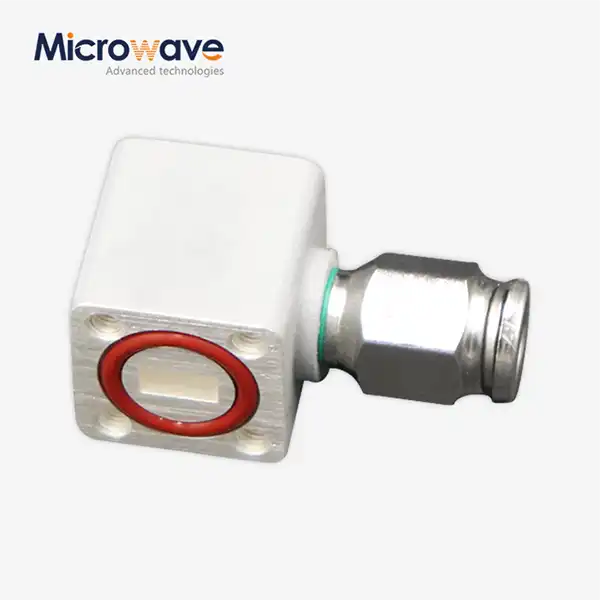 VIEW MOREInflatable Straight Waveguide
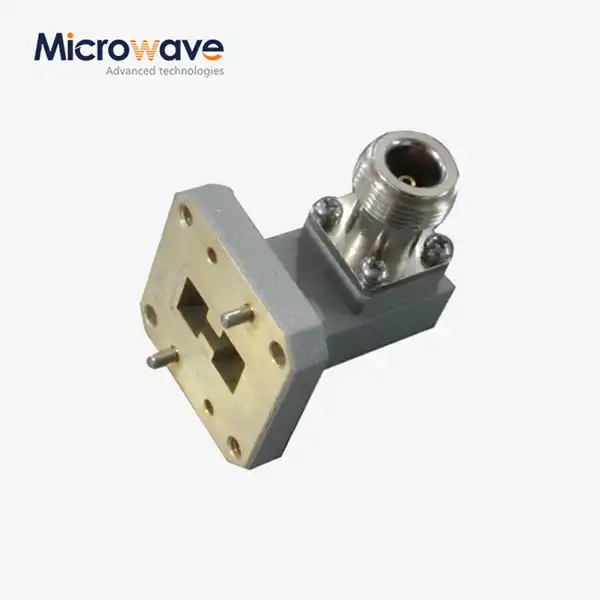 VIEW MORERight Angle Double Ridged WG To Coaxial Adapter
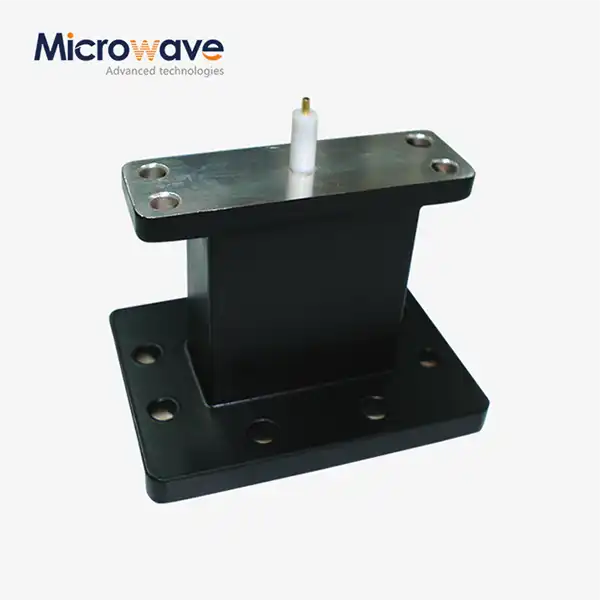 VIEW MOREEnd Launch Waveguide to Microstrip Adapter
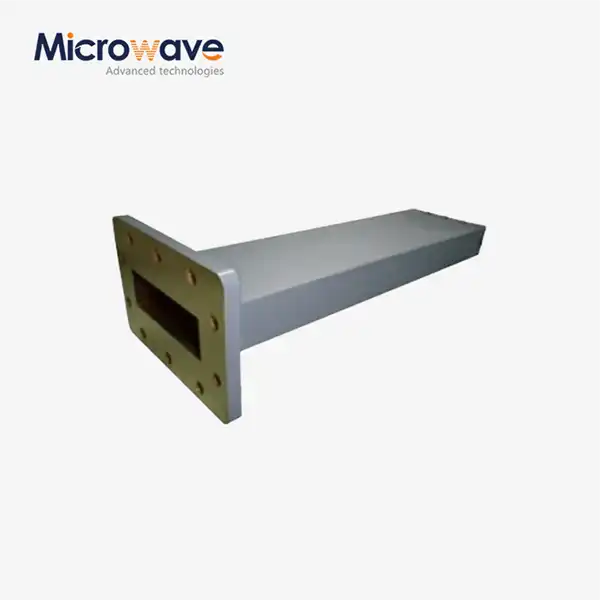 VIEW MOREWaveguide Unmatched Termination
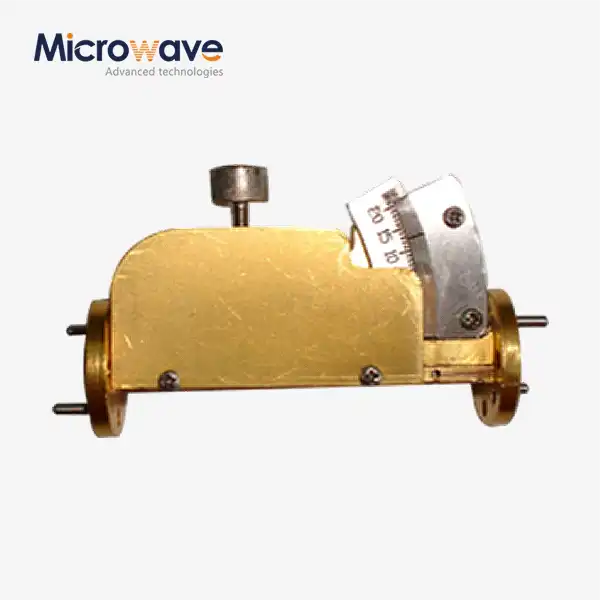 VIEW MOREWaveguide Variable Attenuator