





Choosing the Right Miter Bend Waveguide for High-Frequency Systems
Choosing the right waveguide bend component is very important when designing high-frequency RF and microwave systems. It can make or break the integrity of the signal. A Miter Bend Waveguide is a space-saving solution that guides electromagnetic waves around sharp angles by using internally reflective surfaces that are precisely machined. Unlike traditional curved bends that need a lot of installation space, Miter Bend Waveguide designs take up 30 to 50 percent less space while still being very good at transmitting power. This part is very useful in places where performance and size are important, like satellite communications, radar systems, and telecommunications infrastructure. When procurement teams and system designers understand the details of Miter Bend Waveguide technology, they can make choices that are in line with mission-critical operational needs.
Understanding Waveguide Bends: Core Principles and Functionality
When high-frequency electromagnetic waves travel through rectangular waveguides, they have to carefully change directions to get through complicated system architectures. Traditional smooth-radius bends do this with gradual curves, but their large size makes them hard to use in places with limited space, like airborne radar modules or satellite transponders.
How Mitered Designs Redirect Signals
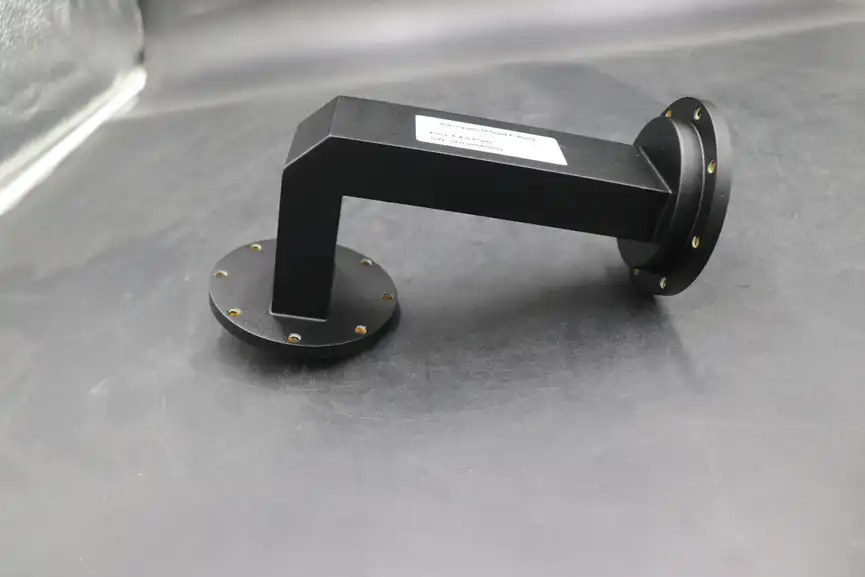
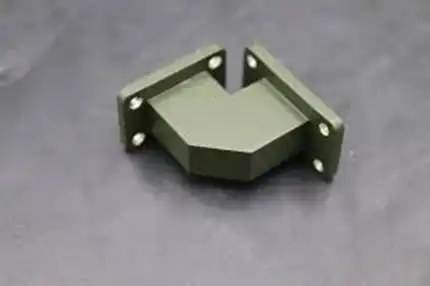
An impedance transformer, a Miter Bend Waveguide, has a sharp corner shape and a reflective plane that is angled at an angle, usually 45 degrees. This reflective surface makes up for reactive gaps at the corner junction, keeping the wave impedance the same during the whole transition. The physics is similar to optical reflection, and the angled miter changes the flow of energy while causing little damage to the pattern of the electromagnetic field. Tolerances of ±0.01mm can be reached with precision CNC machining. This makes sure that the field is spread out evenly, which stops signal distortion and unwanted reflections.
Critical Design Parameters
How well a Miter Bend Waveguide works depends on a number of engineering factors. The bend angle has a direct effect on the reflection properties. Most turns are 90 degrees, but 45-degree and custom angles can be used for specific routing needs. Quality of the surface finish is also very important; rough internal surfaces scatter high-frequency waves, which raises insertion loss and creates standing waves. Material conductivity affects how much power it can handle and how quickly it can lose heat. Flange compatibility makes sure that it can be easily connected to existing waveguide runs.
Frequency Range and Application Zones
Miter Bend Waveguide parts can work with a wide range of frequencies, from UHF bands at 0.3GHz up to millimeter waves above 110GHz. For lower frequency uses, like L-band and S-band satellite ground stations, aluminum construction is a good choice because it is cheap and works well electrically. To keep the phase stable while tracking a target, X-band and Ku-band radar systems need tighter manufacturing tolerances. Millimeter-wave frequencies are used in 5G backhaul and automotive radar. Copper bodies that are oxygen-free and plated with silver reduce conductor losses that get big at higher frequencies. Knowing these features that change with frequency makes it easier to match the specs of a component to the needs of a system. These bends are used in base station antenna feed systems for telecommunications networks, where their small size lets them set up equipment racks more efficiently. Defense radar installations use Miter Bend Waveguide ruggedized versions that can handle the shock, vibration, and sudden changes in temperature that happen on mobile platforms. Earth stations that use satellite communication rely on variations that are carefully machined to keep the signal quality high across multi-gigahertz bandwidths while they are continuously operating.
Selecting the Optimal Component for Your System
To match waveguide bend specifications to application needs, technical parameters must be carefully considered along with practical purchasing issues.
Defining System Parameters
First, write down the frequency range that your system needs to work. A Ku-band satellite uplink that works between 14.0 and 14.5 GHz needs waveguide dimensions and tolerances that keep working well across this bandwidth. Next are the requirements for handling power. For example, a 2kW transmitter output needs parts that can handle continuous high-power operation and have the right thermal management features. There aren't as many good options because of physical limitations like mounting space, weight limits, and environmental conditions.
Loss Minimization Strategies
Insertion loss has a direct effect on system link budgets, especially in receiver paths where noise figure and sensitivity change by tenths of a decibel. When you combine high-conductivity materials with precise surface finishes, you can cut down on resistive losses. Making sure that the impedance compensation at mitered junctions is correct stops reflections that would make standing waves and lower the power that is sent. Looking at test results that plot insertion loss versus frequency for potential parts can help you find designs that work best for your particular frequency range.
Mechanical Integration Factors
Waveguide flanges need to fit with system interfaces that are already in place, whether they are UG-style circular flanges used in business or MIL-standard rectangular flanges required for defense projects. Mounting hole patterns, gasket needs, and bolt torque requirements all affect how hard it is to install and how reliable it will be in the long run. For mobile platforms to work, parts need to be built in a way that keeps them aligned even when they're vibrating and going through changes in temperature without affecting their electrical performance.
Real-World Application Scenarios
Think about an upgrade to a satellite ground station that needs to route a small feed network behind a 4.5-meter antenna. The bend radius is limited to 150 mm by the space behind the reflector, Miter Bend Waveguide, but the Ku-band performance stays the same between 10.7 and 12.75 GHz. It is possible to make a 90-degree H-plane Miter Bend Waveguide out of WR-75 waveguide with corners that are compensated. This bend fits in the space available and has ≤0.08dB insertion loss and ≥26dB return loss across the whole band. When it comes to problems, aerospace radar systems are different. An airborne fire-control radar that works at X-band (8–12 GHz) has to send signals through a nose cone that is only 380 mm across. Each waveguide part can only weigh up to 85 grams because of weight restrictions. Aluminum WR-90 Miter Bend Waveguides with silver plating work well for RF signals at 62 grams each, so you can use that weight for other parts of the system. They also have a loss of only 0.12dB and can withstand 15G shock loads. Defense communication systems need to be able to verify the supply chain and make sure that the electrical performance is good. For a military communications link to be safe, the parts must be made according to MIL-DTL-85/3 standards and come with material certifications that show how pure the copper is and how thick the plating is. Procurement teams have to check that the quality systems used by manufacturers meet AS9100 aerospace standards. This makes sure that production processes are always the same and that products work well in the field.
Effective Procurement Strategies
Finding good Miter Bend Waveguide parts means navigating different supplier channels while keeping cost, lead time, and customization needs in mind.
Supplier Channel Options
Direct relationships with manufacturers give you access to engineering advice when choosing parts and let you make changes to fit your specific needs. Companies that make things like Advanced Microwave Technologies Co., Ltd have design teams that can find the best ways to bend shapes for different frequency ranges or physical limitations. Direct purchasing gets rid of the markups that distributors add, but it may need higher minimum order quantities that are better for production programs than for prototyping. Some well-known distributors, like Pasternack and Richardson RFPD, keep standard catalog parts in stock and can ship them right away. This makes them perfect for making prototypes or fixing things quickly. Their large selection of products lets you compare products from different brands side by side. But distributor inventory is usually limited to common configurations; for unique needs, you need to work directly with the manufacturer.
Pricing and Lead Time Considerations
For common Miter Bend Waveguide sizes and frequency bands, standard catalog parts from well-known manufacturers usually ship within two to four weeks. The price goes up with frequency. For example, a WR-90 X-band Miter Bend Waveguide might cost $180 to $320 per unit when bought in bulk of 10. A WR-10 W-band variant that works at 75 to 110 GHz costs $850 to $1,200 because it needs to be made with tighter tolerances and uses more specialized materials. For custom designs, the procurement process takes 8–14 weeks because engineers have to be consulted, prototypes have to be made, and qualification tests have to be done. The money spent is well spent when standard parts can't meet specific performance or mechanical interface needs. Custom pricing depends on how complicated the design is. For example, a changed bend angle with standard flanges will add 15–25% to the base price, while completely custom geometries with non-standard interfaces may double the unit price.
Standard Versus Custom Solutions
Evaluate whether standard catalog parts meet your needs before pursuing custom designs. Standard products have been tested and shown to work well. They come with easy-to-find documentation like S-parameter data, mechanical drawings, and results from environmental tests. Their manufacturing processes are well-established, which guarantees consistent quality and shorter procurement cycles. Custom parts are needed when there isn't enough room for standard bend angles, when waveguides need to be a certain size to work with a proprietary system architecture, or when mechanical interfaces need to work with hardware that is already in place. As part of the development process, electromagnetic simulations are used to check the electrical performance, prototypes are made to make sure they fit correctly, and environmental compliance is shown through qualification testing. Strong partnerships with suppliers make custom development easier. For example, ADM has been designing waveguides for more than 20 years, which speeds up the process from idea to production.
Maximizing Performance Through Proper Implementation
Choosing the right components is only one part of Miter Bend Waveguide, getting the best system performance. How things are installed and how often they are maintained have a big effect on how reliable they are in the long run.
Installation Best Practices
At Miter Bend Waveguide junctions, mode conversion and too much insertion loss can't happen if the flanges are perfectly lined up. Tighten the bolts evenly in a star pattern to the right amount of force, which is usually 25 to 30 inch-pounds for UG-style flanges. This keeps the gasket from compressing, which would change the shape of the waveguide cross-sections. Before putting the parts together, make sure that the mating surfaces are very clean. Metal particles or oxidation can cause electrical discontinuities that hurt performance. Waveguide-grade gaskets that are right for your operating frequency should be used. Indium-plated copper gaskets work best for high-power systems, while conductive elastomers are fine for lower-power ones. Support waveguide runs well enough to keep mechanical stress from moving to flanged connections. When assemblies aren't properly supported, thermal expansion during high-power operation or temperature cycling can cause them to bend, which can damage the joints. Install support brackets at the intervals suggested by the waveguide manufacturer. Depending on the size and orientation of the waveguide, this is usually every 0.5 to 0.8 meters.
Maintenance and Troubleshooting
Periodic inspection finds problems as they start to appear before they affect how the system works. Every three months, check the connections between the flanges for arcing signs like pitting, discoloration, or metal deposits that show bad electrical contact. Every year, check the torque on the mounting hardware. Over time, vibrations will loosen the fasteners. During major maintenance periods, use lint-free swabs and isopropyl alcohol to clean the inside of the waveguide. This will get rid of the dust that builds up and causes more insertion loss at higher frequencies. Measure VSWR across the operating band to find reflections that show damaged or misaligned parts when trying to figure out why performance is dropping. Time-domain reflectometry finds faults along waveguide runs and can tell the difference between problems with flange connections and bent parts that are broken. Using thermal imaging during high-power testing can show hotspots that mean there is bad electrical contact or damage inside the component that needs to be replaced.
Future-Proofing Your Waveguide Network
Design systems that can be expanded to meet the needs of the future. Choose parts that are rated for frequencies 20–30% higher than what is needed for current operations. This will leave room for upgrades or wider bandwidths. Choose the right materials and plating for the expected service life. For example, systems that will be used for more than 15 years should be built with gold-plated copper, even though it costs more at first. Keep detailed records of your waveguide network, such as the serial numbers of the components, test results, and a history of maintenance. This information makes troubleshooting easier and makes it easier to make changes in the future. Think about modular architectures, which let you replace certain parts without having to redesign the whole system. Standardizing on common flange types across your installation makes it easier to keep track of your inventory and lets you fix problems quickly with spares that you already have on hand.
Conclusion
To choose the right Miter Bend Waveguide, you have to weigh the electrical performance, mechanical limitations, and the ease of procurement. When properly specified, these small components provide efficient signal routing in areas with limited space while maintaining low insertion loss and high return loss. Procurement teams can match parts with application needs by knowing the main differences between Miter Bend Waveguide and curved designs, being aware of material trade-offs, and using systematic selection criteria. By building relationships with reputable manufacturers, you can get both standard catalog items and custom solutions that are made to fit your system's needs. The best way to make sure that parts last as long as possible and keep working well is to install them correctly and do regular maintenance on them.
FAQ
1. What insertion loss differences exist between mitered and curved waveguide bends?
When swept radius bends are well-designed, they usually have an insertion loss of 0.03-0.06dB because their smooth geometry keeps the impedance from dropping suddenly. With precisely machined corner geometries that cancel out reactive effects, compensated Miter Bend Waveguide designs get about the same performance, at 0.08 to 0.12dB. In most system link budgets, the difference isn't important, so the 30–50% space savings of Miter Bend Waveguide configurations are what make them the best choice for small installations.
2. Which materials work best for high-power microwave applications?
Copper that doesn't contain oxygen and is plated with silver is the best material for high-power systems that deal with kilowatt-level signals. Copper is a great conductor of both heat and electricity, so it reduces resistive heating and moves heat quickly through the body of the component. Silver plating lowers surface resistance, which becomes important at microwave frequencies. This stops hotspots that could cause the multipactor to break down or suffer thermal damage while it is running continuously.
3. What lead times should procurement teams expect for custom waveguide components?
From the first meeting to the delivery of the finished product, custom Miter Bend Waveguide development usually takes 8 to 14 weeks. The schedule includes electromagnetic simulation (one to two weeks), making a prototype (two to three weeks), electrical testing and fit confirmation (one week), making any needed design changes (one to two weeks), and making the final product (three to five weeks). With extra fees, rush programs can shorten schedules by 30 to 40 percent.
Partner with ADM for Your Waveguide Component Needs
Advanced Microwave Technologies Co., Ltd. is ready to help you with your high-frequency system needs by providing you with custom waveguide solutions. We make sure that every Miter Bend Waveguide part we make meets strict performance standards in our 24-meter microwave darkroom, which is equipped with advanced measurement tools that can work up to 110 GHz. Our engineering team has more than 20 years of experience, so they can help you with any project, whether you need standard catalog configurations or solutions that are made just for you. As a result of our ISO 9001:2015 quality certification and RoHS compliance, we can provide parts that work well in defense, aerospace, telecommunications, and research settings. Email our technical experts at craig@admicrowave.com to talk about your specific needs. We have been making Miter Bend Waveguides for a long time, so we can give you quick quotes, fair prices, and reliable delivery times that keep your projects on track.
References
1. Marcuvitz, Nathan. "Waveguide Handbook." Institution of Engineering and Technology, 1986.
2. Montgomery, C. G., Dicke, Robert H., and Purcell, Edward M. "Principles of Microwave Circuits." Peter Peregrinus Ltd., 1987.
3. Collin, Robert E. "Foundations for Microwave Engineering." IEEE Press, 2001.
4. Saad, Theodore S. "Microwave Engineers' Handbook, Volume 1." Artech House Publishers, 1971.
5. Pozar, David M. "Microwave Engineering." John Wiley & Sons, 2011.
6. Harvey, A. F. "Microwave Engineering." Academic Press, 1963.
YOU MAY LIKE
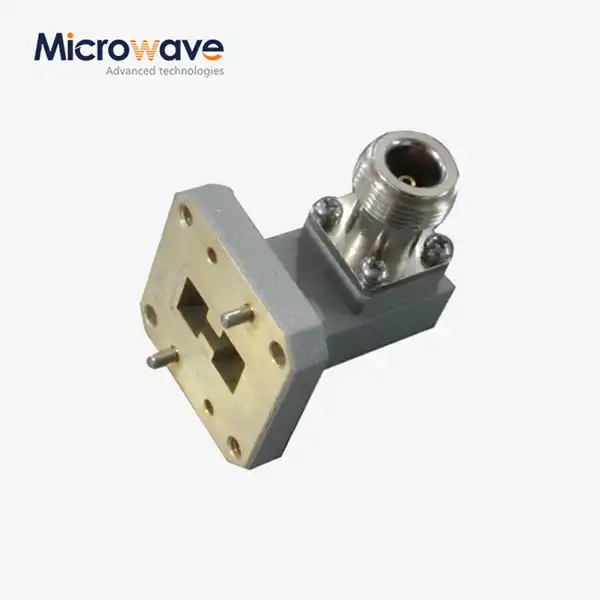 VIEW MORERight Angle Double Ridged WG To Coaxial Adapter
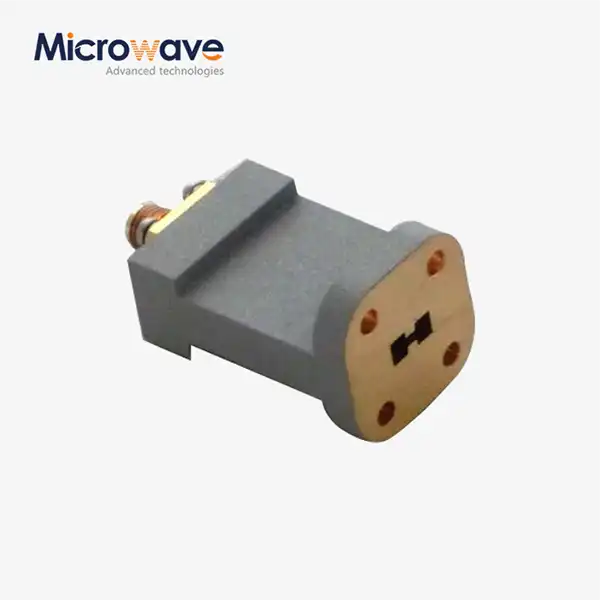 VIEW MOREEnd Launch Double Ridged WG To Coaxial Adapter
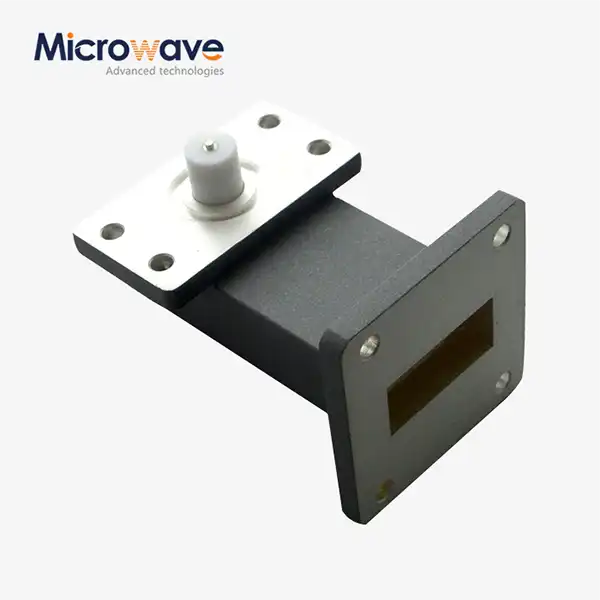 VIEW MORERight Angle Waveguide to Microstrip Adapter
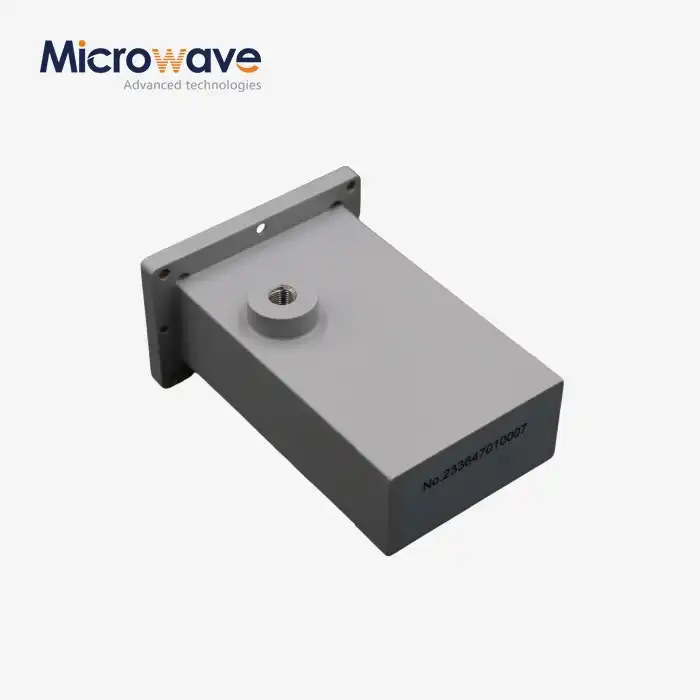 VIEW MOREWG Termination
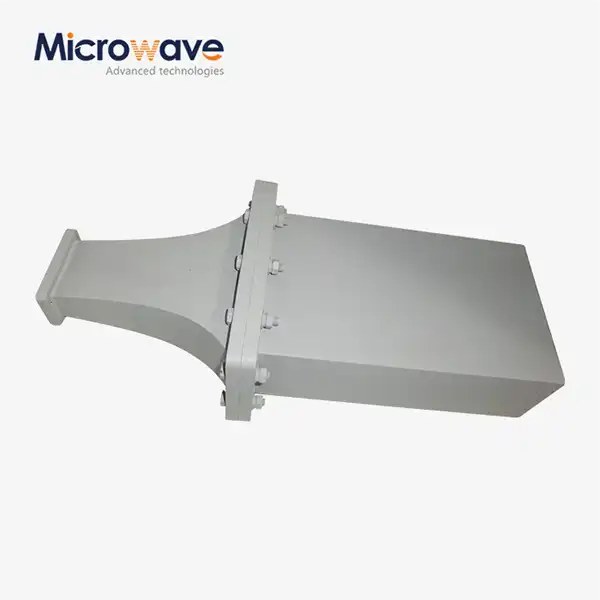 VIEW MOREDouble Ridge Waveguide Termination
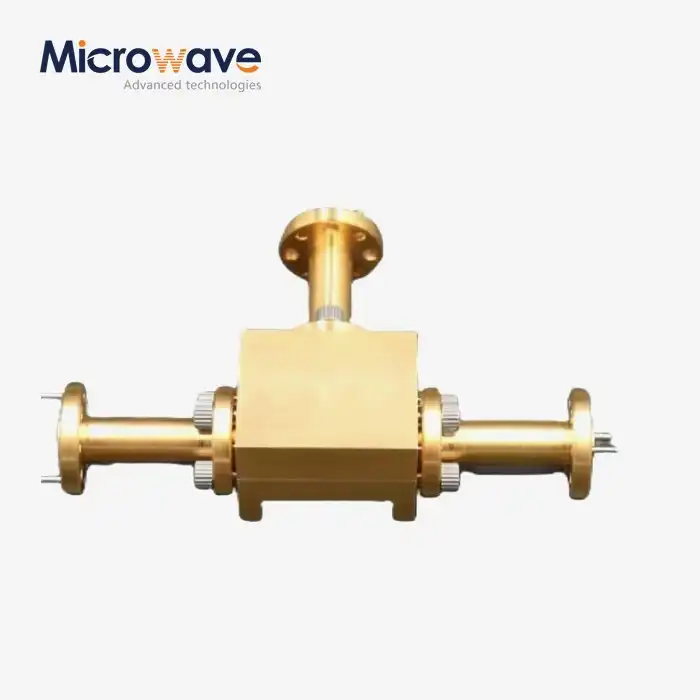 VIEW MOREWaveguide Power Divider
 VIEW MOREE-Plane Tee
 VIEW MORECrossguide Directional Coupler