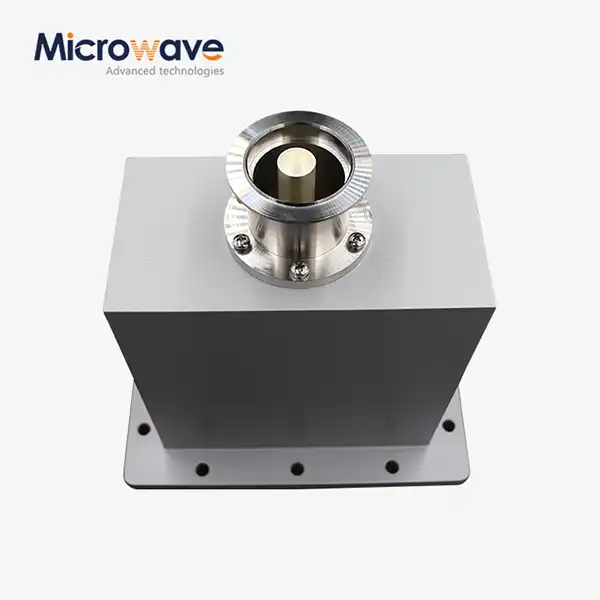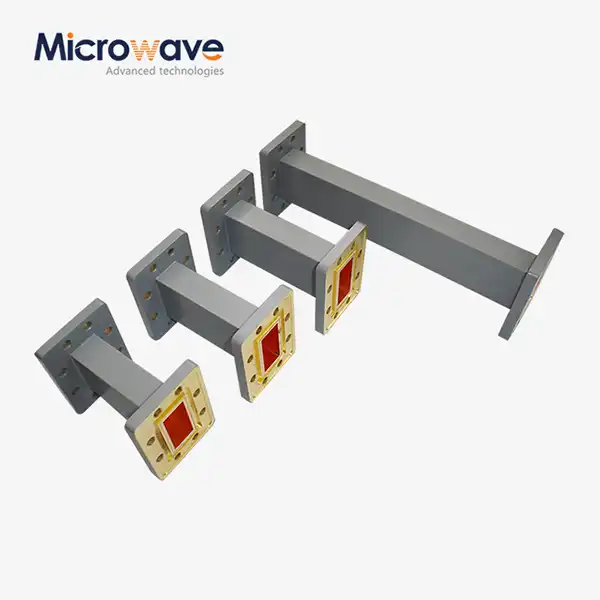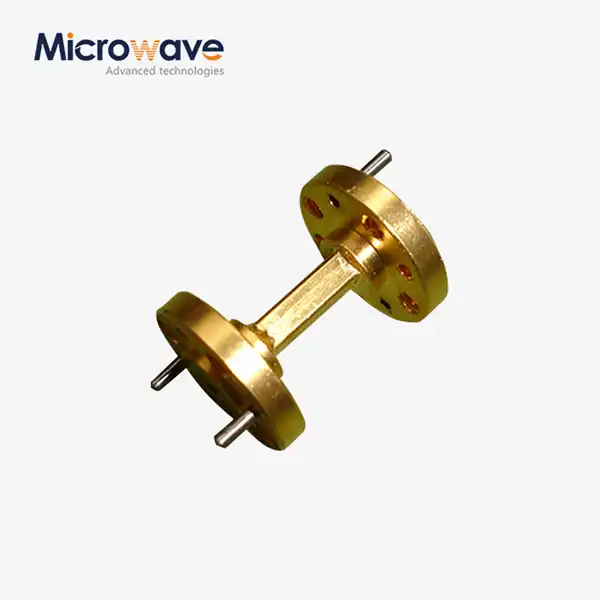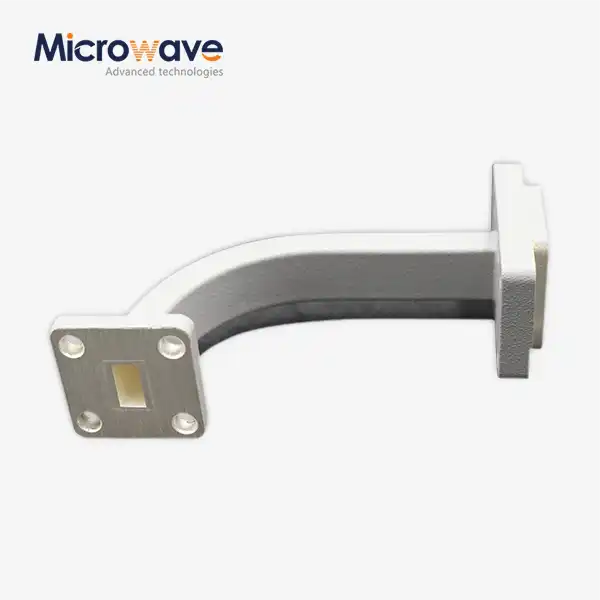





Design of integrated waveguide twist components
To get the best performance out of a Waveguide Twist, you need to carefully choose the parts, install them correctly, and keep an eye on the system all the time. For devices like the Waveguide Twist, which works at frequencies between 10.7 GHz and 12.75 GHz, it's important to keep insertion loss as low as possible (ideally ≤0.5 dB), port-to-port isolation as high as possible (≥70 dB), and impedance matching across the whole operating bandwidth. Controlling the temperature is also very important, especially for systems that handle up to 200W of power, since changes in temperature from -40°C to +85°C can change the way filters work. Regular checks with vector network analyzers and following strict installation procedures greatly increase the life of Waveguide Twist while keeping the integrity of signals in radar and satellite communication applications.
Understanding Waveguide Twist and Its Design Principles
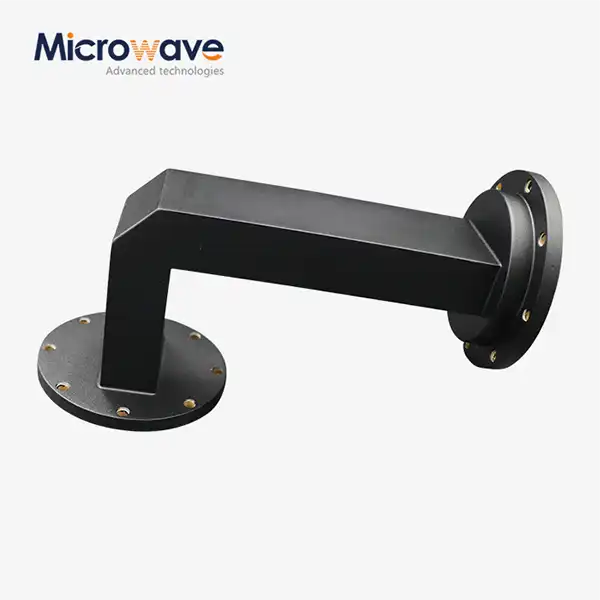
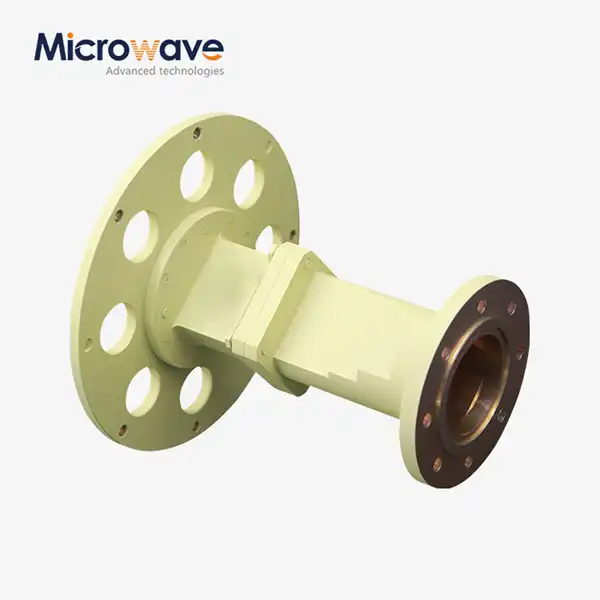
As frequency-selective switches, Waveguide Twist components let a single antenna send and receive signals at different frequency bands at the same time without any problems. For full-duplex communication, these passive microwave parts separate the uplink and downlink channels in satellite ground stations and other communications infrastructure. The Advanced Microwave Technologies Co., Ltd. Waveguide Twist is a good example of this because it was made to work with the 10.7–12.75 GHz range, which is used a lot in VSAT networks and direct broadcast satellite services.
The Physics Behind Polarization Rotation
There are two bandpass filters inside a Waveguide Twist: one for the receive path and one for the transmit path. These filters are connected to the same antenna port. For example, the receive filter lets downlink frequencies through but blocks energy in the transmit band, and the other way around. The frequency division multiplexing keeps the sensitive low-noise block downconverter on the receive side from being overloaded by the strong transmit signal. The difficult part of engineering is getting sharp filter roll-off characteristics without adding too much insertion loss or group delay distortion.
Geometric Parameters That Define Performance
Link budget calculations are directly affected by insertion loss. Each decibel of loss lowers the effective power being sent and raises the sensitivity of the receiver. In its operating range, the ADM Waveguide Twist keeps insertion loss below 0.5 dB. This is possible with low-loss dielectric materials and precision-machined waveguide interfaces. This feature keeps the signal strength high in long-distance satellite links, where even small losses add up to a big problem. When the transmit and receive ports are separated, cross-talk that lowers the signal-to-noise ratio is stopped. The 70 dB minimum isolation requirement makes sure that there is almost no transmit power leakage into the receive path. This is very important when a 200W transmitter is only a few centimeters away from a receiver that handles microwatt-level signals. Isolation is achieved with advanced filter topologies that use resonant cavities and cross-coupling techniques, and the passband flatness is not affected. The quality of impedance matching is shown by Return Loss and VSWR. Standing waves are caused by bad matching and send power back to the source. This lowers efficiency and could damage power amplifiers. If the specifications are higher than 18 dB return loss (1.28:1 VSWR), there will be almost no reflections across the whole bandwidth.
Material Selection and Its Impact on Signal Transmission
Changing temperatures make it hard for Waveguide Twist components to work the twist waveguide properly. As metal cavities heat up, they move resonant frequencies around, which could make isolation at band edges worse. Temperature-compensated mechanical designs and low-expansion materials like Invar are used in the Waveguide Twist to keep its electrical properties from -40°C to +85°C. This stability is important for outdoor installations that have to deal with changes in temperature and light throughout the day.
Performance Characteristics and Advantages of Integrated Waveguide Twists
System-level problems can make even well-designed Waveguide Twist components not work as well as they should. By identifying these bottlenecks, troubleshooting can be done faster, and costly downtime in mission-critical applications can be avoided.
Minimizing Insertion Loss While Maximizing Bandwidth
The most common cause of field failures is a contaminated connector interface. Waveguide flanges that are dirty, wet, or oxidized cause resistive losses to rise and PIM products to be made. These problems can be avoided by checking and cleaning regularly with lint-free wipes and isopropyl alcohol, as well as tightening flange bolts to the manufacturer's specifications. Silver-plated interfaces don't oxidize as quickly as bare copper, which is why high-end Waveguide Twist designs use this plating.
Enhancing System Reliability Through Passive Design
Systematic measurements are used to figure out the failure mode when link performance drops. Measure S-parameters across the frequency range of the Waveguide Twist using a vector network analyzer. More insertion loss could mean that there is internal arcing, moisture getting in, or component degradation. There are fewer isolation points that can cause filter detuning or physical damage. Changes in the center frequency show that the temperature is moving or the device is deforming.
Practical Steps for Diagnosis:
Use time-domain reflectometry to find impedance discontinuities in coaxial cables connecting the Waveguide Twist and transceivers to make sure they are functional. Check the Waveguide Twist temperature when it's working at full power; too much heat means bad thermal management or internal arcing. Check the resistance of the ground to make sure that the RF ground paths stay intact; floating grounds cause common-mode currents that weaken isolation. Look for physical problems that could affect electrical performance, like waveguide walls that are dented, fasteners that are loose, or plating that has corroded.
Compact Integration Supporting Dense System Architectures
When put in front of the Waveguide Twist, impedance matching networks even out the antenna VSWR, which lowers the reflections that would otherwise put stress on the Waveguide Twist. To cut down on standing waves, stub tuners or quarter-wave transformers that are custom-made for each antenna are used. Noise Figure Management in the receive chain needs careful attention to the order of the parts. By putting a low-noise amplifier with enough gain right after the receive port of the Waveguide Twist, you can get around the insertion loss before the signals hit noisy active components further downstream. This effect is kept to a minimum by the 0.5 dB insertion loss specification, which keeps the overall system noise figure the same. Harmonic Filtering stops emissions that aren't in the same band from getting to the Waveguide Twist. At integer multiples of the carrier frequency, transmitters produce harmonics. If these unwanted signals are not filtered properly, they can weaken isolation or even damage components. This problem can be fixed in high-power applications by using external bandpass filters or built-in harmonic traps.
Comparing Integrated Waveguide Twist Solutions for Informed Decision-Making
Choosing what to buy depends on how well the twist waveguide specifications of the parts match the needs of the system. When it comes to RF components, Waveguide Twist units are unique because they can do certain things and not do others.
OEM Versus Custom Component Providers
Bandpass filters are very good at selecting only certain frequencies, but they don't have the two-port functionality that Waveguide Twist designs do. When you use separate filters for the transmit and receive paths, you need either switch matrices or separate antennas, which makes the system more complicated and costs more. Through integrated design, Waveguide Twist components solve this problem in a very nice way. RF switches allow time-division duplexing, which means that sending and receiving happen one after the other instead of at the same time. Switches can work for half-duplex uses like push-to-talk systems, but they add switching time delays that aren't acceptable for full-duplex satellite links. With a Waveguide Twist, communication can go both ways continuously and without any delays. Frequency Mixers change signals between frequency bands, but they add noise and need oscillator sources close by. Passively separating frequencies without active parts, Waveguide Twist offers higher reliability and doesn't need DC power.
Material Trade-Offs Between Copper and Aluminum
Precision in Frequency Coverage: The passband of the Waveguide Twist must cover your system's operating frequencies with enough room to spare. It works with standard satellite downlink frequencies, which are 10.7 to 12.75 GHz. Make sure that the frequencies of your uplink are within the transmit port specifications to make sure that the whole system is covered. Needs for Isolation: Figure out how much isolation is needed by using the transmit power and the receiver's sensitivity. To find the minimum level of isolation needed, divide the transmit power (in dBm) by the receiver damage threshold. Receivers that deal with signals that are 10 million times weaker than the transmitted power are protected by the 70 dB standard. This makes it good for most commercial satellite applications. Power Handling: The 200W rating is enough for most VSAT terminal power levels. Waveguide Twist designs rated for kilowatts are needed for higher-power applications like TV broadcast uplinks. This means that waveguides need to be bigger and cooler. Ruggedness in the environment: The conditions of deployment determine the building's needs. For use in a lab, lighter enclosures are fine, but for use outside, weatherproof housings with sealed interfaces are needed. The temperature range from -40°C to +85°C covers most places on Earth.
Balancing Bandwidth Against Physical Constraints
Supply chain risk can be kept to a minimum by choosing manufacturers with a history of success. The Advanced Microwave Technologies Co., Ltd. has been making precise microwave parts for more than twenty years. RoHS compliance and ISO 9001:2008 certification show that you care about quality management systems and the environment, respectively. The 24-meter microwave darkroom of the company allows thorough performance validation across the frequency range of 0.5 to 110 GHz, which gives confidence in the published specifications. When you are looking at different vendors, you should ask for technical data packages that include measured S-parameters for different temperature and frequency ranges. Find out the warranty terms and the average amount of time between failures (MTBF). Suppliers you can trust give you a lot of paperwork to back up the traceability rules that are very important in defense and aerospace applications.
Procurement Guide for Integrated Waveguide Twist Components
Strategic purchasing decisions make sure that performance needs are met while also keeping costs low and making sure that supply chains are reliable. When doing business with other businesses, it's important to know how costs work and how to get the best deals for Waveguide Twist components.
Evaluating Vendor Certifications and Quality Systems
For commercial-grade parts, standard catalog Waveguide Twist designs with common frequency ranges and power ratings usually cost between $800 and $3,500 per unit. Military-spec versions that pass MIL-STD environmental testing cost 50–200% more than commercial versions that meet the same requirements. Prices for custom-made Waveguide Twist designs with specific frequency plans, better power handling, or unique interface configurations range from $5,000 to $25,000, depending on how complicated they are and how many are being made. Price changes are caused by a number of things. The frequency range has a direct effect on the cost; higher frequencies need more expensive and closely regulated materials for production. Power handling goes up with size—bigger units need bigger waveguides, which take more material and more time to machine. For isolation requirements above 80 dB, you need more filter poles, Waveguide Twist, which makes things more complicated and costs more.
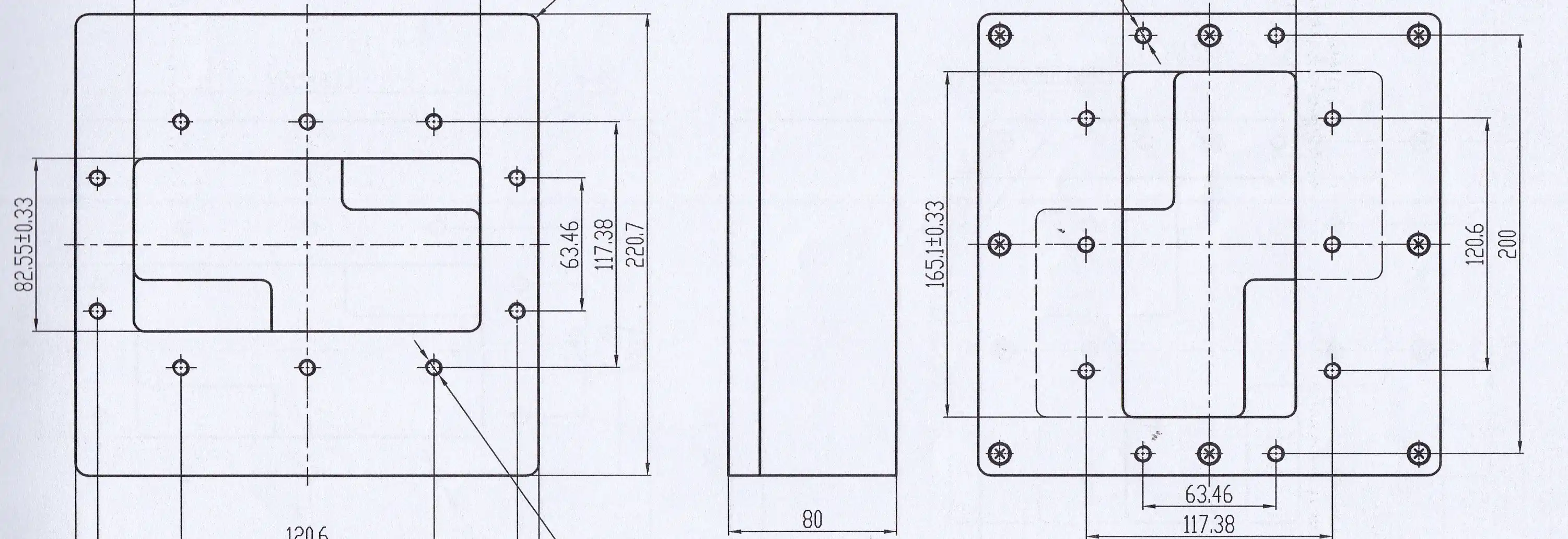
Standard Catalog Versus Engineered Solutions
Orders in bulk can save you a lot of money. Costs for engineering and tools that aren't used often are spread out over longer production runs, which lowers the cost per unit. If you buy 50 Waveguide Twist units, you might get 15–25% off the single-unit price. If you buy more than 100 units, you might get 30–40% off. By setting up blanket purchase orders with scheduled releases, you can keep your volume pricing while still having inventory flexibility. Besides lowering costs directly, strategic partnerships with well-known manufacturers offer other advantages. Allocating priorities during shortages of parts, speeding up delivery for urgent needs, and having access to engineering support all improve operational efficiency. Combined production and research and development (R&D) at ADM allow for quick prototyping and customization, which shortens the time it takes to finish projects.
Technical Support and Documentation Requirements
Getting quotes faster is made possible by good technical communication. Write down what you need, including the operating frequencies, power levels, types of interfaces (waveguide flange standards or coaxial connector types), the environment, and any quality certifications that are required. Include the amount needed and when you'd like it delivered. Before placing an order for production, ask for sample units to be tested to make sure they meet the requirements. Bench testing on your real system configuration confirms performance in the real world and finds integration problems early on. ADM provides quick prototyping services to help with evaluation programs. Talk about customization options when you first contact them. Standard products are the quickest and cheapest to ship, but designs that are specifically made for an application may be necessary. System integration is improved by changing parameters like frequency ranges, interface types, or mechanical configurations. As part of ADM's OEM services, you can change parameters, adapt the interface, and change the way the product looks, including adding your own logo.
Pricing Considerations and Volume Benefits
Precision Waveguide Twist components carry pricing reflecting the sophisticated manufacturing required to achieve specified performance. Unit costs vary based on volume, frequency band, and customization. Long-term agreements provide additional savings for customers with predictable annual demand. Lead times shorten for repeat orders as tooling and fixturing remain established from initial production. Procurement managers planning multi-year programs should discuss framework agreements establishing pricing stability and capacity allocation.
Conclusion
To get the most out of a Waveguide Twist, you need to pay attention to how it is installed, what parts it uses, and how the whole system works together. The Advanced Microwave Technologies Waveguide Twist has low insertion loss, high isolation, and strong environmental stability. It meets important needs in satellite communication and telecommunications infrastructure. Procurement decisions are based on the right selection criteria, such as frequency coverage, power handling, and environmental suitability. To get the best prices, strategic supplier relationships and bulk buying are also recommended. As technology improves with new materials and ways of making things, choosing experienced partners ensures that you can access new features that protect your communication investments for the future. The success of a system in mission-critical situations depends on how well it works technically, how reliable it is, and how cheap it is.
FAQ
1. What factors most significantly influence insertion loss in waveguide twists?
In order to receive applications, standard Waveguide Twist designs operate between 10.7 and 12.75 GHz, which corresponds to satellite downlink frequencies used for VSAT and direct broadcast. Uplink bands that are paired up by transmit units are covered. The precise ranges depend on regional frequency allocations and application needs, so it's important to check them against your system's frequency plan.
2. Can waveguide twists be customized for non-standard frequency bands?
Performance is greatly affected by the quality of the installation. If you don't torque waveguide flanges to the right specifications, air gaps can form that make isolation worse, and if you over-torque them, you could damage the metal. Without proper grounding, common-mode interference can occur. If you clean the connector, resistive losses and passive intermodulation go away. Following the manufacturer's installation instructions will keep performance levels at the right level for the whole life of the system.
3. How do integrated twists compare to rotary joints for polarization control?
By separating the frequency domain, a Waveguide Twist lets you send and receive signals at different frequencies at the same time through a single antenna. Time-domain separation is provided by switches, which switch between transmit and receive modes one after the other. Waveguide Twist designs allow full-duplex communication that doesn't have to wait for switching to happen, while switches are better for half-duplex use. Which one to use depends on whether your system needs two-way communication at the same time.
Contact ADM for Your Precision Waveguide Twist Requirements
If you need high-performance Waveguide Twist solutions for your satellite communication and telecommunications infrastructure projects, Advanced Microwave Technologies Co., Ltd is ready to help. We sell a Waveguide Twist that is the result of more than 20 years of manufacturing experience and quality management that is ISO 9001:2008 certified. It gives your mission-critical applications the insertion loss, isolation, and environmental stability they need. Whether you need standard catalog items that can be sent out right away or OEM designs that are made to your exact specifications, our integrated R&D and production capabilities cut down on project timelines and keep prices low. Get in touch with our technical team at craig@admicrowave.com to talk about your specific needs, ask for performance data, or start evaluation programs for prototypes. We offer full support, such as application engineering advice, discounted prices for large orders, and faster production schedules. Our track record in the defense, aerospace, and commercial satellite industries will give your systems the dependability they need.
References
1. Pozar, David M. Microwave Engineering, 4th Edition. Hoboken: John Wiley & Sons, 2011.
2. Marcuvitz, Nathan. Waveguide Handbook. London: Peter Peregrinus Ltd., 1986.
3. Balanis, Constantine A. Advanced Engineering Electromagnetics, 2nd Edition. Hoboken: John Wiley & Sons, 2012.
4. Collin, Robert E. Foundations for Microwave Engineering, 2nd Edition. New York: McGraw-Hill, 1992.
5. Saad, Theodore S. Microwave Engineers' Handbook, Volumes 1 & 2. Dedham: Artech House, 1971.
6. Silver, Samuel. Microwave Antenna Theory and Design. London: Peter Peregrinus Ltd., 1984.