





Miter Bend Waveguide: Design, Applications, and Key Benefits Explained
When engineers are limited on space in high-frequency radio frequency (RF) systems, they often find that a precisely engineered part that bends electromagnetic waves at sharp angles without affecting the signal integrity is the best way to solve the problem. This is done by a Miter Bend Waveguide having a reflective plane at the corner, usually a Miter Bend Waveguide at a 45-degree angle. This gets rid of the bulk of normal curved bends while still having low insertion loss and great return loss performance. This new shape is now needed everywhere, especially in defense, telecommunications, and aerospace, where every millimeter counts, and dependability can't be compromised.
Understanding Miter Bend Waveguides: Design and Theory
Managing discontinuities in the electromagnetic field is at the heart of waveguide components that are made to change direction. Instead of sweeping radius bends, which need a lot of space, these angular parts use a planar reflector to efficiently change the way waves travel within small assemblies.
Core Design Principles
The Miter Bend Waveguide structure works because the reflective plane and waveguide walls are perfectly aligned geometrically. When electromagnetic energy hits the 45-degree cut in the corner, the field distribution changes direction so that it is perpendicular to the path it was on before. This system works with impedance matching methods that make up for the reactive elements that the sharp discontinuity introduces. To get the best performance, engineers figure out the exact miter angles and add compensation structures, like inductive posts or capacitive steps, that balance out the standing wave ratios. The choice of materials is very important for overall performance. Copper that doesn't contain oxygen is a great conductor because it doesn't lose any electricity. Aluminum alloys are lighter than other materials and have good electrical properties, making them useful in aerospace applications. At Advanced Microwave Technologies Co., Ltd., we use high-conductivity materials in our parts and offer silver or gold plating as an option to improve surface conductivity and corrosion resistance. This makes sure that our parts work the same way from 0.3GHz to 110GHz.
E-Plane and H-Plane Configurations
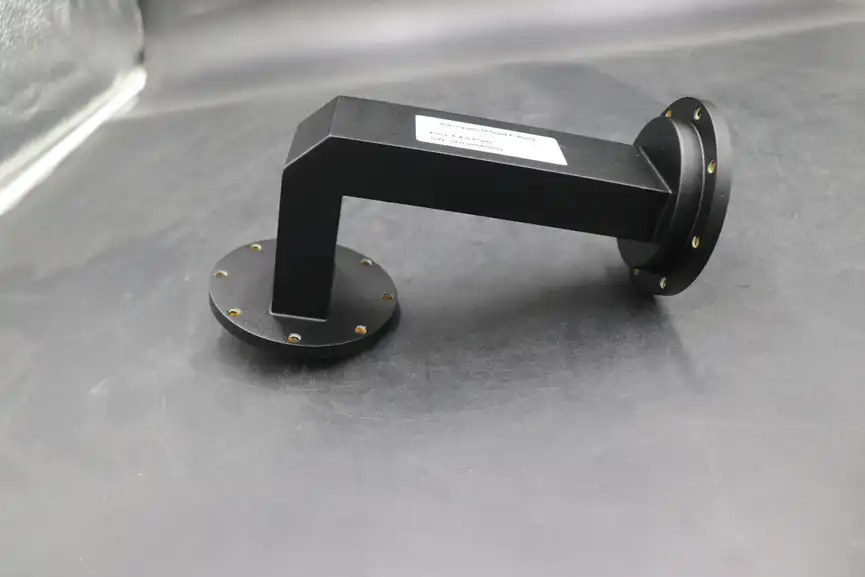
How these parts fit into waveguide systems is based on two main orientations. E-plane shapes bend along the thin wall, which changes the direction of the electric field. Different types of H-plane bends along the wide wall, which change how the magnetic field is spread. When it comes to power handling, bandwidth response, and impedance matching complexity, each orientation is different. Most of the time, H-plane designs are better at handling power because voltage gradients are spread out better across the broad wall geometry. This setup works well for industrial microwave heating systems and high-power radar transmitters that need to send kilowatt-level signals without breaking. E-plane arrangements are popular in satellite communication payloads because they offer benefits in certain frequency ranges and can make mechanical integration in space-constrained assemblies easier. This is because every cubic centimeter of Miter Bend Waveguide counts when it comes to launch costs. Precision in manufacturing determines performance in the end. Our 5-axis CNC machining makes mitered surfaces with a tolerance of ±0.01mm, which makes sure that the field is spread out evenly and reflections are kept to a minimum. This level of accuracy, which is checked in our cutting-edge 24m Microwave Darkroom, makes sure that parts meet strict requirements for insertion loss (≤0.1dB) and return loss (≥25dB) across all operational bandwidths.
Comparing Miter Bend Waveguides With Alternatives
When designing RF systems, procurement engineers often look at more than one way to route waves. Comparative advantages help you get the most out of both your performance and your budget.
Structural and Performance Distinctions
When a curved waveguide bends, the gradual radius geometry keeps the impedance continuity. Usually, this method needs a turning radius that is several times the width of the waveguide. This takes up valuable space in equipment racks or antenna assemblies. Although curved designs naturally offer great broadband performance with little reflection, their large size makes them impractical in modern high-density systems where space is at a premium. When compared to similar curved designs, an angular Miter Bend Waveguide cuts down on volume by 30% to 50%. This efficiency in using space directly leads to lighter payloads in airborne applications, smaller equipment footprints in telecommunications infrastructure, and more adaptable system architecture in radar installations on the ground. Engineers can run signal paths through tight spaces that curved bends just can't fit because of the compact geometry. Through articulated sections, flexible waveguide assemblies let you choose how to route waves. But compared to rigid alternatives, these parts have higher insertion losses and can't handle as much power. Flexible designs work well in test bench setups or situations that need to be reconfigured on a regular basis, but mission-critical installations need the dependability and performance consistency of rigid parts that have been precisely machined.
Selection Criteria for Optimal Performance
To pick the right part, you have to weigh a lot of technical and practical factors. The operating frequency determines the size of the waveguide. Cross-sections need to be smaller for higher frequencies. Systems that work with a lot of different frequency ranges do better with designs that are optimized so that they work the same way across the whole band. Power handling needs have a big impact on the materials and building styles that are chosen. Strong thermal management and materials that can handle high temperatures without losing performance are needed for high-power transmitter outputs. Our high-power versions have built-in heat-dissipation features like copper heat sinks and ceramic thermal interfaces that allow them to work continuously at kilowatt power levels. Material and finish requirements are affected by the environment. Marine radar installations need coatings that don't rust so they can handle salt fog. For aerospace applications, parts must be tested to make sure they can handle high and low temperatures, vibrations, and low outgassing levels that are suitable for vacuum operation. Our ISO 9001:2015 and ISO 14001:2015 certifications show that ADM is dedicated to quality management and environmental responsibility. These certifications make sure that our parts meet strict industry standards, such as MIL-STD specifications for defense applications. Product specs are important, but so are the skills of the supplier. Reliable partners don't just sell parts; they also offer full support, such as electromagnetic simulation, prototype development, and technical advice. System designers can get the best integration by changing bend angles, waveguide sizes, and flange configurations instead of having to settle for standard catalog items.
Practical Applications of Miter Bend Waveguides
Real-life examples of how these precision parts are used show Miter Bend Waveguide how they make important features possible in many fields.
Aerospace and Defense Systems
Airborne fire-control radar systems have a lot of power packed into very small spaces in the nose cones and wing pods of aircraft. Every gram of weight and cubic centimeter of space changes how well an airplane works and how much fuel it uses. Our small angular Miter Bend Waveguide parts let radar designers send strong RF signals between transmitter modules and phased array antennas without having to use bulky curved bends. The designs keep the signals intact in harsh environments with high-G maneuvers, temperature changes from -45°C to +85°C, and strong vibrations. Transponders for satellite communication are another difficult application where space and weight affect every design choice. Launch costs are directly related to the weight of the payload, so it's important that the payload is made of aluminum and has a small shape. Space-efficient routing also helps ground station installations by making them easier to set up and lowering the cost of the infrastructure. Our space-grade parts can handle the changing temperatures of orbital operations and the radiation in space, so they will work reliably for many years of mission lifetimes.
Telecommunications Infrastructure
With the launch of 5G millimeter-wave networks, there is a greater need than ever for precise RF components that can work at frequencies above 24GHz. When installing a base station, you need small waveguide assemblies that carry signals between active antenna arrays and transceiver modules inside weatherproof cases. The low insertion loss properties keep the signal strength, which directly increases the network's capacity and coverage radius. Telecommunications companies get a measurable return on their investments because they use less power and have more reliable systems that require less maintenance. Low-loss signal transmission over long distances is needed for long-haul microwave backhaul links that connect cell sites and network nodes. Even small changes in insertion loss can lead to big gains in link budget, which lets repeater stations be farther apart or send more data. Telecommunications equipment manufacturers know that the quality of a component has a direct effect on the total cost of ownership by making operations more efficient and lowering the number of failures.
Industrial and Research Applications
For industrial material processing, microwave heating systems need to get high-power radio frequency energy to applicators and processing chambers quickly and efficiently. Plasma generators, tools for making semiconductors, and research installations for advanced materials all need precise waveguide parts that can handle kilowatt levels of power and keep working at the same level. High-power versions have thermal management features that keep performance from dropping because of too much heat. This keeps the machine stable during long production runs. Universities and research labs that do electromagnetic experiments need to be able to easily find parts that don't meet standard requirements. Researchers can make experimental setups that match theoretical models by using custom bend angles, flange configurations, and frequency ranges. Our OEM services let you make these kinds of changes, which helps with innovation in both academic and industrial research settings. There are some things that all of these different application scenarios have in common: they need to be reliable, perform consistently, and have a reliable supply chain. Advanced Microwave Technologies Co., Ltd has built its reputation over the past 20 years by providing precise parts that meet exact specifications, quick technical support, and reliable delivery schedules that keep projects on track.
How to Design and Specify Miter Bend Waveguides for Your Needs
Creating clear specifications that include both technical needs and practical limitations is the first step to successful component integration.
Defining Technical Parameters
First, set the operating frequency range based on what the system Miter Bend Waveguide needs. This tells us which waveguide size to choose from the standard series (WR-10 to WR-2300 in our product line). Think about whether the application needs full-band coverage or can handle optimization for only a few frequency segments. Broadband designs may have more impedance matching features, while single-frequency uses can have implementations that are easier to understand and cost less. Material choice and thermal design are directly affected by how much power is being handled. Give details about the duty cycle and the peak and average power levels. Copper construction without oxygen is better for high-power applications because it better dissipates heat, while aluminum construction for lower-power applications saves weight. Specifications for temperature stability should be based on real-world operating conditions, taking into account both the outside temperature and the heat generated by RF power dissipation.
Performance Metrics and Validation
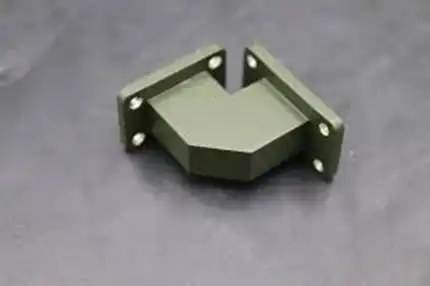
Specifications for insertion loss define the amount of signal loss that is acceptable through the component. Depending on the frequency, the normal range of values is from 0.05dB to 0.15dB. Losses are slightly higher at higher frequencies. Return loss requirements tell us how well the part matches the system's impedance. Values between 20dB and 25dB mean great performance that keeps signal reflections to a minimum. Concerns about physical integration are taken care of by mechanical specifications. These include mounting provisions, flange types (UG, CPR, or custom), and dimensional envelopes. Applications with limited space need exact measurement data to make sure that parts fit correctly together. The temperature range, resistance to humidity, vibration tolerance, and any special needs, like vacuum compatibility or radiation hardness for space applications, are all part of the environmental specifications.
Supplier Partnership Strategies
By working with manufacturers early on in the design process, you can get the best specifications for the parts you need instead of having to make design compromises because of catalog restrictions. ADM's engineering team works with clients to make sure that electromagnetic simulations and prototypes work well before committing to making production tools. Time-to-market is sped up, and development risk is lower with this method. Make sure everyone knows the minimum order quantity and delivery time requirements. Production lead times depend on how complicated the customization is. For standard configurations, they are usually four to eight weeks, and for fully customized designs, they are eight to twelve weeks. Our reliable delivery that meets project deadlines is made possible by our efficient manufacturing processes and global logistics capabilities. The requirements for documentation should be made clear. Traceability is important for defense and aerospace applications, and technical drawings, material certifications, and test data make it possible. Our quality management system keeps detailed records that help with customer audits and making sure that we're following the rules.
Conclusion
Miter Bend Waveguide parts that efficiently redirect RF signals through small angular geometries are now essential building blocks for microwave systems used in telecommunications, aerospace, defense, and industry. The engineering principles that these parts are based on balance electromagnetic theory with the limitations of how they can be made. This makes them space-efficient while still providing excellent electrical performance. When you compare different approaches, you can see which ones are better for different types of applications. This lets you make smart choices that improve system architecture. In the real world, deployments show real benefits like smaller equipment, higher reliability, and better operational efficiency. For the specification and procurement processes to work, there needs to be clear technical communication, partnerships with qualified suppliers, and attention to both performance requirements and commercial factors that support project success and long-term value realization.
FAQ
1. What insertion loss should I expect from a quality component?
When designed and made correctly, Miter Bend Waveguides usually have insertion loss below 0.1dB across the frequency range they are supposed to work with. Performance changes a little depending on frequency, choice of material, and accuracy of manufacturing. Higher frequencies and constructions made of aluminum may have slightly higher losses than lower frequencies and constructions made of copper. To make sure performance fits your system's budget, ask for measured S-parameter data for the frequency band in question.
2. Can components accommodate non-standard bend angles?
Through our OEM services, it's easy to get custom angle configurations. Most of the time, bends are 45 degrees or 90 degrees, but sometimes 30-degree, 60-degree, or other angles are needed to work with certain mechanical constraints. During the design phase, electromagnetic simulation makes sure that non-standard geometries have the best impedance matching. Talk to our engineering team about your needs to find out what options are available and how long the lead times are.
3. How do environmental factors affect component selection?
The operating environment has a big effect on the material and finish requirements. Outdoor phone installations need coatings that don't rust so they can handle changes in temperature and moisture. Marine radar systems need better defenses against salt fog. For aerospace uses, parts need to be tested to make sure they can work in high temperatures, vacuums, and with little gas release. Our industrial and aerospace-grade versions meet these needs by using the right materials, finishing them in protective ways, and putting them through validation testing that makes sure they work reliably for the whole life of the part.
Partner With a Trusted Miter Bend Waveguide Manufacturer
Every precision RF part that Advanced Microwave Technologies Co., Ltd. sends you is made with over 20 years of experience in making high-quality parts. Together with procurement experts and system designers, our engineering team creates custom solutions that meet your unique technical needs and integration challenges. We have strict quality standards that are backed up by ISO 9001:2015 certification and full testing in our advanced 24m Microwave Darkroom facility. These standards are followed for the Miter Bend Waveguide from the first electromagnetic simulation all the way through full production and prototype validation. Our OEM capabilities and global logistics support make sure that you have reliable supply partnerships that keep your projects on schedule, whether your application needs standard catalog parts or fully customized waveguide assemblies with specific bend angles and flange configurations. Our manufacturing capabilities, quality assurance, and customer service provide measurable value throughout the lifecycle of our products for technical buyers looking for a responsive supplier for precision waveguide components. Email craig@admicrowave.com right now to talk about your needs and find out how our knowledge can improve the performance of your microwave and RF systems.
References
1. Marcuvitz, Nathan. Waveguide Handbook. Institution of Engineering and Technology, 1986.
2. Collin, Robert E. Foundations for Microwave Engineering. IEEE Press, 2001.
3. Pozar, David M. Microwave Engineering. John Wiley & Sons, 2011.
4. Saad, Theodore S. Microwave Engineers' Handbook, Volume 1. Artech House, 1971.
5. Montgomery, C. G., R. H. Dicke, and E. M. Purcell. Principles of Microwave Circuits. Institution of Engineering and Technology, 1987.
6. Baden Fuller, A. J. Microwaves: An Introduction to Microwave Theory and Techniques. Pergamon Press, 1990.
YOU MAY LIKE
 VIEW MOREWaveguide Fixed Attenuator
 VIEW MOREWaveguide Probe Coupler
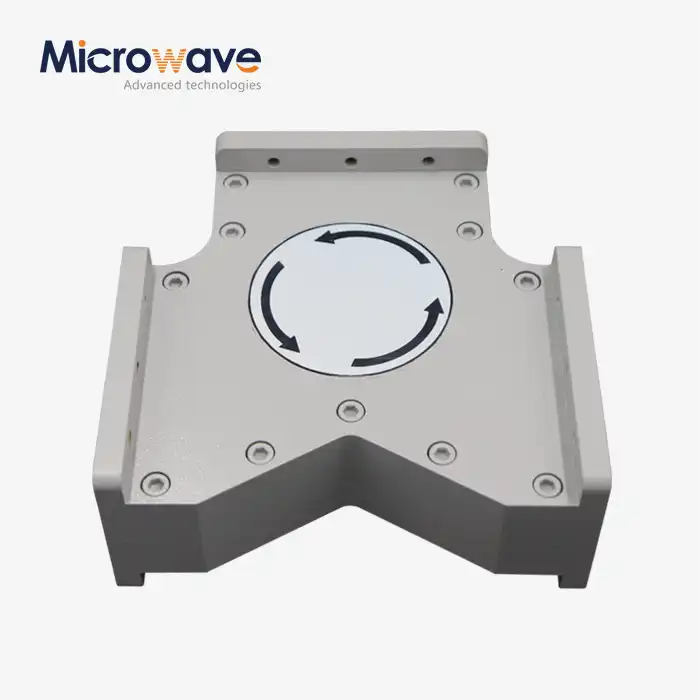 VIEW MOREHigh Power Waveguide Circulator
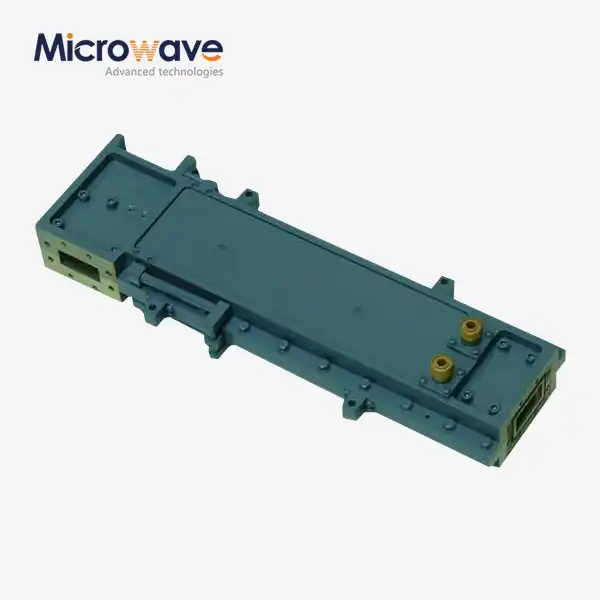 VIEW MOREHigh Power Waveguide Differential Phase Shift Circulator
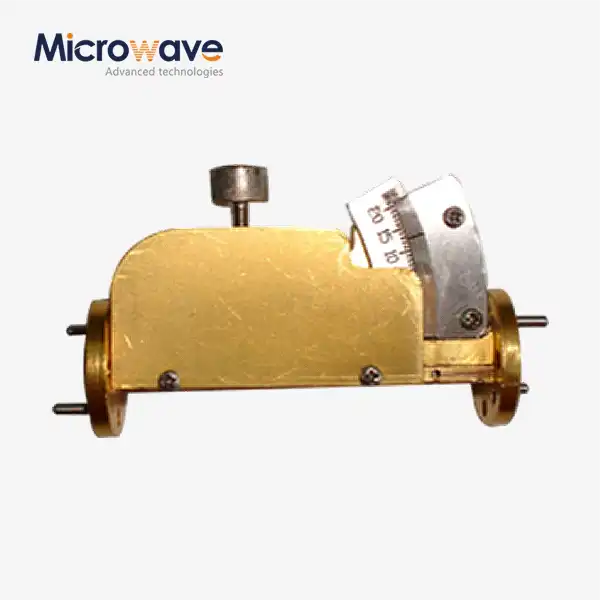 VIEW MOREWaveguide Variable Attenuator
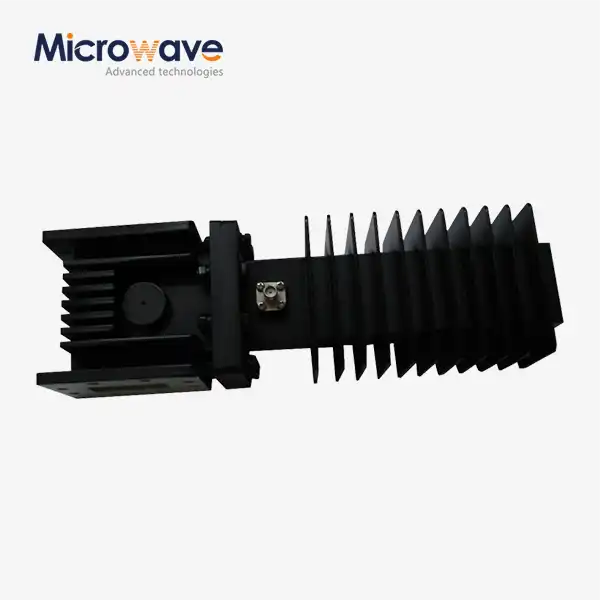 VIEW MOREHigh Power Waveguide Isolator
 VIEW MOREWG Bandpass Filter
 VIEW MOREWG Harmonic Filter