




Choosing the Right Flexible Twistable Waveguide
Choosing the right flexible twistable waveguide can make or break how well your radio system works. Because they can bend and twist axially at the same time, these precision-engineered parts solve a basic problem that fixed waveguides can't: they keep the signal integrity in high-frequency settings. The right waveguide choice affects system reliability, installation efficiency, and long-term operational costs. This is true whether you're routing RF signals around obstacles in a satellite ground station, adjusting for mechanical vibration in naval radar systems, or taking into account thermal expansion in aerospace platforms. At Advanced Microwave Technologies Co., Ltd., we've seen buying teams have a hard time choosing parts that meet the needs of different uses while also being affordable and performing well electrically.
Understanding Flexible Twistable Waveguides
What Makes Twistable Waveguides Different from Standard Flexible Options?
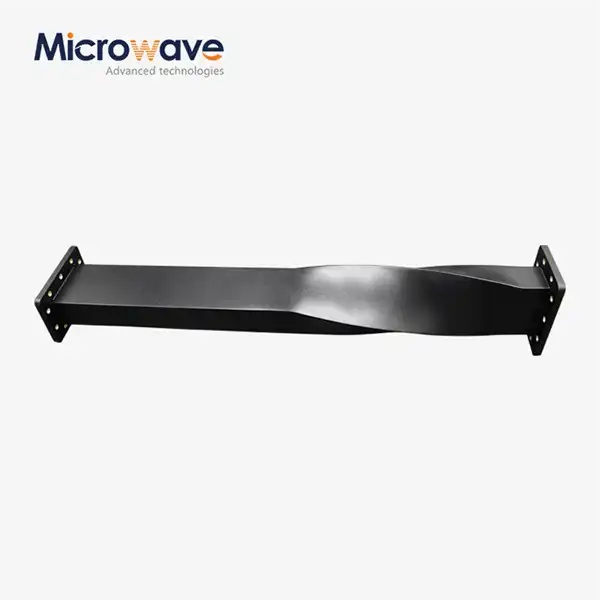
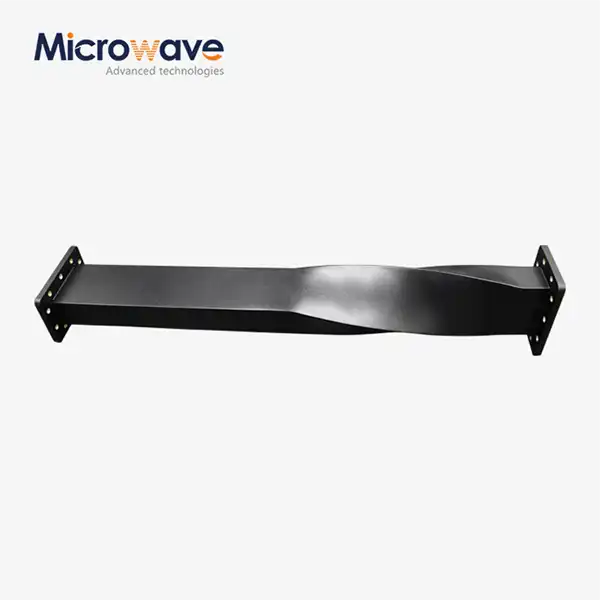
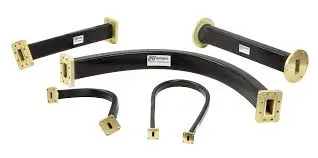
This is a special kind of flexible twistable waveguide made of overlapping silver-plated brass or copper strips wound around each other in a spiral shape. This design lets the part bend in both the E-plane and the H-plane directions while also allowing axial spinning. This is something that regular curved flexible waveguides can't do. When you look at a cross-section, the overlapping shape makes an electric path that stays the same resistance even when it is put under mechanical stress.
The building method directly solves three important problems with integrating systems. It's easier to deal with physical misalignment between radio feeds and receivers when the plumbing isn't made to order. Vibration separation keeps sensitive low-noise amps safe from the stress that comes from hard links. No longer does thermal expansion and contraction cause stress on the ring that causes gaskets to fail or crack, especially in outdoor applications where temperatures can change from -40°C to +85°C.
Frequency Range and Electromagnetic Performance
Advanced Microwave Technologies has rectangular flexible twistable waveguides that cover frequency ranges from 3.22 GHz to 50.1 GHz. These waveguides can be used for a wide range of uses, from C-band satellite communications to Ka-band radar systems. It works in the 3.22-4.90 GHz range and has a VSWR of ≒1.10 and an insertion loss of only 0.15 dB/m. This makes it perfect for long-distance satellite uplinks where every tenth of a decibel is important for link budget estimates.
The specs for higher frequency types are just as amazing. The ADM-260WEL series is made for use between 21.7 and 33.0 GHz and keeps VSWR ≤1.20 with 1.50 dB/m insertion loss, which is pretty amazing when you think about how flexible the mechanical design is. Each model gives exact values for minimum bend radii and maximum twist rates (from 108 to 530 degrees per meter) for both E-plane and H-plane directions. This helps system planners make accurate route calculations.
Real-World Applications Across Industries
These waveguides are used by satellite communication earth stations to link feed horns with low-noise block downconverters. Large antennas can move slightly when they are loaded by wind, and the mechanical flexibility can absorb these small movements. The ability to twist also makes up for manufacturing flaws in mounting structures. Vibration isolation is very helpful for naval radar systems because it separates the mechanical movements of the radar base from the sensitive electronics in the receiver. This keeps phase noise degradation from happening, which would make it harder to find targets.
Extreme weather conditions must be able to handle parts used in aerospace applications. Our waveguides have special protected jackets that make them work consistently in situations of rapid temperature change, high altitude, low pressure, and strong vibrations that are required by MIL-STD-810 testing standards. These parts are used by research labs with particle accelerators and high-field MRI systems because they allow RF power to flow through tight areas where fixed waveguide bends would be hard to set up and keep up.
Comparing Flexible Twistable Waveguides with Alternative Technologies
Performance Characteristics Against Rigid Waveguides
Rigid rectangle waveguides have the lowest insertion loss and can handle the most power. They are the best performers in any system. A normal WR-90 stiff guide working at X-band might have a loss of 0.05 dB/m, while a similar flexible twistable waveguide version would have a loss of 0.40 dB/m. Rigid guides, on the other hand, need to be precisely aligned mechanically and bent with special tools. They also don't allow for movement or heat expansion.
The truth of the placement changes the comparison. To get the right fit, custom rigid waveguide runs need to be carefully measured, made with special tools, and changed several times. Any changes to the system need to be made from scratch. Flexible twistable waveguides can be put in place in minutes, can adapt to changes in the design without needing to be replaced, and can handle mechanical limits that would require expensive repair with hard components.
Evaluation Against Coaxial Cable Solutions
With their screw connections, coaxial wires offer the most mechanical freedom and are easy to set up. But at higher frequencies and power levels, their performance flaws become clear. At 12 GHz, a good semi-rigid coaxial wire might have 1.5 to 2.0 dB/m loss, which is three to five times more than a similar flexible twistable waveguide. This gap gets bigger as the runs go on, which hurts the system gain and noise figure a lot.
Handling power is another important difference. Coaxial lines that can send kilowatts of power need to have big widths, be built solidly, and be carefully managed when it comes to heat. Flexible twistable waveguides can handle tens of kilowatts of power in small cross-sections and are better at getting rid of heat because they are made of metal. For high-power emitter uses in radar and satellite transfer systems, where each watt of power sent directly affects the system's ability, the choice is clear.
When Fibre Optics Makes Sense
Fibre optic communication is the best way to send digital signals over long distances without having to worry about electromagnetic interference. When you need to send baseband data or middle frequency signals that have already been downconverted, fibre has the best speed and distance capabilities. Fibre, on the other hand, can't handle the strong RF signals at antenna feeds or emitter outputs because it has a very different job to do in the signal chain. Fibre is used for digital control and data transfer, and waveguides are used for radio frequency (RF) communication in many modern systems.
How to Choose the Right Flexible Twistable Waveguide for Your Project?
Defining Technical Parameters and System Requirements
Your decision-making process begins with frequency clarity. A flexible twistable waveguide's performance relies on its frequency range. The cutoff frequency prevents communications from travelling below it. The upper frequency limit is caused by higher-order modes that distort the signal. Advanced Microwave standard sheets provide precise operating ranges. System designers should include 10-15% room around band sides to guarantee steady performance even when temperatures vary, and manufacturing faults occur.
Power dealing requires more than peak power statistics; rigorous analysis is essential. Long-term reliability and thermal stress rely on average power. A radar system with 10 kW peak power and 10% duty cycle produces 1 kW average power. This heat management issue influences part lifespan. Our technical team derates based on external temperature, jacket material thermal resistance, and fitting design (vertical vs. horizontal hanging influences convective cooling).
Safety jacket material and standards depend on the environment. For indoor or temperature-controlled use, standard neoprene coats shut effectively against pressure and mild temperatures. Silicone jackets allow outdoor satellite earth stations to function in more climates and protect against UV rays. Specialised polysulphide jackets can withstand chemical exposure at work or at sea, where salt water and hydrocarbons would break down standard fabrics.
Material Choices and Design Considerations
The core conductor material balances cost, mechanical durability, and electrical conductivity. We utilise silver-plated copper for most applications since it conducts well and doesn't rust. Silver-plated brass adds mechanical force to bend- or vibration-prone areas. Electrical properties are steady, and copper does not oxidise, which would increase insertion loss. The plate width is commonly 3–5 microns.
Flange selection affects electrical and mechanical systems. UG-style valves operate with our standard setups and test instruments. Custom flanges might be used for unusual connections or pressure waveguide systems that demand tight sealing. Brass flanges are used in business. Weight-sensitive aviation systems use stainless steel or aluminium. Flange materials should match to prevent galvanic corrosion in damp or salty situations.
Evaluating Supplier Capabilities and Certifications
ISO 9001:2015 certification indicates planned quality control throughout production. Every year, independent auditors verify Advanced Microwave's approval to ensure that our procedures, from examining arriving supplies to final testing and shipment, are documented and trackable. For selling tools in various Asian and European regions, RoHS compliance ensures our products fulfil international environmental regulations.
Testing capabilities distinguish engineering partners from component suppliers. Our 24-meter microwave lab measures far-field antenna patterns to verify system performance. With 110 GHz vector network tests, our whole product range can be electrically defined. Environmental test facilities change temperatures, shake profiles, and expose objects to humidity levels comparable to those they would experience in the field for years to evaluate performance.
Customisation is crucial for OEM and specific system demands. Double-ridged designs for broadband, bespoke length kits for simpler installation, and application-specific flange combinations for direct module connection are common among our engineers. Prototypes (often one for proof-of-concept testing) and production quantities demonstrate manufacturing flexibility that tight sources cannot match.
Procurement Considerations for Flexible Twistable Waveguides
Understanding Pricing Structures and Lead Times
Pricing for parts is based on more than just the cost of the materials. Standard items from the store with popular flange configurations can be shipped from stock, and wait times are given in days. Custom setups that need particular lengths, non-standard flanges, or special jacket materials usually take 3 to 4 weeks to make. Setting up small amounts of prototypes may have setup costs that are spread out over bigger production runs. For new system designs, involving providers early on is a smart financial move.
Volume price systems reward buyers who can correctly guess how much they will need. Our tiered pricing is based on the idea of economies of scale in manufacturing. Buying raw materials, setting up production lines, and testing tools all work better when you place bigger orders. When buyers have to balance tight cash flow with lowering costs, they often set up blanket purchase orders with planned releases. This way, they can get better prices on large orders while keeping an eye on inventory levels.
To handle lead times, you need to know about the whole supply chain, not just your direct provider. It may take longer to get specialised materials like high-temperature rubber covers or sealed ring systems. Active buyers share project timelines and product roadmaps, which lets sellers store long-term materials and divide up production capacity. This way of working together has kept our customers' projects on track even when sudden changes to the system meant that parts had to be turned around quickly.
Selecting Trusted Manufacturers and Quality Verification
Factory checks are a great way to learn about a supplier's skills and quality mindset. When purchasing teams visit Advanced Microwave's factories, they look at our calibrated test equipment (which has current certification stickers and records that can be used to find out where the calibration came from), watch production processes that show how skilled the workers are and how the processes are controlled, and read quality records that show how problems are fixed.
Quality licenses that go beyond ISO 9001 show that you have specific skills. Getting ISO 14001:2015 environmental management certification shows that you are committed to sustainable manufacturing, which is becoming more and more important for companies that work for the government and have to meet environmental compliance standards. Occupational health and safety approval to ISO 45001:2018 shows that a company has grown and cares about its employees' well-being. This is linked to lower employee churn and more experienced production teams.
References from clients and application case studies show how well a provider does in the real world. While general comments aren't very useful, specific project examples with measured results (like a shorter time to integrate, a higher system's mean time between failures, or passing the qualification test on the first attempt) show real skill. Our tech team keeps detailed case studies that show the steps from problem to answer to result. These help potential customers decide if we are a good fit for their needs.
Logistics and Minimum Order Quantities
International shipping adds a level of difficulty to purchases made in the United States. Even though flexible twistable waveguide components are pretty small, they need to be protected in order to keep them from getting damaged during transport. This is especially important for precision flanges, where small dents can cause electrical gaps. As standard, our export packing includes custom foam inserts inside hard cases that are approved for international air freight. This keeps the product's structure through many handling steps.
Minimum order numbers (MOQ) make sure that the buyer's stocking costs are balanced with the supplier's ability to make things quickly. Standard goods often have smaller MOQs (sometimes just one piece) because they don't cost much to set up. Custom combinations might need MOQs of 10 to 20 pieces to cover the costs of making the tools and setting them up. Buyers who need unique designs in small numbers should talk to sellers about selling prototypes in a way that lets them buy one to test the system and then plan to buy more once the designs are finalised.
When doing business across borders, it's important to pay attention to customs paperwork and rules. Waveguide parts are usually covered by unified tariff numbers for microwave transmitting equipment. The duty rates change from country to country. Advanced Microwave keeps a lot of export paperwork, like certificates of origin, material compliance statements, and technical specs, which make it easier to clear customs and figure out tariffs.
Conclusion
When picking the right flexible twistable waveguide, you need to think about how well it works electrically, how well it works mechanically, how it will work in the surroundings, and how much it will cost you overall over the life of the system. The frequency range, power handling, insertion loss, and VSWR (voltage-sine wave ratio) must all be exactly right for your application. The setting your system will be in should affect the materials you choose and the protection jacketing you use. Supplier review goes beyond just looking at the specs of the parts; it also looks at the supplier's quality systems, testing skills, ability to make changes, and level of technical support. As the market moves toward higher frequencies, space-based communications, and modernising the military, the number of uses for these speciality parts that offer unique benefits continues to grow. Procurement teams that are good at what they do spend time creating thorough specifications, making sure that suppliers are qualified, and building relationships with suppliers that go beyond just buying things and become real working partnerships.
FAQ
Q1: What factors determine the flexibility and twisting capability of a waveguide?
The shape of the connecting strips, the temperature of the material, and the stiffness of the protective jacket all have an effect on how well they work mechanically. When frequencies are low, bigger cross-sections tend to have smaller bend radii compared to their size. The maximum twist measurement tells you how many degrees of axial rotation the flexible twistable waveguide can handle per unit length without breaking down or losing its electrical properties.
Q2: How does signal loss in flexible twistable waveguides compare to coaxial cables?
When it comes to higher frequencies, flexible twistable waveguides have a lot less insertion loss than coaxial lines. At X-band (8–12 GHz), a regular bendable waveguide has a loss of 0.40 dB/m, while a good coaxial cable has a loss of 1.5–2.0 dB/m. At higher frequencies, this difference stands out even more because waveguides work better and coaxial cables lose a lot more.
Q3: Can manufacturers customise waveguides for non-standard frequency requirements?
Advanced Microwave often makes custom designs for particular frequency bands, unusual power handling needs, or specific weather conditions. Double-ridged designs increase bandwidth beyond what a normal rectangular waveguide can do. Custom lengths get rid of the need to cut in the field and make fitting easier. Usually, the engineering process starts with talking about the needs of the application, then moves on to design proof and prototype testing, and finally ends with production quality.
Partner with a Trusted Flexible Twistable Waveguide Manufacturer for Your Next Project
Advanced Microwave Technologies has more than 20 years of experience making precise waveguides for the most difficult uses. We have manufacturing facilities that are ISO 9001:2015 approved and can test up to 110 GHz. These facilities make sure that the parts we sell meet strict military, aircraft, and telecommunications standards. As a top provider of flexible twistable waveguides, we keep a large stock of standard types and also offer full OEM customisation for specific system needs, from small trial numbers to large production volumes. During the planning process, our technical team works together closely to provide thorough RF performance models, outdoor testing validation, and installation advice that cuts down on the time it takes to complete your project.
If you need flexible twistable waveguide solutions backed by strict quality control, quick engineering support, and competitive pricing, email craig@admicrowave.com to talk about your specific application needs and get a detailed technical quote that fits your project parameters.
References
1. Saad, T.S. (Editor). Microwave Engineers' Handbook, Volume 1. Artech House Publishers, 1971.
2. Marcuvitz, Nathan. Waveguide Handbook. Institution of Engineering and Technology, 1986.
3. Collin, Robert E. Foundations for Microwave Engineering, 2nd Edition. Wiley-IEEE Press, 2000.
4. Balanis, Constantine A. Advanced Engineering Electromagnetics. John Wiley & Sons, 2012.
5. Pozar, David M. Microwave Engineering, 4th Edition. John Wiley & Sons, 2011.
6. Montgomery, C.G., Dicke, R.H., and Purcell, E.M. Principles of Microwave Circuits. Institution of Engineering and Technology, 1987.