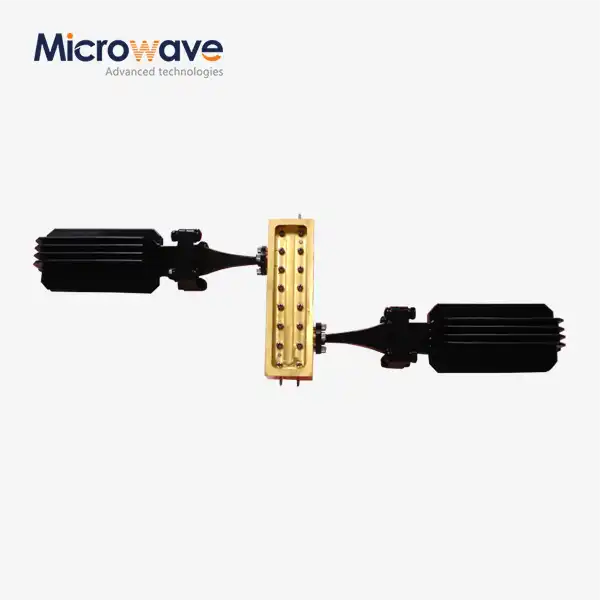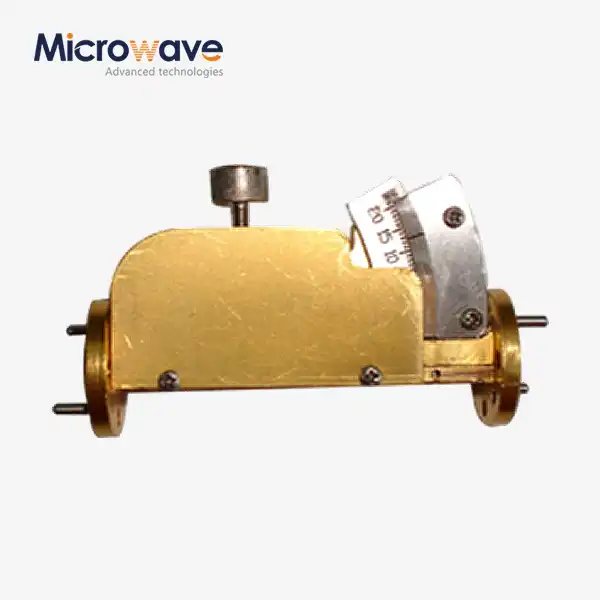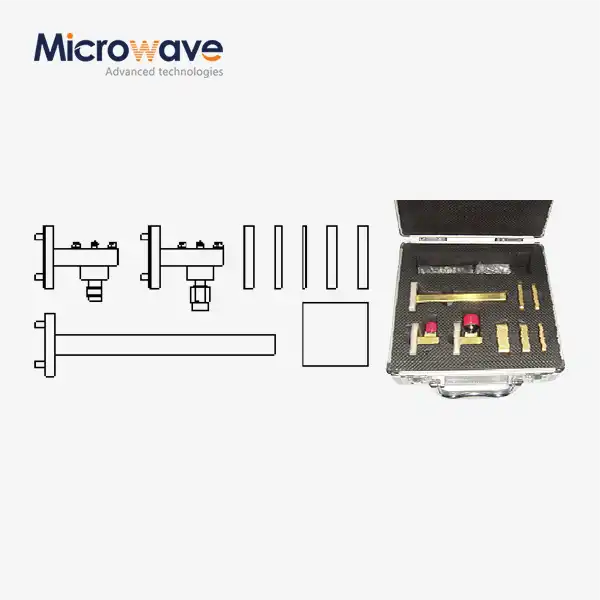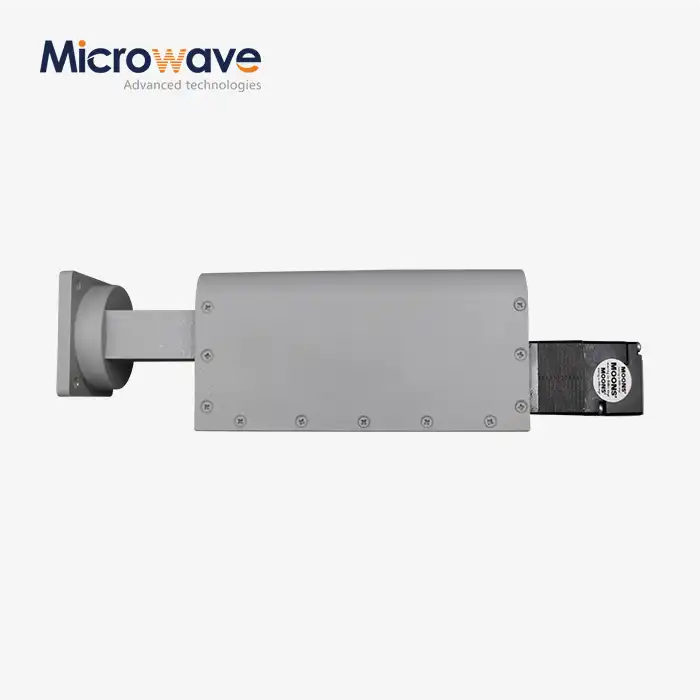





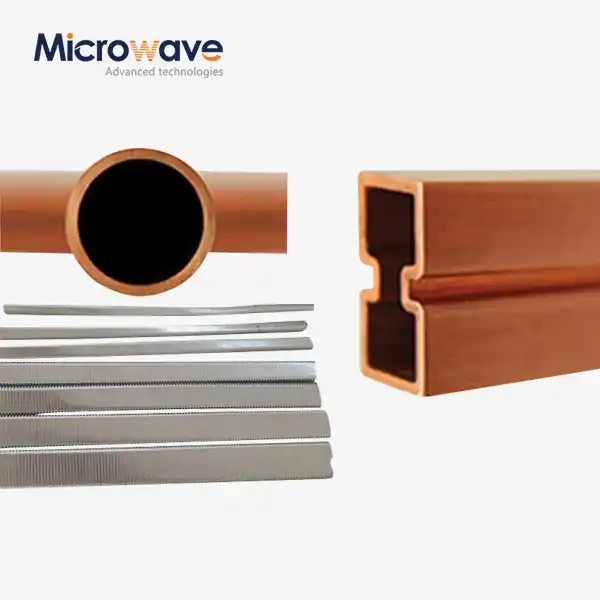
Waveguide Tube
Waveguide Tube for Microwave & Millimeter-Wave Systems
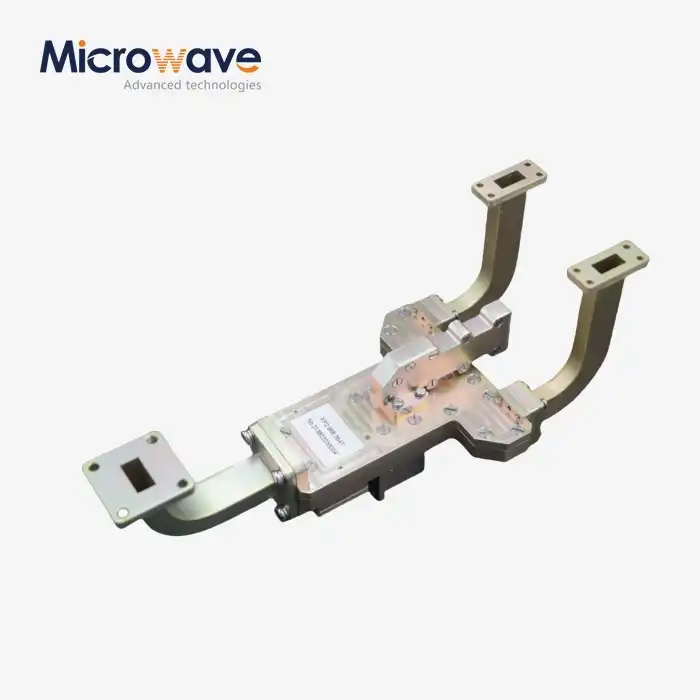
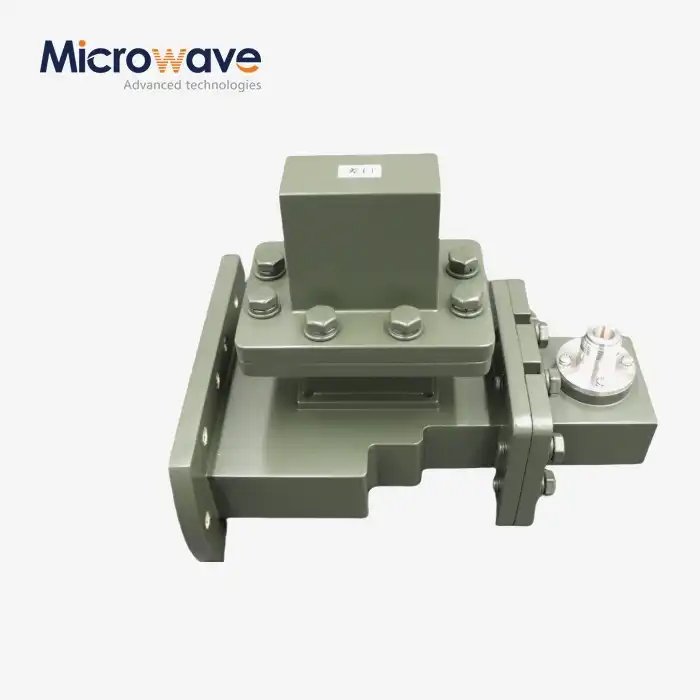
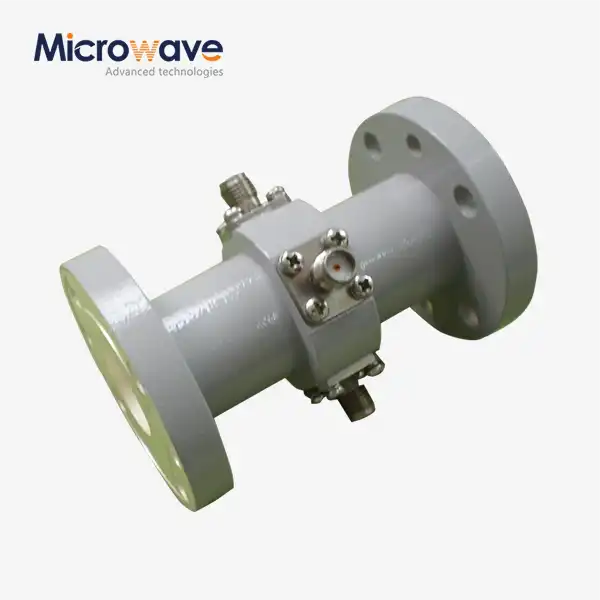
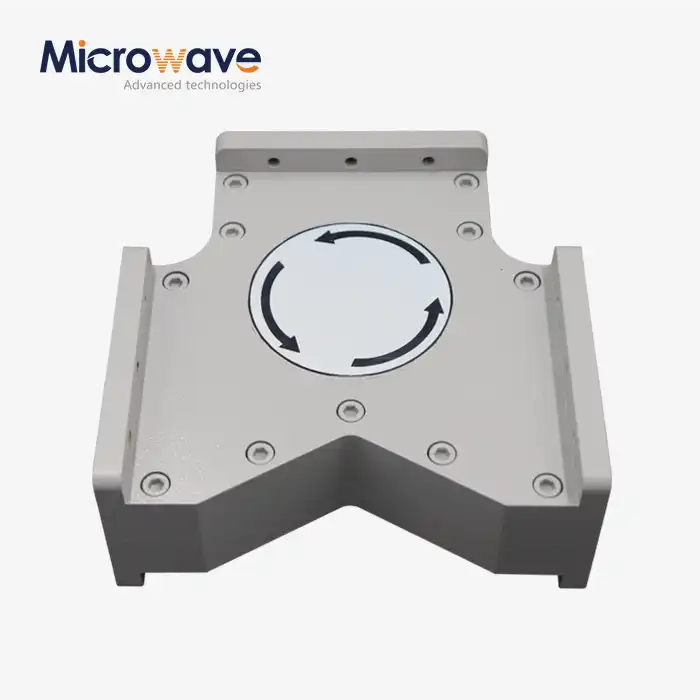
Waveguide Tube products from Advanced Microwave Technologies Co., Ltd. (ADM) range from WR2300 to WR10 and come in standard, thin-wall, and thick-wall configurations. OfHC Copper (ASTM B152) or 6061-T6 Aluminium Alloy is used to make each tube. They have an insertion loss of as little as 0.01 dB/m and a VSWR of usually less than 1.10 across the working bandwidth. Geometry-checked, application-specific configurations are what ADM offers to customers in satellite communication, aerospace, radar, and industrial microwave applications.
What Is a Waveguide Tube?
A product is a hollow metal transmission line that moves high-frequency electromagnetic waves from a source to a load with little energy loss. These waves are in the microwave and millimeter-wave range, from 300 MHz to 300 GHz.
A waveguide, unlike coaxial cables, sends energy through electromagnetic fields (TE or TM modes) that are built into its shape, so it doesn't need a center conductor. The medium inside is air or a special gas, which gets rid of dielectric loss, which is a big problem with regular cables above 1 GHz. In pulsed uses, this design can handle power levels from kilowatts to megawatts and effectively blocks electromagnetic interference (EMI) from outside sources.I don't know what to say.

Key Technical Specifications
The product performance is governed by internal geometry, material conductivity, and surface finish. ADM manufactures to EIA (WR designations), IEC (R-series), and MIL-DTL-85 dimensional standards, where internal dimensions define cut-off frequency and usable bandwidth.
Parameter | Specification |
Size Range | WR2300 to WR10 |
Wall Options | Standard, Thin-Wall, Thick-Wall |
Material | OFHC Copper (ASTM B152) / 6061-T6 Aluminum Alloy |
Surface Finish | Silver or Gold Plating (optional) |
Insertion Loss | 0.01 to 0.1 dB/m (frequency dependent) |
VSWR | Typically < 1.10 across operational bandwidth |
Peak Power Handling | Up to MW range in pulsed applications |
Cross-Section Profile | Rectangular, Circular, or Elliptical |
Frequency Coverage | 300 MHz to 300 GHz (SHF and EHF bands) |
Dimensional Standards | EIA (WR designations), IEC (R-series), MIL-DTL-85 |
Customization | Available based on system requirements |
Silver or gold plating inhibits oxidation and improves skin-depth conductivity, which is particularly relevant at millimeter-wave frequencies where surface losses become the dominant attenuation factor.
Material Selection
Choosing the right material depends on application priorities.
OFHC Copper (ASTM B152) delivers higher electrical conductivity and is well suited for fixed ground-based radar systems, satellite earth stations, and industrial microwave equipment where weight is not a primary constraint.
6061-T6 Aluminum Alloy offers a lower mass for the same structural envelope, making it the practical choice for airborne and aerospace platforms. It also provides good corrosion resistance when properly passivated or surface-treated.
Both materials can be silver-plated to reduce surface resistance, which is especially relevant at millimeter-wave frequencies where skin-effect losses are significant.
Dominant Propagation Modes
The cut-off frequency and the main mode of propagation for each Waveguide Tube are strictly defined by its internal dimensions.
The TE10 mode is usually the most important mode for rectangular waveguides. Working in the single-mode band keeps the signal's structure and stops mode interference. In bigger guides or at higher frequencies, TM modes and higher-order TE modes are possible, but for reliable behaviour, most system designs aim for the single-mode window. The first step is to choose the right WR designation for your operating frequency. Based on your system factors, ADM's technical team can help you make this choice.
Application Scenarios
High-Power Radar (Defense & Aerospace)
In radar devices that are both on the ground and in the air, the product sections connect magnetrons or klystrons to antennas. The hollow metal structure can handle high peak pulse power while also being able to handle changes in pressure and vibration. To stop arcing at high altitude, waveguide parts that are pressurised are used.
Satellite Earth Station Uplinks
We use waveguide sections between High Power Amplifiers (HPAs) and feedhorns to keep the transmission loss low on both the receive (LNB side) and high-power send routes. In the Ku, K, and Ka bands, where coaxial loss would be too high, this is important for link budgets.
Industrial Microwave and Medical LINACs
Waveguides are used to send continuous wave (CW) power to large systems that dry, cure, and process food. Medical Linear Accelerators (LINACs) depend on waveguides to efficiently and safely deliver radio frequency (RF) energy to structures that speed up particles.
Testing and Quality Assurance
ADM runs a 24-meter microwave darkroom with an antenna plane near and far field measuring recombination chamber that lets them switch between near-field and far-field measurement modes easily.
The testing ranges from 0.5 GHz to 110 GHz, which lets the full microwave and millimeter-wave band be used to check performance. Before it is shipped, each Waveguide Tube is checked for insertion loss, VSWR, structural integrity, and a consistent surface finish.
Customization and Supply Options
ADM can be changed to fit the needs of a particular system. It is possible to choose the length, material type, surface treatment, joint type, and wall thickness (standard, thin, or thick). If you ask, you may be able to get custom WR sizes that aren't in the normal WR2300–WR10 range.
You can talk to the technical team about your needs by emailing craig@admicrowave.com.
FAQ
Q: What range of frequencies does the product work with?
A: The operating range is based on the size of the WR. The cut-off frequency and the usable bandwidth are set by the internal dimensions. The full product range covers frequencies from 300 MHz to 300 GHz.
Q: What's the difference between an OFHC Copper waveguide and a 6061-T6 Aluminium waveguide?
A: OFHC Copper is better for ground-based, high-power equipment because it conducts electricity better. 6061-T6 aluminium is lighter and better for aerospace or platforms that need to be light. Both can be silver-plated to make the surface more conductive.
Q: Why should you use a waveguide instead of a coaxial cable when the frequency is high?
A: Above 1 GHz, dielectric and skin-effect losses in coaxial cables get worse. The dielectric medium in a waveguide is air, which reduces dielectric loss, allows for higher power levels, and effectively blocks electromagnetic interference (EMI).
Q: What kind of VSWR should I expect?
A: VSWR for ADM's products is usually less than 1.10 across the operational bandwidth. This means that there is little signal reflection and good power transfer.
Q: Can ADM make custom sizes or combinations that aren't standard?
A: Yes. Based on the needs of the system, customisation options include non-standard lengths, wall thicknesses, flange setups, and material or surface treatment options.
Contact Us
Send your technical requirements or inquiries for Waveguide Tube to craig@admicrowave.com. ADM's team can assist with specifications, material selection, and custom configurations.