





Wideband Double-ridged Horn Antenna: High Gain & Wide Coverage
In today's fast-paced telecommunications and defense industries, engineers and system integrators face a persistent challenge: how to achieve reliable signal transmission across multiple frequency bands without compromising performance or investing in multiple specialized antennas. The Wideband Double-ridged Horn Antenna emerges as the definitive solution to this critical problem, delivering exceptional high gain performance and comprehensive frequency coverage from 0.2 GHz to 40 GHz in a single, robust unit. This revolutionary antenna design eliminates the costly need for multiple narrowband antennas, reduces testing time by up to fifty percent, and ensures consistent signal quality across vast frequency spectrums. Whether you're conducting electromagnetic compatibility testing, deploying satellite communication systems, or developing next-generation radar applications, the Wideband Double-ridged Horn Antenna provides the technical foundation for success in demanding high-frequency environments.
Understanding Wideband Double-ridged Horn Antenna Technology
The Wideband Double-ridged Horn Antenna represents a significant advancement in antenna engineering, fundamentally transforming how organizations approach broadband communication and testing requirements. Unlike conventional pyramidal horn antennas that typically achieve bandwidth ratios of only two-to-one or three-to-one, the innovative double-ridged design incorporates strategically positioned metallic ridges within the horn structure, creating a unique electromagnetic environment that supports signal propagation across extraordinarily wide frequency ranges. These internal ridges function as sophisticated impedance transformers, gradually transitioning electromagnetic fields from the feeding waveguide to free space while maintaining optimal impedance matching throughout the entire operational bandwidth. The result is a remarkable ten-to-one bandwidth ratio that enables comprehensive single-antenna solutions for applications previously requiring multiple specialized units. This technological breakthrough stems from meticulous geometric optimization of ridge profiles and their precise interaction with the horn's flaring structure, allowing the Wideband Double-ridged Horn Antenna to deliver consistent performance characteristics across frequency ranges that were once unattainable with traditional antenna designs.
The operational physics underlying Wideband Double-ridged Horn Antenna performance centers on the careful management of electromagnetic wave propagation through graduated impedance transitions. When radio frequency signals enter the narrow waveguide throat, they encounter a high-impedance environment that must smoothly transform to match the low impedance of free space at the antenna aperture. The double-ridged configuration accomplishes this transformation through multiple synergistic propagation modes that work together to extend usable frequency range while maintaining consistent radiation characteristics. This sophisticated design approach eliminates traditional trade-offs between bandwidth and performance, delivering exceptional gain stability, voltage standing wave ratio values below two-to-one, and minimal signal distortion across operational spectrums spanning from sub-gigahertz frequencies to millimeter-wave bands. Advanced Microwave manufactures high-quality dual-ridged horn antennas that exemplify these principles, incorporating precision-engineered ridge geometries and carefully optimized flare angles to maximize performance across the entire 0.2 GHz to 40 GHz frequency range.
Technical Specifications and Performance Characteristics
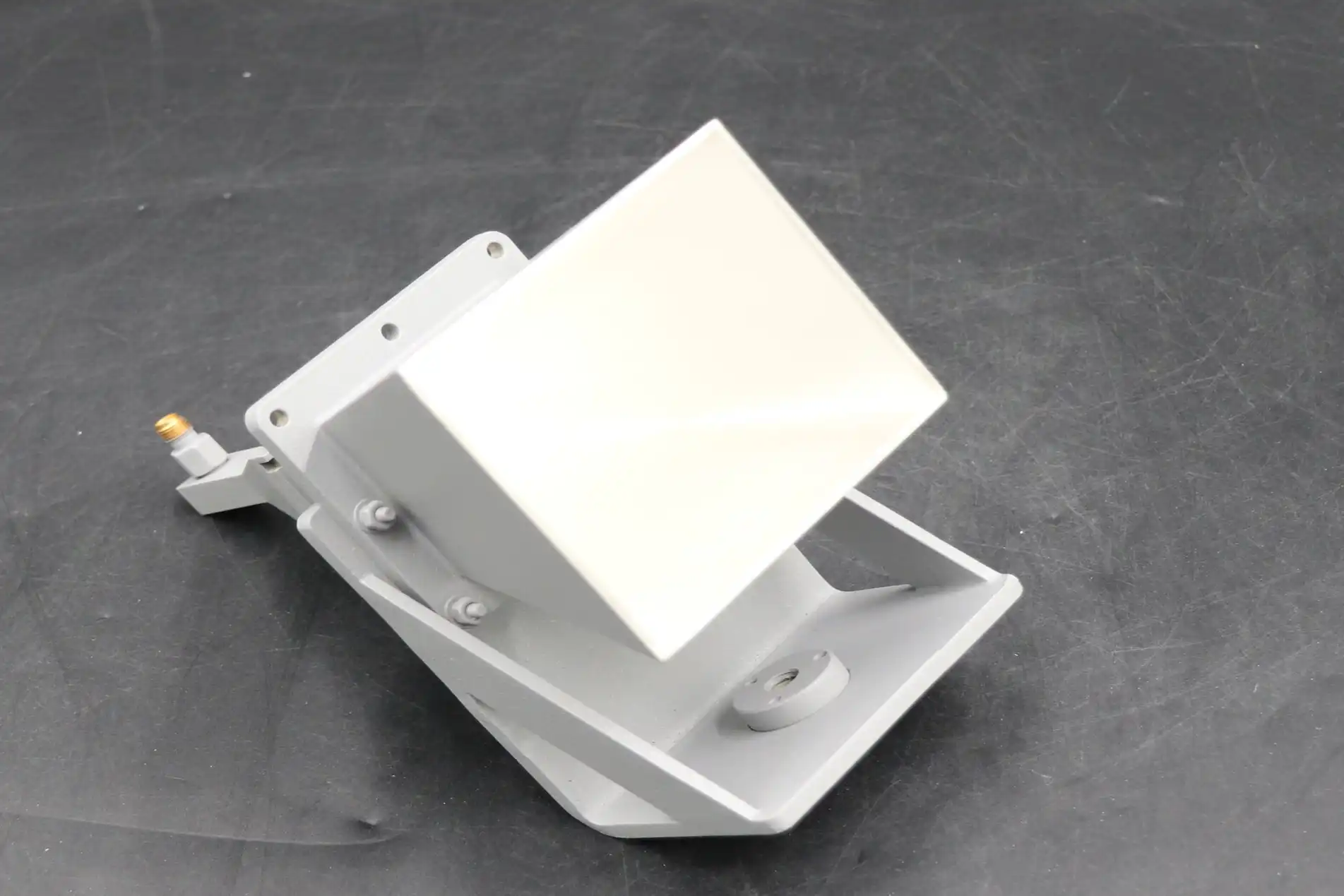
Professional-grade Wideband Double-ridged Horn Antenna systems demonstrate impressive technical specifications that directly address the demanding requirements of modern communication and measurement applications. The frequency coverage typically spans from 200 MHz to 40 GHz, providing comprehensive support for legacy communication systems operating at lower frequencies while simultaneously accommodating bleeding-edge fifth-generation and future sixth-generation technologies operating at higher millimeter-wave frequencies. Gain characteristics range from four decibels isotropic at lower frequencies to twenty decibels isotropic at higher frequencies, with the natural increase in gain with frequency helping to compensate for cable losses in testing configurations. The voltage standing wave ratio consistently remains below two-to-one across the entire operational bandwidth, ensuring efficient power transfer and minimal signal reflections that could compromise measurement accuracy or communication reliability. Power handling capabilities extend up to two hundred watts for continuous operation and even higher levels for pulsed applications, making these antennas suitable for both sensitive measurement scenarios and high-power transmission requirements in defense and telecommunications applications.
The construction of high-performance Wideband Double-ridged Horn Antenna systems demands precision engineering and advanced materials science that Advanced Microwave Technologies has perfected through over two decades of manufacturing experience. Premium-grade aluminum alloys form the structural foundation, providing optimal balance between electrical conductivity, mechanical strength, and corrosion resistance essential for long-term reliability in diverse operational environments. The black anodized coating applied to external surfaces offers enhanced protection against environmental degradation while reducing unwanted reflections that could interfere with radiation pattern purity. Internal ridge geometries are machined to tolerances measured in hundredths of millimeters, ensuring consistent electromagnetic performance and predictable behavior across the entire frequency range. The N-Type female connector interface provides robust mechanical connection and excellent electrical performance up to forty gigahertz, facilitating easy integration with standard test equipment and communication systems. Despite their wideband capabilities and robust construction, these antennas maintain compact dimensions and lightweight characteristics, typically weighing less than five pounds while delivering world-class performance across more than one hundred to one frequency ratio.
Applications of Wideband Double-ridged Horn Antenna in Modern Systems
The versatility and exceptional performance characteristics of Wideband Double-ridged Horn Antenna systems make them indispensable across numerous high-value application domains where reliable wideband performance directly impacts operational success and measurement accuracy. In electromagnetic compatibility and electromagnetic interference testing environments, these antennas serve as both radiating sources and receiving elements in shielded chambers, enabling comprehensive emissions and immunity evaluations across regulatory frequency ranges spanning from thirty megahertz to eighteen gigahertz in single measurement sweeps. This capability dramatically reduces testing time and costs while improving measurement accuracy through elimination of antenna changeovers that introduce setup variations and calibration uncertainties. Testing facilities worldwide rely on Wideband Double-ridged Horn Antenna systems to validate compliance with international standards including Federal Communications Commission Part Fifteen, CISPR Thirty-Two, and military specifications, where their stable gain characteristics and predictable radiation patterns enable precise determination of device emissions and immunity characteristics across entire frequency spectrums of interest.
Satellite communication ground stations represent another critical application domain where Wideband Double-ridged Horn Antenna technology delivers exceptional value through reliable high-frequency signal transmission and reception. These antennas ensure efficient signal transfer for high-definition video, data, and voice communications between ground facilities and orbiting satellites, operating across multiple frequency bands without requiring complex switching mechanisms or multiple antenna installations. The high gain characteristics enable establishment of robust communication links even with satellites in distant orbits, while low voltage standing wave ratio values ensure maximum power transfer efficiency in both transmission and reception modes. Advanced Microwave's specialized designs for satellite applications incorporate enhanced phase center stability and polarization purity that are essential for maintaining signal integrity in demanding space communication scenarios. The antennas' ability to handle high power levels makes them suitable for both commercial satellite operations and military satellite communications where reliable connectivity can be mission-critical.
Radar Systems and Defense Applications
Within radar and defense sectors, Wideband Double-ridged Horn Antenna systems provide the foundation for advanced surveillance, detection, and tracking capabilities that modern security operations demand. Air traffic control radar installations utilize these antennas for ultra-sharp beamforming that enables accurate aircraft tracking even in adverse weather conditions where conventional antenna systems might struggle with signal degradation. The wide bandwidth capability allows single-antenna coverage of multiple radar frequency bands, simplifying system architecture while improving reliability through elimination of band-switching mechanisms. Military surveillance applications benefit from the antennas' ability to detect potential threats and distinguish between multiple targets through precise directivity and low side-lobe characteristics that minimize false alarms from unwanted reflections. The robust construction and consistent performance across temperature extremes make Wideband Double-ridged Horn Antenna units ideal for deployment in challenging operational environments ranging from arctic installations to tropical coastal facilities where equipment must withstand harsh conditions while maintaining operational readiness.
Antenna measurement and characterization facilities worldwide depend on Wideband Double-ridged Horn Antenna systems as calibrated reference standards for far-field pattern measurements, gain determinations, and polarization assessments. Professional antenna test ranges use these antennas in anechoic chambers where their stable radiation characteristics and known performance parameters enable accurate characterization of devices under test across wide frequency ranges without requiring multiple measurement setups. The twenty-four meter microwave darkroom at Advanced Microwave Technologies exemplifies the state-of-the-art testing capabilities that Wideband Double-ridged Horn Antenna technology supports, with comprehensive measurement systems spanning frequencies from 0.5 GHz to 110 GHz. This facility's Antenna Plane Near and Far Field Measuring Recombination Chamber utilizes precision double-ridged horn antennas to extract detailed information about radiation patterns, gain distributions, and impedance characteristics that designers need to optimize antenna performance for specific applications. The ability to transition fluidly between near-field and far-field measurements while maintaining calibrated reference standards throughout enables comprehensive antenna analysis that drives innovation across telecommunications, aerospace, and defense industries.
Advantages of Choosing Wideband Double-ridged Horn Antenna Solutions
Organizations selecting Wideband Double-ridged Horn Antenna systems gain significant operational and economic advantages that extend well beyond simple technical specifications. The comprehensive frequency coverage eliminates needs for multiple specialized antennas, directly reducing capital equipment investments while simplifying inventory management and maintenance requirements. Testing laboratories can perform complete compliance evaluations with single antenna installations rather than managing arrays of narrowband units, each requiring individual calibration, storage, and periodic verification. This consolidation translates to reduced testing time, lower operational costs, and improved measurement consistency since setup variations between antenna changes are eliminated. The high efficiency characteristics, demonstrated through voltage standing wave ratio values consistently below two-to-one, minimize power losses and ensure optimal signal transmission whether antennas are deployed in measurement applications or operational communication systems. These efficiency gains become particularly significant in high-power applications where even small percentage improvements in power transfer can yield substantial performance benefits or cost savings through reduced amplifier requirements.
The durability and long-term reliability of properly engineered Wideband Double-ridged Horn Antenna systems provide additional value through extended operational lifetimes and minimal maintenance requirements. Advanced Microwave constructs these antennas from high-quality aluminum with black anodized coatings that offer excellent resistance to corrosion, ensuring reliable performance even in harsh environmental conditions including high humidity, salt spray, and temperature extremes. The robust mechanical design withstands physical stresses associated with frequent repositioning in test environments or exposure to wind loading in outdoor installations. Unlike complex phased array systems or electronically steered antennas that contain active components requiring periodic replacement, the passive double-ridged horn design delivers consistent performance over decades of operation with minimal intervention beyond basic cleaning and periodic calibration verification. This long-term reliability, combined with the antennas' ability to support both current applications and future frequency band allocations, protects initial investments and ensures continued utility as communication standards and testing requirements evolve.
Integration and Customization Capabilities
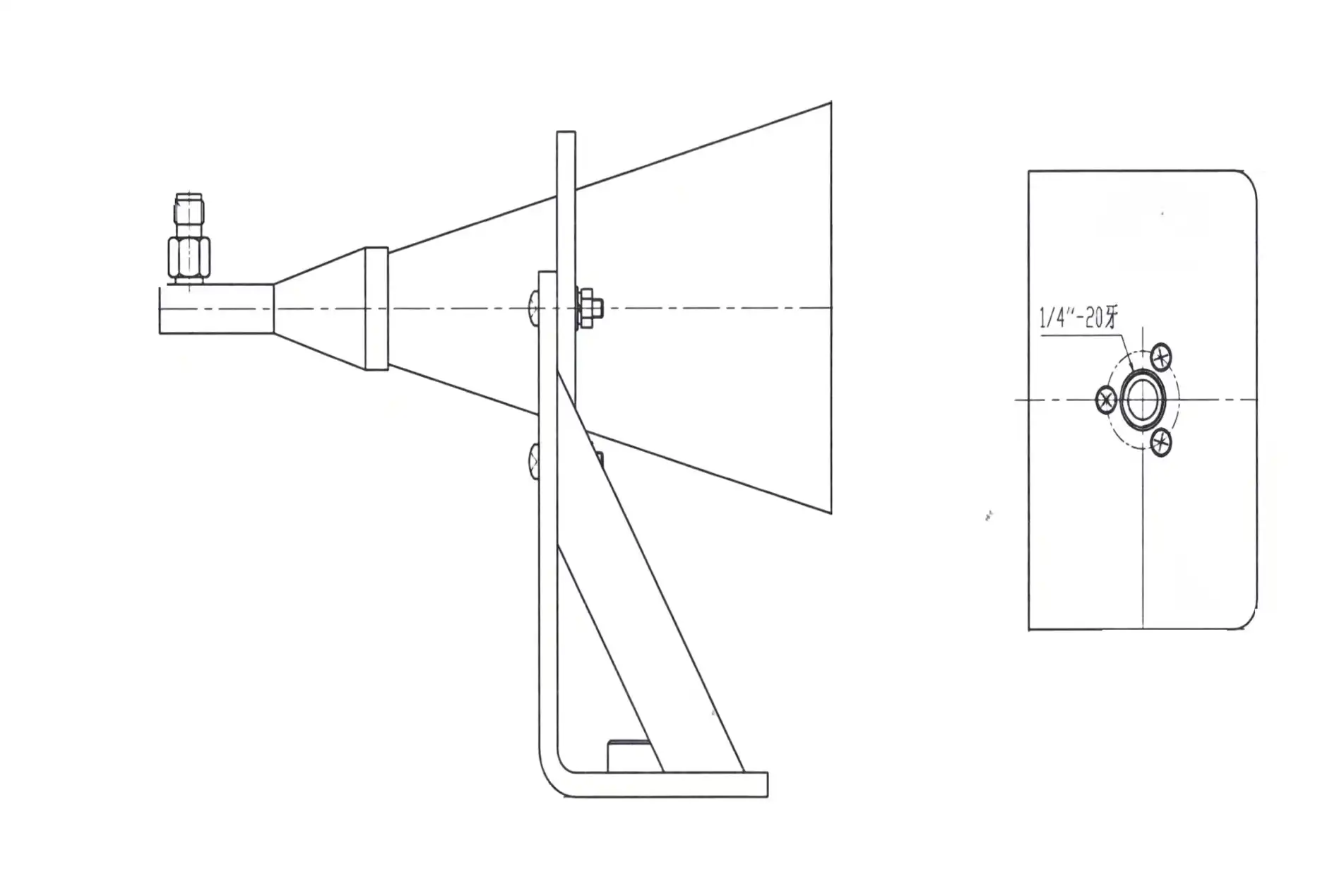
Advanced Microwave Technologies recognizes that different applications demand tailored solutions beyond standard catalog specifications. The company's comprehensive original equipment manufacturer services enable precise customization of Wideband Double-ridged Horn Antenna parameters to meet unique application requirements across telecommunications, aerospace, defense, and research sectors. Frequency range specifications can be optimized for particular operational bands, whether customers need enhanced performance in specific sub-ranges or extended coverage beyond standard offerings. Physical dimensions including aperture size, ridge spacing, and overall length can be modified to accommodate installation constraints or achieve desired radiation pattern characteristics while maintaining the fundamental advantages of wideband operation. Connector types and mounting configurations are readily customizable to ensure compatibility with existing infrastructure and simplify integration into complex measurement systems or communication networks.
The prototyping capabilities at Advanced Microwave Technologies enable rapid development and validation of customized Wideband Double-ridged Horn Antenna designs before committing to full-scale production. Engineering teams work closely with customers to understand specific requirements, translate those needs into optimized antenna geometries, and produce functional prototypes for comprehensive testing and evaluation. This collaborative approach ensures that final production units precisely meet application demands while maintaining the high-quality standards that have established Advanced Microwave as a leading manufacturer in the microwave technology sector. Technical support extends beyond initial design and delivery, with expert engineers providing in-depth assistance including installation guidance, performance optimization recommendations, and troubleshooting support throughout the antenna's operational lifetime. This comprehensive service approach ensures customers maximize value from their Wideband Double-ridged Horn Antenna investments while benefiting from Advanced Microwave's two decades of specialized experience in high-frequency antenna design and manufacturing.
Quality Standards and Manufacturing Excellence
Advanced Microwave Technologies maintains rigorous quality management systems that ensure every Wideband Double-ridged Horn Antenna meets or exceeds demanding industry standards and customer expectations. The company's ISO 9001:2015 certification demonstrates commitment to comprehensive quality control procedures spanning all business aspects from initial design through final product delivery and after-sales support. Every component undergoes thorough inspection and testing using advanced microwave measurement equipment capable of characterizing performance up to 110 GHz in the company's state-of-the-art twenty-four meter microwave darkroom. This controlled testing environment enables precise verification of gain characteristics, radiation patterns, voltage standing wave ratio values, and polarization purity across entire operational frequency ranges, ensuring consistent performance that customers can rely upon for critical applications.
Environmental responsibility represents a core value at Advanced Microwave Technologies, as evidenced by ISO 14001:2015 certification demonstrating dedication to minimizing ecological impact throughout manufacturing operations. Comprehensive environmental management systems govern waste handling, energy conservation, and emissions reduction initiatives that ensure technological advancement proceeds sustainably without compromising planetary health. The ISO 45001:2018 certification further exemplifies Advanced Microwave's commitment to employee wellbeing through workplace environments prioritizing occupational health and safety. Technicians and engineers operating sophisticated manufacturing equipment and testing facilities receive proper training, protective equipment, and safety protocols that safeguard health while boosting productivity and job satisfaction. These internationally recognized certifications are not mere accolades but integral components of corporate culture that empower continued leadership in microwave technology while upholding environmental, quality, and safety values that benefit customers, employees, and communities.
Conclusion
The Wideband Double-ridged Horn Antenna delivers unmatched performance for organizations requiring reliable high-gain coverage across broad frequency spectrums, from EMC testing to satellite communications and defense applications.
Cooperate with Advanced Microwave Technologies Co., Ltd.
Partner with a trusted China Wideband Double-ridged Horn Antenna factory that combines over twenty years of manufacturing excellence with cutting-edge testing capabilities. As a leading China Wideband Double-ridged Horn Antenna supplier, Advanced Microwave Technologies offers ISO-certified quality, comprehensive customization, and competitive Wideband Double-ridged Horn Antenna price structures. Our position as a premier China Wideband Double-ridged Horn Antenna manufacturer ensures rapid prototyping, volume production, and China Wideband Double-ridged Horn Antenna wholesale options for distributors. Discover High Quality Wideband Double-ridged Horn Antenna for sale backed by expert technical support and global shipping. Contact craig@admicrowave.com today to discuss your specific requirements and receive detailed specifications tailored to your application needs.
References
1. Jacobs, J. P. et al. "Wideband 0.5–50 GHz double-ridged guide horn antenna using coaxial-to-ridge waveguide launcher." IET Microwaves, Antennas & Propagation, 2024.
2. Balanis, C. A. "Antenna Theory: Analysis and Design." Fourth Edition, John Wiley & Sons, 2016.
3. Kerr, J. L. "Short Axial Length Broad-Band Horns." IEEE Transactions on Antennas and Propagation, 1973.
4. Turrin, R. H. "Dual Mode Small-Aperture Antennas." IEEE Transactions on Antennas and Propagation, 1967.
5. Love, A. W. "The Diagonal Horn Antenna." Microwave Journal, 1962.
YOU MAY LIKE
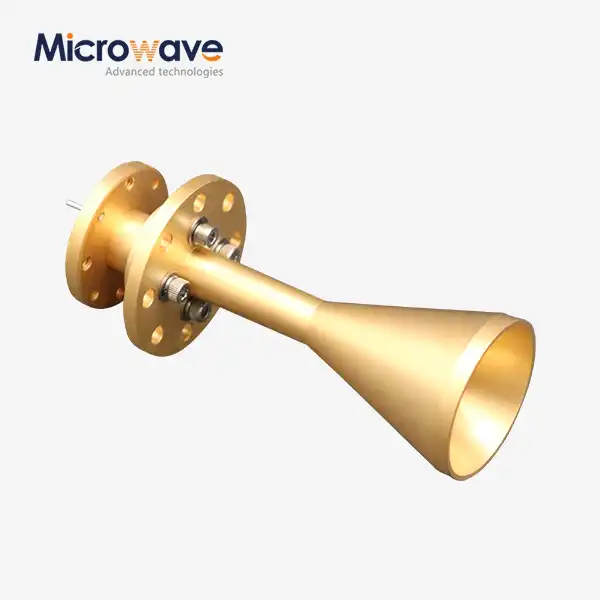 VIEW MOREConical Circular Polarization Horn Antenna
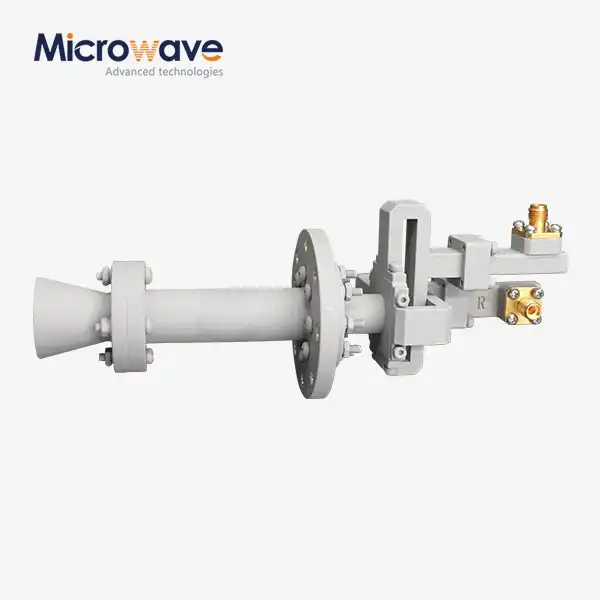 VIEW MOREConical Dual circular Polarization Horn Antenna
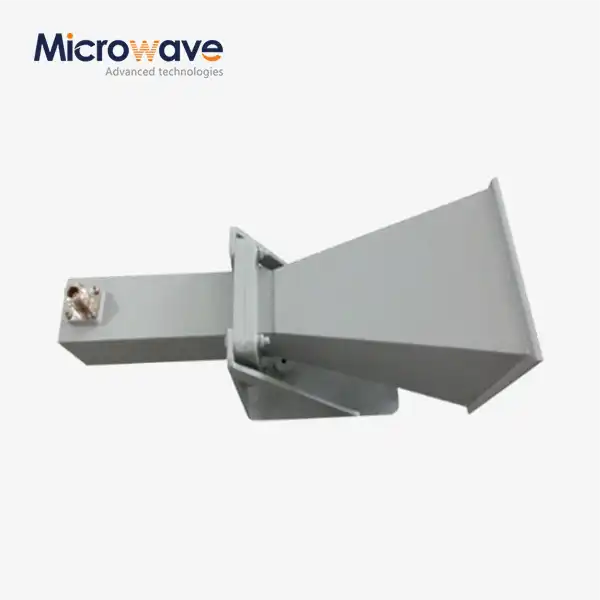 VIEW MORELadder Membrane Square Dual Circular Polarization Horn Antenna
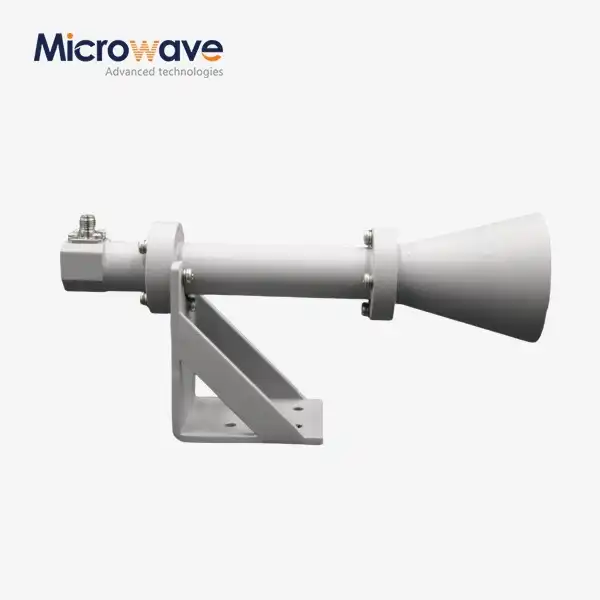 VIEW MOREDual Linear Broadband Circular Polarization Horn Antenna
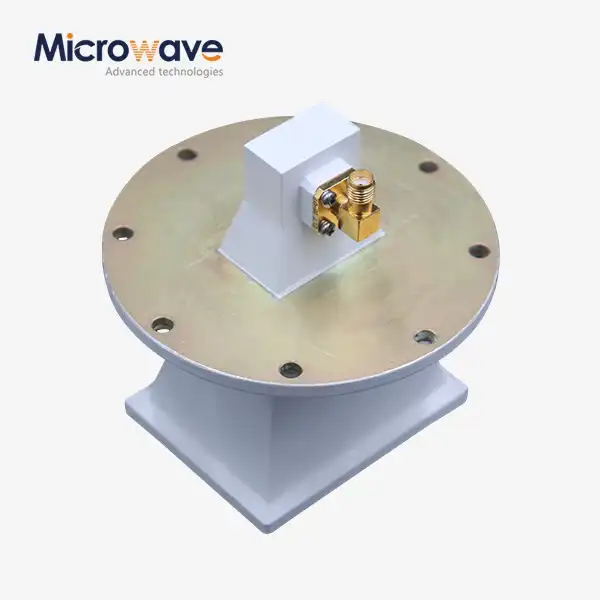 VIEW MOREPyramidal Linear Polarization Horn Antenna
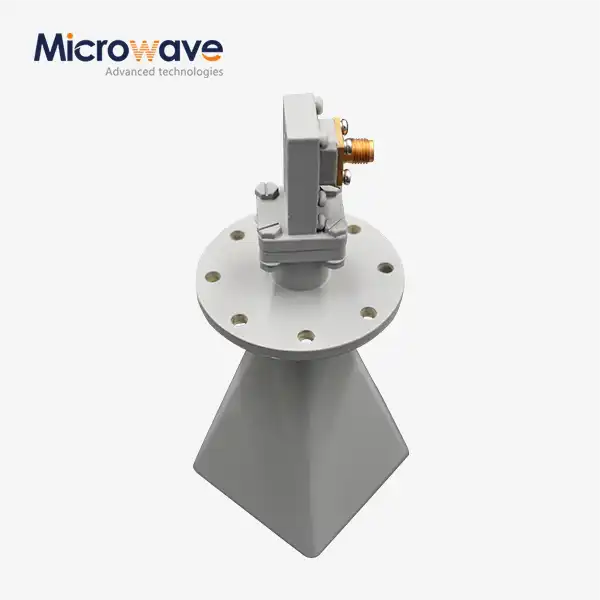 VIEW MORELow Side Lobe Diagonal Linear Polarization Horn Antenna
 VIEW MOREQuadrifilar Helix Antenna
 VIEW MORECassegrain Antenna