





E-Plane Tee Benefits for Phase Control & Signal Splitting
Picture this: your satellite communication system is losing signal integrity due to inefficient power distribution, or your radar system cannot achieve the precise phase control needed for accurate target detection. These are real-world challenges that engineers face daily in high-frequency microwave applications. The e-plane tee emerges as the solution to these critical problems, offering unmatched capabilities in phase control and signal splitting. This specialized waveguide component delivers precise power division with minimal loss, maintains phase coherence across demanding frequency ranges, and ensures reliable performance in aerospace, defense, and telecommunications systems where signal integrity cannot be compromised.
Understanding E-Plane Tee Architecture and Phase Control Mechanisms
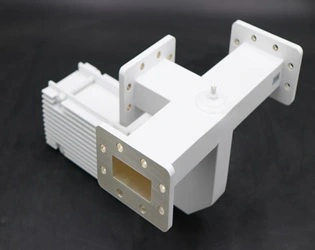
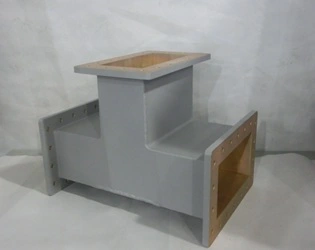
The e-plane tee represents a sophisticated three-port waveguide junction where the auxiliary arm connects directly to the broad wall of the main waveguide, creating a unique configuration that fundamentally transforms how microwave signals are managed. This specialized geometry aligns perfectly with the electric field orientation within rectangular waveguides, establishing the foundation for exceptional phase control capabilities that distinguish this component from conventional power dividers. When electromagnetic energy propagates through the main waveguide and encounters the junction, the electric field lines maintain their original orientation while power splits between the output ports according to precise phase relationships. What makes the e-plane tee particularly valuable for phase control applications is its ability to generate signals at the two output ports that maintain a 180-degree phase relationship. This inherent phase difference is not an accidental characteristic but a direct result of the electromagnetic field distribution within the junction geometry. Advanced Microwave Technologies Co., Ltd. manufactures e-plane tee components with precisely engineered junction dimensions that optimize this phase relationship across broad frequency ranges. The junction of the auxiliary arm is made on the broad wall of the main waveguide with exacting tolerances, ensuring consistent phase performance from 0.5 GHz to 110 GHz. The phase control mechanism within an e-plane tee operates through fundamental electromagnetic principles governing waveguide propagation. As incident waves encounter the T-junction, the boundary conditions imposed by the auxiliary arm create specific field patterns that determine power distribution and phase relationships. The electric field vectors in both output arms maintain parallel alignment with the fields in the main guide, but the path length differences and field symmetry result in the characteristic phase inversion between ports. This predictable phase behavior makes the e-plane tee indispensable for applications requiring precise signal manipulation, including balanced mixers, phase shifters, and antenna feed networks where controlled phase relationships directly impact system performance.
Phase Coherence in High-Frequency Applications
Maintaining phase coherence across wide frequency ranges presents significant challenges in microwave engineering, particularly as operating frequencies extend into millimeter-wave bands. The e-plane tee addresses these challenges through its inherently broadband design characteristics that preserve phase relationships even as frequency varies within the operational bandwidth. Advanced Microwave's e-plane tee designs incorporate sophisticated impedance matching networks that minimize frequency-dependent phase distortions, ensuring that the 180-degree phase relationship remains stable across the entire specified frequency range. This phase stability is crucial for phased array radar systems where precise control over the relative phase between array elements determines beam steering accuracy and sidelobe suppression. The component's ability to maintain phase coherence under varying operational conditions extends beyond frequency stability to include temperature invariance and power level independence. High-quality e-plane tee implementations use materials with low thermal expansion coefficients and stable dielectric properties, preventing phase drift as ambient temperatures fluctuate. This thermal stability is particularly important in aerospace applications where components experience extreme temperature variations during operation. Furthermore, the linear phase response of well-designed e-plane tee junctions ensures that phase relationships remain consistent across different power levels, preventing signal distortion in systems operating with varying power requirements.
Signal Splitting Performance Characteristics
The signal splitting capabilities of an e-plane tee extend far beyond simple power division, encompassing precise amplitude balance, low insertion loss, and excellent port-to-port isolation. When configured as a power divider, the e-plane tee splits input power nominally equally between its two output ports, with advanced designs achieving amplitude imbalance of less than 0.5 dB across the operational bandwidth. This exceptional balance is critical in applications such as antenna feeding systems where uniform power distribution ensures optimal radiation patterns and system efficiency. Advanced Microwave Technologies Co., Ltd. achieves these performance levels through precision manufacturing techniques including computer-controlled machining and rigorous quality control procedures that verify electrical performance of every component. Insertion loss represents a critical performance parameter for any signal splitting device, as excessive loss degrades system sensitivity and wastes valuable transmitted power. The e-plane tee excels in this regard, with typical insertion loss values below 0.2 dB for well-designed implementations. This remarkably low loss results from the smooth electromagnetic field transitions within the junction, minimizing energy dissipation through resistive losses or mode conversion. The low insertion loss characteristic is particularly valuable in satellite communication systems where link budgets are tight and every fraction of a decibel impacts system performance. Additionally, the e-plane tee maintains excellent port isolation, preventing signal leakage between output ports that could cause interference or crosstalk in sensitive applications.
E-Plane Tee Applications in Satellite Communications and Radar Systems
Satellite communication systems demand components that deliver unwavering reliability combined with exceptional electrical performance across broad frequency ranges. The e-plane tee fulfills these demanding requirements through its proven ability to distribute signals efficiently while maintaining signal integrity throughout the transmission path. In satellite ground stations, e-plane tee components serve critical roles in antenna feed networks where they split received signals for processing by multiple receiver chains or combine transmitted signals from multiple power amplifiers. The component's low insertion loss directly translates to improved system sensitivity in receive applications and enhanced effective radiated power in transmit configurations. Modern high-throughput satellites operating at Ka-band and higher frequencies particularly benefit from the e-plane tee's superior performance at millimeter-wave frequencies. As satellite operators push toward higher frequency bands to access greater available bandwidth, the need for components that maintain performance at these challenging frequencies becomes paramount. Advanced Microwave's e-plane tee designs support frequencies up to 110 GHz, providing satellite system designers with reliable power division solutions for next-generation communication payloads. The component's compact design and lightweight construction also address the stringent mass and volume constraints inherent in space applications, where launch costs create powerful incentives for miniaturization.
Radar System Integration and Performance Enhancement
Radar systems rely on precise signal distribution to achieve the angular resolution and detection sensitivity required for modern applications ranging from air traffic control to military surveillance. The e-plane tee plays essential roles in radar transmit and receive architectures, enabling balanced power distribution to antenna elements in phased array configurations and facilitating monopulse processing techniques in tracking radars. In transmit applications, the component's high power handling capability allows it to distribute kilowatts of RF power to multiple antenna elements without degradation, while its low insertion loss preserves transmitted power that directly impacts maximum detection range. For radar receiving systems, the e-plane tee's phase characteristics enable sophisticated signal processing techniques that enhance target detection and tracking capabilities. The natural 180-degree phase relationship between output ports makes the e-plane tee ideal for balanced mixer configurations used in frequency conversion stages, where this phase difference helps suppress local oscillator noise and improve dynamic range. In monopulse radar systems that use angular comparison techniques for precise target tracking, e-plane tee components create the sum and difference channels required for elevation and azimuth angle determination. Advanced Microwave Technologies Co., Ltd. provides e-plane tee variants optimized for specific radar bands including X-band, Ku-band, and Ka-band, with customization options available to match unique system requirements.
Defense and Aerospace Mission-Critical Applications
Defense and aerospace applications impose the most demanding requirements on microwave components, requiring not only exceptional electrical performance but also proven reliability under extreme environmental conditions. The e-plane tee meets these stringent requirements through robust mechanical construction using high-quality materials that withstand shock, vibration, and temperature extremes encountered in military and space environments. Advanced Microwave's e-plane tee components undergo rigorous qualification testing including thermal cycling, random vibration, and accelerated life testing to verify their ability to perform reliably throughout their operational lifetime. In electronic warfare systems, e-plane tee components enable sensitive direction-finding equipment through precise power splitting for amplitude comparison techniques that provide accurate bearing information on signal sources. The component's wide bandwidth characteristics allow electronic warfare receivers to cover broad frequency ranges with minimal hardware, reducing system complexity and improving operational flexibility. For airborne radar applications in unmanned aerial vehicles and military aircraft, the e-plane tee's lightweight design contributes to overall system weight reduction while maintaining the electrical performance required for mission success. ISO:9001:2008 certification and RoHS compliance ensure that Advanced Microwave's e-plane tee products meet international quality and environmental standards required for defense procurement.
Technical Advantages of E-Plane Tee Design in Modern Microwave Systems
The technical superiority of e-plane tee components stems from fundamental design principles that optimize electromagnetic field distributions and minimize parasitic effects that degrade performance in alternative implementations. Unlike conventional power dividers based on resistive or hybrid coupler architectures, the e-plane tee achieves power division through purely reactive waveguide structures that introduce minimal loss and maintain excellent power handling capabilities. This reactive splitting mechanism operates efficiently across broad bandwidths without the frequency limitations imposed by quarter-wave coupled structures, making the e-plane tee particularly suitable for applications requiring octave or multi-octave bandwidth coverage. The impedance matching characteristics of well-designed e-plane tee junctions contribute significantly to their overall performance advantages. Advanced Microwave Technologies Co., Ltd. employs sophisticated electromagnetic simulation tools during the design phase to optimize junction geometry for minimal reflection across the operational frequency range. The resulting designs achieve voltage standing wave ratios typically below 1.2:1, ensuring efficient power transfer and preventing standing waves that could cause power compression or damage in high-power applications. Superior impedance matching also improves system-level performance by reducing reflections that might otherwise interfere with sensitive receiving equipment or destabilize transmitter power amplifiers.
Broadband Performance and Frequency Scalability
Achieving consistent performance across broad frequency ranges represents a significant challenge in microwave component design, particularly as operational bandwidths expand to support modern communication and radar systems. The e-plane tee addresses this challenge through its inherently broadband design characteristics that maintain electrical performance across frequency ratios of 2:1 or greater. This wideband operation results from the smooth electromagnetic transitions within the waveguide junction combined with carefully optimized matching networks that compensate for frequency-dependent impedance variations. For system designers, this broadband capability simplifies system architecture by reducing the number of frequency-specific components required and improving operational flexibility. The scalability of e-plane tee designs across different frequency bands enables Advanced Microwave Technologies Co., Ltd. to provide solutions spanning from L-band through W-band and beyond. Whether the application requires operation at 2 GHz for legacy communication systems or 94 GHz for millimeter-wave radar applications, the fundamental design principles remain consistent while dimensional scaling and material selections adapt to the specific frequency requirements. This scalability extends to customization options where engineers can specify exact frequency ranges, power handling requirements, and physical interface configurations to match unique system needs. The company's extensive experience in waveguide component design ensures that each customized e-plane tee delivers optimal performance for its intended application.
Power Handling and Environmental Durability
Power handling capability represents a critical specification for e-plane tee components in transmitter applications where kilowatts of RF energy must be distributed without component damage or performance degradation. Advanced Microwave's e-plane tee designs support high power levels through careful attention to thermal management and voltage breakdown prevention. The all-metal waveguide construction provides excellent thermal conductivity, efficiently dissipating the small amount of heat generated by insertion loss. For especially high-power applications, specialized designs incorporate enhanced cooling features including increased wall thickness for improved heat spreading or provisions for forced-air or liquid cooling integration. Environmental durability extends beyond power handling to encompass resistance to mechanical stress, temperature extremes, and environmental contaminants. The e-plane tee's robust mechanical structure withstands shock and vibration encountered in mobile platforms including ships, aircraft, and ground vehicles. Materials selection emphasizes corrosion resistance and dimensional stability across the -55°C to +125°C temperature range typical of military specifications. Protective coatings and sealing techniques prevent moisture ingress and contamination that could degrade electrical performance over time. These environmental protection features ensure that e-plane tee components maintain their specified performance throughout years of field operation in demanding applications.
Customization and OEM Integration Services for E-Plane Tee Components
Every microwave system presents unique requirements shaped by specific operational frequencies, power levels, physical constraints, and performance objectives. Recognizing this diversity, Advanced Microwave Technologies Co., Ltd. offers comprehensive customization services that tailor e-plane tee designs to exact customer specifications. The customization process begins with detailed consultation where experienced engineers work closely with customers to understand system requirements and constraints. This collaborative approach ensures that the final component design optimizes performance for the intended application while maintaining manufacturability and cost-effectiveness. Customization options span all critical parameters including frequency range, power handling capacity, physical dimensions, waveguide flange types, and materials selection. For frequency-specific applications, engineers optimize junction geometry and matching networks to achieve peak performance within the narrow operational bandwidth. When broad bandwidth is required, alternative design approaches maintain acceptable performance across wider frequency ranges. Physical size constraints in space-limited applications drive compact designs that maximize electrical performance within available volume. Material selections can be tailored to meet specific environmental requirements including enhanced corrosion resistance for maritime applications or low outgassing characteristics for space flight hardware.
Rapid Prototyping and Design Verification Services
The development cycle for new microwave systems benefits significantly from rapid prototyping capabilities that allow early hardware verification of component designs. Advanced Microwave Technologies Co., Ltd. maintains dedicated prototyping facilities equipped with advanced machining capabilities that produce functional e-plane tee prototypes in abbreviated timeframes. These prototype components undergo comprehensive testing in the company's state-of-the-art measurement laboratories to verify that electrical performance meets design specifications. The 24m Microwave Darkroom and Antenna Plane Near and Far Field Measuring Recombination Chamber provide unparalleled measurement capabilities for characterizing component performance across the full frequency range from 0.5 to 110 GHz. Design verification services extend beyond basic parameter measurement to include detailed characterization of insertion loss, return loss, amplitude balance, phase balance, and port isolation across the operational bandwidth. Temperature-dependent measurements characterize performance variations over the specified environmental range, while high-power testing verifies power handling capabilities under realistic operating conditions. This comprehensive verification approach identifies any design refinements needed before full-scale production, minimizing development risk and accelerating time to market for customer systems. The measurement data generated during verification provides valuable documentation for system integration and serves as the baseline for production acceptance testing.
Production Scalability and Quality Assurance
Once prototype validation confirms that the e-plane tee design meets all requirements, Advanced Microwave's production capabilities scale efficiently from small-batch specialized components to higher-volume manufacturing for commercial applications. The company's manufacturing processes emphasize consistency and repeatability, employing precision machining equipment with computer numerical control and automated inspection systems that verify dimensional accuracy. This manufacturing approach ensures that production units exhibit the same excellent performance characteristics as prototype hardware, providing customers with reliable components that perform as expected when integrated into their systems. Quality assurance procedures throughout the manufacturing process guarantee that every e-plane tee component meets specified performance standards. Incoming material inspections verify that raw materials meet specifications for dimensional tolerances and material properties. In-process inspections at critical manufacturing stages catch any deviations before they propagate through subsequent operations. Final electrical testing of every component verifies insertion loss, return loss, and amplitude balance, with test data recorded for traceability and documentation purposes. ISO:9001:2008 certification and RoHS compliance demonstrate Advanced Microwave's commitment to quality management and environmental responsibility, providing customers with confidence in component reliability and regulatory compliance.
Conclusion
The e-plane tee delivers unmatched phase control and signal splitting performance for demanding microwave applications across satellite communications, radar systems, and aerospace platforms. Its superior electrical characteristics, robust construction, and customization flexibility make it the preferred choice for mission-critical systems.
Cooperate with Advanced Microwave Technologies Co., Ltd.
Partner with a proven leader in microwave technology. As a premier China e-plane tee manufacturer, China e-plane tee supplier, and China e-plane tee factory offering China e-plane tee wholesale, we deliver High Quality e-plane tee products with competitive e-plane tee price for e-plane tee for sale globally. Our 20+ years of expertise, ISO-certified quality, and advanced 24m Microwave Darkroom ensure precision from 0.5-110GHz. With customizable OEM services, rapid prototyping, comprehensive technical support, and efficient delivery backed by our perfect supply chain system, we transform your specifications into reality. Contact craig@admicrowave.com today to discuss your e-plane tee requirements and discover how our professional R&D team, strict quality control, and strong after-sales capabilities can elevate your system performance in satellite communications, defense, aerospace, navigation, weather monitoring, and UAV applications.
References
1. Pozar, David M. "Microwave Engineering, Fourth Edition" - Comprehensive treatment of waveguide theory and junction design principles including detailed analysis of E-plane tee configurations and scattering parameter characteristics.
2. Collin, Robert E. "Foundations for Microwave Engineering, Second Edition" - Authoritative text covering electromagnetic field theory in waveguide structures with specific chapters addressing power division networks and tee junction analysis.
3. Skolnik, Merrill I. "Radar Handbook, Third Edition" - Industry-standard reference for radar system design including extensive coverage of feed networks, power distribution systems, and phase control techniques utilizing waveguide components.
4. Maas, Stephen A. "Microwave Mixers, Second Edition" - Detailed examination of balanced mixer configurations and the role of waveguide tee junctions in achieving superior conversion loss and port isolation in microwave receiver designs.
5. Balanis, Constantine A. "Antenna Theory: Analysis and Design, Fourth Edition" - Comprehensive antenna engineering text covering feed network design, power distribution architectures, and the application of waveguide components in phased array and reflector antenna systems.
YOU MAY LIKE
 VIEW MORELow Phase Noise Amplifier
 VIEW MOREAc Power Amplifier
 VIEW MOREVoltage Controlled Phase Shifter
 VIEW MOREStandard Horn Antenna
 VIEW MOREConical Horn Lens Antenna
 VIEW MOREPoint Focusing Horn Lens Antenna
 VIEW MORECorrugated Horn and Multimode Horn Antenna
 VIEW MOREMini Wideband Double-ridged Horn Antenna