





Why Mass Production of 5G Antenna with Phase Shifter Is Challenging?
Mass-producing a 5G antenna with phase shifter integration is one of the most demanding challenges in modern RF manufacturing. These components combine precision beamforming circuits, tightly toleranced mechanical structures, and high-frequency signal control into a single assembly—at millimeter-wave frequencies where even minor deviations cause measurable performance loss. Unlike conventional antenna production, every unit must pass phase accuracy verification, insertion loss testing, and environmental screening. The convergence of these requirements at commercial volumes creates significant pressure on fabrication processes, supply chains, and quality systems simultaneously.
Defining the Challenge: What Makes Mass Production Difficult?
The Technical Foundation of Phase Shifter Integration
Phase shifters, which can be controlled analogously or digitally, help a 5G beamforming antenna direct signal beams at specific users in real time. At millimeter-wave frequencies (24 GHz to 100 GHz), the wavelengths are very short. This means that the tolerances between parts must be kept to a few hundredths of a millimeter. If the phase part isn't lined up right, it affects both the beam accuracy and the system gain.
Why Beamforming Demands Are So Unforgiving
Massive MIMO arrays are used in 5G base stations and can have anywhere from 64 to 256 antenna elements. Each antenna element needs its own phase shifter. It is necessary for all elements to have the same phase. If they don't, mistakes will add up across the array and lower the spectral efficiency. IEEE Transactions on Antennas and Propagation says that phase error greater than ±5 degrees across an array significantly lowers the effective isotropic radiated power (EIRP).
Applications That Raise the Stakes
Smart cities, vehicle-to-everything (V2X) transmission, and industrial IoT all use these sensors. In all of these situations, signal steering that works sometimes or not at all leads to failure at the system level. For purchase engineers who are buying in bulk, this means that variability is not acceptable—every unit in the batch must perform the same.
Root Causes Behind the Production Bottlenecks
Precision Fabrication at Millimeter-Wave Scale
To keep phase accuracy in production, base materials need to have dielectric constants that don't change much when the temperature does. People often ask for Rogers and PTFE-based laminates, but they need special etching and bonding methods to be processed. During lamination, a one-degree change in temperature can move the dielectric constant far enough to change the phase response across a frequency band.
Supply Chain Fragility for Specialized Components
It takes a long time to get GaAs or GaN-based phase shifter chips, low-loss RF boards, and precision connections from reliable sources. For high-frequency MMIC devices, many certified component sources have wait times of 16 to 26 weeks. When OEM makers put together 5g antenna with phase shifter sub-arrays, this reliance on a single source causes timing problems that affect the whole production plan.
Balancing Cost and Performance at Volume
The cost of materials for high-frequency boards and MMIC chipsets is three to five times that of regular PCB circuits. When thousands of antenna elements are used in a Massive MIMO deployment, the cost per unit becomes one of the most important things to think about when buying. Manufacturers have to find a way to maximize yield while keeping costs low, without sacrificing the phase accuracy that is essential to the function of the product.
It's clear that output bottlenecks are not separate problems because these pressures are coming together. They are caused by technical, material, and business limitations that affect each other and need to be handled as a whole.
Evaluating Existing Solutions and Production Methods
Traditional vs. Automated Assembly
At millimeter-wave frequencies, the positional tolerances needed can't be consistently reached with traditional hand-assembly methods. Robotic pick-and-place systems, automatic soldering with controlled temperature profiles, and inline vector network analyzer (VNA) tests are all used in modern production lines for 5G antenna arrays to make sure that S-parameter performance is met at every step. These methods raise the first-pass return, but they need a lot of money and time to make sure the process works right.
Analog vs. Digital Phase Shifter Trade-offs
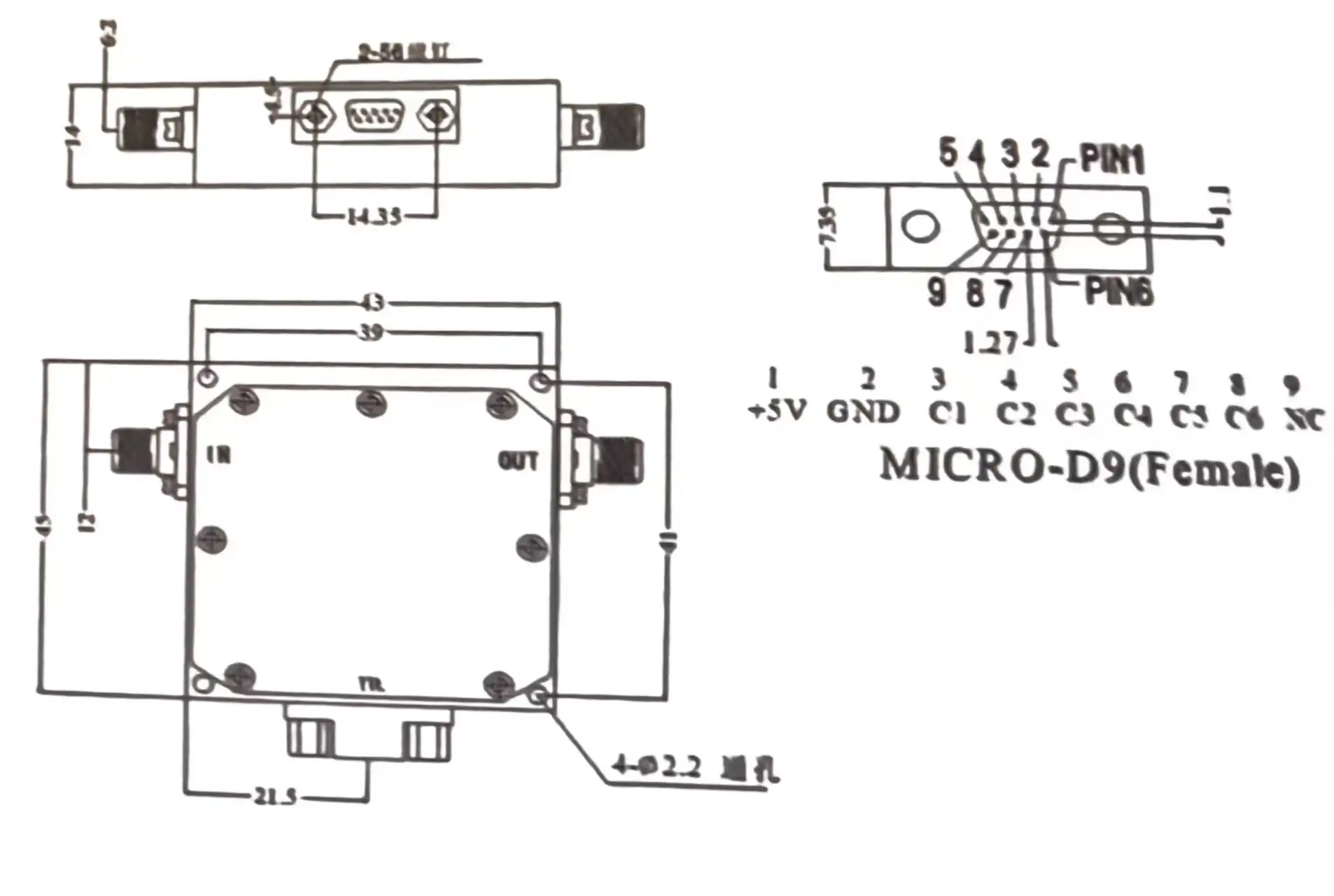
It is easier to integrate analog phase shifters, and they have smaller insertion loss, but they need to be calibrated for each unit, which is a lot of work when you do it all at once. Digital phase shifters, like the digitally controlled phase shifter (DCPS) modules used in Active Electronically Scanned Arrays (AESA), can set the phase at the bit level over and over again and are better for automated calibration. However, they come with more parts and may be harder to control when they are mass-produced.
Lessons From Leading Manufacturers
Major companies that make telecom equipment say that offline testing takes 20–30% of the total time it takes to make phased array antenna modules. Overall fallout rates dropped by up to 40% when manufacturers switched to modular subarray architectures, which test smaller functional blocks before putting them all together. This means that for business-to-business buyers, picking a supplier with clear inline test procedures is just as important as the 5g antenna with phase shifter specification itself.
Strategies and Best Practices to Overcome Mass Production Challenges
Design for Manufacturability
Standardizing phase shifter interfaces and using modular subarray architectures makes it easier to put together each unit. When phase changer modules are pre-defined and can be switched out, it takes a lot less time to calibrate the whole array. When suppliers use design-for-manufacturability (DFM) concepts in their engineering process, they make parts that are more consistent and don't need as much work to be redone when the system is put together.
Building a Reliable Supplier Network
Here are the main things that are done in the supply chain to lower the risk of production:
- Dual-source critical components: Qualifying two suppliers for MMIC phase shifter chips reduces single-source lead time risk.
- Long-term blanket purchase orders: Securing material commitments 6–12 months ahead stabilizes pricing and allocation.
- Supplier quality audits: Reviewing production process capability (Cpk) data from substrate and connector suppliers before order placement catches problems before they reach assembly.
These habits help buying teams see problems coming and are adaptable enough to handle them without stopping production lines.
Rigorous Inline Quality Assurance
Vector Network Analysis must be used at more than one stage of assembly for phased array antenna production quality control, not just at the end for final inspection. To meet the requirements of the system, phase accuracy must stay within ±2 degrees per piece. Environmental Stress Screening (ESS), which includes temperature changes from -40°C to +85°C and exposure to dampness, checks for long-term dependability before the product is shipped. Suppliers with ISO 9001:2015 certification show that they have written process control that helps them keep output uniform at high volumes.
Future Outlook: Trends Shaping 5G Antenna Production
Advanced Materials and Miniaturization
For making millimeter-wave antennas, liquid crystal polymer (LCP) and low-temperature co-fired ceramic (LTCC) substrates are becoming more popular. These materials have better control over dimensions and less variation in loss than regular laminates. This directly helps keep phase consistency across production batches.
AI-Assisted Manufacturing and Calibration
Machine learning techniques are being used to calibrate antenna arrays. This has cut the time it takes to describe each part from minutes to seconds. Early users in the telecom equipment space say that calibration output has gone up by 60–80%, which directly lowers the cost of making each unit of complex phased array designs.
Evolving Supplier Ecosystem
New companies are getting into the RF component supply chain because of the need for 5G facilities around the world. This gives procurement managers more ways to find suppliers, but it also means that vendors have to meet stricter requirements. Newer market participants pose a higher risk of not meeting qualification standards than suppliers who have been making microwave parts for more than 20 years, have established quality certifications, and can measure up to 110 GHz in-house.
Conclusion
Making a lot of 5g antenna with phase shifter changers is still one of the hardest technical problems in RF manufacturing right now. If a production program meets its yield and delivery goals, factors like phase accuracy, material quality, supply chain depth, and the ability to test in real time all play a role. For B2B procurement teams to move forward, they need to choose providers who have detailed process control, modular design methods, and enough tech depth to fix problems before they cause delivery failures. When buyers know about these limitations, they can arrange more reasonable lead times and set realistic quality standards.
FAQ
What is the difference between analog and digital phase shifters in 5G antennas?
Analog phase shifters use voltage-controlled parts like varactors or ferrite materials to make phase changes in real time. They usually have less insertion loss, but each unit needs to be calibrated separately. Digital phase shifters, such as the DCPS units used in AESA radar and 5G Massive MIMO, change phase in small steps that are managed by binary signals. They work better for automatic calibration in high-volume output, but they have more parts.
How do manufacturers verify phase accuracy in production?
It is proven that the phase is correct by using Vector Network Analysis to measure the S21 transmission phase over the whole working frequency range. High-quality parts keep the phase accuracy within ±2 degrees of the setting that was given. Manufacturers who can use an inline VNA at more than one stage of the assembly process can find phase deviations before they are fully integrated.
What are typical production lead times for phased array antenna assemblies?
Lead times range from 12 to 26 weeks, based on how quickly you can get the parts you need, especially MMIC chipsets. If buyers can see their future demand for 6 to 12 months, they can get better allocation from component suppliers.
What certifications should I require from a supplier?
Having ISO 9001:2015 approval means that quality management has been recorded. Most commercial and telecom applications need to be RoHS compliant. When buying things for defense or space, make sure you get extra tracking paperwork and environmental test results.
Partner With ADM for Reliable 5G Antenna with Phase Shifter Solutions
ADM has been a trusted 5g antenna with phase shifter manufacturer for more than 20 years, sending high-precision RF and microwave parts to customers around the world in defense, satellite, and telecom. Our testing lab works up to 110 GHz, and all of our products come with paperwork that is backed by ISO 9001:2015. You can talk to our engineering team about your needs and get a unique price by emailing craig@admicrowave.com.
References
1. Balanis, C. A. Antenna Theory: Analysis and Design. Wiley, 2016.
2. Pozar, D. M. Microwave Engineering, 4th ed. Wiley, 2012.
3. IEEE Transactions on Antennas and Propagation. "Phased Array Calibration and Beam Steering Techniques for 5G mmWave Systems." IEEE, 2021.
4. International Telecommunication Union. IMT-2020 (5G) Technical Performance Requirements. ITU-R, 2017.
5. Rao, S., et al. "Millimeter-Wave Antenna Arrays for 5G Networks: Design and Manufacturing Challenges." Microwave Journal, 2022.
6. Rogers Corporation. Advanced High-Frequency Materials for 5G Antenna Applications: Design and Process Considerations. Rogers Corp Technical Publications, 2023.
YOU MAY LIKE
 VIEW MORECircular Waveguide To Coaxial Adapter
 VIEW MOREH-Plane Tee
 VIEW MORECrossguide Directional Coupler
 VIEW MORE90° Polarized Rotary Joint
 VIEW MOREDouble Ridge Waveguide Tube
 VIEW MORECoaxial Cable Assembly
 VIEW MOREConical Dual circular Polarization Horn Antenna
 VIEW MOREDual Linear Broadband Circular Polarization Horn Antenna