





Cassegrain Antenna vs Gregorian: Picking the Right Dual Reflector
Choosing between a Cassegrain antenna and a Gregorian antenna is one of the more consequential decisions a procurement engineer faces when specifying a dual reflector system. Both designs share a two-mirror architecture, but they diverge sharply in geometry, performance trade-offs, and deployment suitability. The Cassegrain antenna uses a convex hyperbolic secondary reflector, folding the signal path back through an aperture in the main dish. The Gregorian places its concave elliptical secondary beyond the prime focus. That single geometric difference drives distinct gain profiles, physical footprints, and cost structures that matter deeply in satellite, defense, and research applications.
Understanding Dual Reflector Antennas: Basics and Theory
What Makes a Dual Reflector System Different
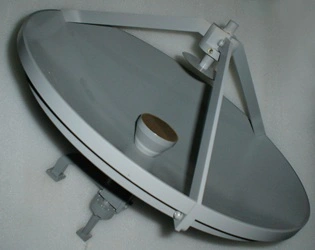
A dual reflector antenna is better than a single parabolic dish because it has an extra mirror that moves energy from the feed horn to the main reflector. This design makes the effective focal length longer without making the physical structure bigger. This makes beam collimation better and noise from spillover less noticeable. The Cassegrain and Gregorian families both come from visual telescope designs from the 17th century. During the middle of the 20th century, microwave engineers adapted them for radar and satellite work.
Cassegrain Geometry and Signal Path
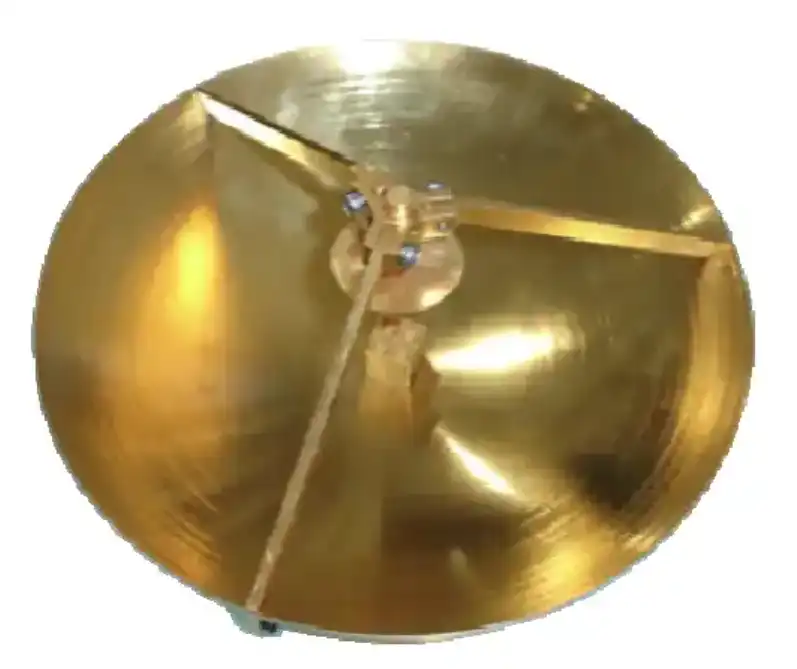
The secondary reflector in a Cassegrain antenna is a convex hyperboloid that sits between the feed and the prime focus. The feed horn is at the very top of the main dish and faces forward toward the secondary. With this setup, heavy electronics like low-noise amplifiers, high-power amplifiers, and waveguide transitions can be placed behind the main reflector instead of at the end of a long feed boom. Getting rid of long waveguide runs directly cuts insertion loss. This is why Cassegrain configurations are the usual choice for Ku-band and Ka-band teleport earth stations that need to save money on their link budgets.
Gregorian Geometry and Signal Path
The secondary reflector of a Gregorian antenna is a concave ellipsoid that is placed outside the main dish's prime focus. From a point past the focal plane, the feed illuminates the secondary. The Gregorian system has lower cross-polarization and slightly better aperture efficiency in some setups because the secondary is curved and bigger than a Cassegrain sub-reflector with the same aperture. The longer structure, on the other hand, needs more space and a higher support frame, which is important in ground stations that don't have a lot of room.
Comparative Analysis: Cassegrain Antenna vs Gregorian Antenna
Gain, Efficiency, and Frequency Handling
When the Cassegrain antenna is well-designed, it usually has an aperture efficiency of between 60 and 70% and cross-polarization discrimination (XPD) of more than 30 dB. Gregorian systems can get about the same level of efficiency, but they need tighter mechanical tolerances on the secondary curve. At millimeter-wave frequencies (Ka-band, 26.5–40 GHz and above), the Cassegrain shape is usually the best because the small secondary reduces loss due to blocking and scattering. Gregorian antennas work better in wideband or multi-band situations because the bigger secondary lets the feed clusters be set up in more ways.
Structural Complexity, Cost, and Maintenance
The two designs are physically different, which affects how much they cost to buy and how much maintenance they need in the field. These are the main differences that buying teams should look at:
- Secondary reflector fabrication: A Cassegrain hyperbolic sub-reflector requires tighter surface accuracy tolerances (RMS error within λ/20) compared to a Gregorian elliptical secondary at the same frequency, which can increase machining costs at higher bands.
- Overall structural length: Gregorian systems are physically longer, adding wind-load stress on the mount and increasing civil foundation requirements—a relevant factor for outdoor ground station installations at wind speeds above 150 km/h.
- Feed and electronics accessibility: Because Cassegrain electronics mount at the rear of the main dish, field technicians service amplifiers and waveguide components from ground level, reducing mean time to repair (MTTR) compared to systems with elevated feed booms.
- Cost at smaller apertures: Below roughly 50 wavelengths in diameter, Cassegrain sub-reflector blockage becomes proportionally significant. For small aperture test antennas or compact radar feeds, a Gregorian layout can actually deliver better efficiency per dollar.
For both designs to work, the feed-phase-center matching must be very accurate. Misalignment in either design causes beam squint and measurable gain loss, so vendor alignment documentation should be a standard item on the acceptance test checklist when the product is sent to the factory.
Use Case Scenarios
Because they have a low noise temperature and a small feed unit on the back, cassegrain designs are most common in satellite earth stations, monopulse tracking radars, and deep-space telemetry. When it comes to radio astronomy arrays, wideband electronic warfare systems, and dual-band ground station configurations, Gregorian designs work better because the secondary reflector area can fit a more complicated multi-frequency feed horn assembly.
How to Choose the Right Dual Reflector Antenna for Procurement
Define Your Frequency Band and Gain Target First
Before calling a dual reflector cassegrain antenna provider, you need to know the frequency band that will be used, the antenna gain that is needed (in decibels), and the allowed VSWR, which for professional systems is usually less than 1.3:1. The aperture size, the surface accuracy standard, and the sub-reflector shape are all controlled by these three factors. A Ka-band system that needs 52 dBi gain will need a main reflector that is about 2.4 meters in diameter and has surface RMS accuracy better than 0.2 mm. A Cassegrain layout is usually the first choice.
Evaluate Environmental and Structural Constraints
The conditions for placement outside have a direct effect on which design is useful. Take into account the wind survival rating (which is usually tested to 200 km/h using ASTM B117 salt spray and wind tunnel methods), the weight of the ice, and the requirements for seismic zones. A small Cassegrain with a shallow main reflector (f/D ratio of 0.6–0.8) has a flatter wind profile than a Gregorian of the same size but with a longer secondary boom. When installing on a ship or a rooftop, this change in the actual envelope can make all the difference.
Verify Vendor Qualifications and Customization Capacity
Before placing an order, procurement teams should ask any dual reflector antenna maker for the following:
- Surface accuracy verification reports using laser tracker or photogrammetry
- Factory acceptance test (FAT) results covering gain, VSWR, and sidelobe patterns against ITU-R S.580 and FCC 25.209 masks
- Material and finish specifications, including salt spray test compliance
- Documented OEM customization capabilities for non-standard aperture sizes or feed interfaces
Vendors with ISO 9001:2015 and RoHS compliance certifications offer a quality record that can be checked, which is exactly what defense and satellite users need for supply chains that can be tracked.
Market Insights: Leading Dual Reflector Antenna Manufacturers and Suppliers
What to Look for in a Qualified Supplier
Precision microwave antenna makers from North America, Europe, and Asia are all part of the global market for these antennas. Three things set qualified providers apart: their measurement infrastructure, the level of customization they offer, and how quickly they can handle deliveries. A maker with a calibrated anechoic room and a test frequency range of up to 110 GHz can confirm performance data in a way that smaller shops can't. ADM (Advanced Microwave Technologies Co., Ltd.) runs a 24-meter microwave darkroom that can recombine near-field and far-field signals across a range of frequencies, from 0.5 to 110 GHz. This type of facility directly supports the validation of Ka-band and V-band antennas.
Pricing, Lead Times, and Logistics
Custom dual reflector antennas are not common thing. The price changes based on the size of the opening, the level of surface accuracy, the complexity of the feed, and the finish standard. When purchasing in bulk, OEM orders usually get better prices, and buying teams should be clear about wait times. Depending on the reflector diameter and sub-reflector machining needs, normal production windows for precision antenna systems run from eight to sixteen weeks. Before awarding the contract, make sure you understand the guarantee terms, the availability of expert support, and the foreign shipping paperwork, such as export compliance certificates.
Conclusion
You can choose between a Cassegrain antenna and a Gregorian design based on the frequency band, the space you have available for placement, and the complexity of the feed assembly your application needs. Cassegrain shape is the best choice for satellite earth stations, monopulse radar, and deep-space antennas because it is small, has low noise temperature, and can be serviced from the back. When wideband or multi-frequency feed flexibility is important, Gregorian designs make sense with their longer structures. No matter what, any system that works above the X-band must have accurate surfaces, alignment documentation, and vendor certification as part of the buying process.
FAQ
Why does a Cassegrain antenna have lower noise temperature than a prime-focus dish?
The Cassegrain secondary turns the feed horn away from the warm ground and toward the sky. This lowers the temperature noise picked up at the feed opening, which raises the system's G/T ratio, an important factor for how well it receives satellites.
Can a Gregorian antenna replace a Cassegrain in an existing ground station?
In most cases, no. The two designs have different main reflector f/D ratios. For Gregorian systems, the primary needs to be deeper, while for Cassegrain systems, the dish needs to be shallower (f/D 0.6–0.8). When you change the types of sub-reflectors without changing the main dish, you get big optical errors.
What surface accuracy is required for Ka-band operation?
The main reflector RMS surface error should be less than 0.2 mm at Ka-band (26.5–40 GHz). This needs panels made of stretch-formed aluminum or carbon fiber that have been checked by photogrammetry or a laser tracker.
How long does custom dual reflector antenna procurement typically take?
Depending on the size of the aperture and the way the feed is set up, standard production wait times for precision handmade parts are eight to sixteen weeks. Make sure your supplier agrees to this timeline during the RFQ stage.
What certifications should a dual reflector antenna supplier hold?
Check for quality management certifications like ISO 9001:2015 and RoHS compliance, as well as factory acceptance test reports that list ITU-R S.580 and FCC 25.209 sidelobe envelope standards.
Partner with ADM for Your Next Dual Reflector Antenna Project
ADM has been making and researching Cassegrain antennas for more than 20 years and is a trusted company. Our building is ISO 9001:2015-certified, and we have a 24-meter anechoic chamber and OEM customization options for Ku-, Ka-, and V-band antenna assemblies used in research, military, and satellites. Get in touch with our tech team right away to talk about your needs and get a cheap quote. To get a custom quote, email us at craig@admicrowave.com.
References
1. Stutzman, W. L., & Thiele, G. A. Antenna Theory and Design. Wiley, 2012.
2. Balanis, C. A. Antenna Theory: Analysis and Design, 4th ed. Wiley, 2016.
3. Silver, S. Microwave Antenna Theory and Design. MIT Radiation Laboratory Series, McGraw-Hill, 1949.
4. ITU-R Recommendation S.580-6. Radiation Diagrams for Use as Design Objectives for Antennas of Earth Stations Operating with Geostationary Satellites. International Telecommunication Union, 2004.
5. FCC Rules, Part 25.209. Earth Station Antenna Performance Standards. Federal Communications Commission, 2005.
6. Rahmat-Samii, Y., & Mikulski, J. J. "Dual-Reflector Antenna Design for Satellite Earth Stations." IEEE Transactions on Antennas and Propagation, 1983.
YOU MAY LIKE
 VIEW MOREEnd Launch Waveguide to Coaxial Adapter
 VIEW MORECoaxial Power Detector
 VIEW MOREWG Transition
 VIEW MORECircular Waveguide Transition
 VIEW MOREDouble-Ridged Waveguide Magic Tee
 VIEW MORECoaxial Load
 VIEW MORELadder Membrane Conical Dual circular Polarization Horn Antenna
 VIEW MOREDual Linear Broadband Dual Circular Polarization Horn Antenna