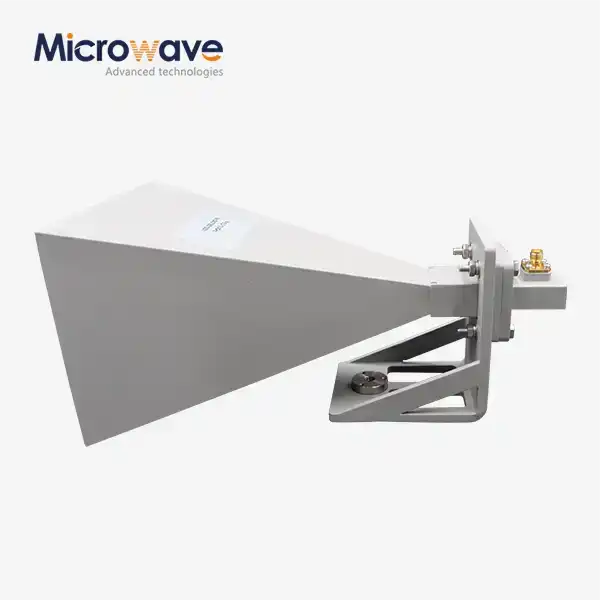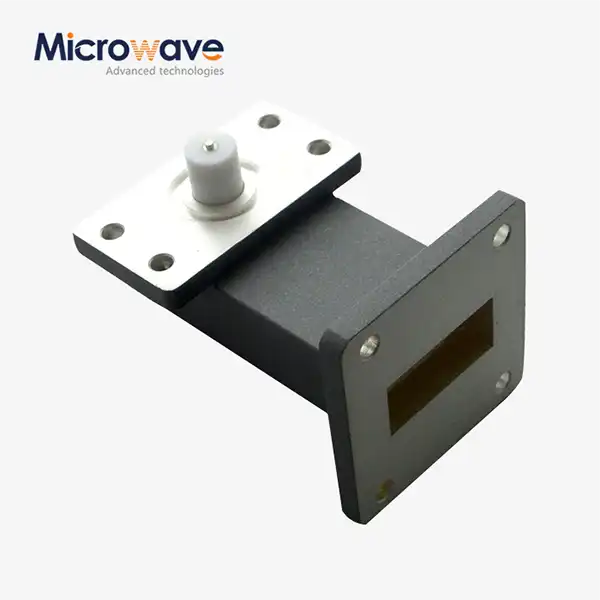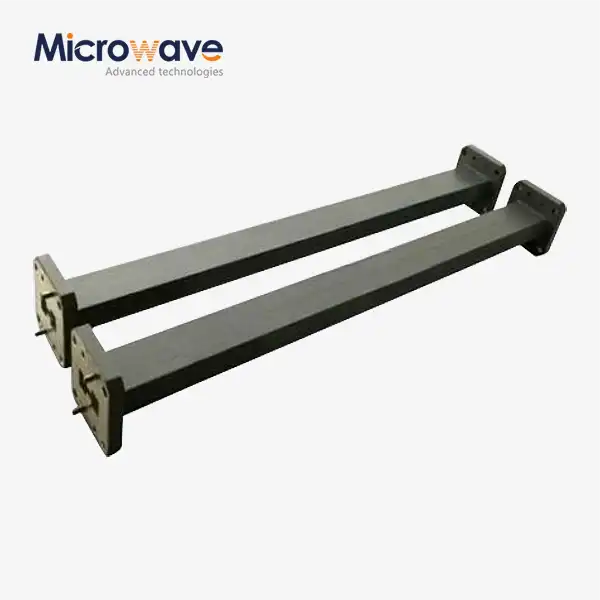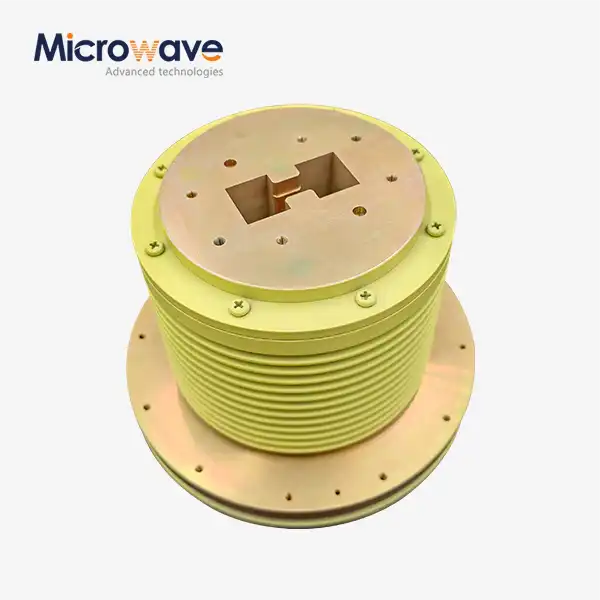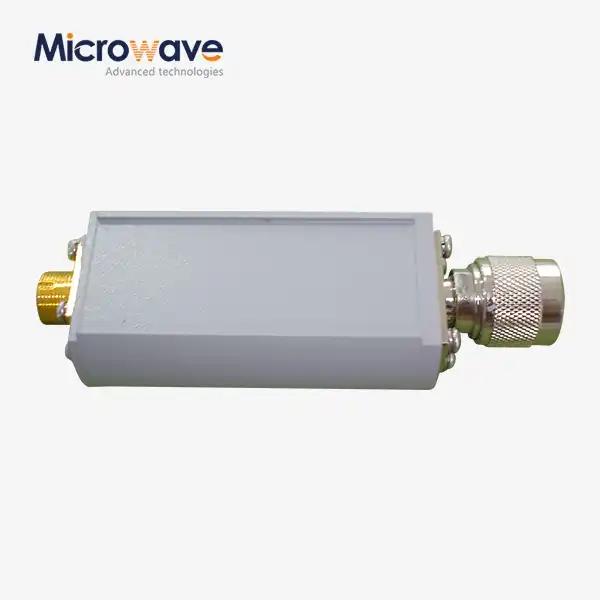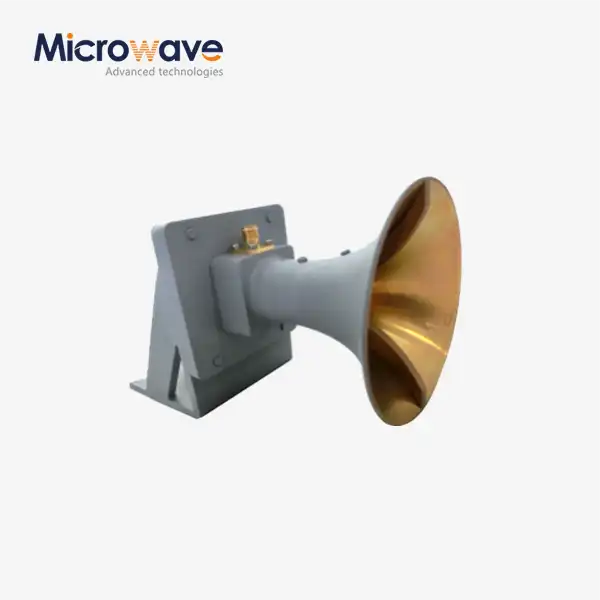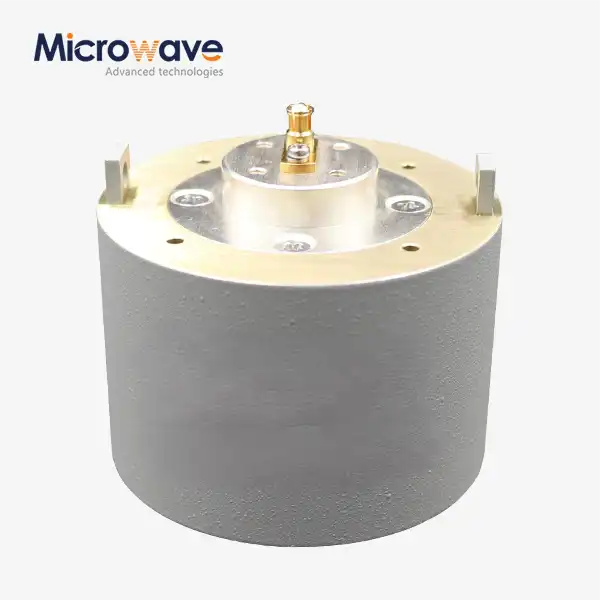





Why Broadwall Double Ridge Waveguide Couplers Handle High Power
Broadwall double ridge waveguide couplers are great at handling high power because they have a special shape that combines bigger dimensions with carefully placed internal ridges that spread electromagnetic energy more evenly across the waveguide cross-section. This arrangement lowers the amount of current concentrated at any one point. This lowers the risks of resistive heating and voltage breakdown, even when continuous wave signals at the kilowatt level pass through the structure. The broadwall orientation places the coupling apertures on the waveguide's wider face, which allows for more space between the holes and better thermal dissipation paths than the narrowwall variants. This makes these parts essential for radar transmitters, electronic warfare systems, and high-power test equipment that needs to be reliable in harsh conditions.
Understanding Broadwall Double Ridge Waveguide Couplers
Broadwall double-ridge waveguide couplers are sophisticated passive microwave components that solve one of the biggest problems in RF engineering: getting very wide bandwidth without lowering the amount of power it can handle. Standard rectangular waveguides can only work with a frequency ratio of about 1.5:1. These new structures have two parallel ridges running longitudinally inside the waveguide, which makes them work with a wider frequency range. This change capacitively loads the middle of the waveguide, which lowers the fundamental TE10 mode's cutoff frequency while pushing higher-order modes to higher frequencies at the same time. This makes a single-mode bandwidth that can be useful and can cover ratios of 3.6:1 or even wider, like 2–18 GHz or 6–40 GHz in a single small assembly.
The broadwall designation refers to the exact location of the coupling aperture. The sampling holes or slots are cut into the waveguide's wider face instead of its narrow sidewall in these designs. This orientation has a number of electromagnetic benefits. The bigger surface area makes it easier to finetune the distribution of the coupling aperture, which is usually done using Tchebyscheff patterns that keep the coupling flatness within ±1.0 dB over many octave ranges. We at Advanced Microwave Technologies Co., Ltd have done a lot of testing in our 24 m microwave darkroom and found that broadwall configurations have better directivity numbers—usually more than 20 dB—even at the band ends, where it's hard to keep phase relationships.
Electromagnetic Principles Behind Power Handling
The physics behind these couplers' power capacity is mostly about how the electric field is distributed and how the heat is managed. Ridge shape changes the field patterns inside the waveguide. This makes the energy spread out more evenly and stops field accumulation in one place that could cause voltage breakdown or too much ohmic heating. The choice of material is also very important. The structure is made of high-grade aluminium 6061-T6 or copper alloys, and surface finishes like silver plating or chromate conversion coatings keep resistive losses to a minimum. These specs have a direct effect on continuous wave power ratings, which can be several kilowatts or more based on the frequency and whether the unit works in a vacuum or under pressure.
Critical Specifications for Procurement Evaluation
When technical buyers look at these parts, they should focus on a few measurable factors for a broadwall double-ridge waveguide coupler. VSWR values usually stay below 1.4:1 throughout the operational spectrum. This makes sure that the impedances match, which stops signals from reflecting. Insertion loss readings show how well the signal moves through the main waveguide path. The best units have losses well below 0.5 dB. Coupling accuracy specs tell you how accurately the device samples signal power; industrial-grade units keep mean coupling values within a ±1.0 dB range. Frequency range compatibility with WRD standards, like WRD650, WRD750, or WRD180, makes sure that the system can work with existing waveguide infrastructure. This makes system integration much easier for aerospace contractors and operators of satellite ground stations.
Why are Broadwall Double Ridge Waveguide Couplers Ideal for High-Power Applications?
Components for high-power microwave systems need to be able to handle not only electrical stress but also the mechanical and thermal effects of long-term use. These needs are met by Broadwall double-ridge waveguide couplers, which have a number of design features that work together to provide excellent stability.
The first advantage of broadwall architectures is that they have larger physical dimensions. When the internal volume is bigger, the current density is lower for the same amount of power. This directly leads to less resistive warmth. When you mix the ridge shape, which spreads electromagnetic fields more evenly, with the other features, you get a part that gets rid of heat better than single-ridge or standard rectangular waveguide options. Our engineering team often asks for these couplers to be used in travelling wave tube amplifier test benches. These benches are used to characterise synthetic aperture radar parts across all of their operational bands. Defence contractors working on tight qualification schedules have found it very helpful to be able to keep coupling factors stable during long test runs without thermal drift.
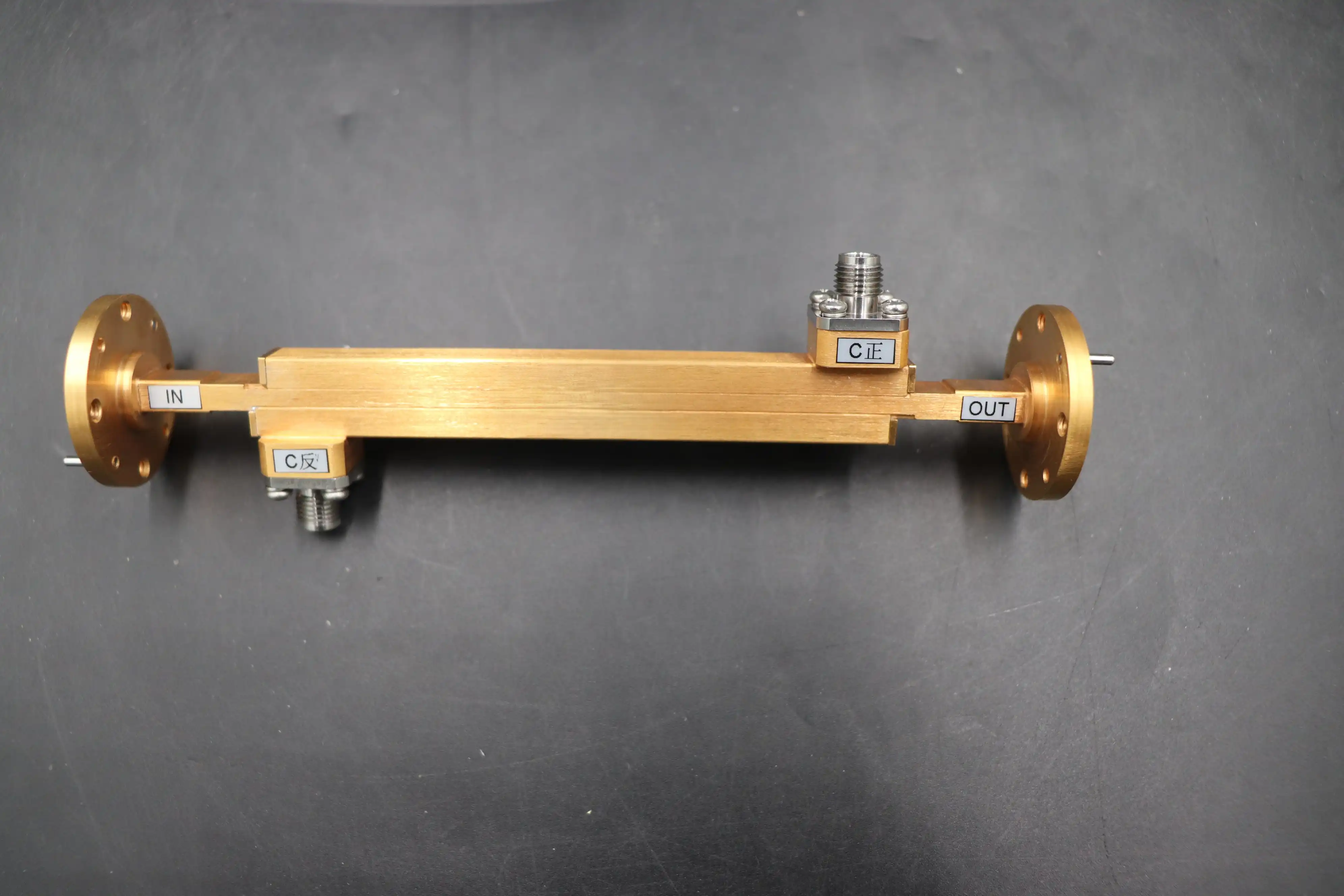
Design Features Enabling Superior Performance
There are three main things that make these couplers stand out in tough environments. The broadwall aperture array lets engineers precisely control the sizes and spacing of the coupling holes, which improves both the flatness and directivity of the coupling at the same time. Ridge profiles are computer-optimised electromagnetically to find the best balance between increasing bandwidth and power-handling limits. Modern designs have done a great job of finding this balance between these historically competing needs. Material systems include not only bulk metals that conduct electricity but also carefully chosen platings and conversion coatings. Silver plating lowers skin-effect losses at higher frequencies, and chromate layers keep electronics from rusting in maritime or high-humidity aerospace settings. Units that will be used in vacuums get special surface treatments to lower the risk of multipaction, a type of breakdown that only happens in low-pressure RF environments.
Real-World Application Validation
The operational setting where these couplers work best is shown by the electronic warfare suites on current military aircraft. Because of their small size and weight, jamming and danger detection systems need to be able to work across multiple octave frequency bands, which are usually 6 to 18 GHz, and they also need to be able to handle high vibrations and fast temperature changes between high and low altitudes. A single broad-band double-ridge waveguide coupler does the job instead of three or four narrow-band standard waveguide couplers. This makes the system simpler and lowers the total insertion loss. These parts have also become standard in satellite ground stations, which is another area. The wideband sampling feature helps tracking antennas keep an eye on multiple satellite constellations across the C, X, and Ku bands. This means that a single feed network can handle multiple communication links without having to change any hardware.
These broadwall double-ridge waveguide couplers keep precise control over high-power broadband antenna feeds in automated test laboratories that check for EMC and EMI radiated immunity. The devices send return messages to amplifier control loops, which keep the field strength constant across swept frequencies. This is required by regulation for compliance certification. High power handling and precise connection make sure that test rooms meet international standards without the need for an operator to switch hardware between frequency segments.
Comparing Broadwall Double Ridge Waveguide Couplers with Alternative Solutions
When making decisions about what to buy, it's helpful to know how the different waveguide technologies stack up in terms of performance factors that are important for certain uses. Broadwall double ridge waveguide couplers are one of a kind in the world of solutions because they can do things that other architectures can't do at the same time.
Broadwall Versus Single Ridge and Narrowwall Variants
Similar capacitive loading ideas are used by single-ridge waveguide couplers to increase bandwidth, but they only have one ridge element. Because of this unevenness, the useful bandwidths are usually only around 2:1, while with double-ridge shapes, ratios can be as high as 3.6:1 or even higher. As field concentrations get stronger in single-ridge configurations, power handling also gets worse. With narrow-wall couplers, sample holes are placed on the waveguide's shorter side. This arrangement can be helpful in installations with limited space, but it makes it harder to get a flat coupling response across wide bandwidths because the aperture area is smaller and the spacing between coupling holes is closer together. It is because of the tighter tolerances needed to keep quarter-wavelength phase relationships in compact shapes that directivity performance tends to drop faster at band edges compared to broadwall solutions.
Functional Considerations for Hybrid Couplers
Waveguide hybrid couplers do something different; they provide quadrature phase relationships between output ports instead of directional sampling. Hybrids are useful for situations where you need to split a signal with exact 90-degree phase separation, like in balanced amplifier setups or phased array feed networks. The bandwidths of these parts are usually smaller than those of double-ridge directional couplers, though, and they are not the best for power tracking purposes. When buying parts for RF systems, procurement teams should make it clear the difference between the needs for directional sampling and the needs for power division.
Market Landscape and Supplier Considerations
Wideband high-power broadwall double-ridge waveguide couplers and waveguide components will be in higher demand in 2024 because of defence modernisation programmes and more satellite constellation deployments. Leading companies have made goods that cover millimetre-wave frequencies, which can be used for new 5G backhaul and aircraft radar uses. When buying something, the image of the supplier is very important. This is especially true for mission-critical defence and aerospace projects where a broken part could risk the security of the system. Established manufacturers with decades of experience making products and complete quality management systems, such as ISO 9001 certification and RoHS compliance, give customers peace of mind that their products will meet all requirements for as long as they are used. Premium sellers are different from commodity suppliers because they offer thorough test data that include full S-parameter characterisation across temperature ranges.
Conclusion
Broadwall double ridge waveguide couplers are the best choice for applications that need a small, reliable package that can handle both high power and a wide bandwidth. Their unique shape effectively spreads electromagnetic energy and provides better heat dissipation compared to other structures. Defence, aircraft, satellite communications, and industrial research procurement pros can benefit from knowing the technical principles, comparative advantages, and sourcing factors that make these specialised parts unique. Focusing on manufacturing capabilities, quality certifications, and customisation options when choosing a provider, along with following best practices for installation and upkeep, will make sure that these important parts work at their best for as long as they are used. As microwave technology keeps getting better at higher frequencies and more difficult uses, working with more experienced manufacturers becomes more important for staying ahead of the competition.
FAQ
1. How does thermal management work in high-power broadwall couplers?
Several things have to work together for thermal cooling to happen in high-power Broadwall double-ridge waveguide couplers. The waveguide body itself takes in heat and moves it away from the coupling apertures, where it heats up locally because of the flow of current around the sides of the apertures. When compared to narrowwall designs, broadwall designs have more surface areas that come into contact with air or cooling systems. Choosing the right material has a big effect on thermal performance. Copper alloys are better at transferring heat than aluminium, but in aerospace applications, weight is usually a factor. Surface finishes affect both electrical and thermal properties. For example, silver plating lowers ohmic losses, which cause heat, and chromate conversion coats protect base metals without making their thermal resistance much higher.
2. What factors determine the choice between broadwall and narrowwall designs?
The selection process is based on the needs of the application. Broadwall designs work best when they need to handle a lot of power, have a wide bandwidth, and respond flatly to coupling. This makes them perfect for wideband radar test systems and multi-band satellite ground stations. In installations with limited space where the mechanical envelope drives design choices, narrowwall options may be preferred even though they have lower performance. The frequency range also plays a role in the choice. Because of the way the dimensions are set up, some waveguide size standards automatically lend themselves to one design over the other.
3. Can these couplers be customised for specialised applications?
Through OEM manufacturing partnerships, it is still possible to do a lot of customisation. You can change the frequency ranges to fit your specific system needs, the coupling values to meet your power tracking needs, and the flange setups to fit your specific mechanical interfaces. For specific environmental conditions, higher power ratings can be achieved through vacuum- or pressurisation-compatible surface treatments. Defence companies and research institutions working on new radio systems can lower their program risk by using prototype development services to make sure that custom designs work before they are committed to production.
Partner with ADM for Your High-Power Waveguide Coupler Needs
Advanced Microwave Technologies Co., Ltd is ready to help you get Broadwall double ridge waveguide couplers that are precisely designed to work with your mission-critical systems. Our ISO 9001-certified production facilities and 24m Microwave Darkroom testing capabilities make sure that every part meets strict performance requirements from 0.5 GHz to 110 GHz. We have been making high-quality products for over 20 years. Our engineering team offers a wide range of OEM services, such as rapid prototyping, custom frequency ranges, and specialized power ratings. These services are available to defense contractors needing ruggedized parts for airborne electronic warfare systems, satellite integrators building next-generation ground stations, and research institutions making advanced radar prototypes. Our straight global logistics network makes sure that our prices are low and that we can keep your programs on track with our delivery schedules. Get in touch with our technical experts right away at craig@admicrowave.com to talk about your needs with a Broadwall double ridge waveguide coupler supplier who has a lot of experience. We'll show you with quotes, full specs, and S-parameter data why top defense and aerospace companies trust ADM as their strategic microwave component partner. Let's work together to turn the problems you're having with your RF system into performance gains.
References
1. Pozar, David M. "Microwave Engineering, Fourth Edition." Wiley, 2011. Chapter 7: Power Dividers and Directional Couplers.
2. Saad, Theodor S. "Microwave Engineers' Handbook, Volume 1." Artech House, 1971. Section on Ridge Waveguide Theory and Applications.
3. Levy, Ralph. "Directional Couplers in Waveguide Technology." IEEE Transactions on Microwave Theory and Techniques, vol. 47, no. 6, June 1999.
4. Bhat, Bharathi and Koul, Shiban K. "Stripline-Like Transmission Lines for Microwave Integrated Circuits." New Age International Publishers, 1989. Chapter on Double Ridge Waveguides.
5. Montgomery, C.G., Dicke, R.H., and Purcell, E.M. "Principles of Microwave Circuits." MIT Radiation Laboratory Series, Volume 8, McGraw-Hill, 1948.
6. Zhang, Qi et al. "Wideband High-Power Waveguide Components for Modern Radar and Communication Systems." International Journal of RF and Microwave Computer-Aided Engineering, vol. 32, issue 4, April 2022.